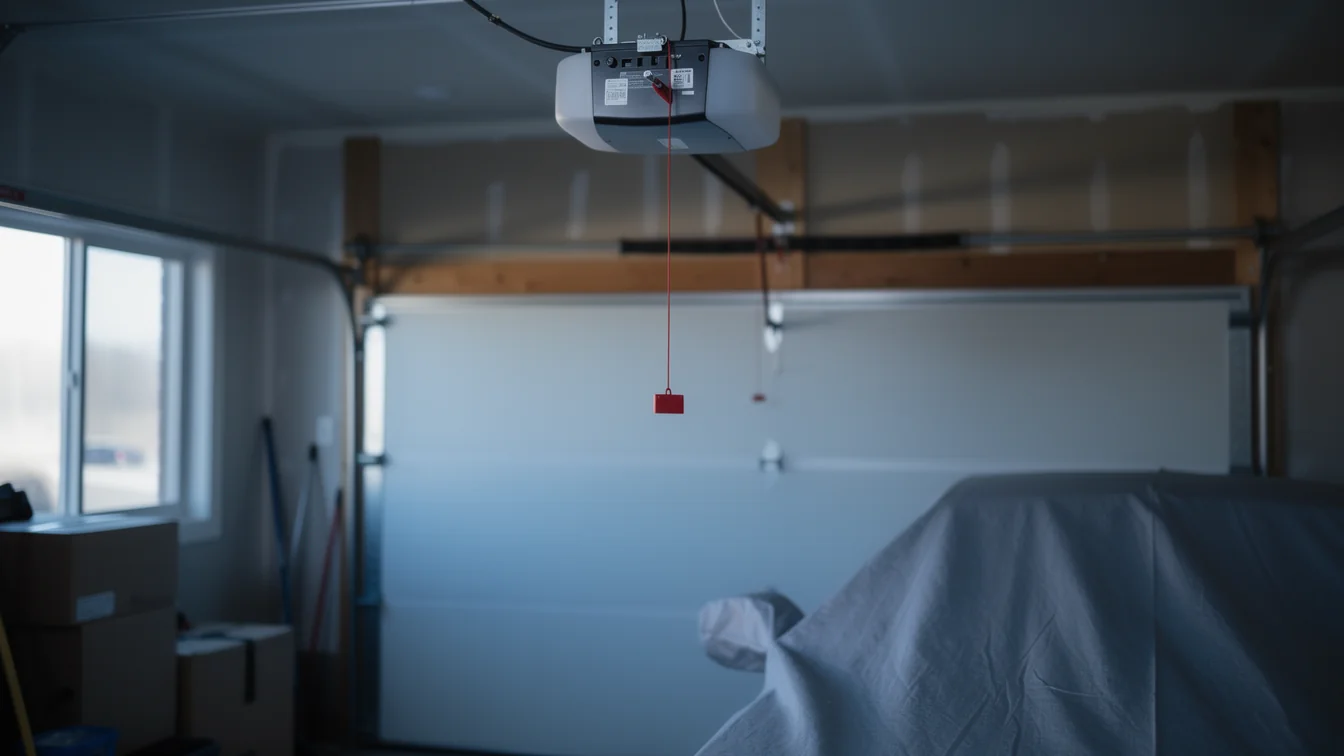
 What Happens to Your Opener When the Power Cuts Out in San Bernardino
Most San Bernardino garage openers date to the 1960s-70s building boom.
Is Your San Bernardino Garage Door Worth Fixing?
Most San Bernardino houses date to the 1958-1996 build run, median 1979. That era's doors and hardware decide whether a repair call makes sense or a replacement does.
Local detail
When It Stops Being a DIY Job
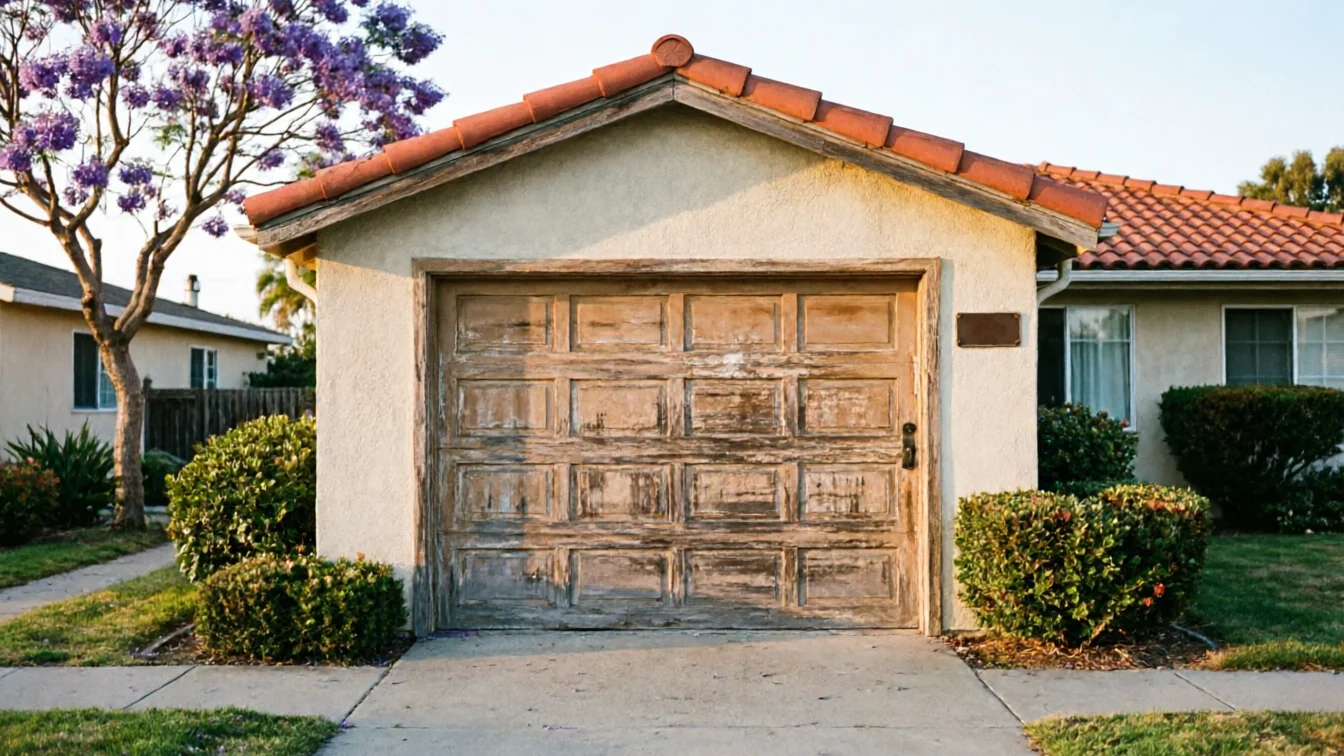
A lot of the housing stock around San Bernardino went up between 1958 and 1996, with the median landing around 1979. That matters because doors from that build window are usually steel sectional panels on torsion or extension springs sized for hardware nobody manufactures the same way anymore. If your door is original to a house from that era, a cracked panel or a seized roller isn't a weekend fix with parts from a hardware store rack - the track gauge and spring wind are often specific to that period.
When it's a loose bolt, a bent sensor bracket, or a track that's knocked slightly out of true, that's within reach for most owners with basic tools. When it's a broken torsion spring, a bent shaft, or cables that have started to fray, that's not. Torsion springs are under enough tension to break a hand or worse if you don't have the winding bars and the experience to use them. We'll tell you straight when a job is a twenty-minute fix you could've done yourself - and when it isn't worth the risk of finding out.
The honest limit here: if your door's hardware is original to a house built before the 1980s, we may need a day or two to source matching parts rather than same-day stock. That's not us dragging it out - some of this hardware just isn't sitting on a shelf.
The area
What the Weather Here Does to It
San Bernardino sits in a moderate heat climate band, and that shows up less in dramatic failures and more in slow wear. Heat cycles expand and contract steel tracks and springs over years, drying out factory lubrication faster than it would in a milder zone. Nylon rollers get brittle sooner. Opener gear sets that run in a hot garage all summer wear down faster than the same part would somewhere cooler.
None of this means your door is about to fail tomorrow. It means that on a house with original 1960s-70s hardware - which describes a lot of the stock in this area - the wear curve has already had decades of heat cycling to work on it. A spring that's lasted this long on a house from that build era has usually earned its retirement, not because it's defective, but because it's done the job it was rated for.
We check for the heat-specific signs when we're out: dried grease turned to grit on the track, rollers with flat spots, cable strands starting to separate near the drum. Those are the tells that say repair now versus replace before it strands your car in the garage.
What we find
The Situation
Across the service area - roughly 153,214 households, with 86,867 of those owner-occupied houses - the housing is heavily weighted toward that 1960s-70s build run, spread across the named pockets from Shandin Hills and Del Rosa close in, out through Verdemont, Muscoy, and the foothill communities like Crestline and Lake Arrowhead. A door that's original to a house in Perris Hills or North Park is carrying the same hardware questions as one in Terrace or Rancho West - this isn't a one-neighborhood problem.
Median household income across the area runs around $84,594, which is relevant mostly in how it shapes the fix-or-replace call: owners here aren't automatically defaulting to the cheapest patch, and a lot of the repair requests we get are for doors that are genuinely salvageable rather than ones limping along past their point.
That's the real situation: an aging, fairly uniform housing stock, spread wide across a lot of named areas, where the deciding factor isn't the neighborhood - it's the age of the door in front of us.
How we work
What You Pay
We don't have a flat number to quote here, and we're not going to make one up. What we can tell you is how the call gets made: a spring replacement on original hardware costs less than letting a seized spring take out a cable, a drum, or the opener trying to fight it. A panel swap on a door that still has good hardware underneath usually costs less than full replacement. A full replacement starts to make sense once you're replacing the third or fourth major component on the same door inside a couple of years.
We give you the actual repair cost and the actual replacement cost side by side before we touch anything, so you're deciding with real numbers in front of you, not a guess. If a repair gets you another five years out of a door that's already outlasted its original warranty by decades, that's often the better call than a full teardown. If we're patching the same spring assembly twice in one year, we'll say so plainly instead of billing you for a third visit.
Questions
Common questions
How do I know if my garage door is original to the house?
If your house was built in the 1958-1996 window common across this area - especially the 1960s-70s stock - and the door's never been swapped, it's likely original hardware. Signs include a single thick torsion spring overhead rather than two side springs, and steel panels with raised rectangular grooves rather than flat modern ones.
Is it ever too late to repair instead of replace?
Yes. If the track is bent in more than one place, if you've already replaced the spring once and it's failing again, or if the opener and the door hardware are both original and failing together, replacement usually costs less over the next few years than another round of repairs on worn-out parts.
Does the heat here actually shorten door life?
It contributes. San Bernardino's moderate heat band means more expansion-contraction cycling on tracks and springs over the years than a cooler climate would produce, which dries lubrication and ages rollers and cables faster. It's gradual wear, not sudden failure, which is why regular checks catch it before it becomes an emergency.
Can I just replace the spring myself?
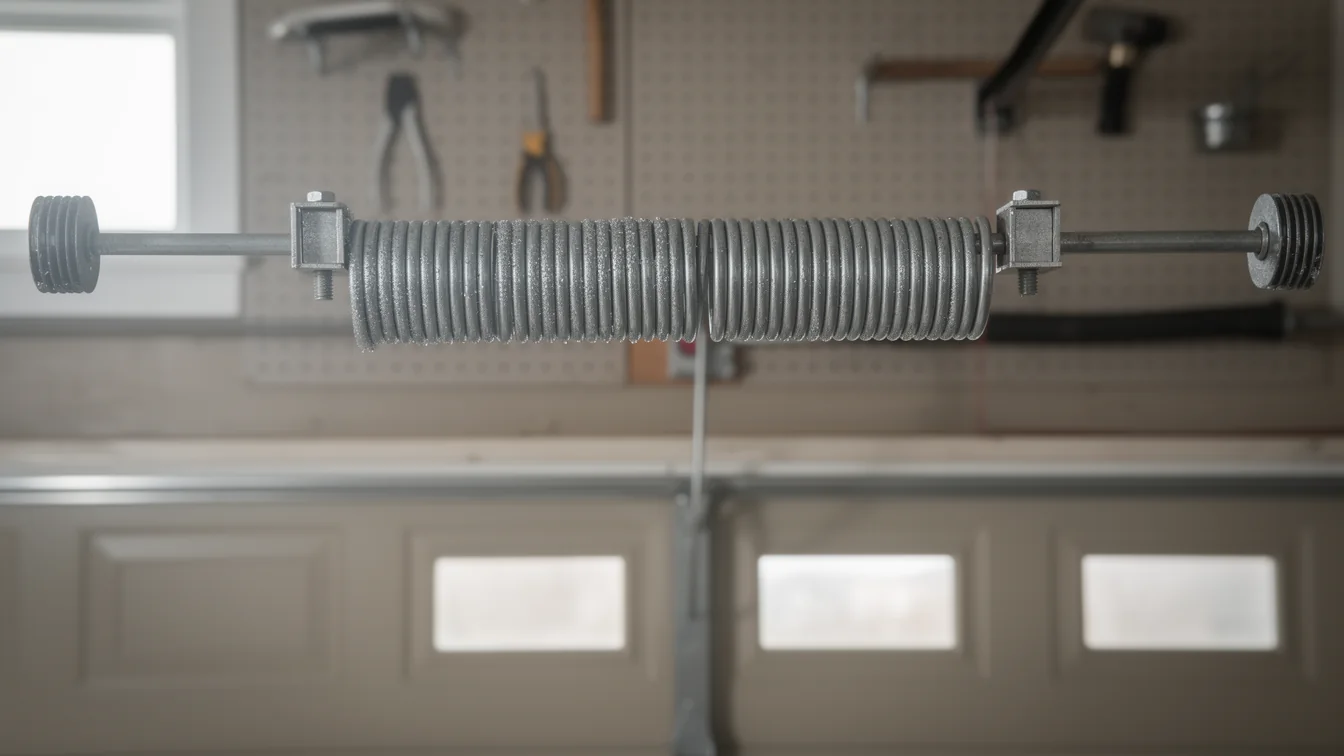
We'd rather you didn't. A torsion spring under tension can cause serious injury if the winding bars slip, and the spring sizing on older hardware isn't always obvious from a parts-store chart. It's one of the few jobs on a garage door we don't recommend as DIY regardless of your tool kit.
Recommendation
You Might Also Like
More garage door guides for San Bernardino homeowners.
What Happens to Your Opener When the Power Cuts Out in San Bernardino
Most San Bernardino garage openers date to the 1960s-70s building boom.
 Garage Door Repair Built Around San Bernardino's Housing Stock
Serving San Bernardino's 1958-1996 housing stock, from Shandin Hills to Verdemont.
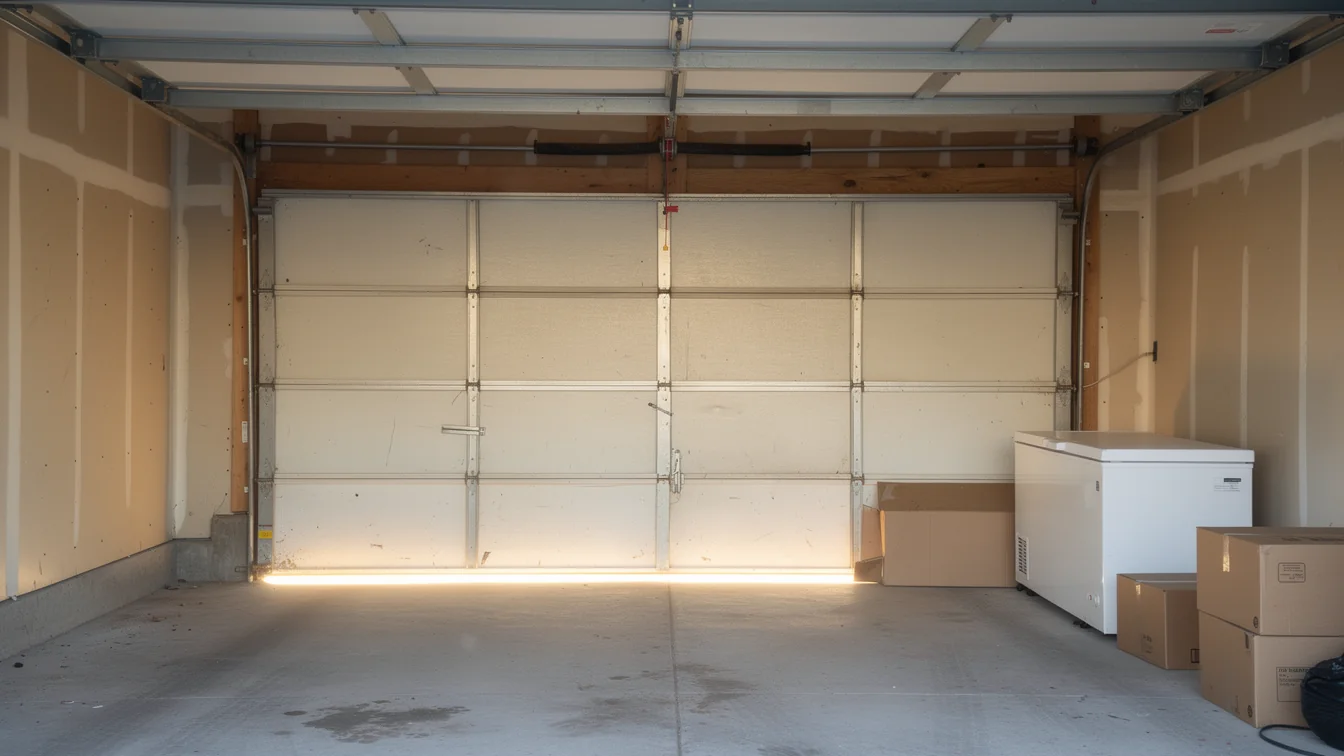 What San Bernardino's 1970s Housing Stock Means for Your Garage Door
San Bernardino homes built 1958-1996 need garage door repairs that match original torsion hardware and heat-cracked panels, not generic one-size fixes.
Ready when you are
Need a garage door sorted in San Bernardino?
San Bernardino Garage Door Pros repairs and installs garage doors, springs and openers in San Bernardino, CA and the surrounding area.