What Causes It Around Here
Most houses in San Bernardino's service area went up between 1958 and 1996, with the median landing around 1979, so a lot of the original torsion hardware is now pushing fifty years old. Across the 16 named areas we cover, the stock is mostly 1960s and 70s builds, which means steel rollers and painted springs that were never swapped out, just repainted over or left alone.
San Bernardino sits in a moderate-heat climate band, and that daily swing from cool mornings to hot afternoons is what fatigues galvanized spring coils over decades. Metal expands and contracts every single day, and on a spring that's already thirty or forty years old, that cycling is what finally snaps a coil instead of just stretching it.
Rollers wear the same way. Nylon rollers from the 60s and 70s era weren't built for the number of open-close cycles a door sees today, and once the roller flattens on one side, the whole track takes uneven load. None of this is dramatic - it's just age plus heat plus use, compounding year over year until something gives on a Tuesday morning when you're already late.
How Long You Are Without the Door
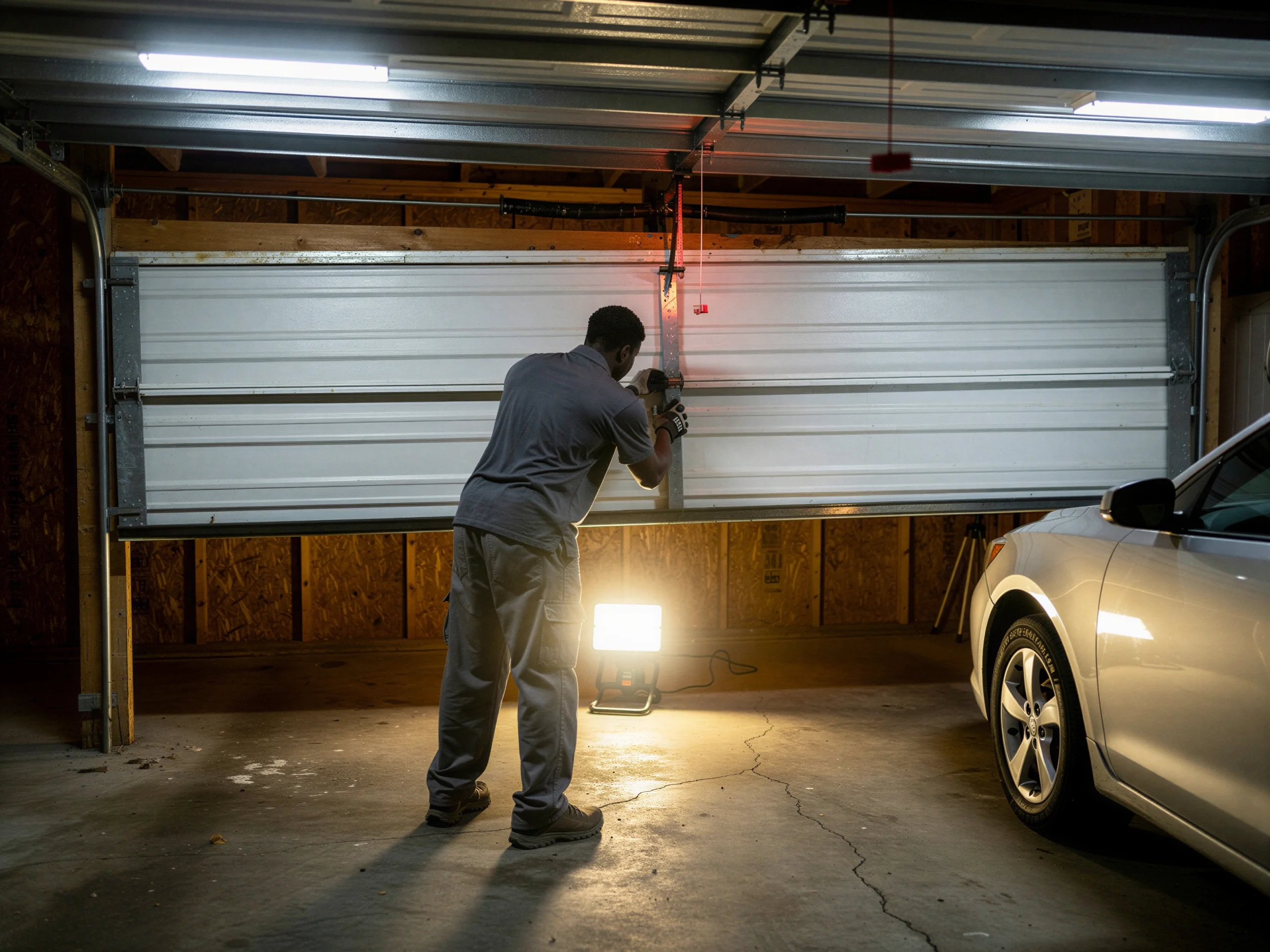
We don't have a documented average turnaround time to quote you here, and we'd rather tell you that than make one up. What we can tell you is what drives the wait when it happens: a broken spring means the door is dead weight and nobody is opening it by hand safely, and if the cable or drum is original to a house built in that 1958-1996 window, the part sometimes isn't a shelf item anymore.
Yearly checks prevent surprises
That's the real argument for maintenance over reaction. A yearly check catches a roller that's starting to flatten or a cable that's starting to fray while the door is still working, so you're scheduling a visit on your own terms instead of calling because the car is trapped inside.
Original hardware checkups
With 86,867 owner-occupied houses among the area's 153,214 households, a sizable share of this area's garages are still running original hardware from the build year, which is exactly the hardware that benefits most from being looked at before it fails rather than after.
Parts sourcing delays
We'll say plainly: we can't promise a same-day fix on every job. Parts for older torsion systems sometimes need sourcing. Maintenance is how you avoid finding that out the hard way.
What You Are Seeing
The door that used to glide now grinds or hesitates partway up the track - that's usually a roller that's worn flat on one edge, more common on the older nylon rollers found in 1960s and 70s builds than on newer sealed-bearing ones.
Stretched cable imbalance
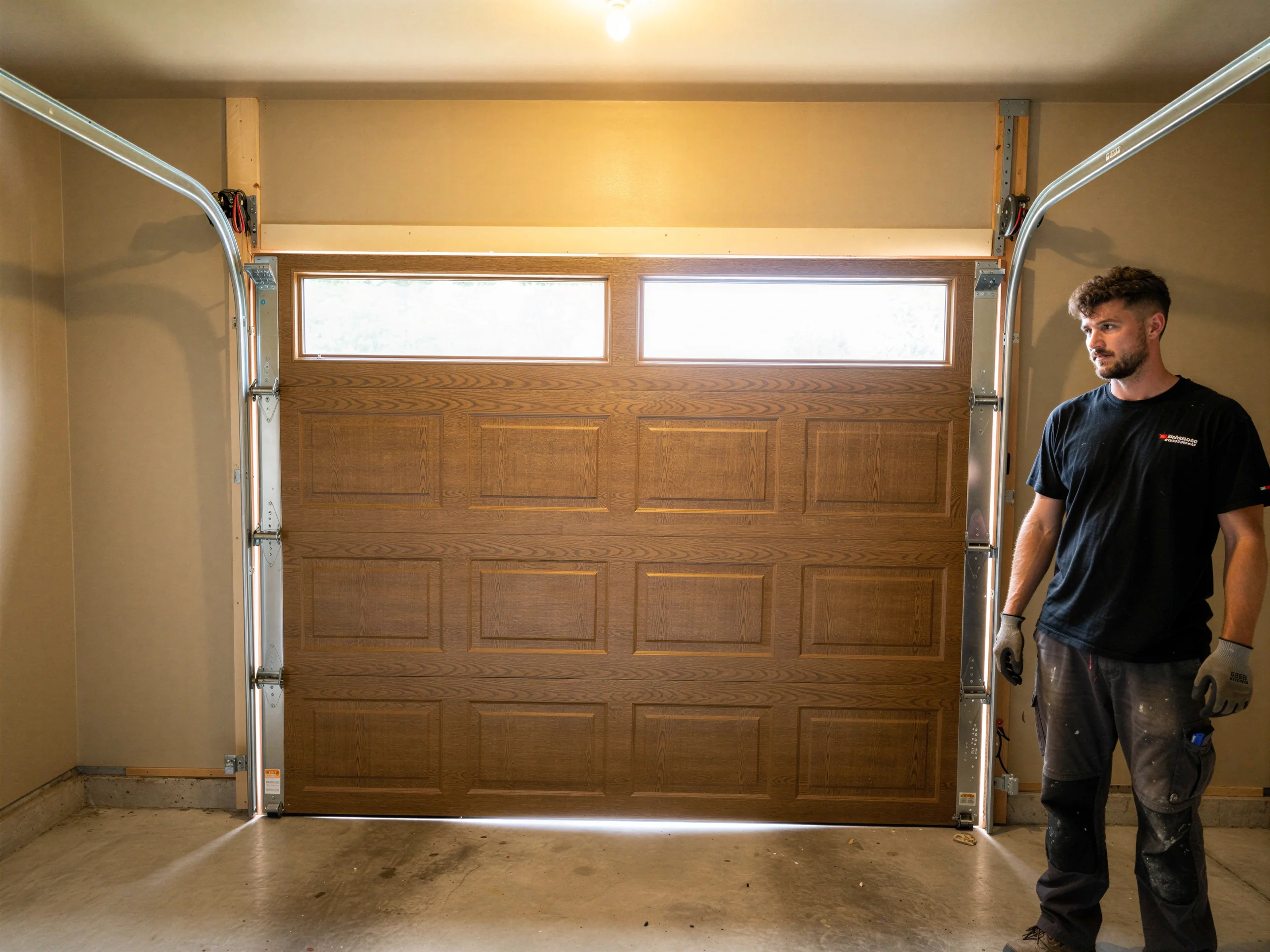
A door that closes unevenly, dropping faster on one side, is often a sign one cable has stretched more than the other, which happens gradually and then seems sudden. Sagging in the middle of a wood panel door, more common on the original one-piece doors from this era's earliest builds, tells you the door itself is tired, not just the hardware.
Heavier-feeling door lift
A spring that's lost tension shows up as a door that feels heavier than it used to when you lift it manually, or an opener that strains and groans before it moves the door at all. Noise is the easiest early warning and the one most owners ignore the longest.
Warning sounds before failure
A squeal from the rollers, a thud from the springs settling, or a rattle from loose hardware on track brackets - these are the sounds a door makes before it fails, not after. At a median household income of $84,594, most owners here can afford a maintenance visit instead of waiting for a full breakdown call, and that's the trade worth making.
The DIY Question
Some of this is fair for a homeowner to handle. Lubricating hinges and rollers with the right garage door lubricant, checking that the track bolts are snug, and visually scanning the cables for fraying are all reasonable things to do a couple times a year, especially on a door that's already decades old and showing its age.
Springs break bones
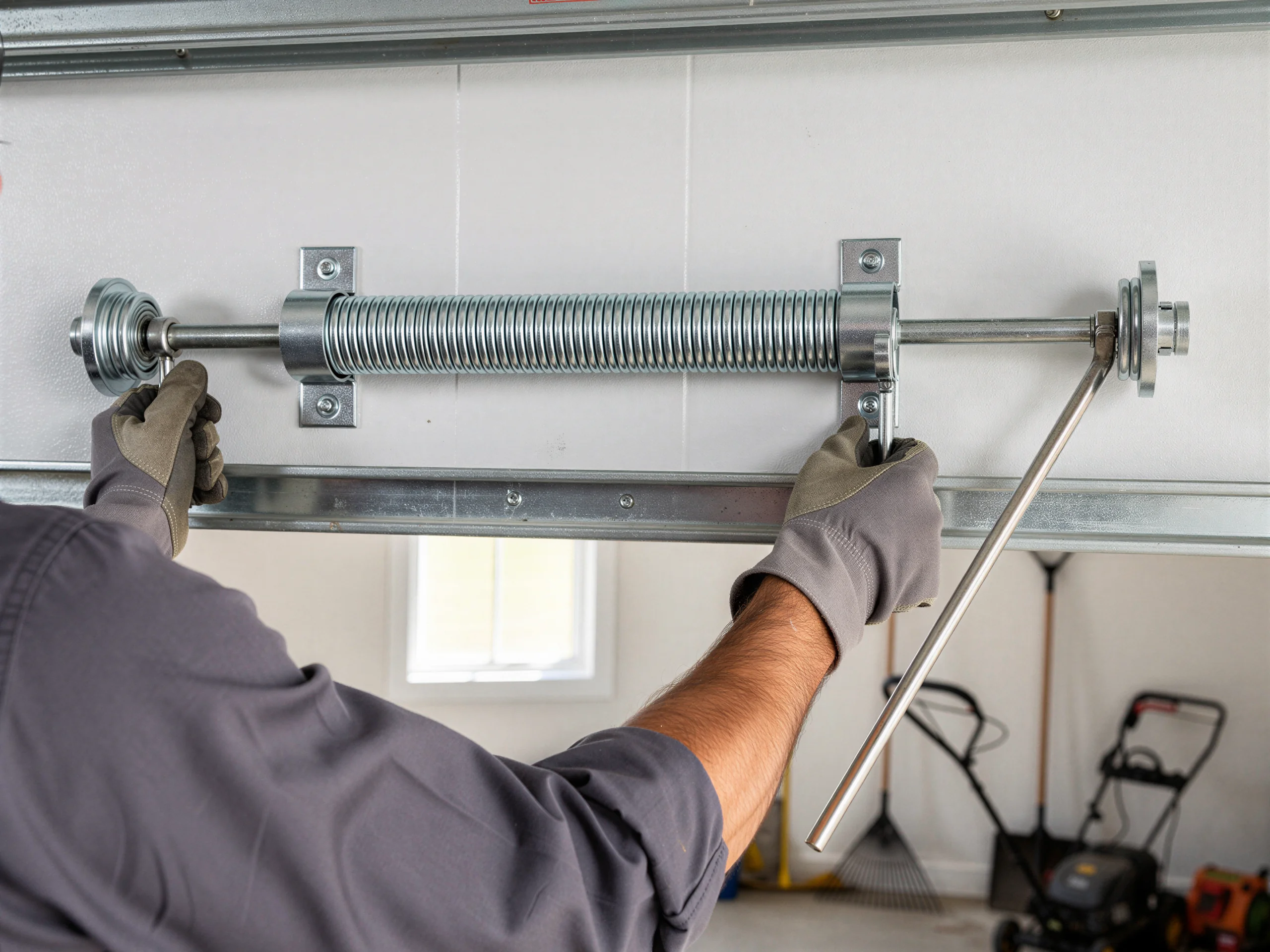
What isn't fair to take on yourself is anything involving the torsion spring. These springs are under enough tension to break a bone or worse if they let go while you're working on them, and that's true whether the door is five years old or fifty.
Cable and spring interplay
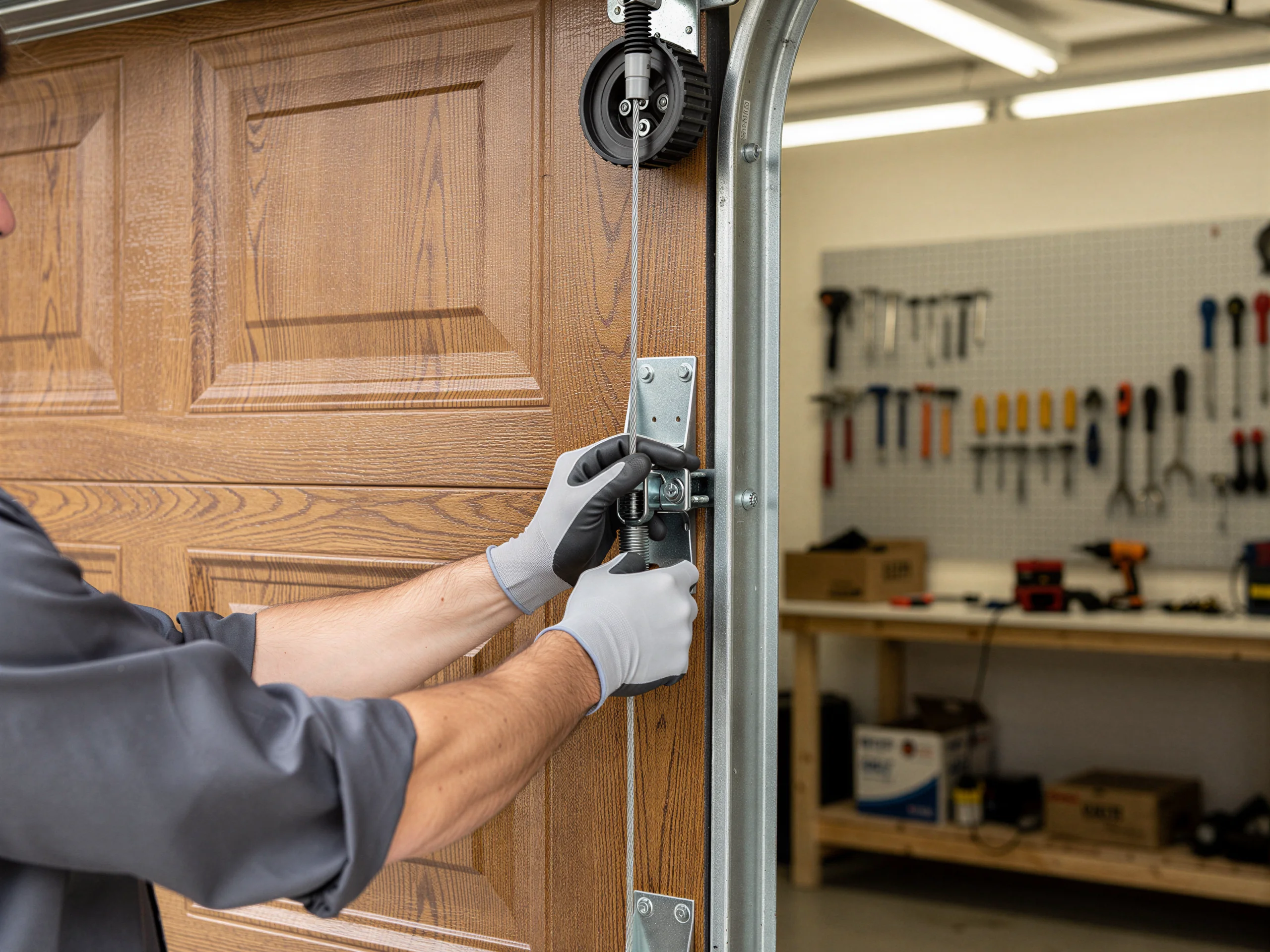
Cable replacement carries the same risk, because the cable and the spring work against each other under load. We'll be honest about the other side of this too: not every call needs a truck.
Tightening versus truck calls
If your issue is a dirty track or a loose bracket, that's a fifteen-minute fix with a wrench and a rag, and paying someone to drive out for it doesn't make sense. Know the difference between tightening a bolt and touching a spring, and you'll keep yourself safe and your money where it belongs.
Talk to a local pro
Garage door service in San Bernardino?
Same-day service with honest, upfront quotes.