What Causes It Around Here
Most of the housing stock in this service area went up between 1958 and 1996, with the median build year sitting around 1979. That means a lot of original torsion springs and extension systems are still hanging on well past the point where they should've been swapped out. A spring rated for roughly 10,000 cycles doesn't care that it's a nice day out; after a few decades of daily openings, it lets go without warning, usually on a cold morning or the first really hot stretch of the year.
Across the 16 named areas this company covers, the stock is heavily 1960s and 1970s construction, which lines up with a specific set of failure patterns: steel rollers worn oval, galvanized cable starting to fray at the drum, and center brackets stressed from decades of thermal cycling. The climate band here runs moderate on heat, but moderate still means real swings between a cool desert night and a hot afternoon, and that expansion-and-contraction cycle is hard on aging hardware, especially the fasteners holding torsion anchor brackets to a header that's also almost 50 to 60 years old.
Newer doors in this area fail less for the same reason newer cars break down less - the metal hasn't fatigued yet. The emergency calls we get are disproportionately from houses built in that 1958-1996 window, on original or near-original hardware.
How Long You Are Without the Door
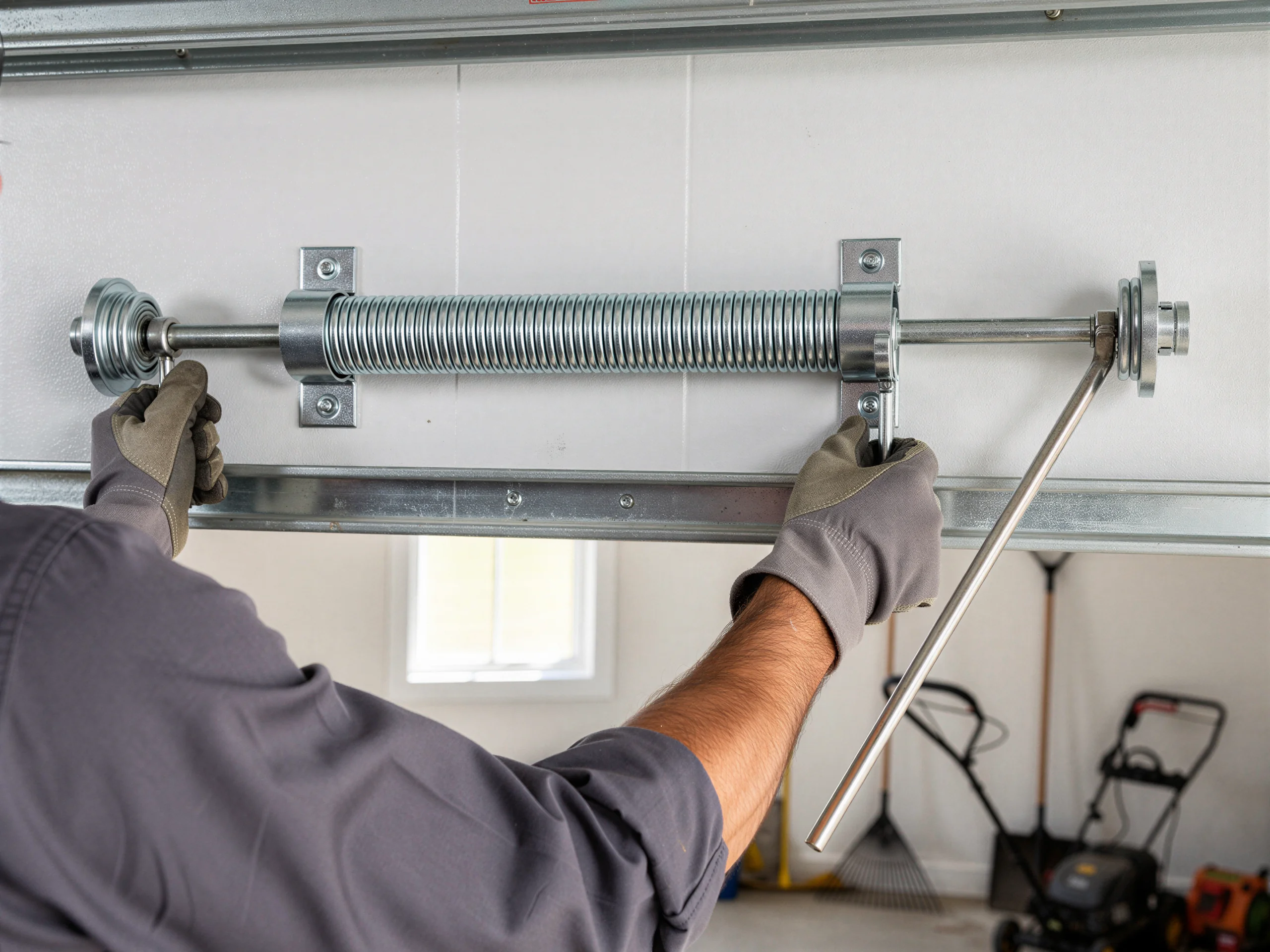
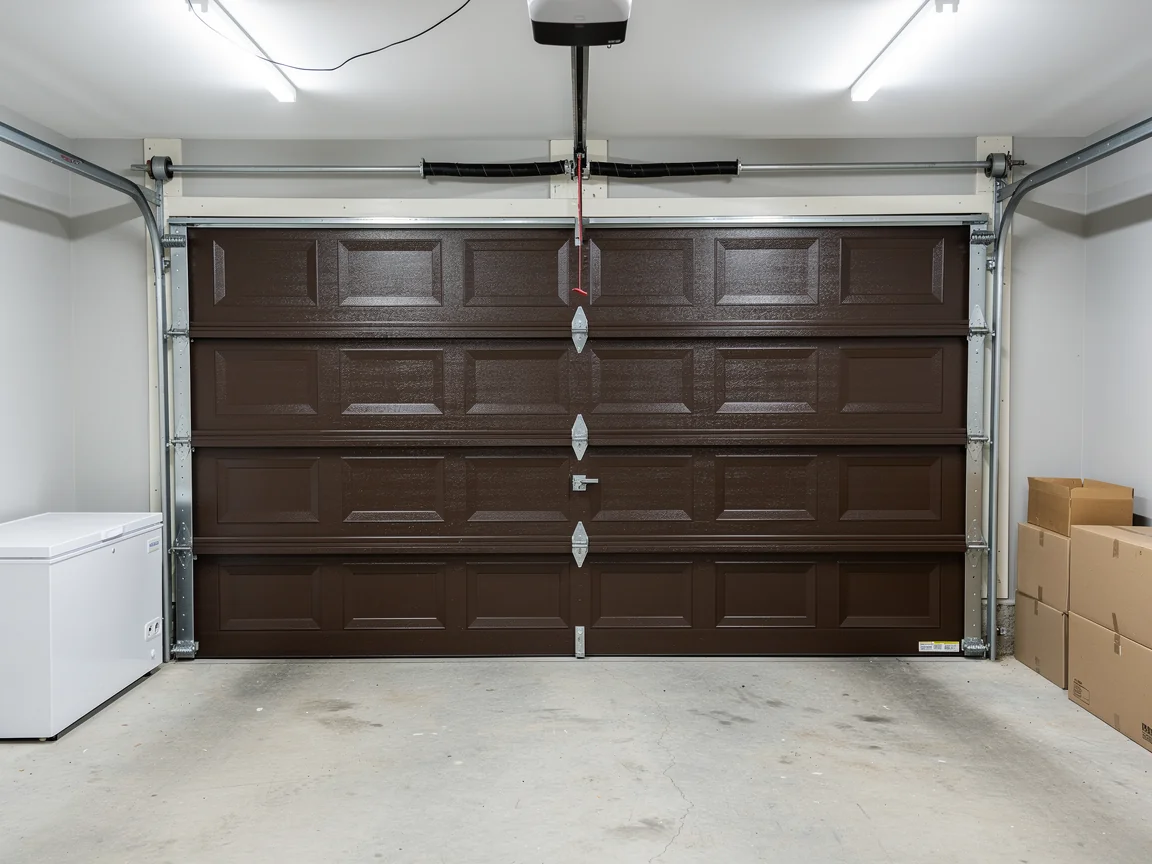
A broken torsion spring on a double door means the door won't open with the opener and shouldn't be forced open by hand - the weight without spring tension is more than most people can safely lift, and trying anyway is how fingers and backs get hurt.
Off-track roller shove
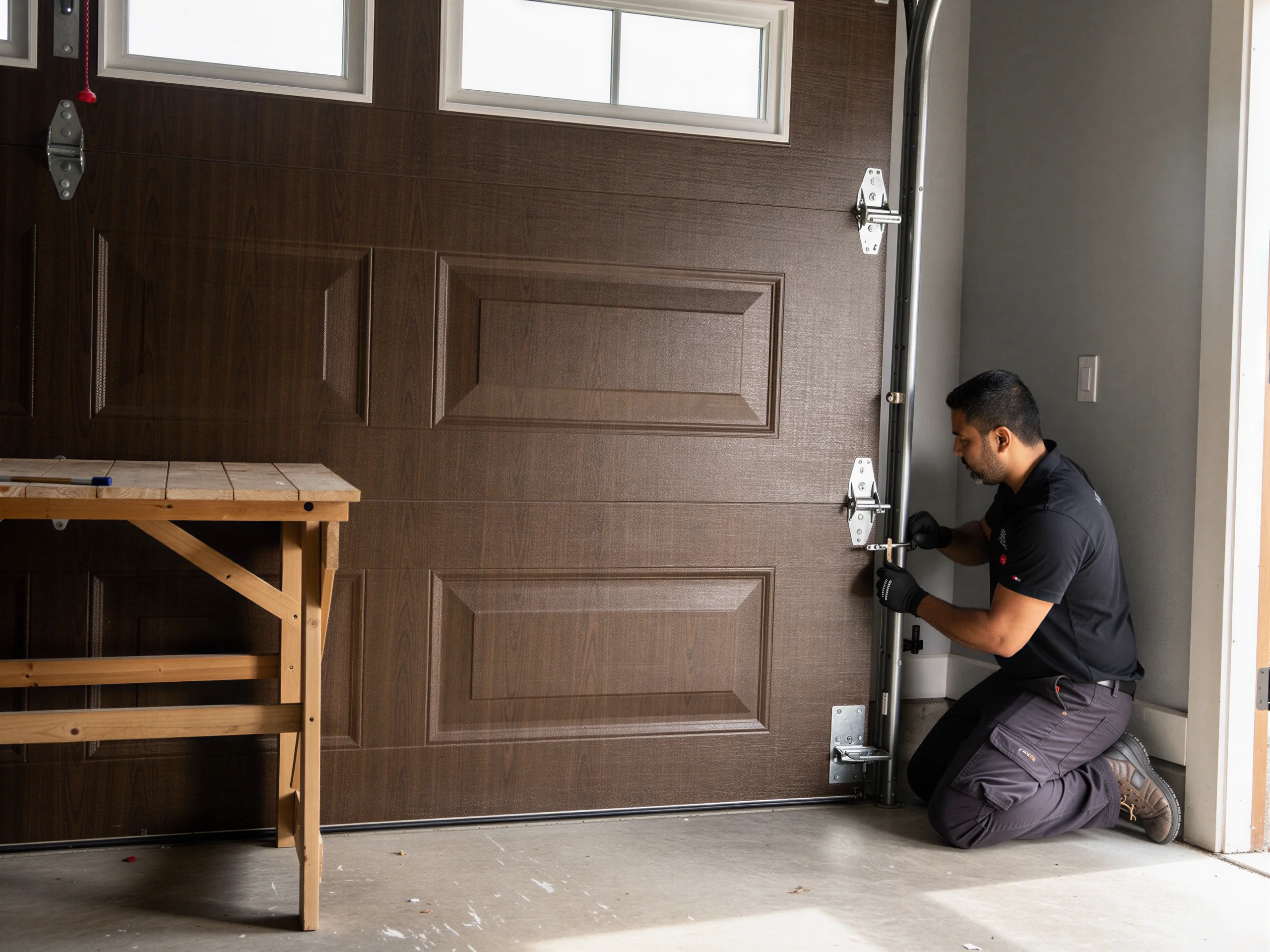
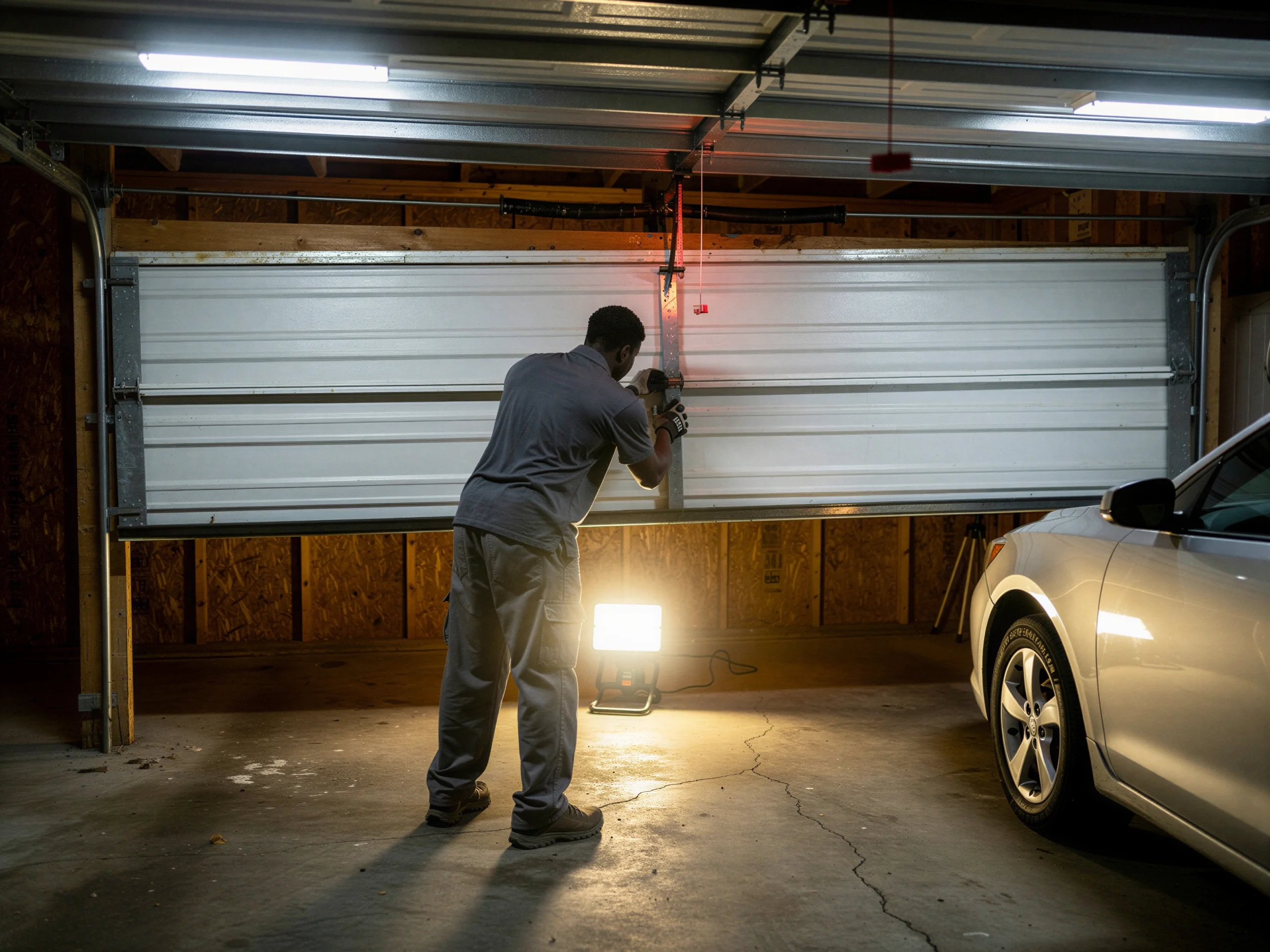
An off-track door is similar: it may look like it just needs a shove, but a roller out of the track usually means a bent track or a snapped cable, and pushing on it can walk the whole panel further off alignment. How long a household goes without a working door comes down to what's actually broken and what parts that requires.
Same-visit spring swaps
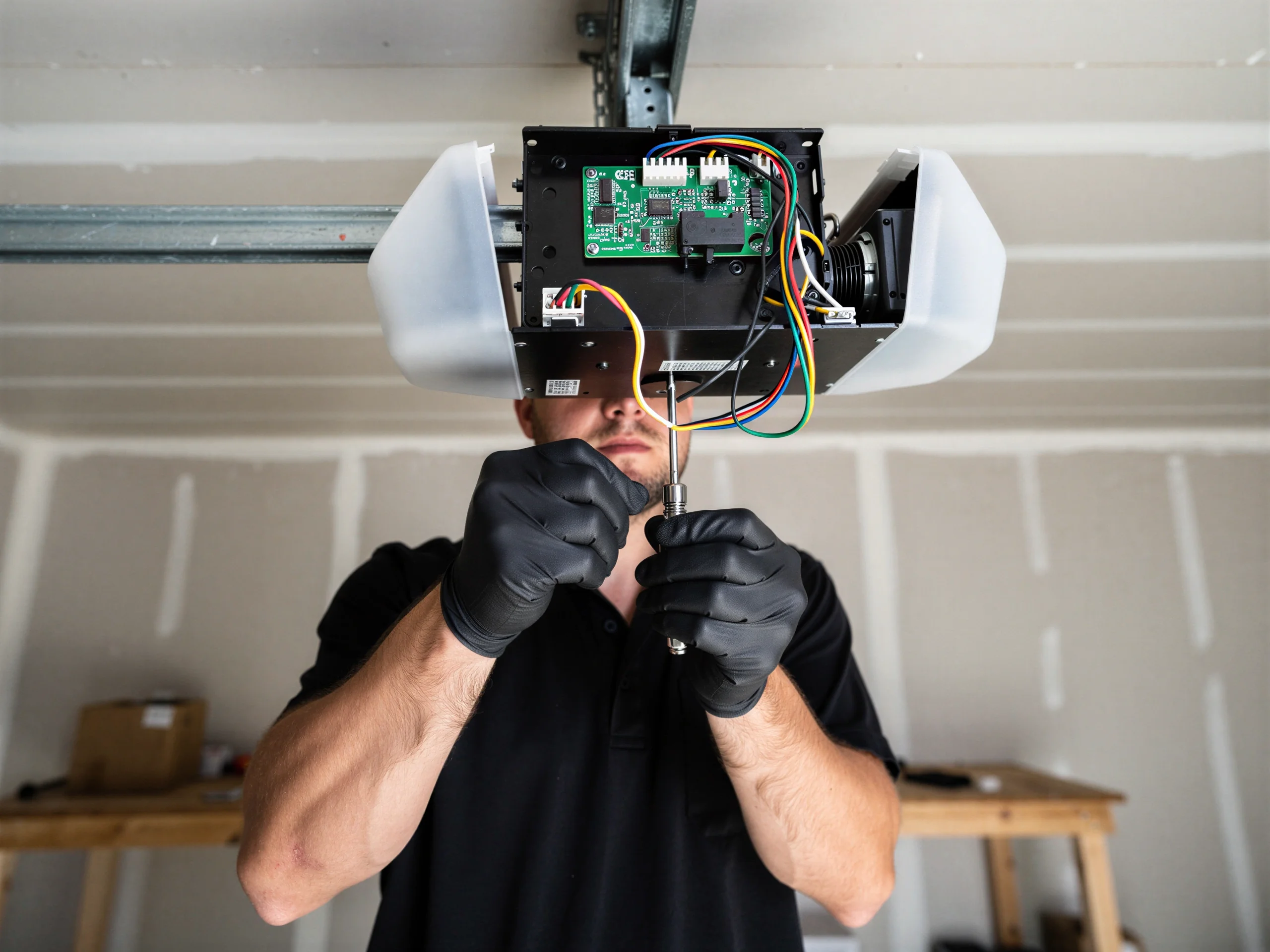
A spring swap on a standard torsion setup is usually a same-visit fix once a tech is on site. A bent track, a cracked panel, or an opener board that's fried from an electrical issue can mean a part has to be sourced, which takes longer.
Phone quotes unreliable
We won't quote a fix over the phone without seeing the door - door width, spring size, and drum type all vary house to house, especially across a service area with housing spanning four decades of code and construction changes.
What You Are Seeing
If the door won't budge and you hear a bang before it happened, that's almost always a torsion spring letting go - loud, sudden, and usually safe to leave alone until a tech arrives as long as nobody tries to force the opener.
Crooked door, slipped cable
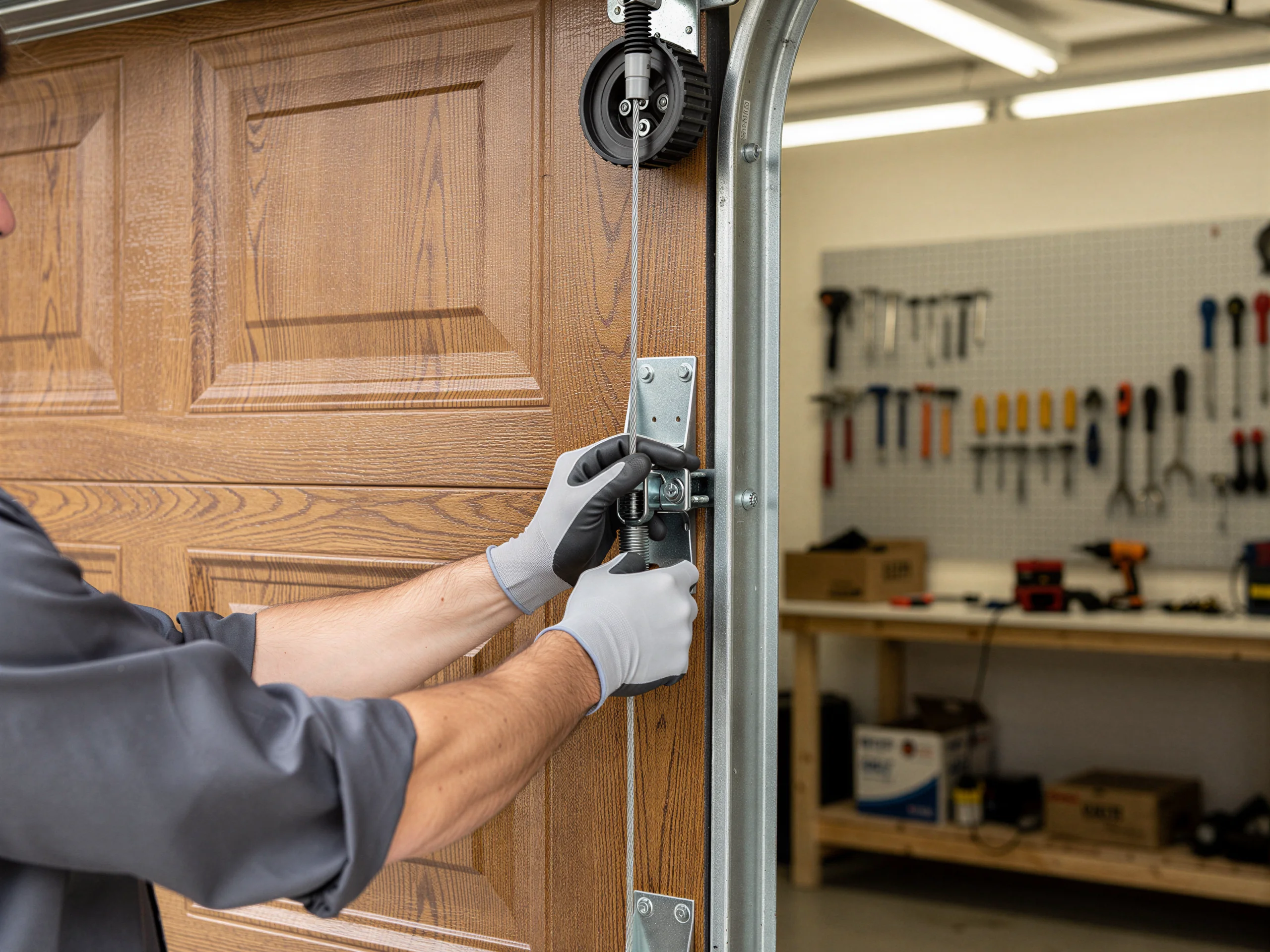
If the door is stuck halfway and crooked, one cable has likely slipped off the drum while the other held, which pulls the whole panel out of square. If the opener motor runs but the door doesn't move, check whether the trolley has disconnected from the carriage before assuming the motor itself is dead - that's often a manual-release cord that got bumped.
Grinding from cracked roller
A door that opens fine but shudders or grinds partway up usually points to a roller that's cracked or a track section that's bent, not a spring problem at all.
Auto-reverse sensor blockage
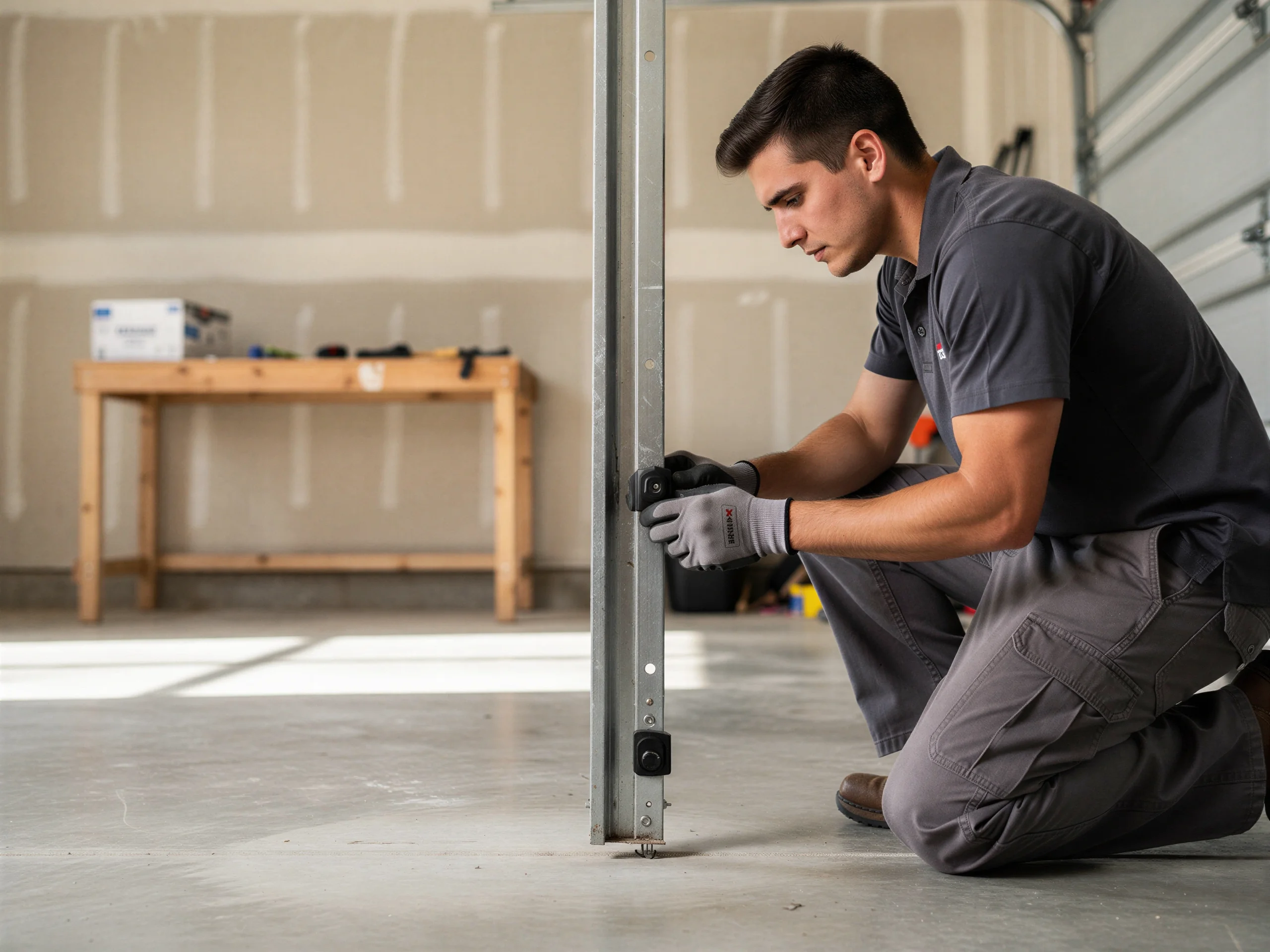
And if the door reverses on its own partway down, that's the safety sensors doing their job - something is blocking the beam, or the sensors themselves have drifted out of alignment, which happens more often than people expect on older openers bolted to a header that's shifted slightly over the decades.
The DIY Question
Some of this is fair to handle yourself. Tightening loose hardware, cleaning tracks, lubricating rollers and hinges - all reasonable weekend jobs. Torsion springs are not.
Torsion bar hazards
They're wound under enough tension to cause serious injury, and the tools to do it safely aren't something most households own or should buy for a once-a-decade job. Cables, drums, and anything involving the torsion bar sit in the same category.
Impact damage second opinion
If a panel is cracked or a track is bent from an impact, that's also worth a second opinion before buying a part - sometimes a repair makes sense, and sometimes the door is old enough and damaged enough that putting money into a new panel on a 1970s-era door isn't worth it compared to replacing the section or the whole door.
No same-day color matching
We'll tell you straight which one it is rather than selling a repair that won't hold. One honest limit: we don't do same-day custom panel color matching - if a single panel needs replacing and the rest of the door has faded over the years, expect a visible difference until the whole door is eventually replaced.
Talk to a local pro
Garage door service in San Bernardino?
Same-day service with honest, upfront quotes.