
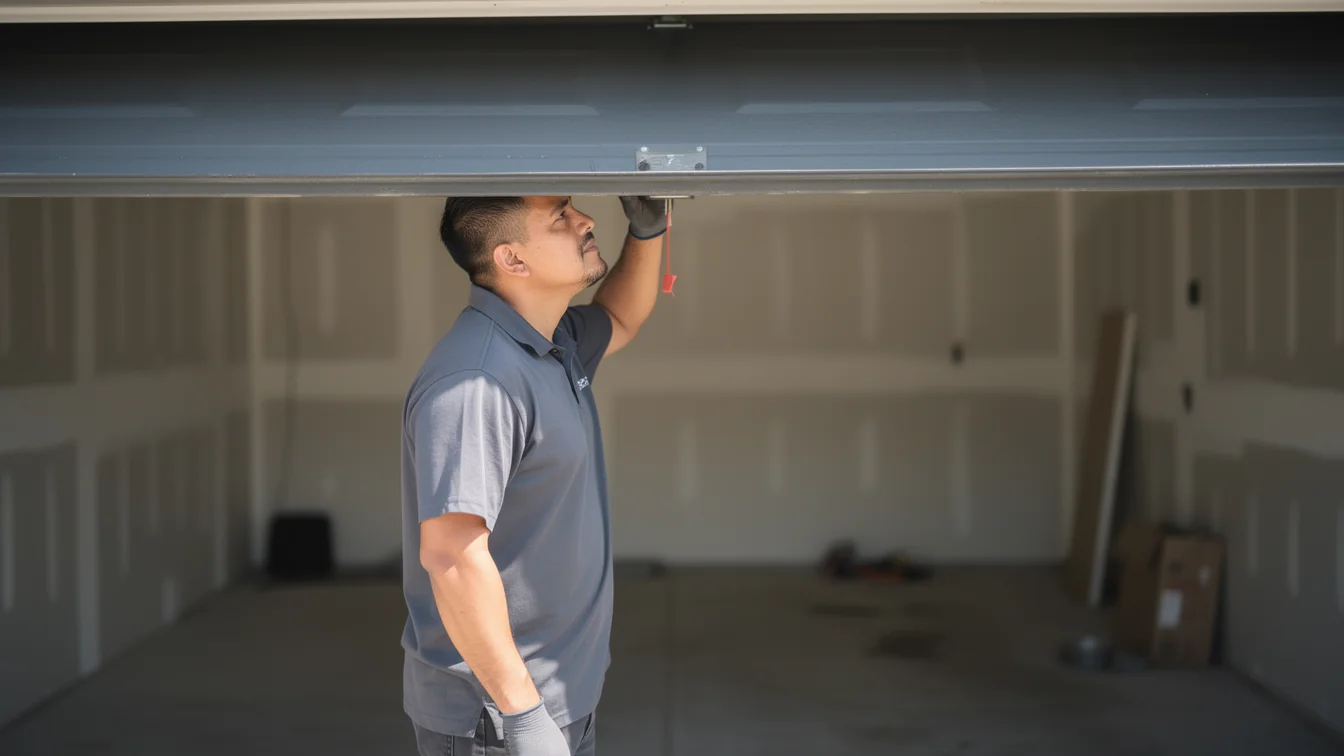
 The Noises That Mean Something: A San Bernardino Homeowner's Guide
San Bernardino's 1960s-70s housing stock means specific noises point to specific parts.
Off-Track Doors: What's Really Going On
A look at why garage doors slip off track in San Bernardino's older housing stock, how the local climate plays a role, and what it actually costs to fix.
Local detail
When It Stops Being a DIY Job
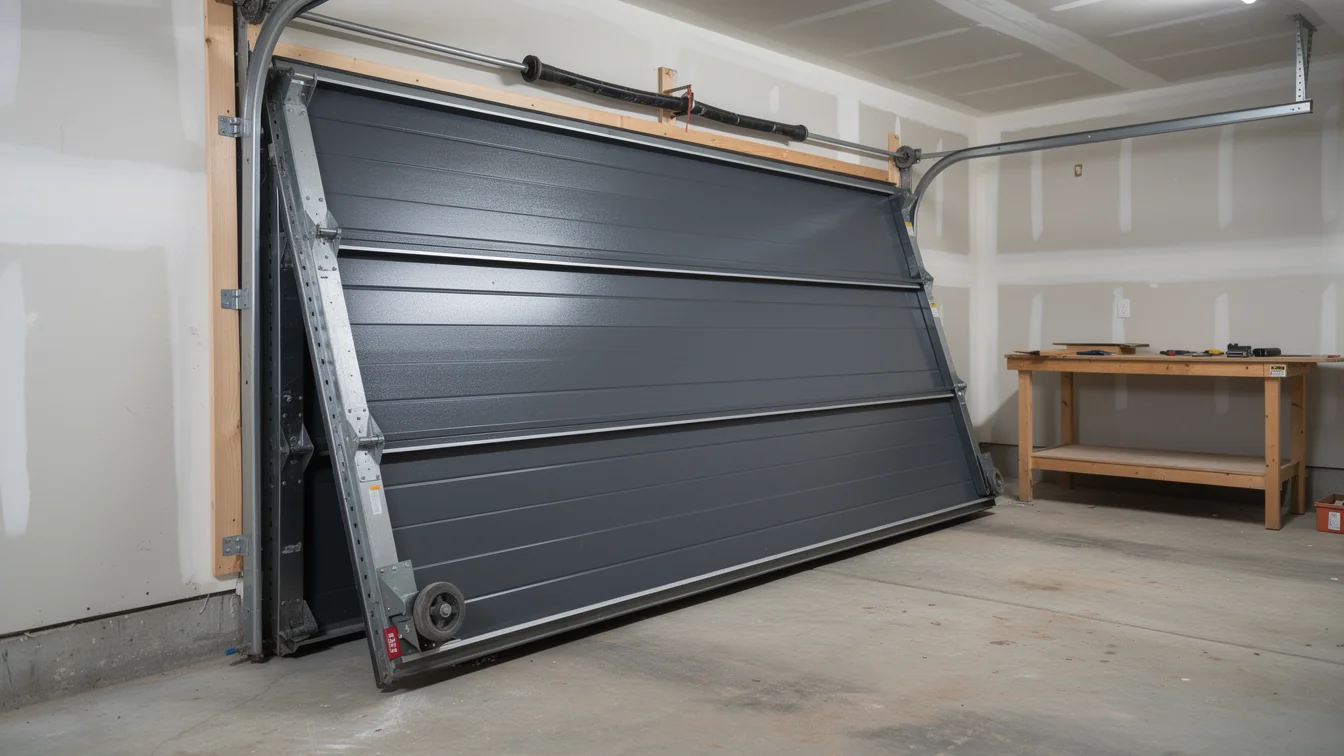
A door that's hopped the track looks like a simple fix - shove it back in the groove, tighten a bolt, done. Most of the time it isn't that. If the door came off because a roller cracked or a bracket bent, you can sometimes walk it back on with the door disconnected from the opener and the springs still holding tension. But if a cable snapped or a spring let go at the same time the door jumped track, the door is now a few hundred pounds of unsecured panel balanced on nothing. That's not a ladder-and-wrench afternoon, that's a trip to urgent care waiting to happen. Our limitation here is honest: we won't walk a homeowner through re-tensioning a torsion spring over the phone, and we wouldn't want you doing it. If the track is just knocked loose and the door is still sitting square in the opening, a quick bracket re-tighten is reasonable to try yourself. Once a cable is off the drum or the bottom roller has chewed through its bracket, stop and call someone who does this daily.
The area
What the Weather Here Does to It
San Bernardino sits in a moderate heat band, not the kind of extreme swing that cracks pavement, but enough that steel track goes through real daily expansion and contraction - hot through the afternoon, cooling fast once the sun drops behind the hills. That cycle, repeated for decades, works the lag screws in track brackets loose a fraction of a turn at a time. You don't notice until the day the track finally shifts enough that a roller rides the edge instead of the channel, and the door binds or jumps. It's not a dramatic failure, it's a slow one. Houses with galvanized track from the original build tend to show this first, because the mounting hardware was never upgraded and the bracket spacing was set for a door half the weight of what often gets hung on it now. Heat isn't the whole story, but it's the reason a track that looked fine in spring starts binding by late summer.
What we find
The Situation
Most of the housing here went up between 1958 and 1996, with the median landing around 1979, and that 1960s-70s wave is still the dominant stock across neighborhoods like Del Rosa, Verdemont, Shandin Hills, and the Perris Hills side of town. A lot of those houses still have their original track and roller setup, or a replacement door hung on the original hardware because nobody thought to swap the track when the door changed. Steel track from that era wasn't built for today's heavier insulated doors, and when a heavier door gets dropped onto old brackets, the margin for a bent rail or a stripped screw gets thin. We see the same pattern across the service area's roughly 86,867 owner-occupied houses: original track, original bracket, a door that's been swapped once or twice since. The track usually isn't the part that broke - it's the part that was never upgraded.
How we work
What You Pay
We don't have a flat number to put here, because what a derailed door costs depends entirely on what actually failed - a bent section of track, a cracked roller, a bracket pulled loose from the jamb, or all three because one caused the next. What we can say is that this area's median household income, around $84,594, is part of why a full track-and-roller upgrade usually beats patching the original 1960s-era hardware piece by piece once it starts failing. Patching buys you a few months. Replacing the worn brackets and rollers at the same time you fix the immediate problem usually costs less over a two or three year span than three separate service calls for the same aging hardware. We'll tell you straight if your situation is a quick fix or if the track's just worn out and due.
Questions
Common questions
Why did my garage door suddenly come off the track with no warning?
Usually it wasn't sudden - a bracket had been loosening for months or a roller had been cracking slowly. The afternoon heat cycle common here finally pushed it past the point where the track could hold alignment, and it let go all at once.
Can I just push the door back onto the track myself?
Only if the springs and cables are intact and the door is sitting level in the opening. If a cable's off the drum or the door is hanging crooked, the door is under uneven tension and pushing on it is how people get hurt.
Is it the track or the door that usually needs replacing?
In houses built here in the 1960s and 70s, it's often the track and brackets, not the door panel itself. Original hardware wasn't sized for some of the heavier doors now hung on it, so the track takes the wear first.
Recommendation
You Might Also Like
More garage door guides for San Bernardino homeowners.
The Noises That Mean Something: A San Bernardino Homeowner's Guide
San Bernardino's 1960s-70s housing stock means specific noises point to specific parts.
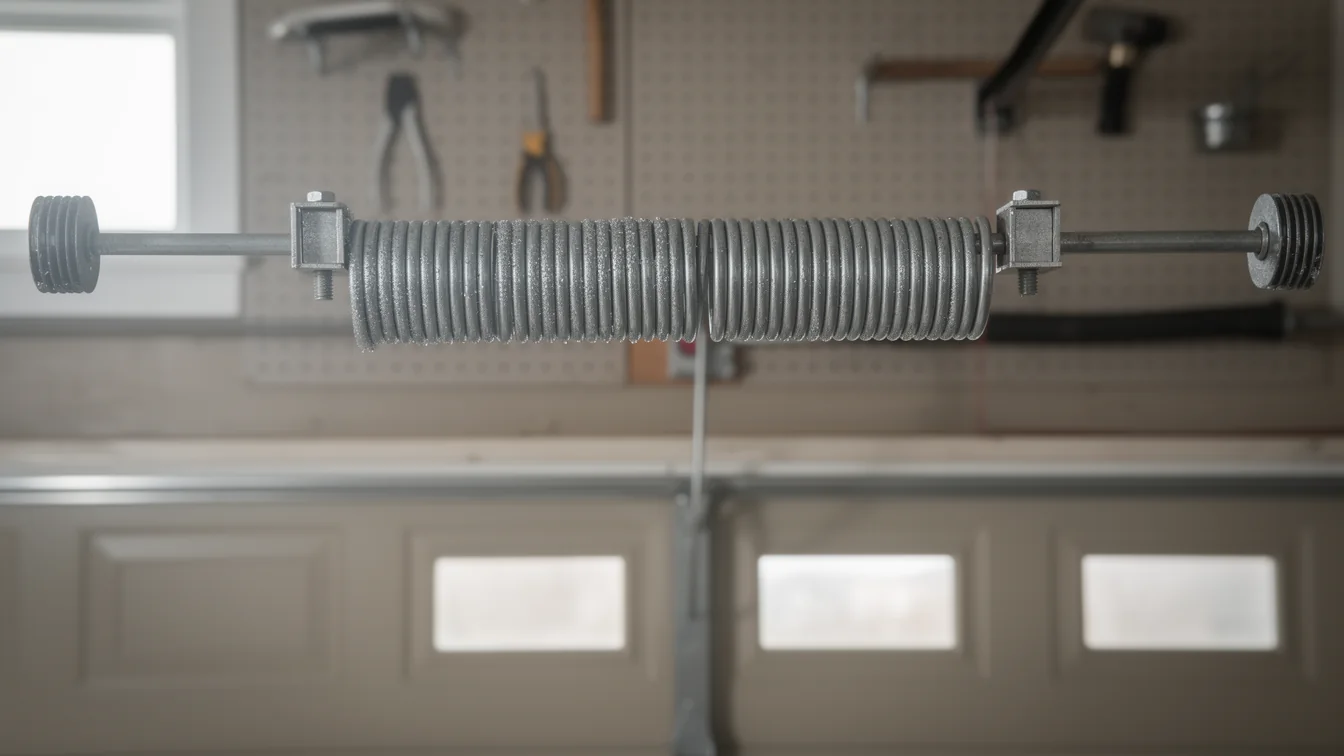 Garage Door Repair Built Around San Bernardino's Housing Stock
Serving San Bernardino's 1958-1996 housing stock, from Shandin Hills to Verdemont.
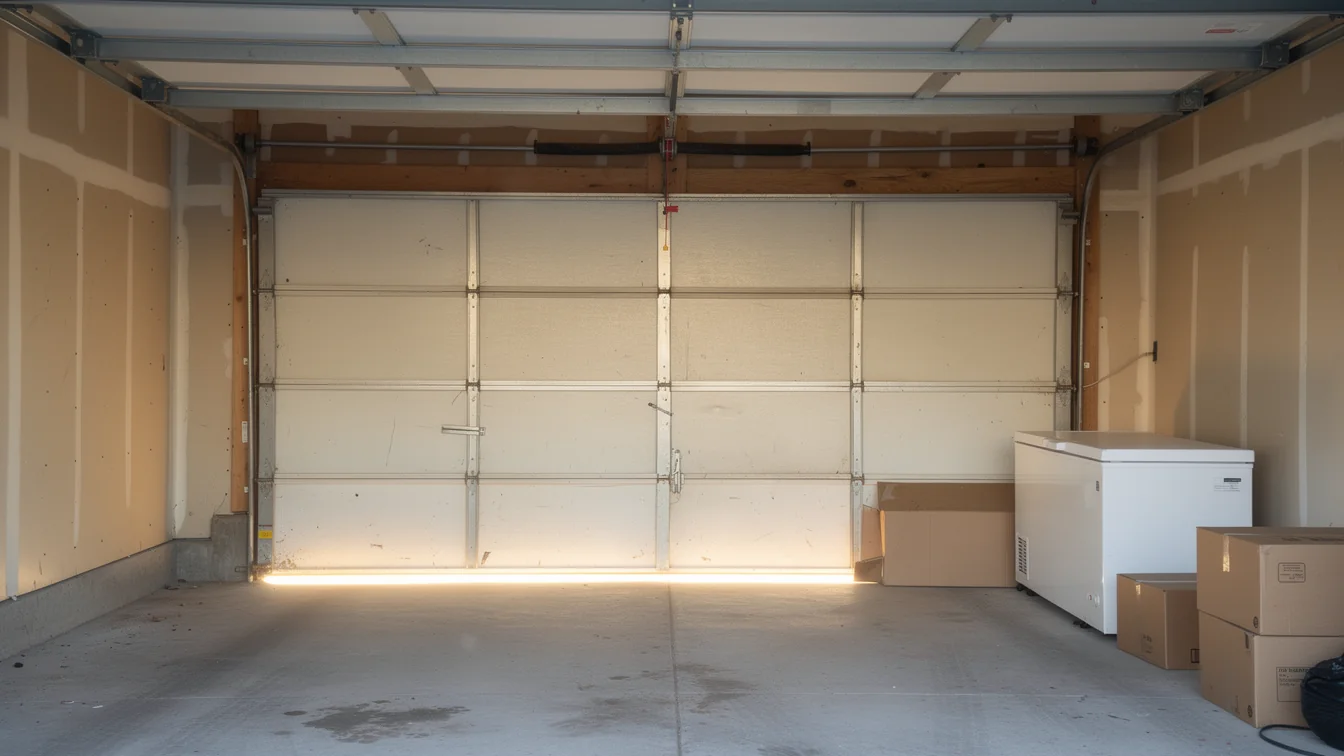 What San Bernardino's 1970s Housing Stock Means for Your Garage Door
San Bernardino homes built 1958-1996 need garage door repairs that match original torsion hardware and heat-cracked panels, not generic one-size fixes.
Ready when you are
Need a garage door sorted in San Bernardino?
San Bernardino Garage Door Pros repairs and installs garage doors, springs and openers in San Bernardino, CA and the surrounding area.