What Causes It Around Here
Most of the houses we get called to in San Bernardino went up between 1958 and 1996, with the median right around 1979. That matters more than people think. A torsion spring rated for 10,000 cycles doesn't know what year it is - it just winds and unwinds every time the door moves, and a spring installed when a house was built in the late 1970s or early 1980s is well past its expected life by now, whether that house sits in Del Rosa, North Park, or out toward Verdemont.
Across the sixteen named areas we work, you see the same 1960s-70s stock repeating itself: same gauge of torsion hardware, same style of steel track, same single-point roller setups that were standard before nylon rollers and double-track systems became common. When one of these doors fails, it's rarely a mystery. It's a spring that's done its cycles, a cable that's frayed where it rides the drum, or a center bracket worked loose from decades of the same stress point.
Our climate band here runs moderate on heat, not the kind of temperature swing that cracks panels or warps wood doors the way you'd see at higher elevation spots like Crestline or Lake Arrowhead. So around San Bernardino proper, the failures we see trace back to age and cycle count on original hardware, not weather damage. That's useful, because it means the fix is usually mechanical and straightforward, not a structural rebuild.
How Long You Are Without the Door
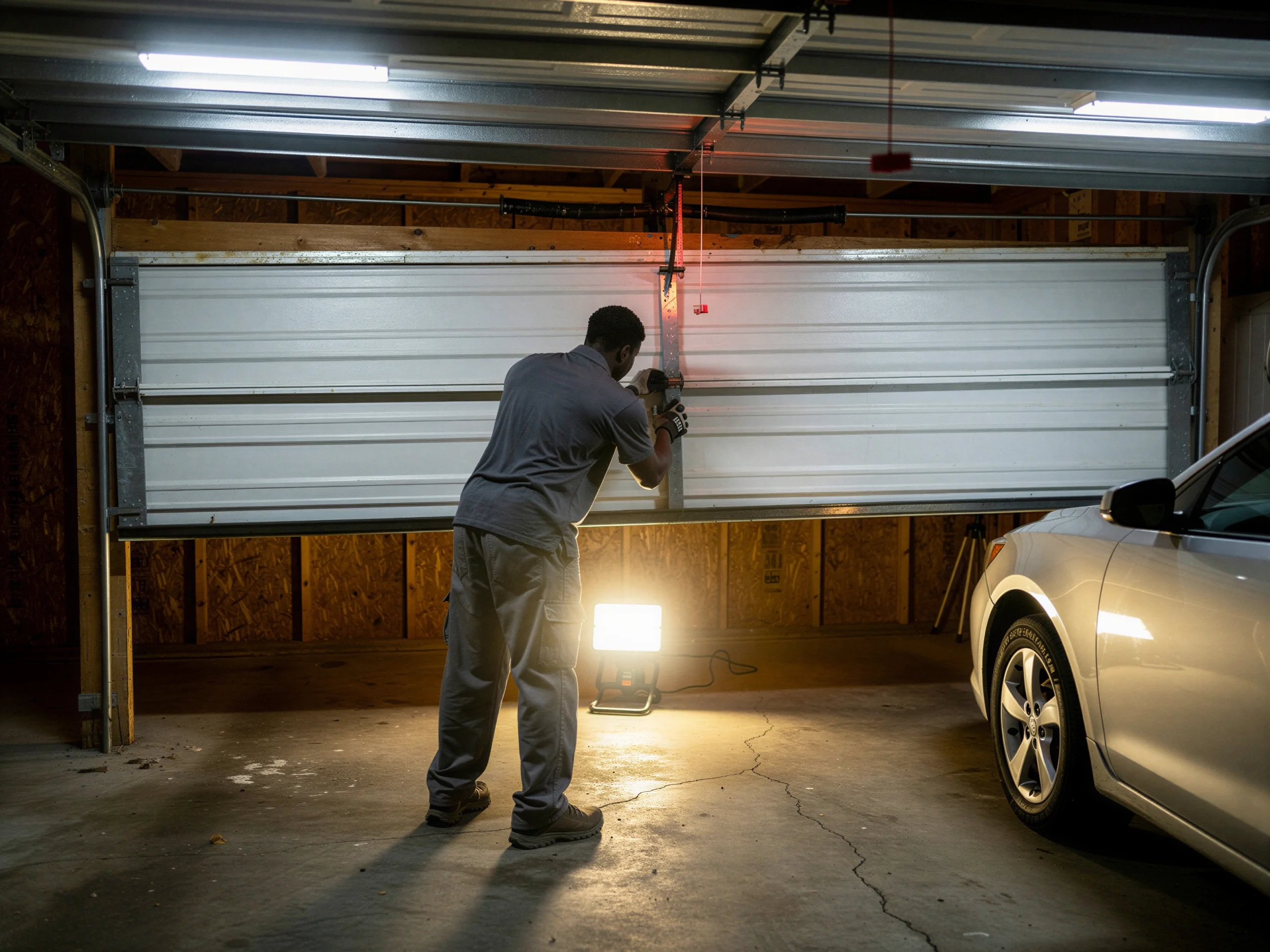
A broken spring on a single door usually means the door won't move at all - not slow, not stiff, just dead weight that the opener can't lift on its own and you shouldn't try to lift by hand either.
Single spring overload
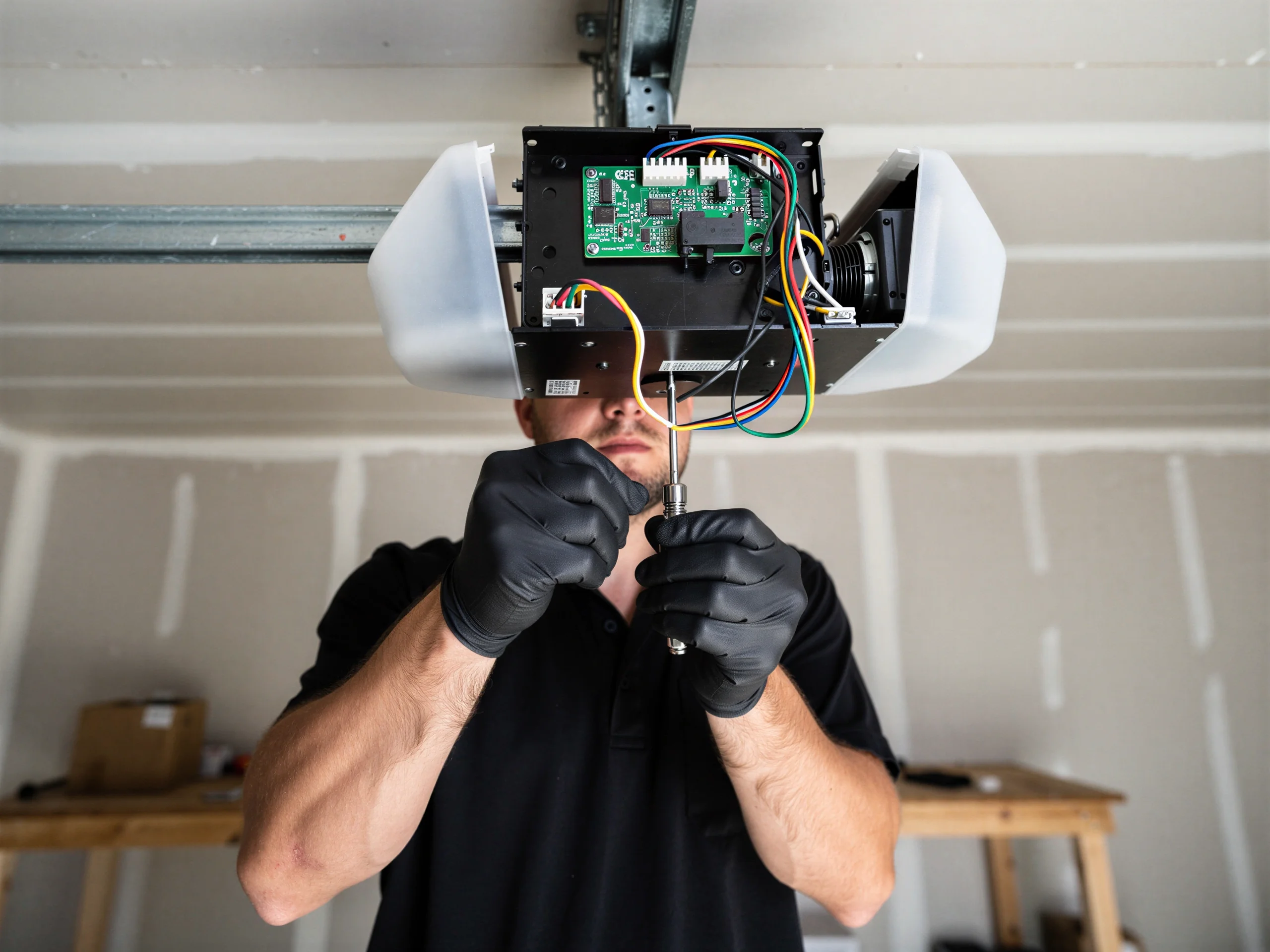
If it's a double door with two springs and only one has gone, you might get it moving with real effort, but you're loading the whole job onto one spring and a center bracket that was never built to carry it alone. Opener failures are a different kind of stuck. The door itself might be fine, but if the circuit board's gone or the motor's burned out, you're stuck with manual release and muscle until it's replaced.
Seized roller on old rigs
On the 1960s-70s single-point roller setups common in this area, a seized roller or a track knocked out of alignment can jam the door partway, which is its own kind of stuck - not a parts problem necessarily, just something out of line that needs adjusting before it'll move freely again.
Obsolete hardware sizing
We don't carry every part for every door on the truck. Original hardware from houses built in the 1960s and 1970s sometimes uses sizes and mounts you don't find on a shelf anymore, and matching that exactly can take a call or two before we've got the right piece in hand.
What You Are Seeing
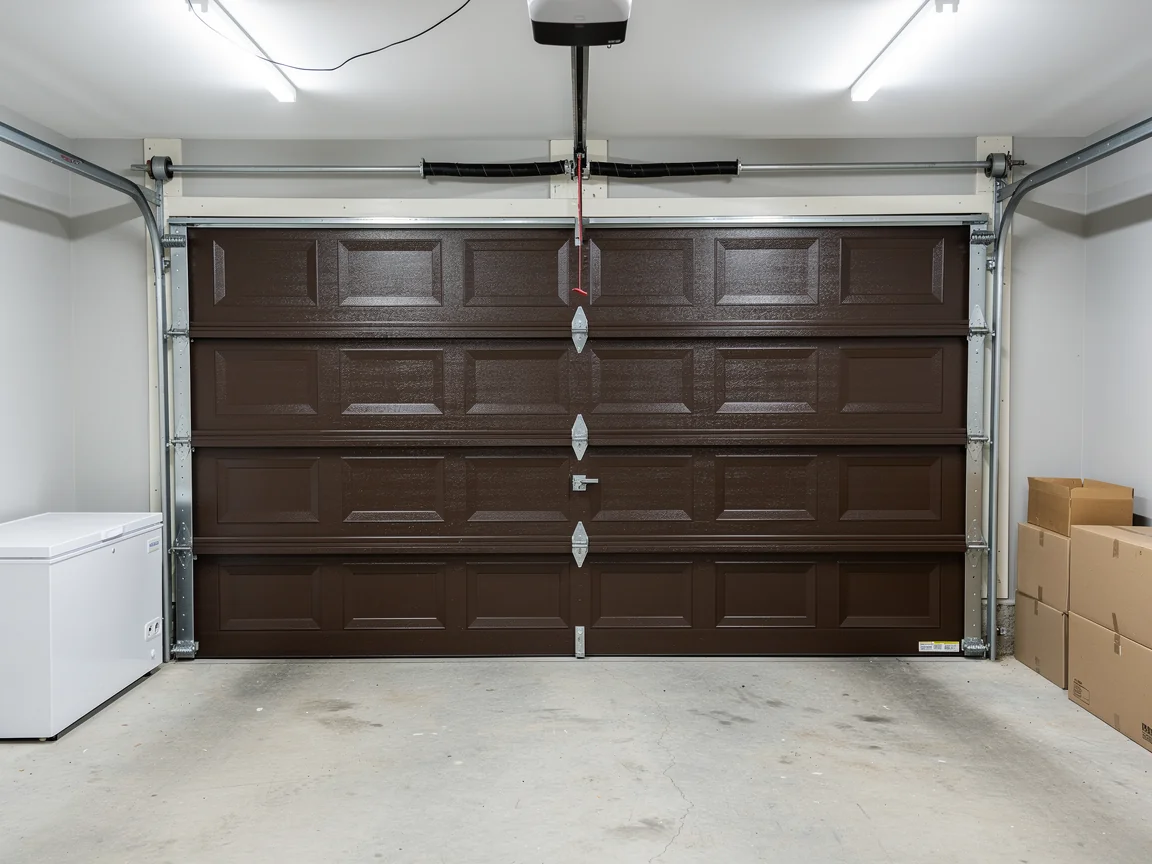
A loud bang followed by the door refusing to open is almost always a torsion spring letting go - you'll often see the gap in the coil if you look up at the shaft above the door.
Sensors and travel limits
A door that opens a few inches and stops, or reverses on its own, usually points to the opener's safety sensors or the travel limits, not the spring at all.
Gradual spring tension loss
If the door is noticeably heavier on one side, or the opener strains and groans before anything moves, that's usually a spring losing tension gradually rather than snapping outright - common on doors in this area where the spring has been doing its job quietly for fifteen or twenty years past when it should've been swapped.
Common wear patterns
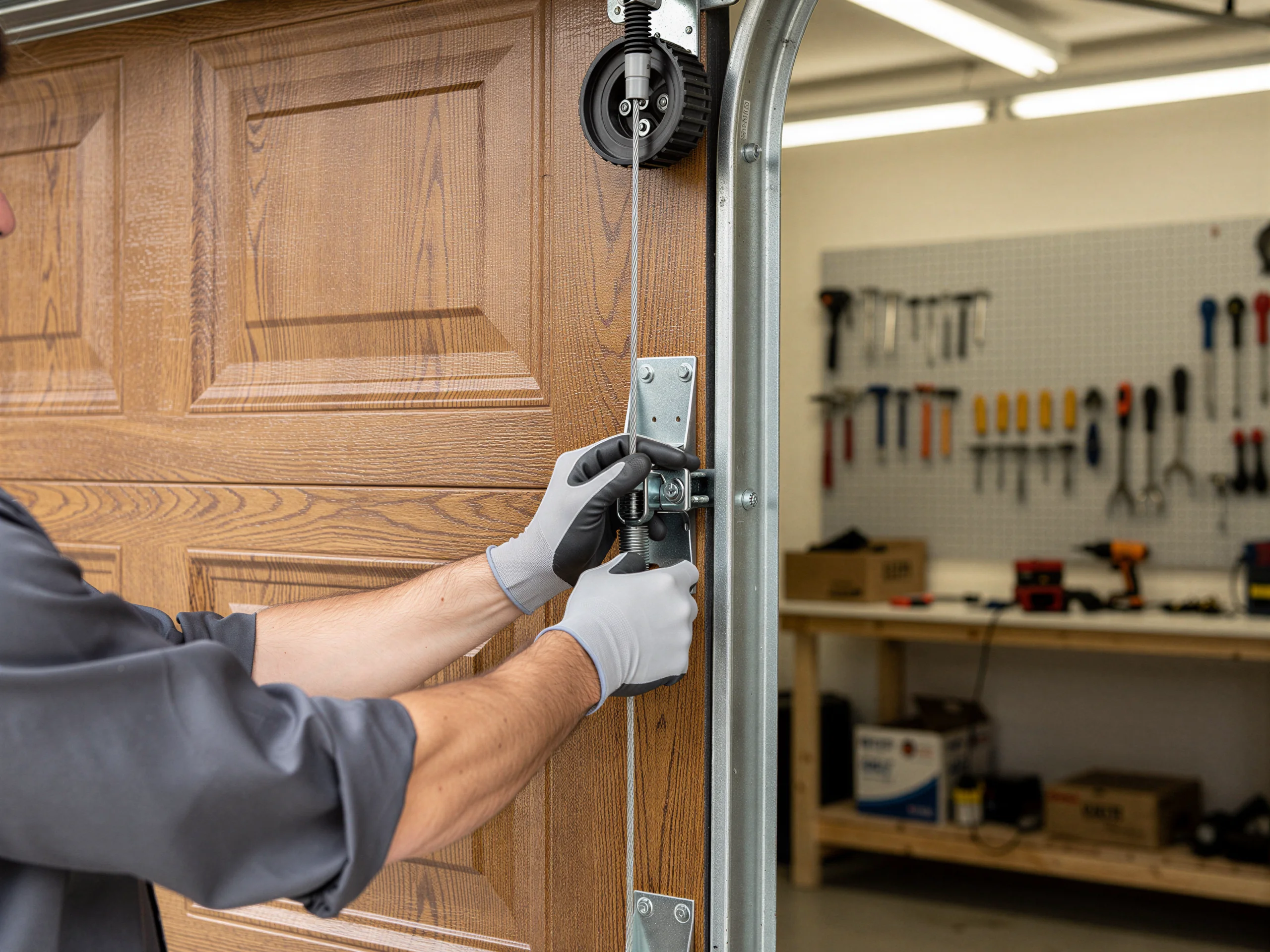
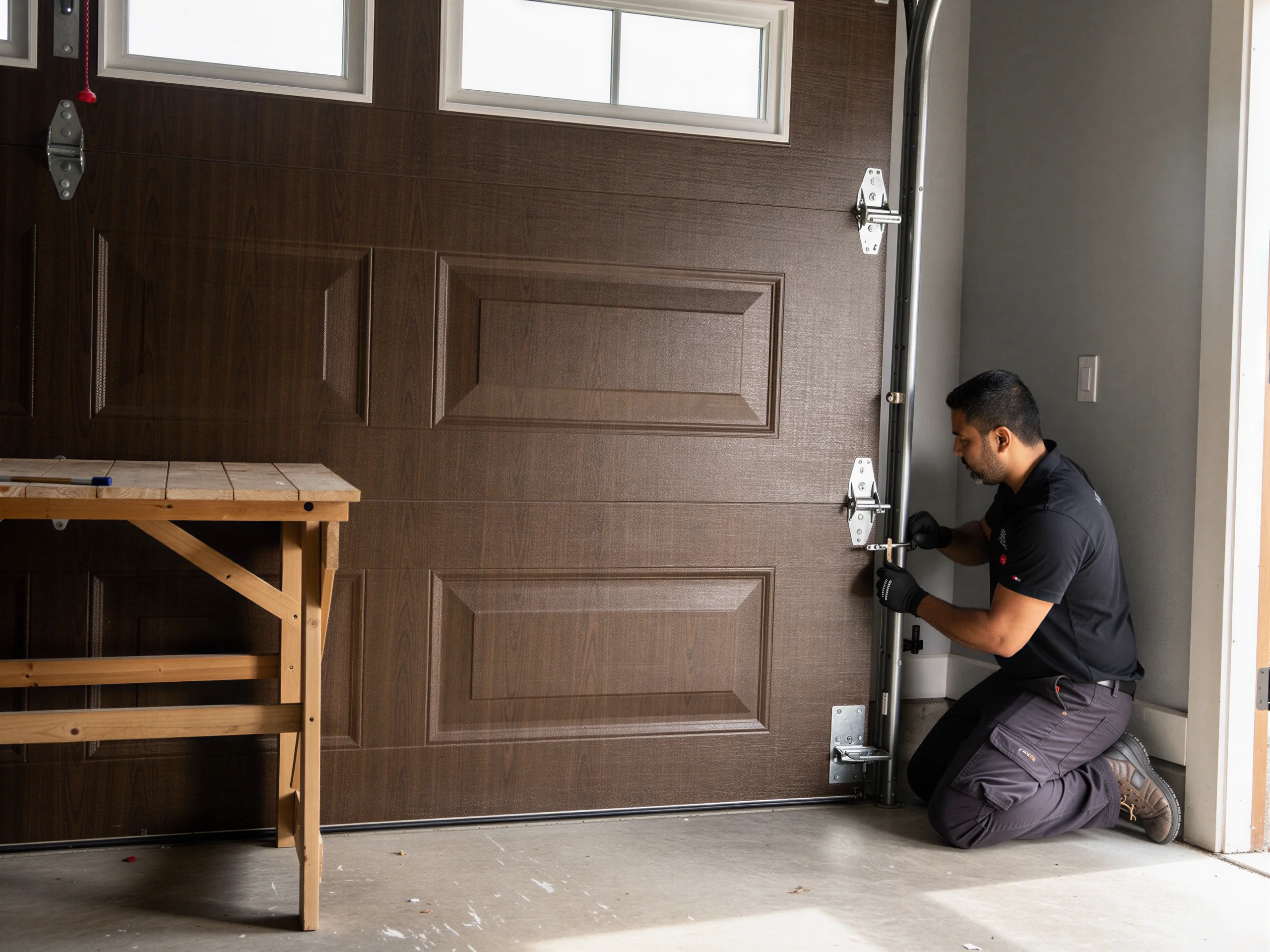
Fraying visible on the cable near the drum, a roller that's cracked or chipped where it meets the track, or a bottom bracket that's visibly bent - these are all wear patterns we see repeatedly on the same era of door common across San Bernardino's older neighborhoods. None of them fix themselves, and most get worse the longer the door keeps cycling on a damaged part.
The DIY Question
Replacing rollers or tightening loose hardware on the track is reasonable work for someone comfortable with hand tools. Lubricating hinges and checking bolts for tightness costs you nothing and can catch a problem early.
Springs stay off-limits
A torsion spring is not a DIY job. The spring is wound under enough tension to cause serious injury if it releases while you're working on it, and the winding bars and clamps needed to do it safely aren't things most homeowners have lying around.
Original springs everywhere
Given that a large share of the doors in this area - across roughly 86,867 owner-occupied houses in the service area - are still running original or first-replacement springs from construction-era hardware, this is exactly the kind of repair where the a few dollars saved doing it yourself isn't worth the risk.
Check remote and breaker
If the opener is simply unresponsive and the door moves fine by hand, that's worth a look before assuming the worst - sometimes it's a dead remote battery or a tripped breaker. But once a spring has gone, or a cable's frayed through, call it in.
Talk to a local pro
Garage door service in San Bernardino?
Same-day service with honest, upfront quotes.