What Causes It Around Here
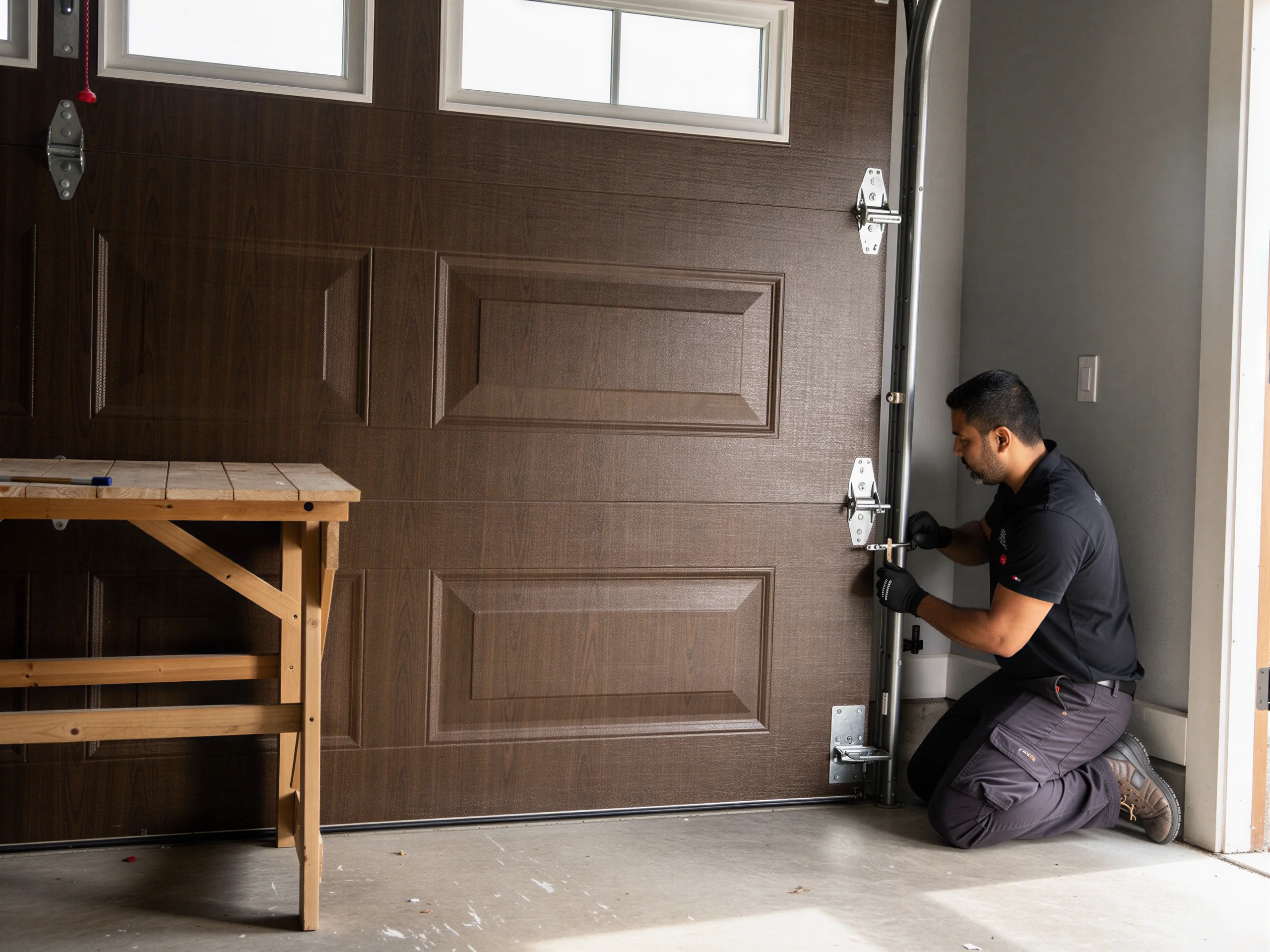
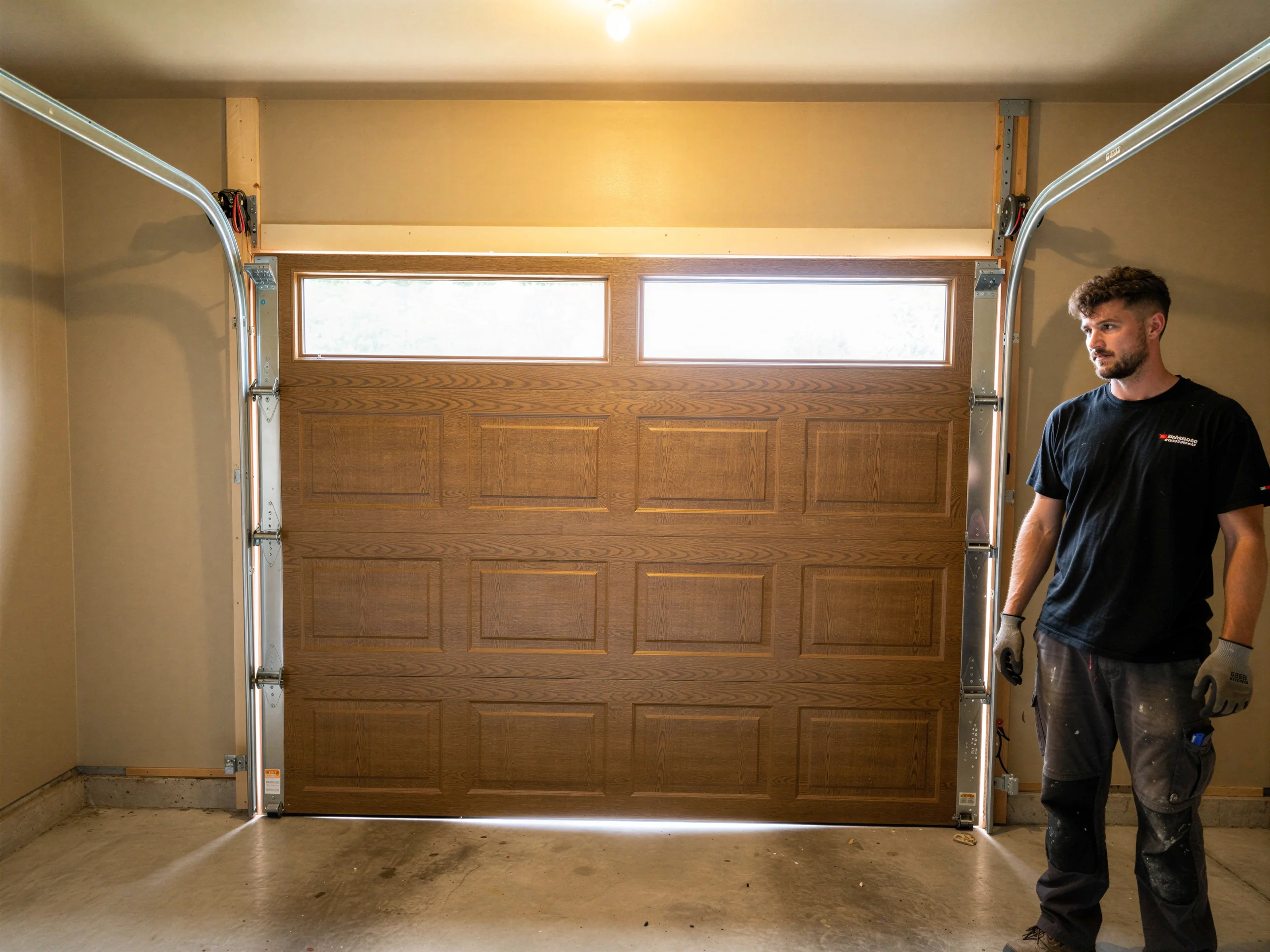
Most houses across San Bernardino's older pockets, from Shandin Hills down through Del Rosa and Perris Hills, went up between 1958 and 1996, with the median landing around 1979. That's a specific problem for garage doors. Builders in that stretch used openings, track spacing, and spring sizing standard for the era - and a lot of it was never sized for the heavier insulated steel doors homeowners want today. When we pull an old door off a house built in that window, the header is often framed for a lighter single-layer panel, and the torsion hardware was matched to that weight, not to anything you'd buy new now.
San Bernardino sits in a moderate heat band, not the extreme swing you get further out toward Oak Hills or Lake Arrowhead. That matters because the failures here tend to be slow, not sudden. Grease dries out over years instead of cooking off in a season. Springs lose tension gradually. Nobody notices until the door won't balance anymore, and by then the opener has been straining against a spring that's been weak for a year or more. A new install on a house like this isn't just dropping in a door - it's correcting for decades of hardware that was fine when the house was built and isn't anymore.
How Long You Are Without the Door
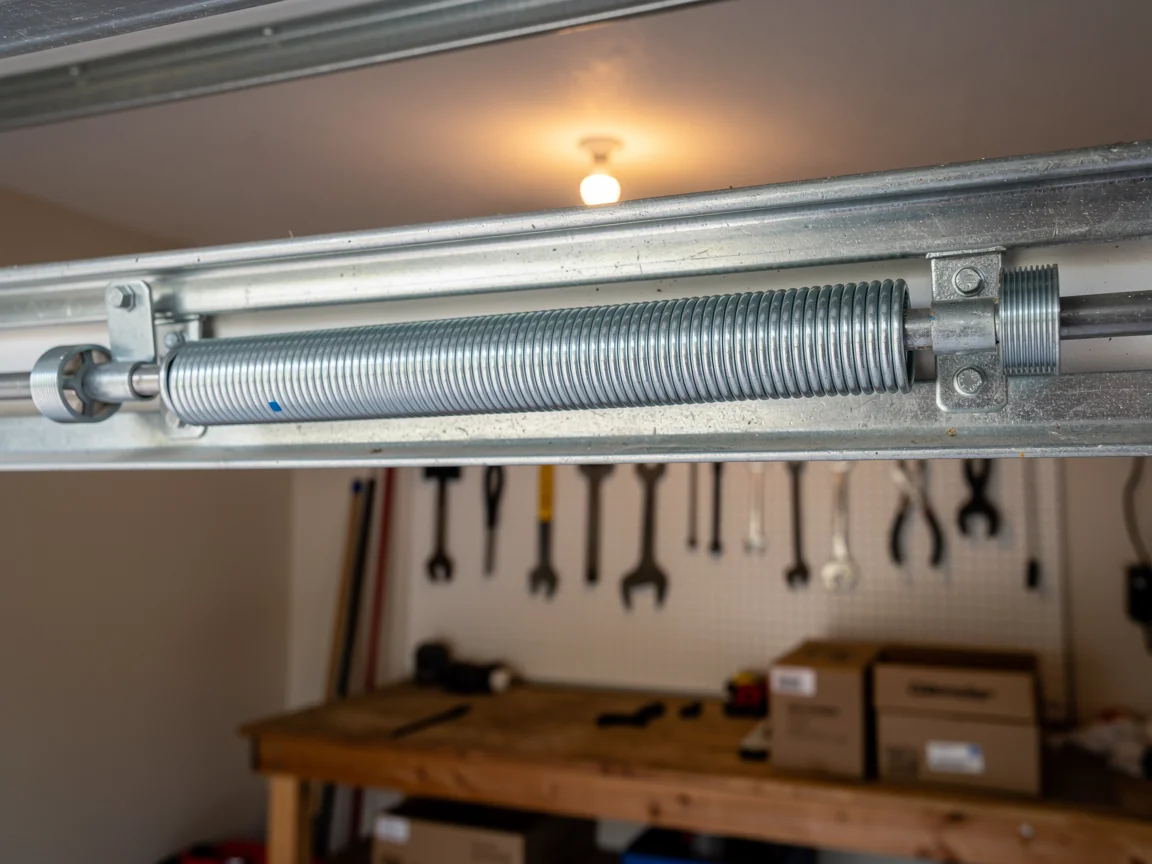
Once we've measured the opening, the honest answer depends on what's behind the wall. A standard-size door off the shelf goes in on a schedule we can usually hold to within a day or two.
Off-standard openings need orders
A house in one of San Bernardino's older sections - North Park, Carousel, the Terrace area - sometimes has an opening that's an inch or two off current standard sizing, which means the door itself is a special order. That's the one part of this job we can't speed up.
Manufacturer waiting period
If your opening needs a non-standard panel, you're waiting on the manufacturer, not on us. We don't leave a garage open overnight between tear-out and install if we can help it - we sequence the work so the old door comes down and the new one goes up the same visit whenever the unit is in stock.
Upfront special-order notice
On a special order, we'll tell you that up front, before the old door comes off, specifically so you're not stuck with an open bay in the meantime. If timing is tight, say so when you call - it changes which door we recommend.
What You Are Seeing
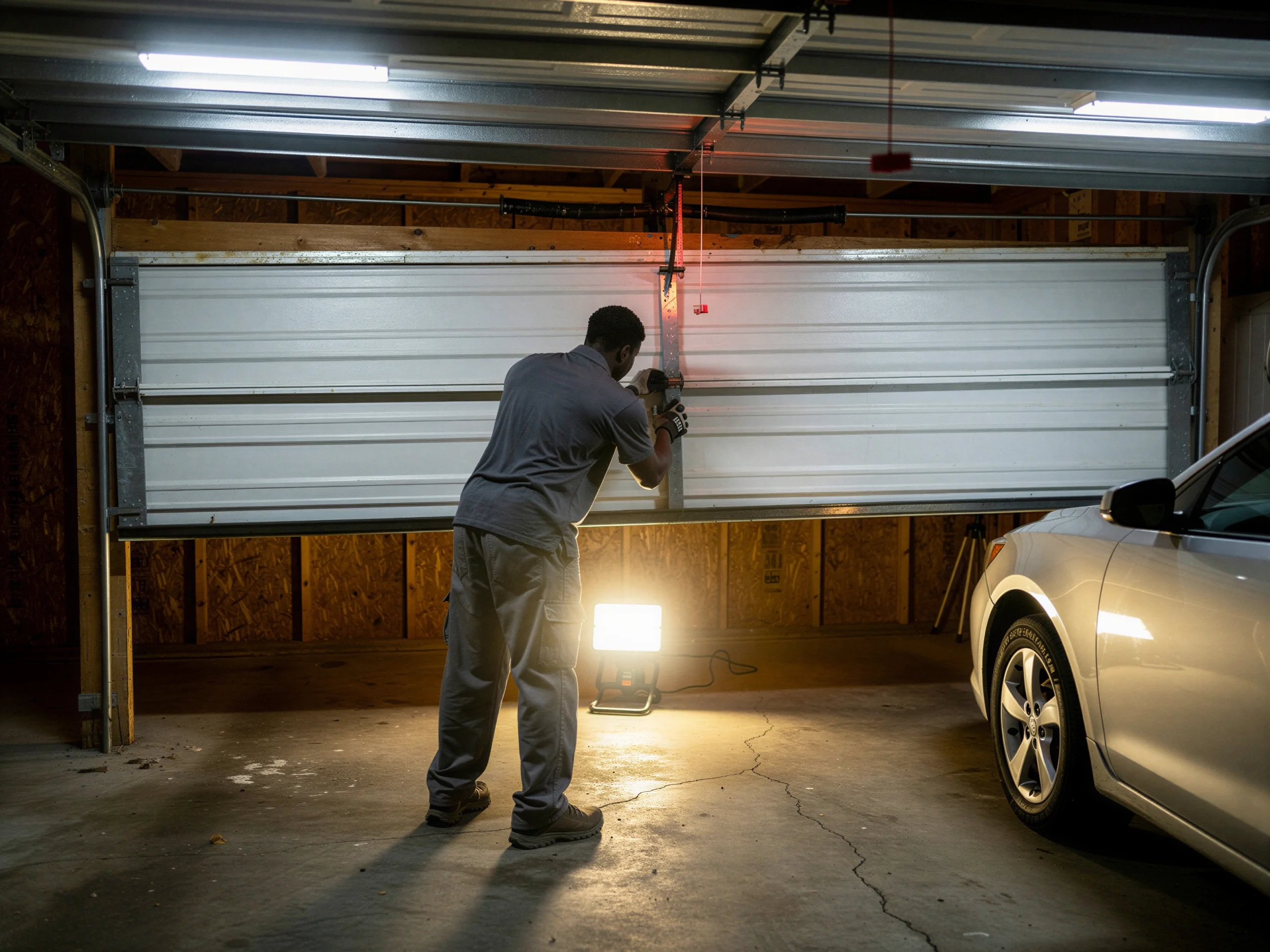
On a lot of these mid-century and 1970s-era San Bernardino houses, the first sign isn't a dramatic failure - it's a door that closes unevenly, dropping faster on one side, or a panel that's started to bow at the bottom corner where decades of moisture and temperature cycling have worked at the seam.
Steel rollers grinding
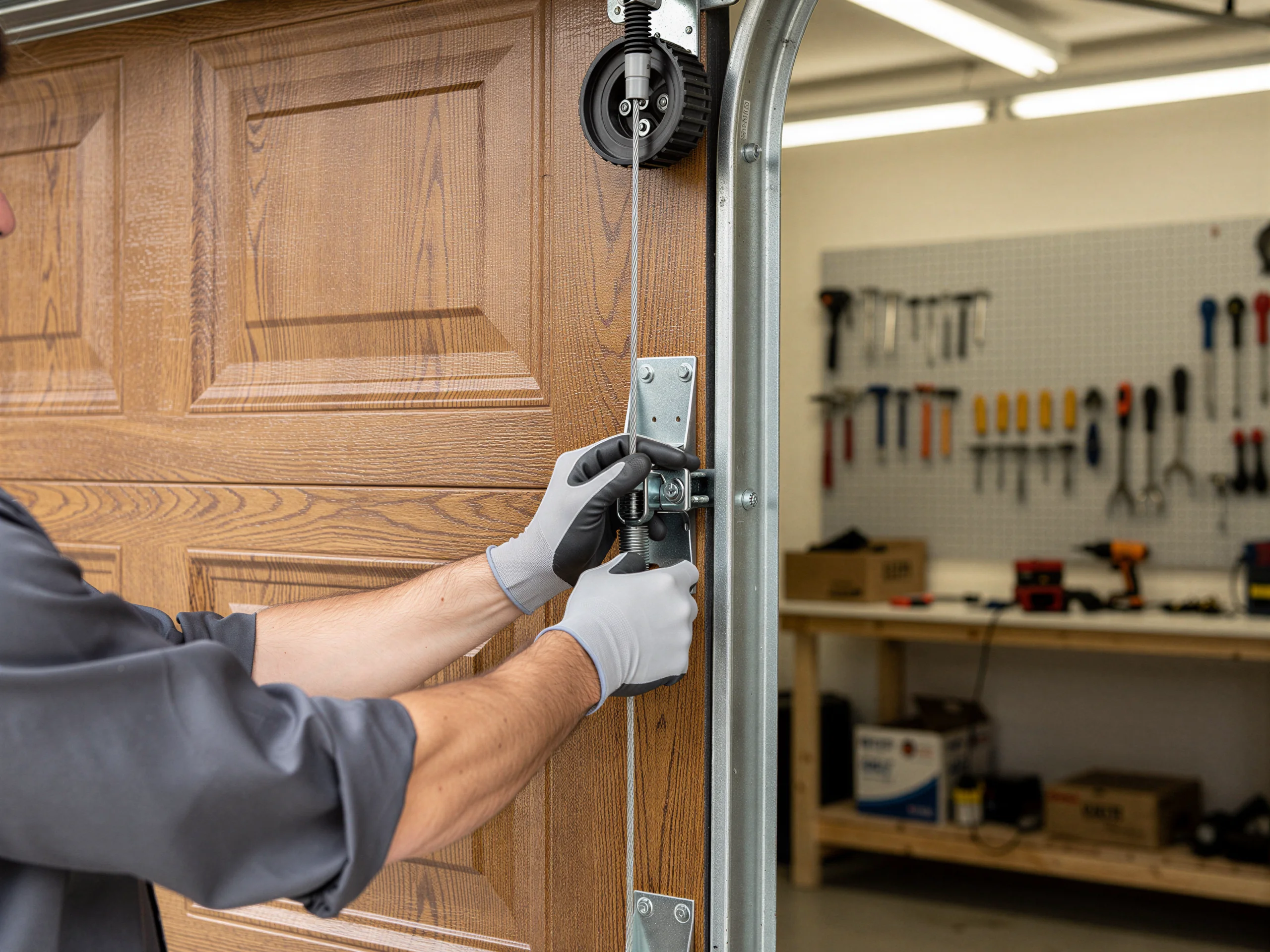
Rollers that came with the original build are usually steel on steel with no nylon sleeve, so you'll hear it before you see it - a grinding on the way up that gets worse month over month. Cables fraying near the bottom bracket show up often on doors original to houses from the 1958-1996 stretch, since that hardware has simply had more years to wear.
Reversal from track drift
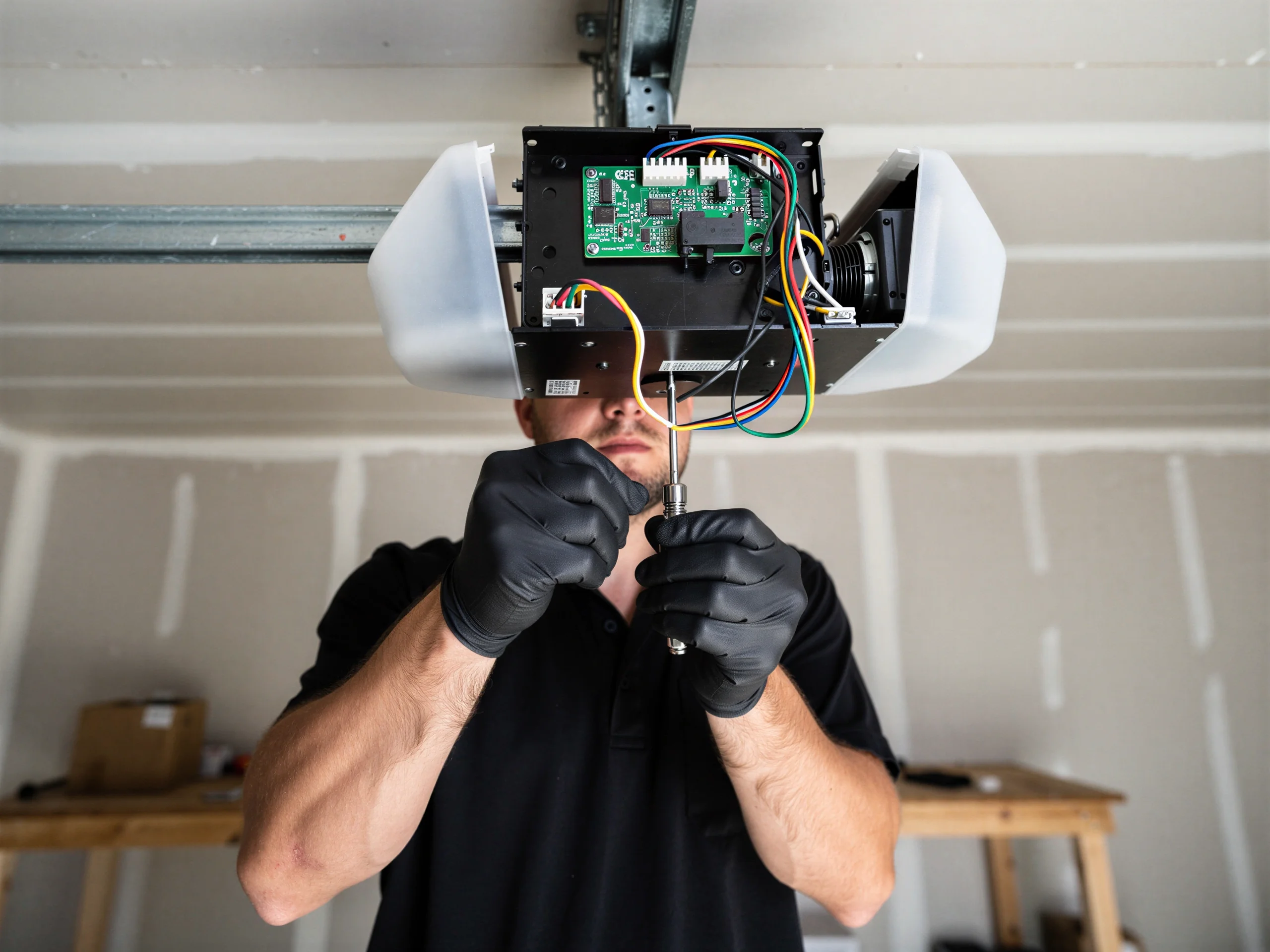
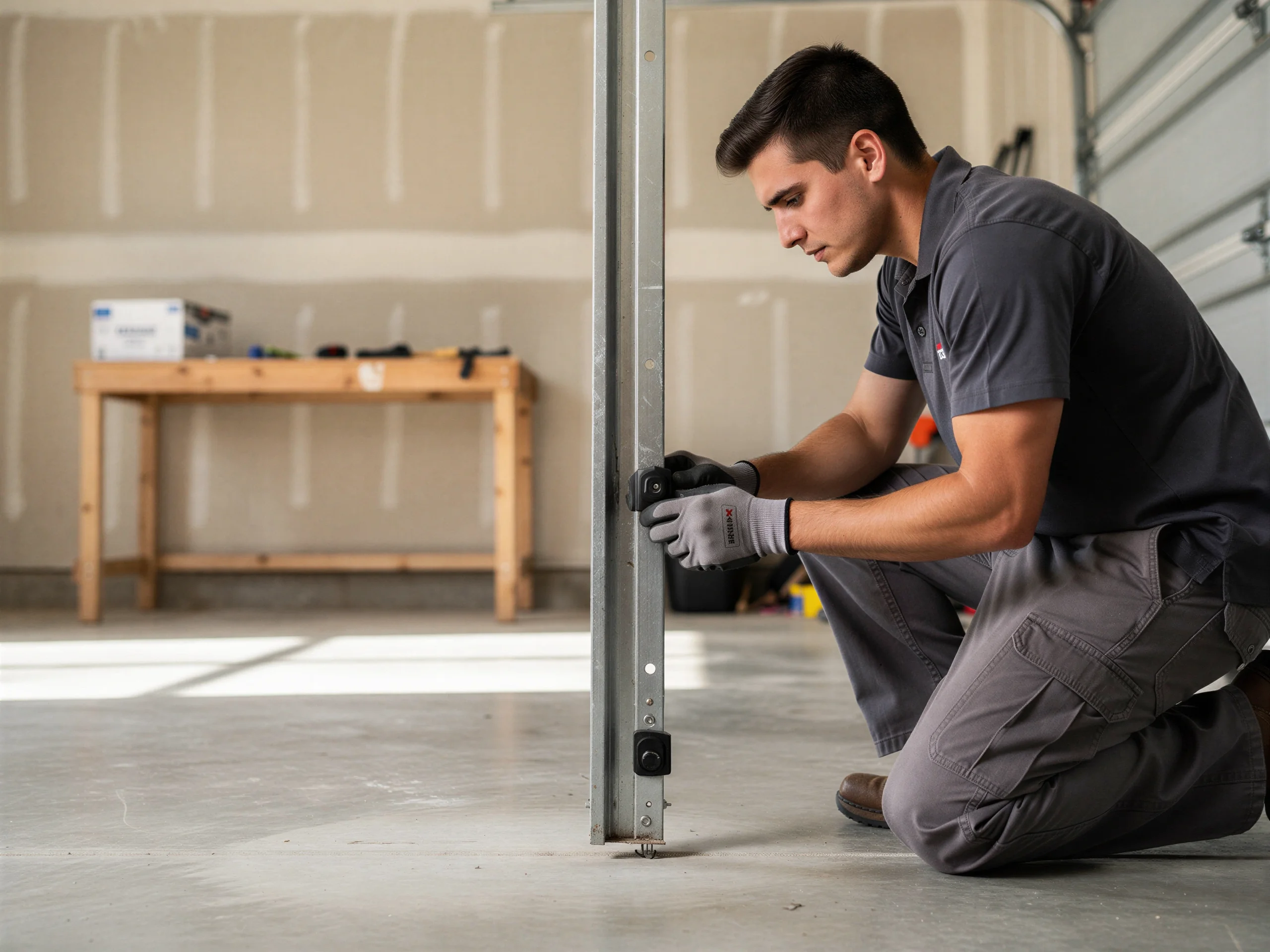
If you're seeing a door that reverses on its own partway through closing, that's usually the opener's safety sensors reacting to a door that's no longer moving smoothly on its track - not a sensor problem on its own.
Inspect before cable fails
None of these are reasons to panic, but they're reasons to get the door looked at before a cable or spring lets go while the door's halfway open.
The DIY Question
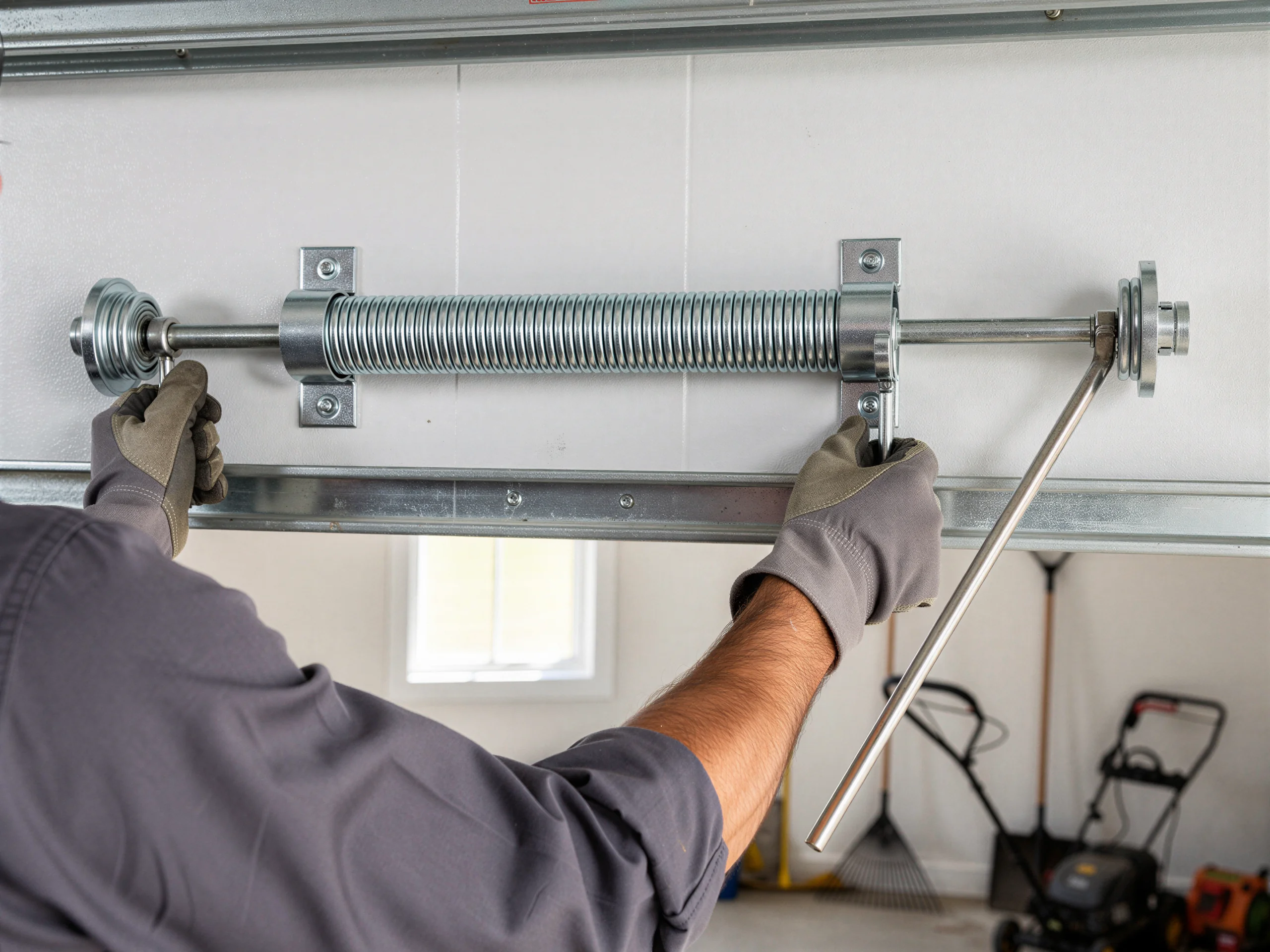
There's a real limit to what makes sense to do yourself here, and it's the torsion spring, full stop. A wound spring on a standard door carries enough stored force to break fingers or worse if it lets go while you're working on it, and that's true whether the door is five years old or original to a 1960s build. Swapping rollers, tightening track bolts, lubricating hinges - that's reasonable weekend work for someone comfortable with a ladder and a socket wrench.
With a median household income of $84,594 across the service area, most owners here choose a full insulated steel replacement over patching an old panel once it starts going, rather than stretching a repair further. That's often the right call on a door that's original to a house built before 1996 - the labor to keep nursing 1970s hardware along can cost more over a few years than just replacing it once. We'll tell you straight if your door is a repair or if you're better off putting that money into a new install instead.
Talk to a local pro
Garage door service in San Bernardino?
Same-day service with honest, upfront quotes.