What Causes It Around Here
Most houses across this service area went up between 1958 and 1996, with the median closer to 1979. That matters for springs because a torsion spring is rated for a cycle count, not a calendar date, and a door installed under Nixon or Carter has been through a lot of open-close cycles by now, even in a quiet household. Across the 16 named areas we cover, the stock is overwhelmingly 1960s-70s construction, which means a lot of original or first-generation replacement hardware still sitting on the header above the door.
The climate band here runs moderate heat rather than the heavy freeze-thaw that kills springs through corrosion in colder states. What gets springs in San Bernardino is heat cycling - the metal expands through hot stretches, contracts overnight, and that repeated flex is what finally snaps a spring that's already near the end of its wind count. It's less dramatic than a winter failure but just as final.
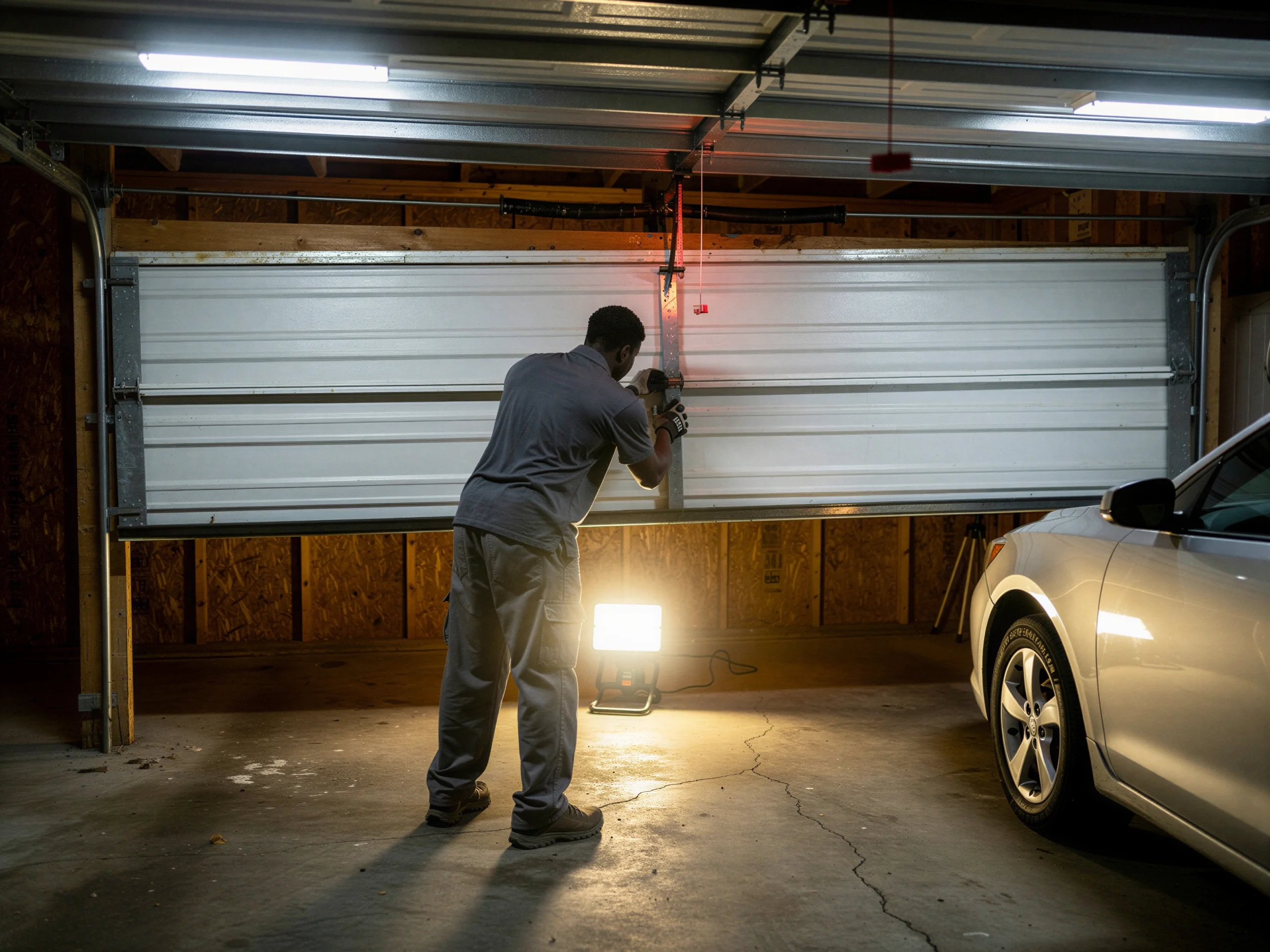
We also see a lot of single-spring setups on older single-car doors from that era, which means when it goes, the door doesn't ease down - it drops. That's the call we get most: a door that was fine yesterday and won't lift at all today.
How Long You Are Without the Door
A spring job itself doesn't take long once we're at the house - it's a parts-on-hand repair, not a rebuild.
Common versus rare spring sizes
The variable is whether your door uses a common torsion size or one of the less-standard setups still found on original 1960s and 70s installs in this area. If it's common stock, we're usually done same visit. If your door has the older hardware pattern that doesn't match what's on the truck, that's a second trip.
Driving on one spring
We won't pretend every job is a quick in-and-out. If you're down to one working spring on a double-car door, drive it carefully or don't drive it at all - the opener isn't built to lift that weight alone and will burn out trying.
What You Are Seeing
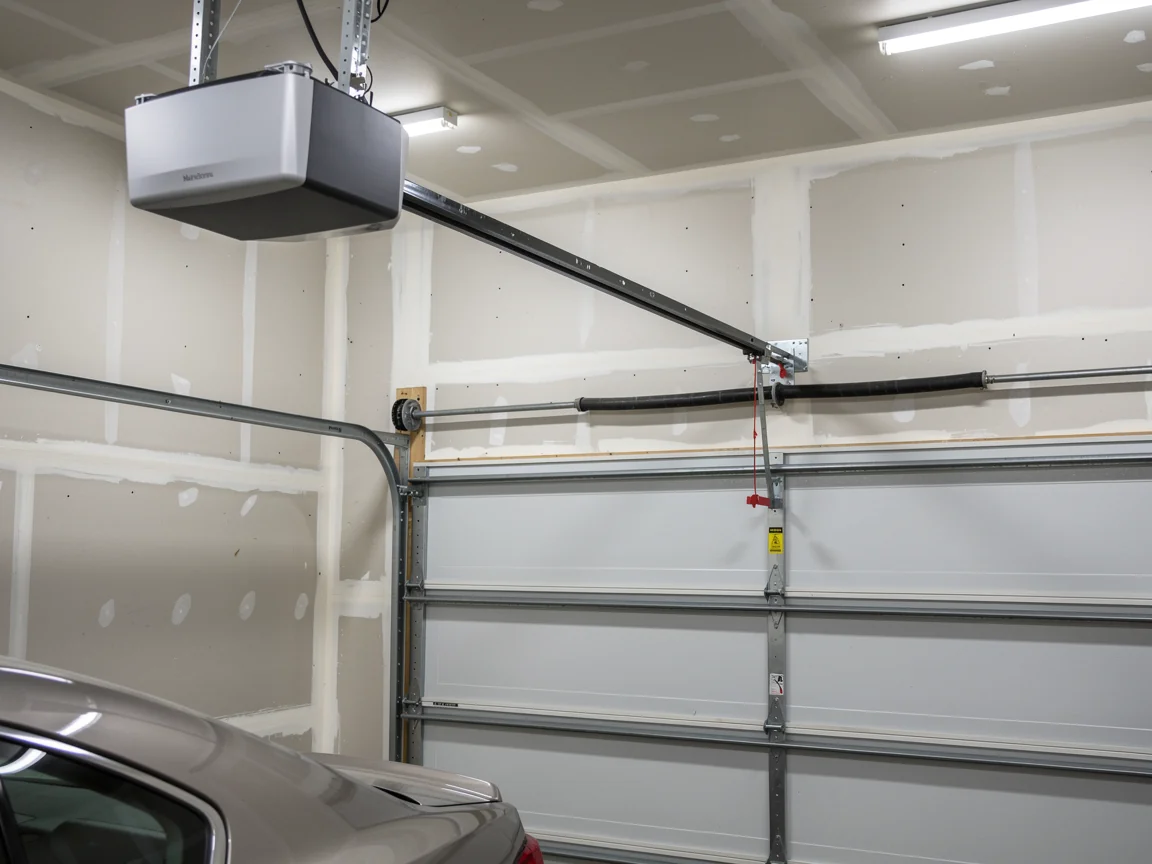
A broken torsion spring usually looks like this: the door won't budge, or it lurches up a few inches and stalls. If you pull the release and try by hand, it feels like dead weight - because without the spring doing its job, that's exactly what it is, especially on a double-car door common across the owner-occupied houses in this area.
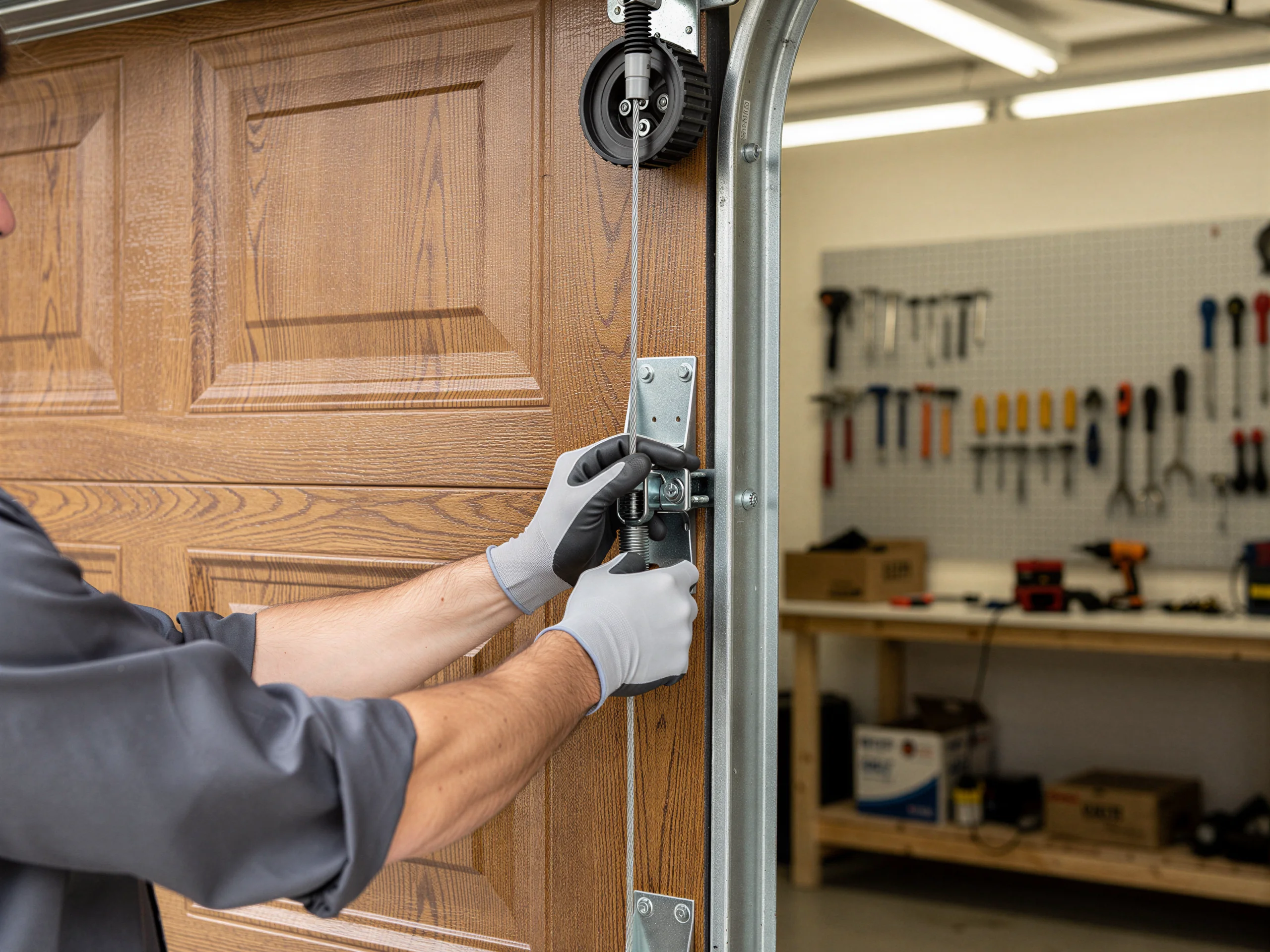
A spring that's failing but not yet broken gives you warnings first - a loud bang from the garage (that's usually the spring itself letting go, not an opener fault), a door that closes unevenly, or a cable that looks loose on one side. Extension springs - the kind stretched along the horizontal tracks rather than coiled above the door - tend to show visible gaps between coils before they go. Catching that stage is the whole difference between a controlled repair and a dropped door.
The DIY Question
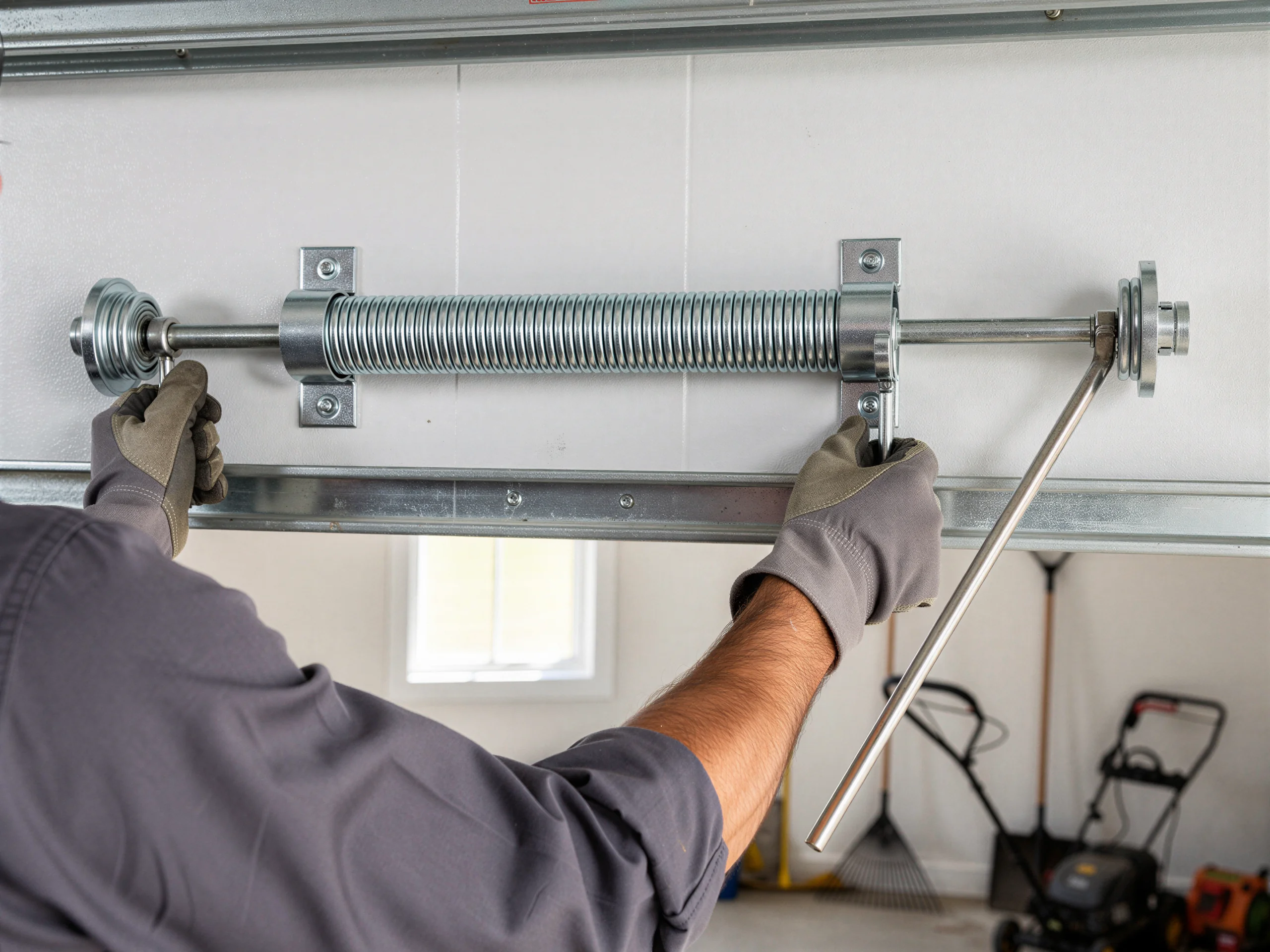
Don't. A wound torsion spring holds enough stored force to break a hand or worse, and the winding bars and cone setup aren't something to improvise with a wrench from the garage shelf. This is the one place in garage door work where the margin for a mistake is genuinely injury, not just a redo.
What you can safely do yourself: look at the spring without touching it, note whether it's one spring or two, check if there's a visible gap in the coil, and call that in. That saves us a diagnostic trip and gets the right spring on the truck the first time.
One honest limitation - if your door is original to a house built in the 1958-1996 range and the spring size isn't a current stock item, we may need to order it rather than carry it, which adds a day. We'd rather tell you that up front than promise a same-day fix we can't back up.
Talk to a local pro
Garage door service in San Bernardino?
Same-day service with honest, upfront quotes.