What Is on the Truck
Crestline sits about 8 miles out from our San Bernardino base, and the housing up here runs older than most of the valley stock we see on a typical day.
Spring size range on board
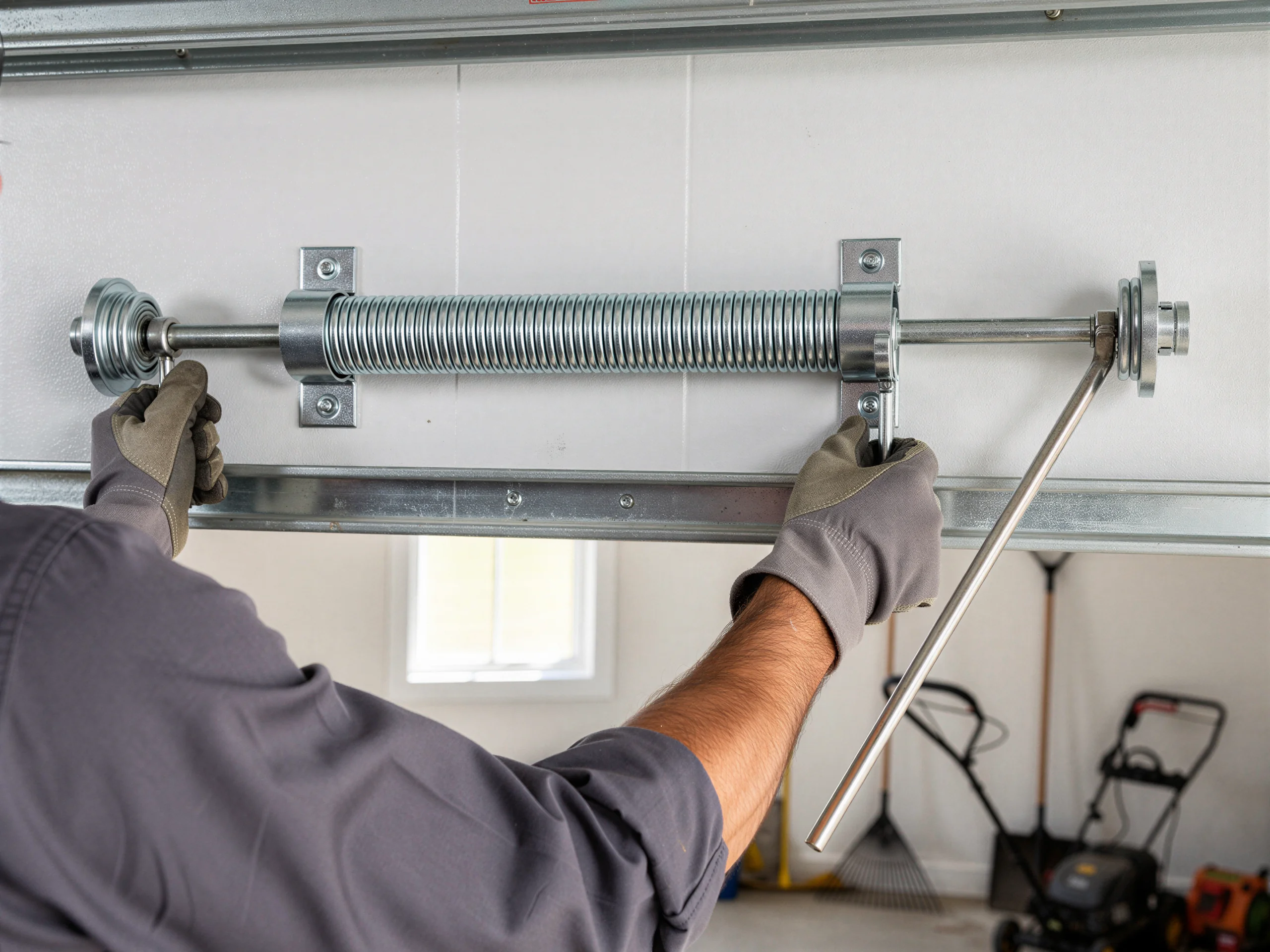
The median build year across the wider service area lands around 1979, but Crestline's own homes center closer to 1966. That gap matters on the truck: we carry a wider range of torsion spring sizes and older-style extension spring kits because a door installed in the mid-60s often still has its original track width, not the wider rail that became standard later.
Older openers, lighter doors
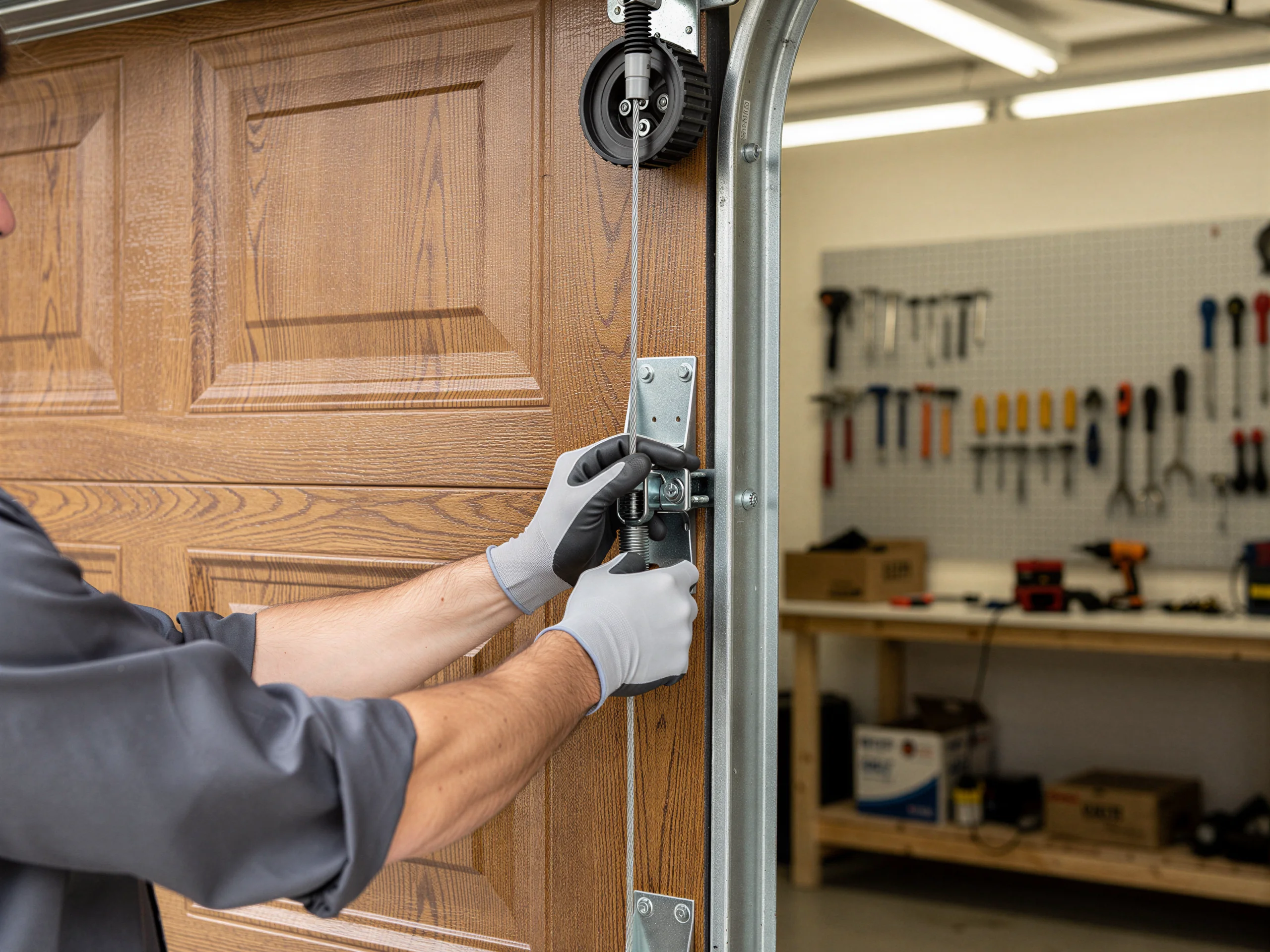
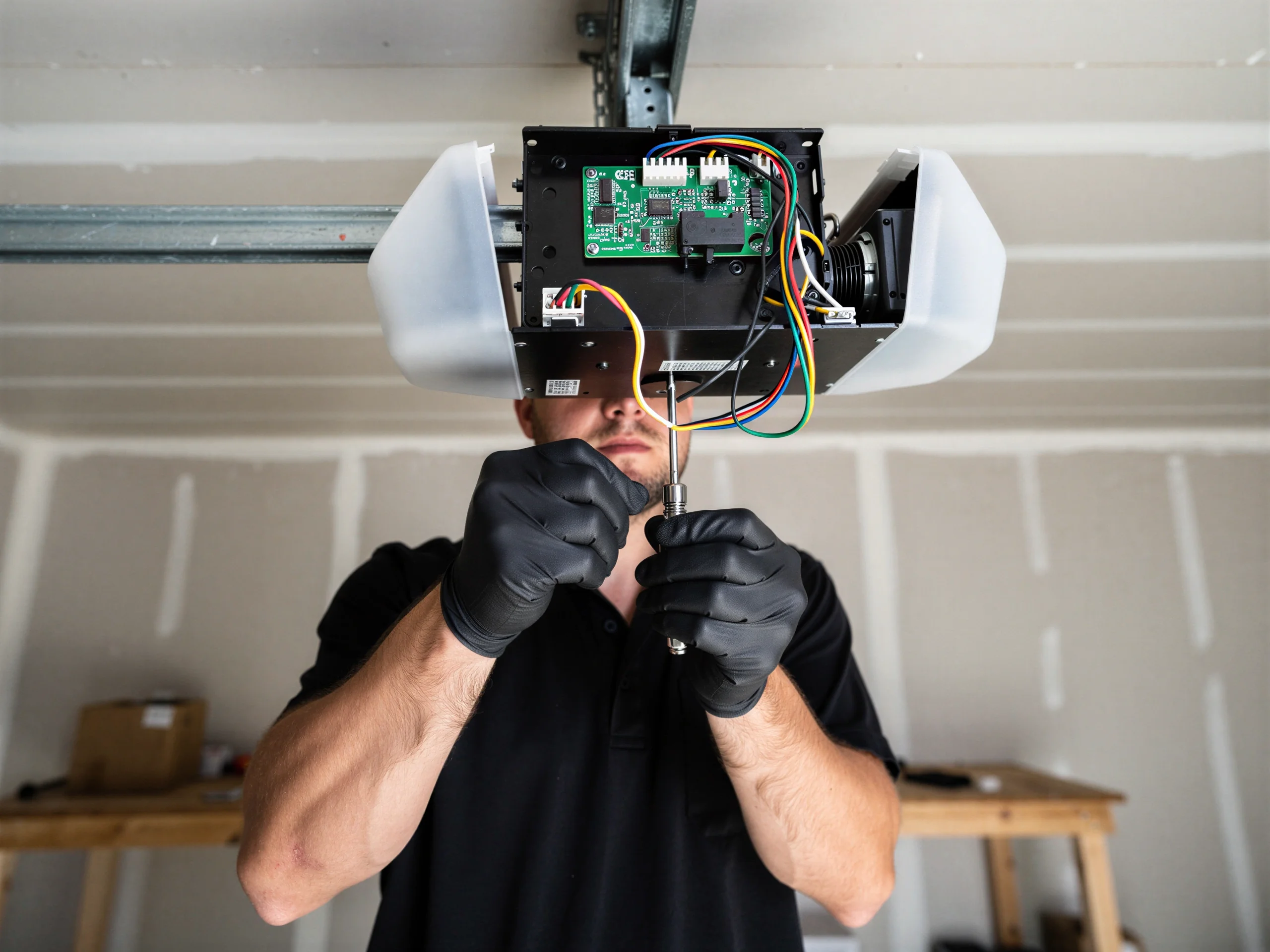
We also bring more drum and cable options, since older openers up here were matched to lighter doors than the insulated steel panels sold today. If a homeowner swapped in a newer door but kept the old jamb and track, we need parts for both eras on the same job.
Van carries mixed hardware
That's the nature of a route that covers homes from the late 1950s through the late 1990s - you don't know which decade you're fixing until the door is open in front of you, so the van carries both.
What You Pay
We don't have a Crestline-specific price list to quote here, and giving you a number without seeing the door would be a guess dressed up as a fact. What we can tell you is that pricing on a call out to Crestline reflects both the part and the drive - 8 miles from San Bernardino isn't far, but it's part of what we weigh when we schedule the day. Older hardware can also change the cost picture: a torsion spring sized for a 1966-era door isn't always a shelf item, so sourcing it can add to the job compared with a standard modern spring that every supplier stocks. If your door was replaced more recently but the opener or track is original, tell us that up front - it changes which parts we bring and saves a second trip.
How Long You Are Without the Door
We run this call from San Bernardino, about 8 miles away, so there's no local branch sitting around the corner from your driveway.
Friday rush and parts
That distance is short, but it's still a real number when a spring breaks on a Friday afternoon and every other call in the area needs the same truck. We're honest about this: if the part your door needs isn't common - which happens more often on homes built before the mid-1970s - we may need to source it before we can finish the job, and that can mean a second visit rather than a same-day fix.
Odd parts stretch timelines
A standard spring or roller swap on a door from this era is usually no slower than any other call; it's the odd-sized or discontinued part that stretches the timeline.
What Causes It Around Here
Crestline's homes trend older than the service-area median, with most of the stock going up in the 1960s and 70s like much of the surrounding mountain-adjacent communities. A door that age has had decades to accumulate wear most owners never see: hardened lubricant on the rollers, a torsion spring that's cycled well past its rated life, and track that's been bent and rebent slightly out of true from years of use. The service area's climate band is moderate on heat, which is kinder to doors than a true desert stretch, but age still does the work that weather doesn't. Steel panels from this era are thinner-gauge than what's sold now, so dents from an errant basketball or a backed-into bumper tend to warp the panel rather than just scuff the paint. None of this is unique to any one house in Crestline - it's just what 1966-median housing stock looks like after fifty-plus years of daily openings and closings.
What Can Go Wrong
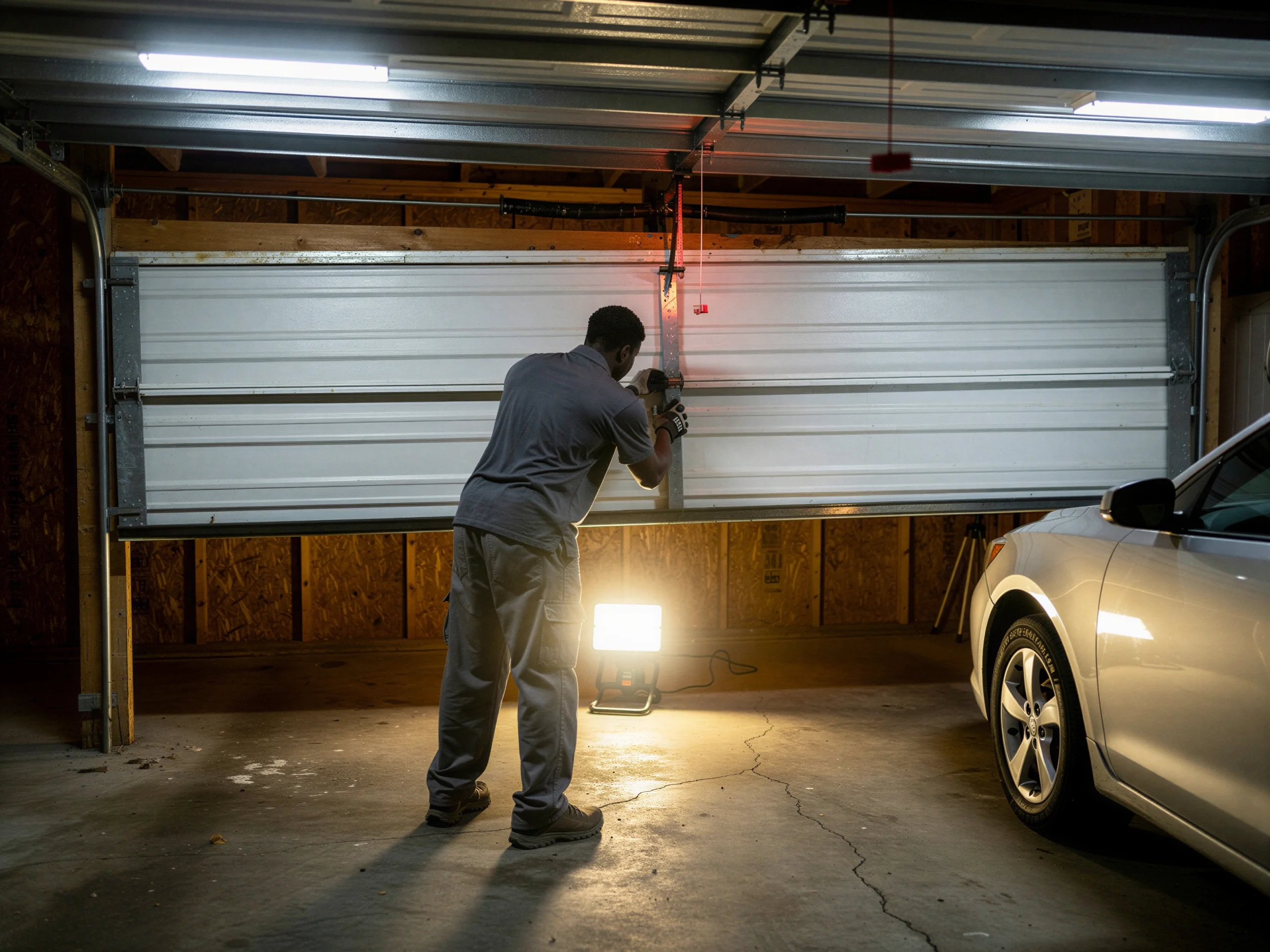
The most common failure we see on older doors up this way is a torsion spring that's simply worn out from cycle count, not from any one dramatic event - it just lets go one morning.
Drum fraying after rebalancing
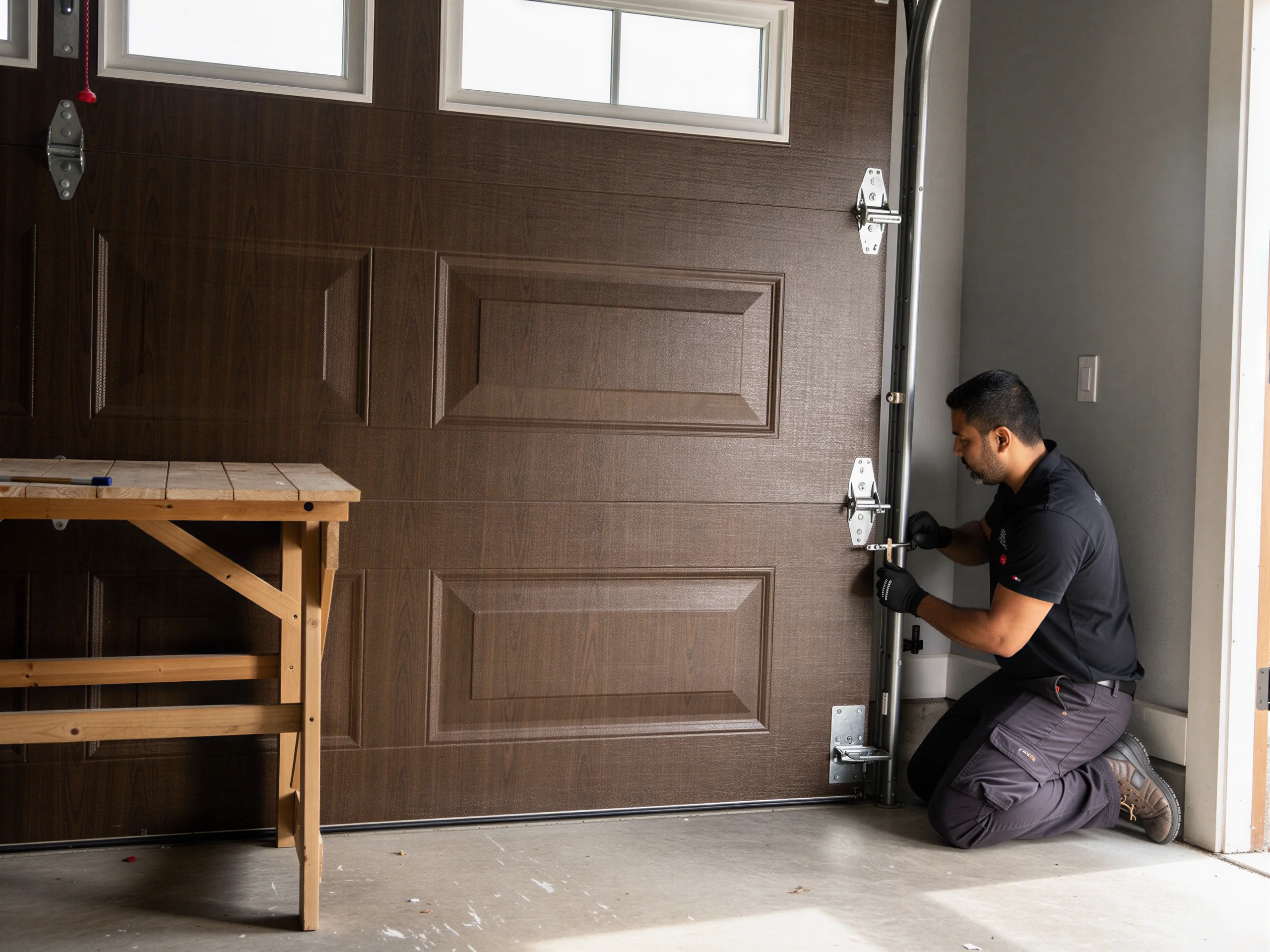
Close behind that: cables fraying where they wrap the drum, especially on doors that were never rebalanced after a spring swap years ago. Rollers on original hardware are often steel-on-steel rather than nylon, which means more noise and faster wear at the track bends.
Adding missing safety sensors
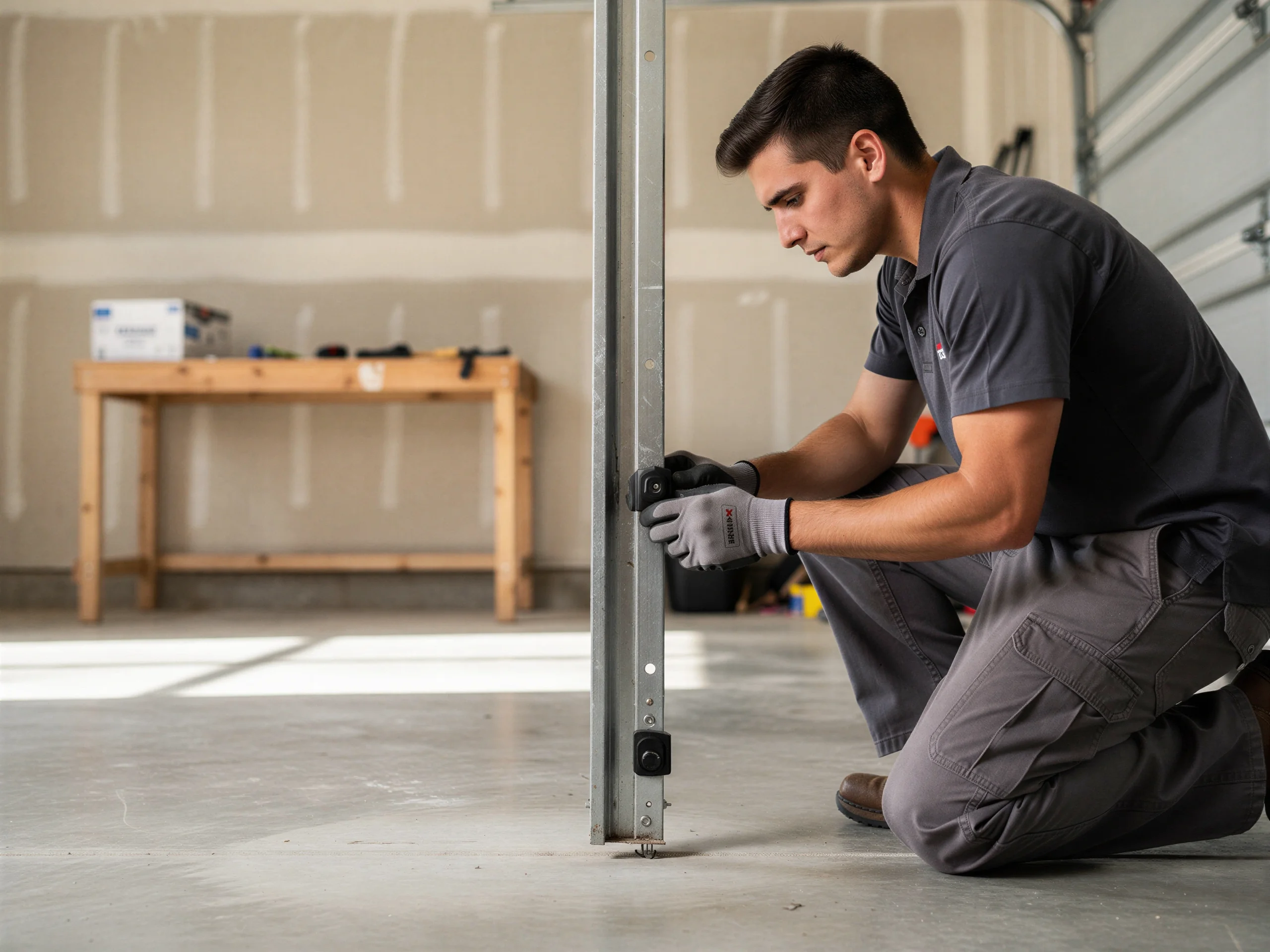
We also see openers original to the house, which on a 1960s install usually means no safety reversal sensors - those have to be added, not optional, on any opener we touch.
Sagging door needs replacement
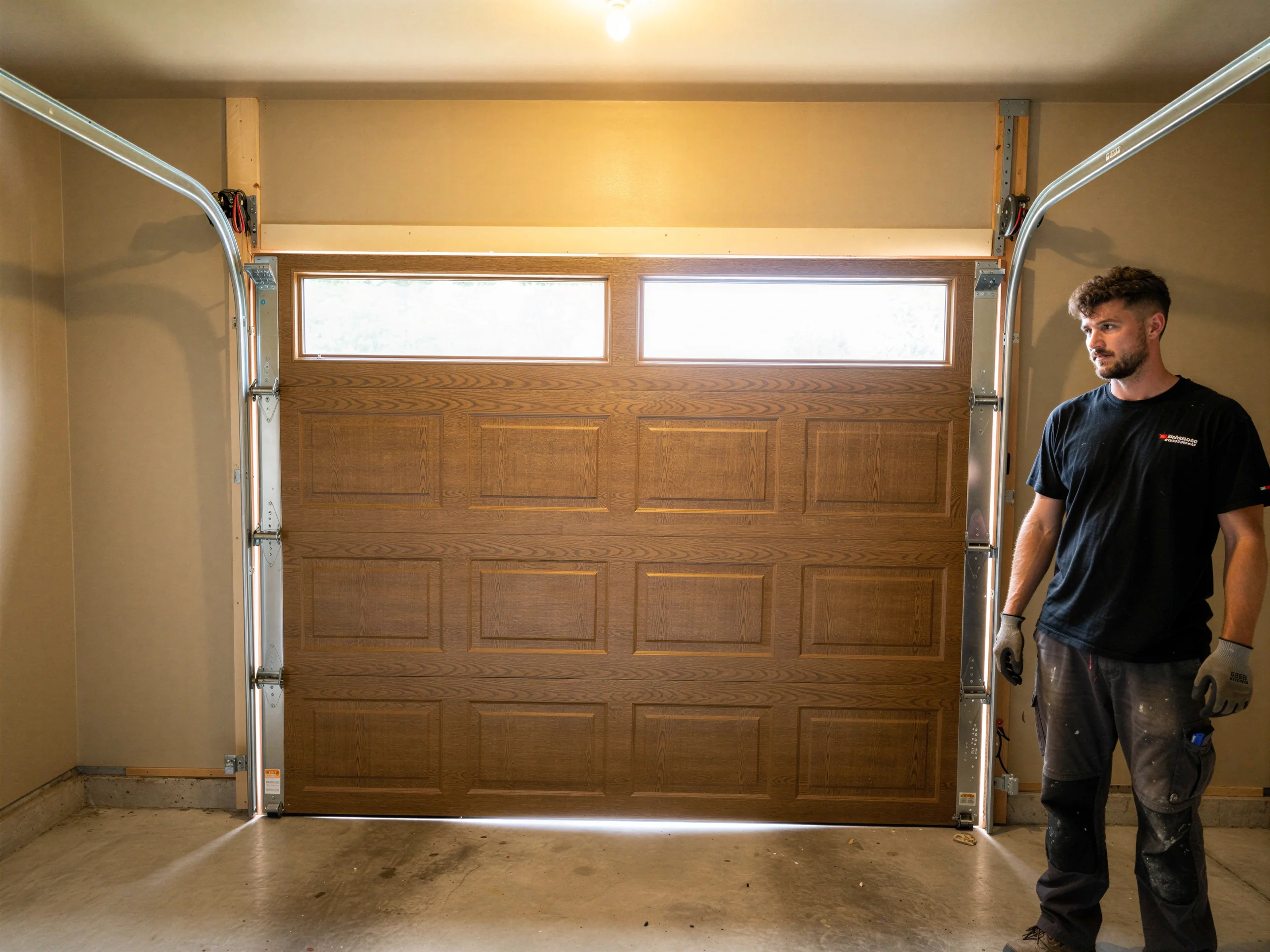
One honest limitation: if the door itself has sagged or racked out of square from age, a tune-up won't fix that - replacement is the straighter path, and we'll tell you that instead of billing you for repeated adjustments.
Getting It Booked In
Since this call comes from San Bernardino, it helps to know roughly what's wrong before we load the truck - spring, opener, or track - so we bring the right stock for a house built in the mid-1960s rather than a modern one. Tell us the door's age and whether the opener looks original; both change what rides along for the 8-mile drive. For more on what a Crestline repair call typically covers, see our Crestline garage door repair page, or check general service across San Bernardino if you're comparing what's available closer to the valley floor.
Talk to a local pro
Garage door service in San Bernardino?
Same-day service with honest, upfront quotes.