What Is on the Truck
Crestline is a small place - about 4,047 households tucked into the mountain side of the service area - so we don't load the truck the same way we would for a bigger grid down the hill.
Torsion springs for narrower tracks
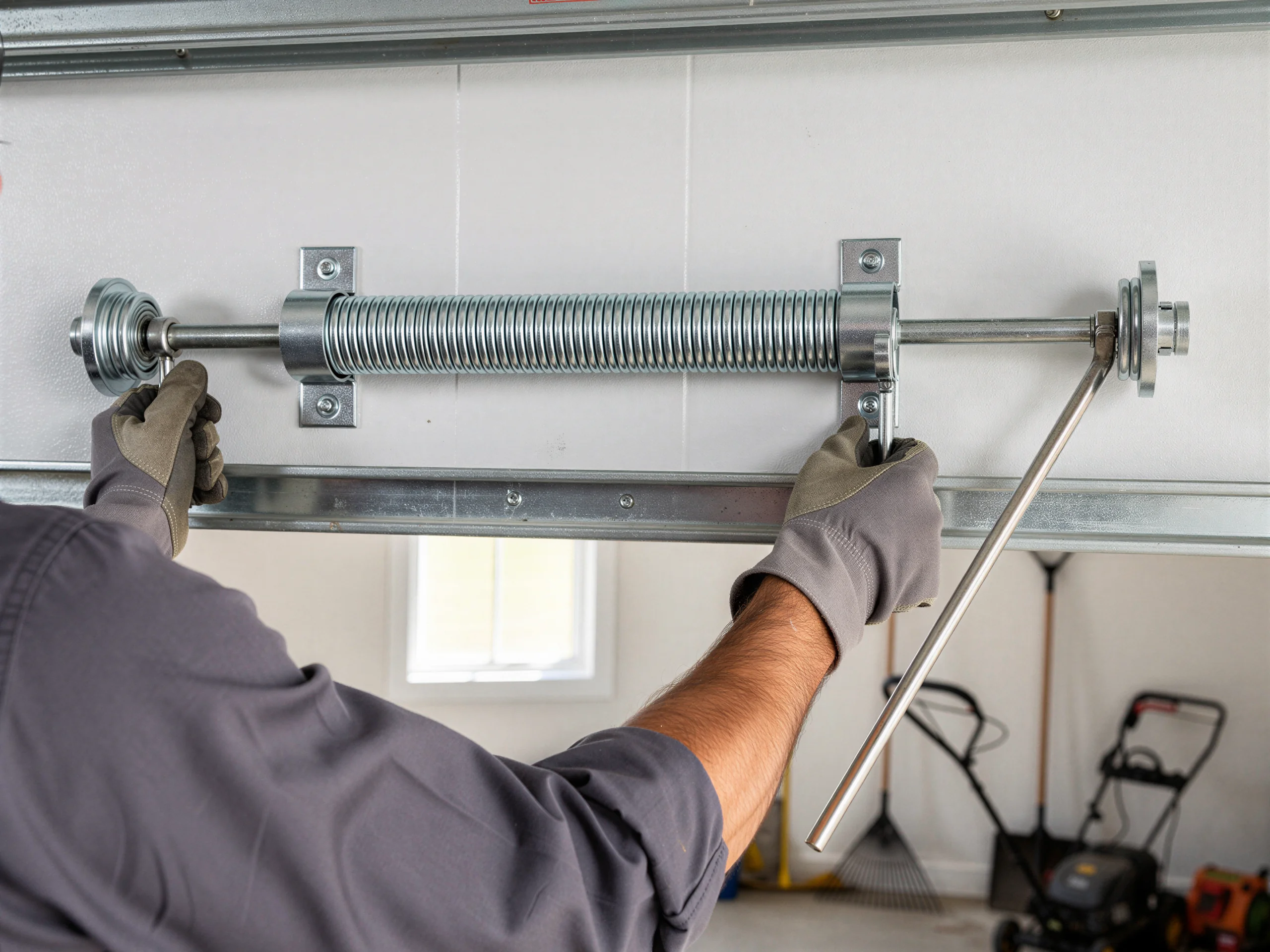
Most homes here date to around 1966, which puts them square in the era of torsion springs wound for single and double doors with steel tracks narrower than what's standard today. Before we head up from San Bernardino, we pull the make, year, and door width from whoever's calling so we're not guessing on the mountain with the wrong gauge of wire.
Extension and torsion stock
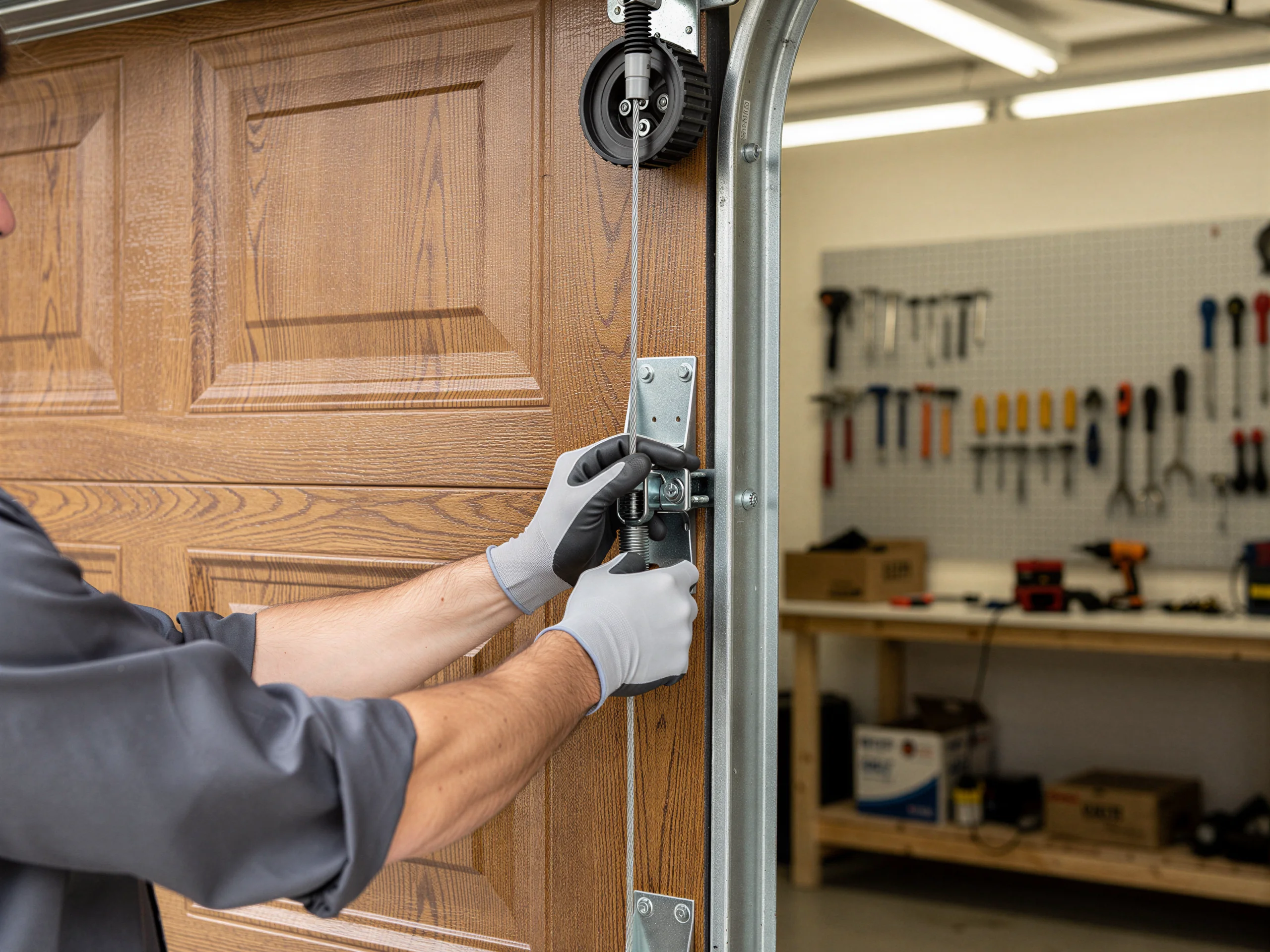
We carry both torsion and extension stock, cable, and the matching end bearings and drums, because a 1966-built garage often still has the original bracket pattern even if the door itself has been swapped once or twice since.
Proprietary spring kit orders
What we don't carry is every obscure opener-branded spring kit - if your door runs an odd proprietary assembly, we may need to order the exact part, which means a second trip.
What You Pay
We price the job by what's actually wrong - spring size, whether it's a single torsion spring or a pair, and whether the cable or drums need replacing alongside it - not by a flat number because Crestline homes don't all run the same door. At $79,378 median household income, a bit under the wider service area's $84,594, most of the calls we get here are repair calls, not full door replacements: people want the spring fixed and the door working again, not a new system. We'll tell you the spring size and the reason it failed before we touch anything, so the number you're quoted matches the parts going on the door. One thing we won't do is quote a price over the phone sight unseen on a door we haven't looked at - torsion systems vary enough by year and brand that a guess isn't a real number.
How Long You Are Without the Door
We run this job from San Bernardino, about eight miles down the mountain from Crestline, so the drive is part of the math on how fast we get to you.
Planned trip, not instant
It's not a same-block call, and we're not going to pretend otherwise - we plan the trip rather than treat it as an instant dispatch. Once we're on site, most spring jobs on a 1966-era door with standard torsion hardware don't take long, because the parts are not unusual to replace, just unusual to carry in every possible size.
Mismatched hardware slows jobs
Where the door sits on an older original bracket or has had non-matching replacement hardware bolted onto it over the years, the job takes longer, because we're fitting what we have to what's there instead of a straight swap. We don't post a blanket turnaround time for Crestline calls specifically, since the drive, the door's age, and what's actually broken all move that number around.
What Causes It Around Here
A garage door spring doesn't fail from one big event - it fails from cycle count, and a door built around 1966 has had a lot more open-and-close cycles than one built in the 1990s. That's the main story in Crestline: the housing stock here skews older than much of the rest of the service area, where the broader median build year runs closer to 1979. Older torsion springs were wound for the weight of doors common at the time, which were often lighter than the insulated steel doors a lot of owners have replaced them with since. When a heavier door gets dropped onto a spring sized for the original lighter one, it shortens the spring's working life, sometimes by years. We see this pattern on a fair number of calls: a newer door, same old spring, and nobody told the owner the two didn't match when the door got swapped.
What Can Go Wrong
The spring itself is usually the first thing to go, but it's rarely alone. On a torsion system, a broken spring puts extra strain on the cable drums, and if those are original to a 1966 install, they can be worn enough that they need replacing at the same time.
Safety cords snapping
Extension spring setups - more common on older single-car doors - tend to take the cables and the safety containment cords with them when they snap, which is the part people don't expect.
Bent end bearing plates
We also see bent end bearing plates from a spring that let go hard rather than easing down, and on older doors, stripped bracket screws from decades of vibration. None of this is unusual for a door this age; it's what happens when the spring finally gives after years of use.
Bracket pattern mismatch
What we can't do is make a 1966 bracket pattern work with every modern opener out of the box - sometimes the bracket has to be replaced too, which we'll flag before we start.
Getting It Booked In
Because we're coming up from San Bernardino, it helps to have the door's rough age, whether it's torsion or extension spring, and whether it's a single or double door before we head out - that's the information that decides what goes on the truck for a household base as small as Crestline's 4,047. You can see more on how we handle calls around Crestline generally on our Crestline garage door repair page, and if you're outside Crestline itself, the main spring repair page for the San Bernardino service area covers the broader area. We book the job once we know what we're walking into, not before - on a door this old, showing up without knowing the spring type wastes everyone's time.
Talk to a local pro
Garage door service in San Bernardino?
Same-day service with honest, upfront quotes.