What Is on the Truck
Most houses in Jurupa Valley went up around 1980, and that one number tells us what's hanging in the opening before we ever see a photo.
Sectional doors on center shaft
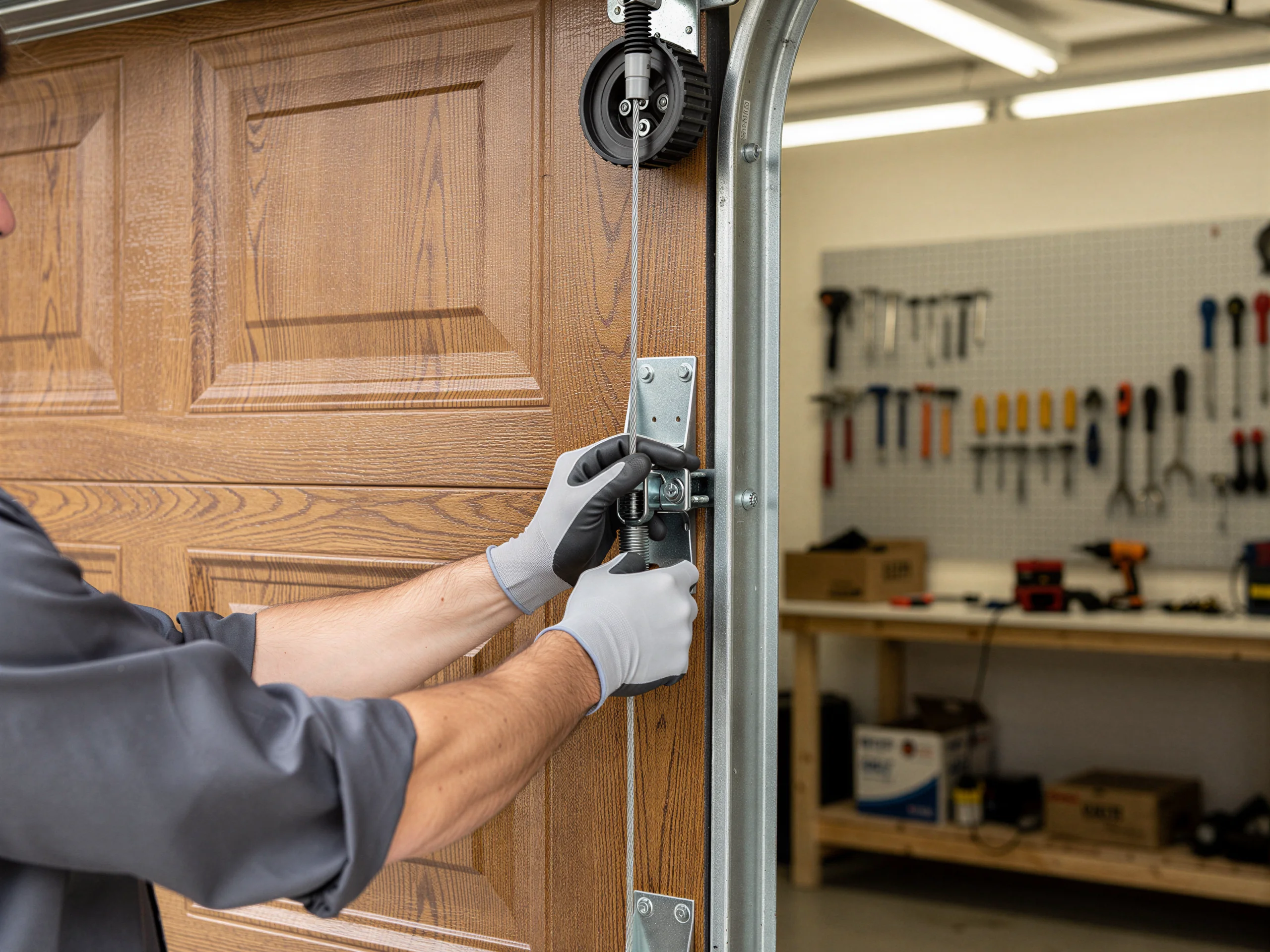
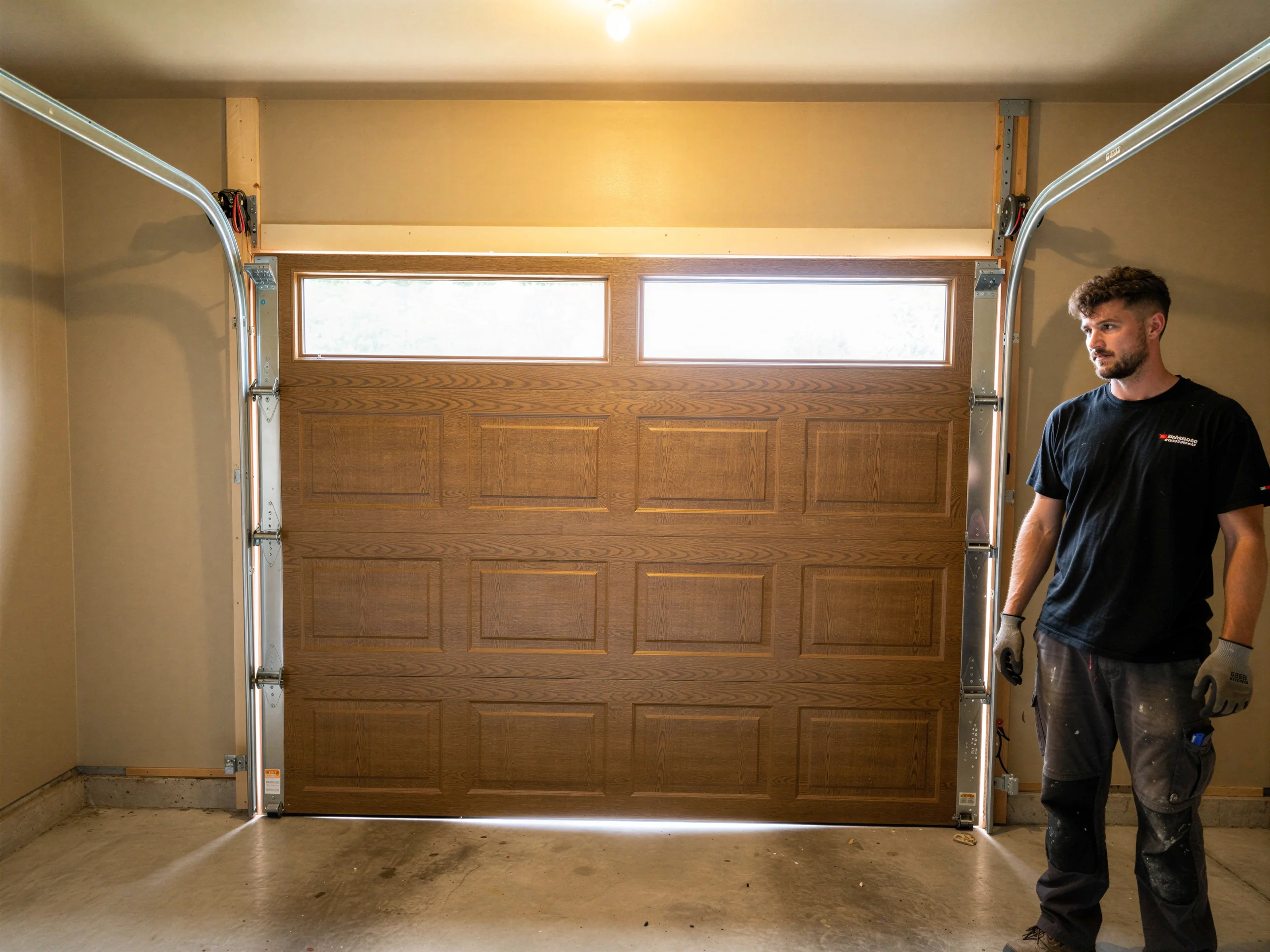
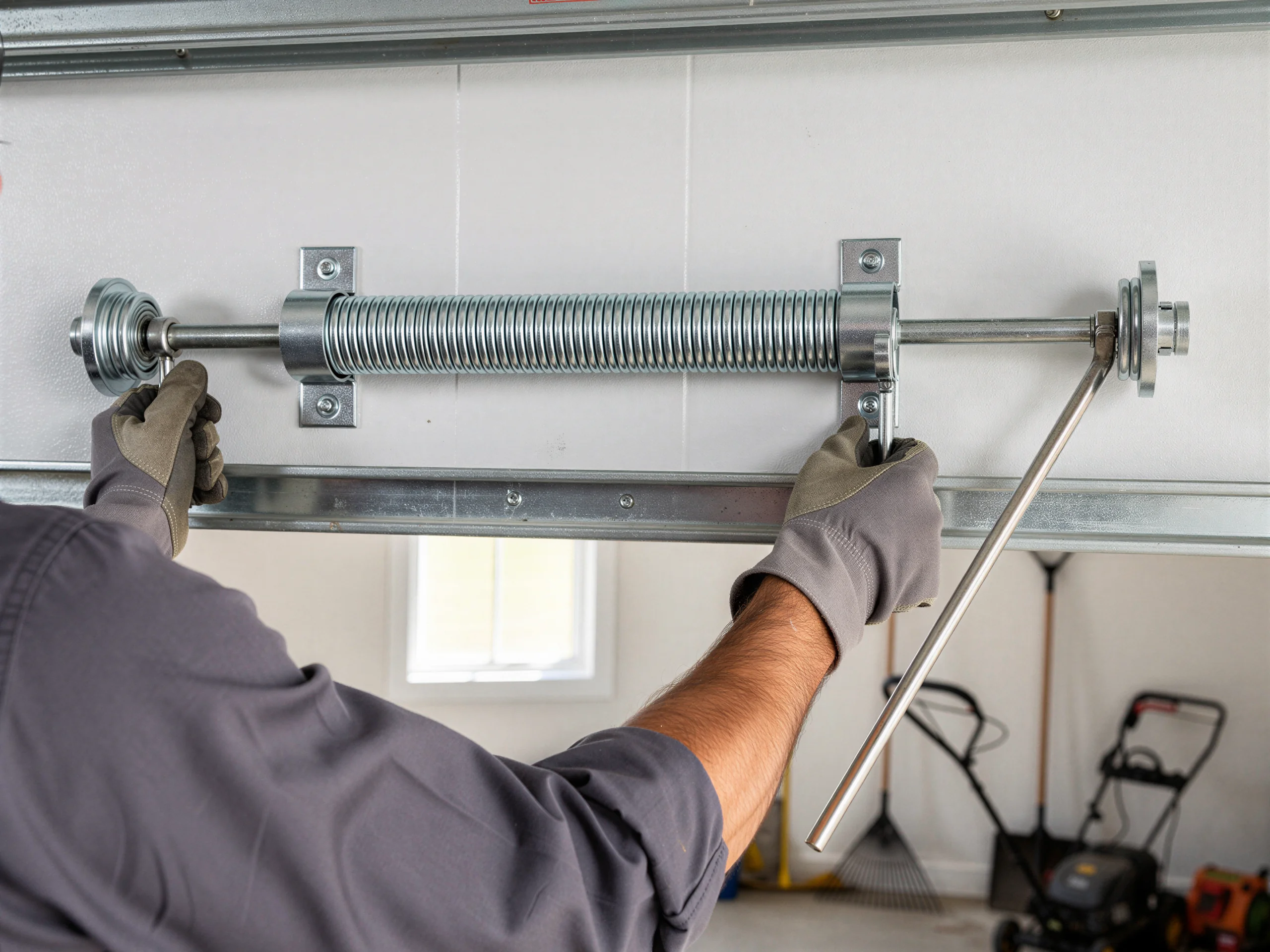
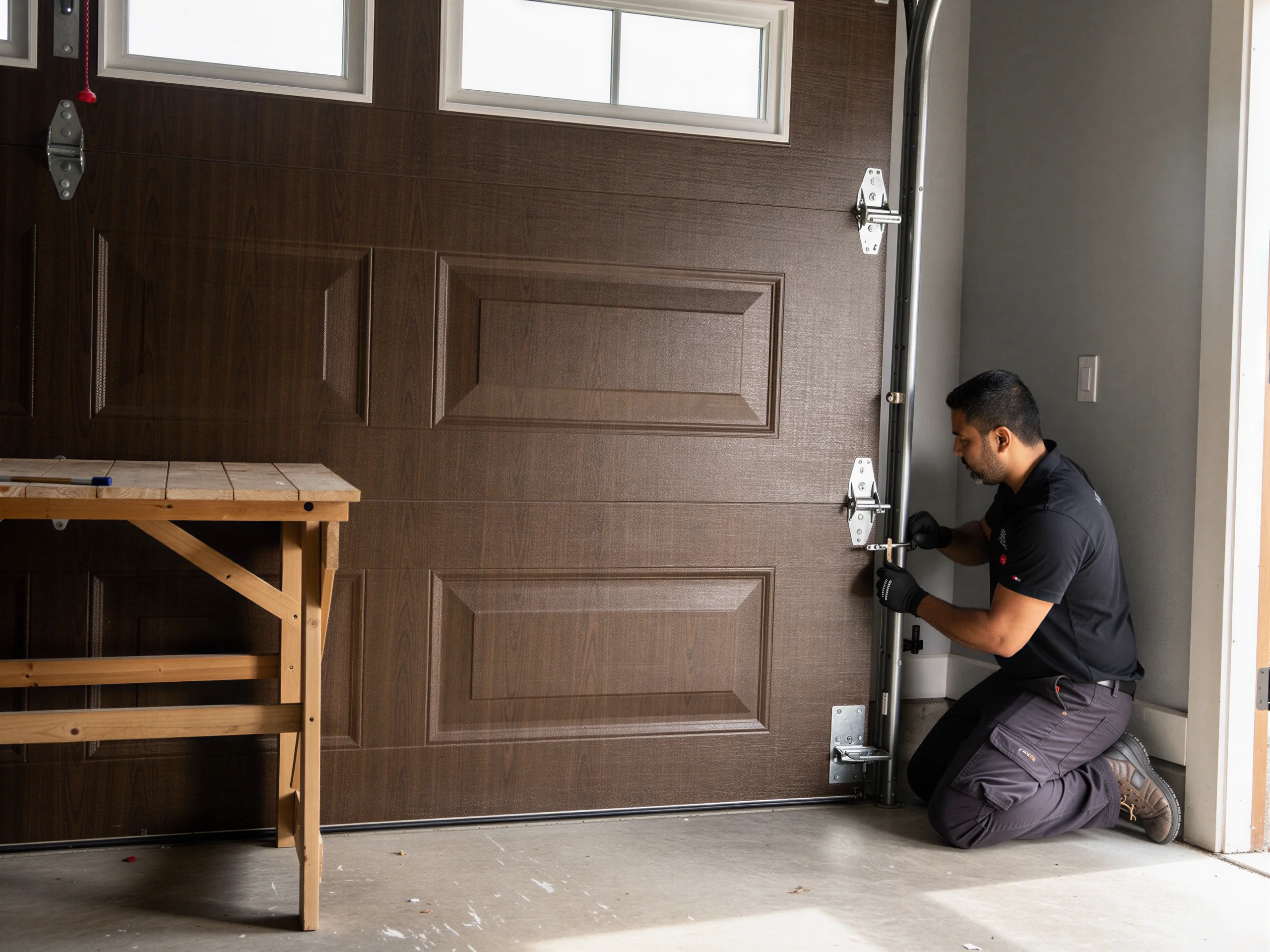
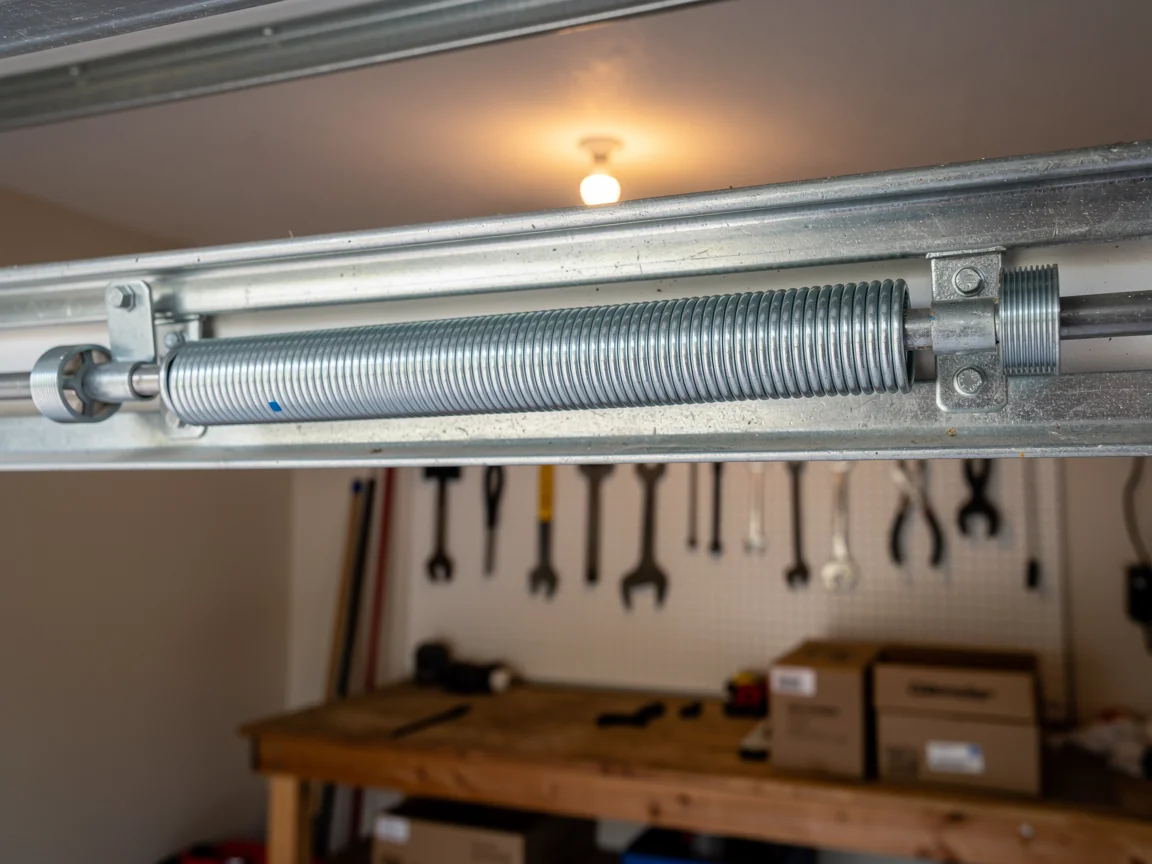
These are steel sectional doors, usually the 16x7 double on the main house, hung on torsion springs mounted on a single center shaft rather than the older side-mounted setups you see on anything built before the mid-60s. The panels are thin-gauge steel, no insulation core, and the rollers are the stamped steel kind that wear a groove into the track over two or three decades of use.
Chain-drive carriage play
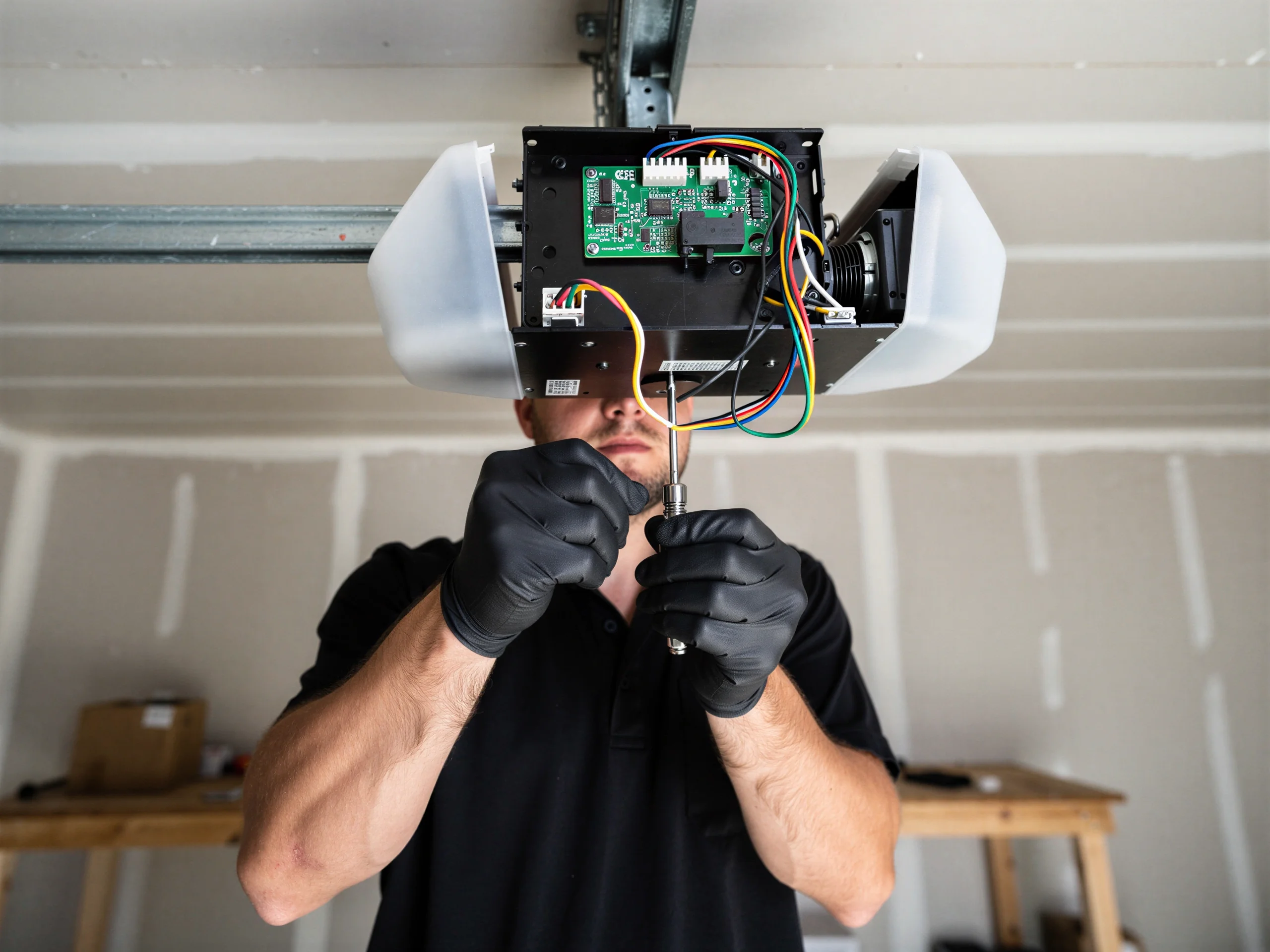
Openers from that build era, if original, are chain-drive units with the carriage long since developing play in the sprocket. We carry torsion springs sized for that door weight, center-shaft bearing plates, and the fasteners that go with 1980s track brackets, because the hardware pattern on these doors is consistent enough across the area that guessing isn't necessary.
Paint-matching panel limits
What we don't carry on every run is a replacement panel matched to a specific faded paint color from a door that age - repainting or living with a mismatched panel is sometimes the honest answer rather than a full door swap. We load based on what a 1980-built door in this area typically needs, not a generic parts list.
What Causes It Around Here
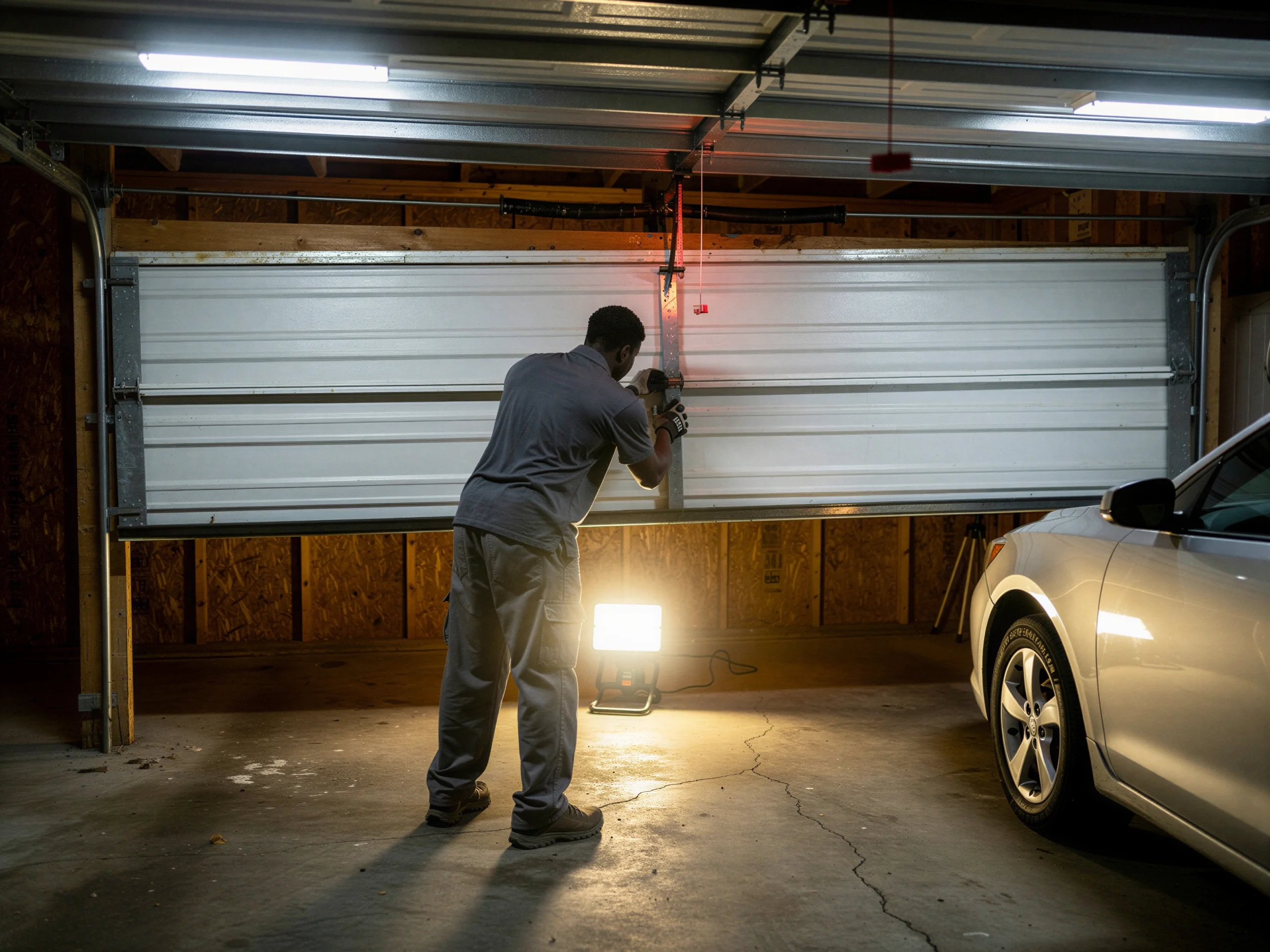
A torsion spring rated for a certain door weight and cycle count was never meant to last forever, and on a door installed around 1980 that spring is past due regardless of how it looks. The common call here is a broken spring on a double door, or a cable that's frayed at the bottom bracket from the same age of hardware. Heat plays a part too - the climate band here runs moderate but still puts steel springs and plastic opener gears through real thermal cycling year over year, which shortens their working life compared to a part that never sees temperature swings. We also see track misalignment on doors where the original steel track has taken decades of minor dings; it still moves the door, just not smoothly, until a roller finally jumps the track. None of this is dramatic. It's steady wear on parts installed before anyone reading this owned the house.
Getting It Booked In
We run this job from San Bernardino, about 14 miles out, so a Jurupa Valley call isn't a same-building dispatch - it's a drive, and we're upfront about that rather than promising a window we can't back from across town.
Details to give up front
Call and tell us the door size, whether it's a single or double, and what it's doing (won't open, opens partway, loud bang then stuck) and we'll bring the spring and cable stock sized for a door of this area's typical age.
Bring sprocket kit first
If your opener is original to a 1980-era build, mention that too; chain-drive units from that period often need a specific sprocket kit we'd rather bring the first trip than the second.
The DIY Question
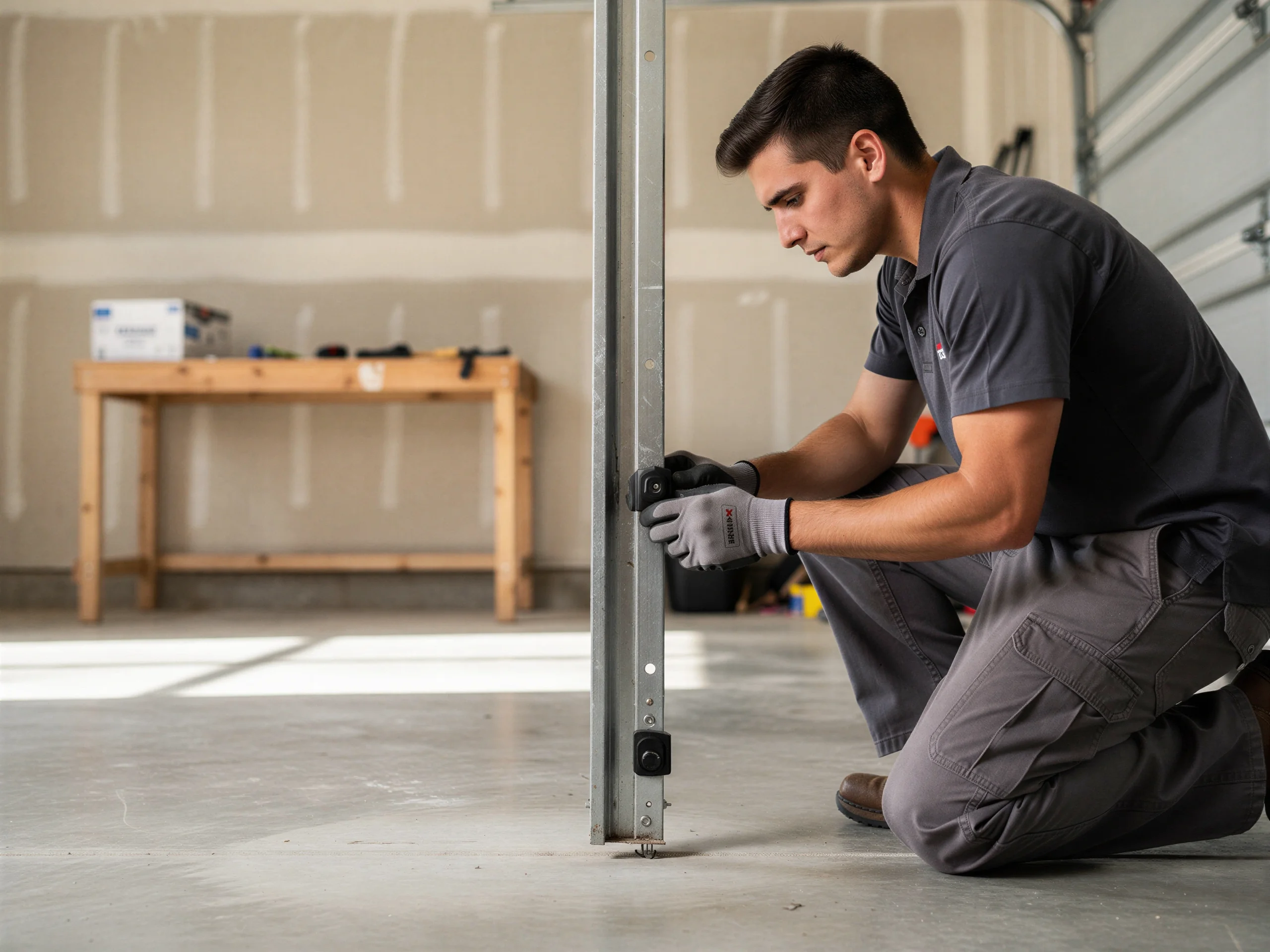
A torsion spring is under enough stored tension to break a bone or worse, and that doesn't change because the door is 40 years old versus 4. Don't touch the spring, the cables, or the center shaft bearing yourself. What you can safely check: whether the opener's safety sensors (the two small eyes near the floor on each track) are aligned and unobstructed, since a knocked sensor is a common reason a door won't close and costs nothing to fix yourself. Lubricating hinges and rollers with a garage door lubricant, not WD-40, is also fine as routine upkeep. Past that, if the door is original to a 1980 build and the opener motor itself is failing, replacing the whole opener often makes more sense than nursing a 40-year-old chain-drive unit through one more repair - we'll tell you straight when that's the better money.
Talk to a local pro
Garage door service in San Bernardino?
Same-day service with honest, upfront quotes.