What You Pay
What you pay for a service call in Colton usually comes down to the age of the door, not the brand of truck that shows up.
Original sectional doors
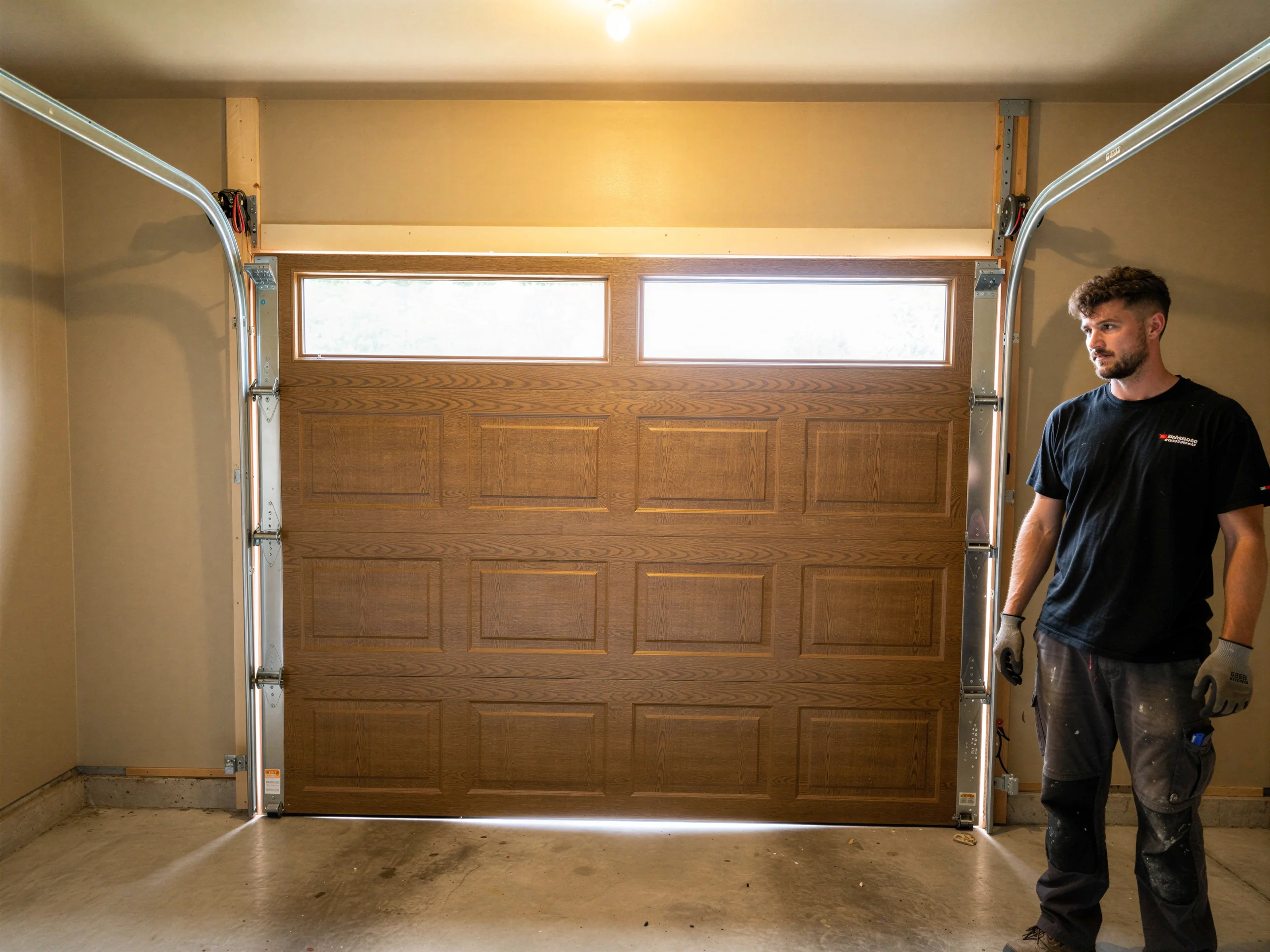
Colton's housing stock centers on 1979, which means a lot of garage doors here are either original steel sectional doors on torsion springs sized for a lighter 1970s panel, or a second-generation opener installed sometime in the 1990s or 2000s when the first one gave out.
Older drums and bearing plates
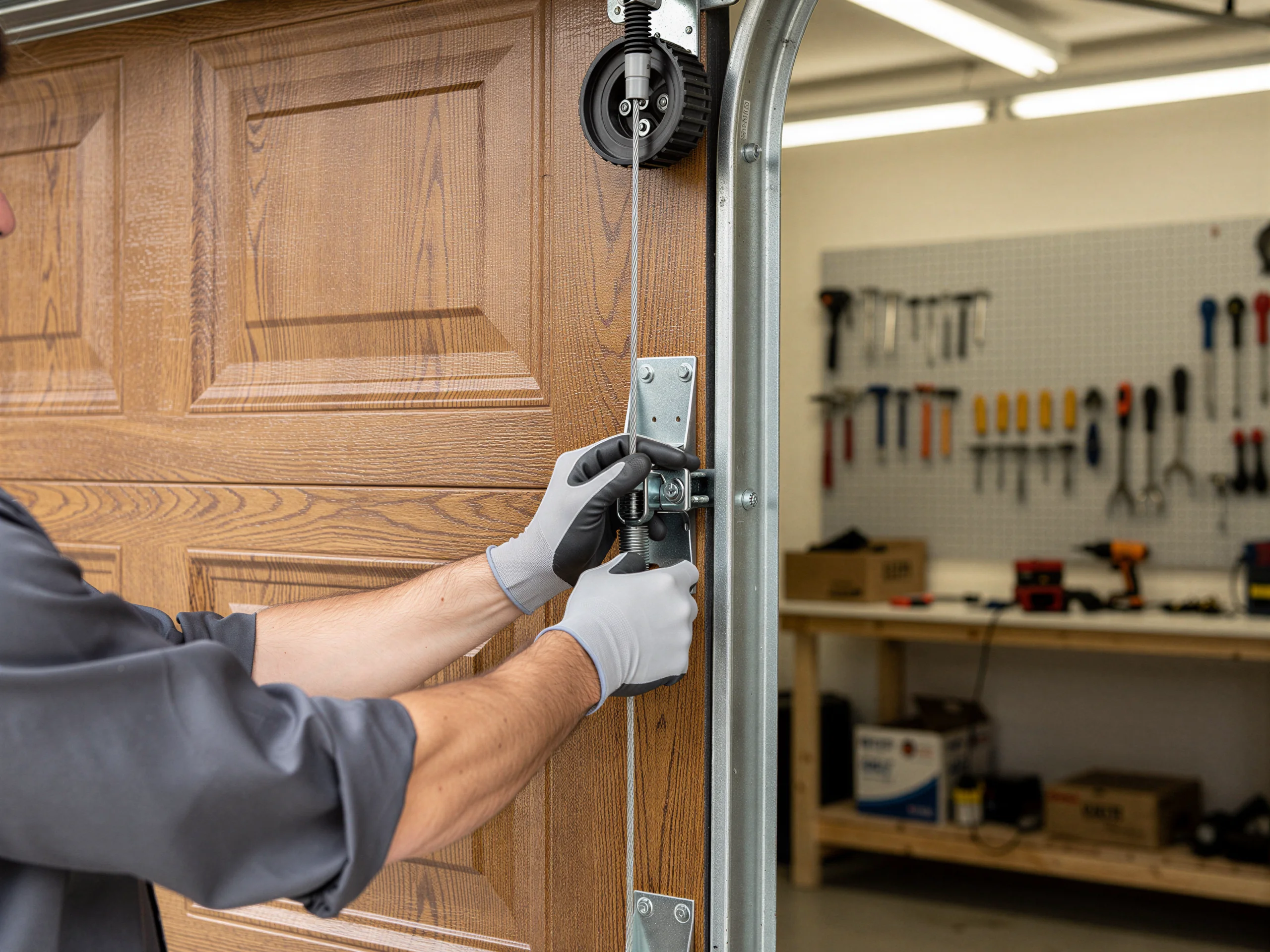
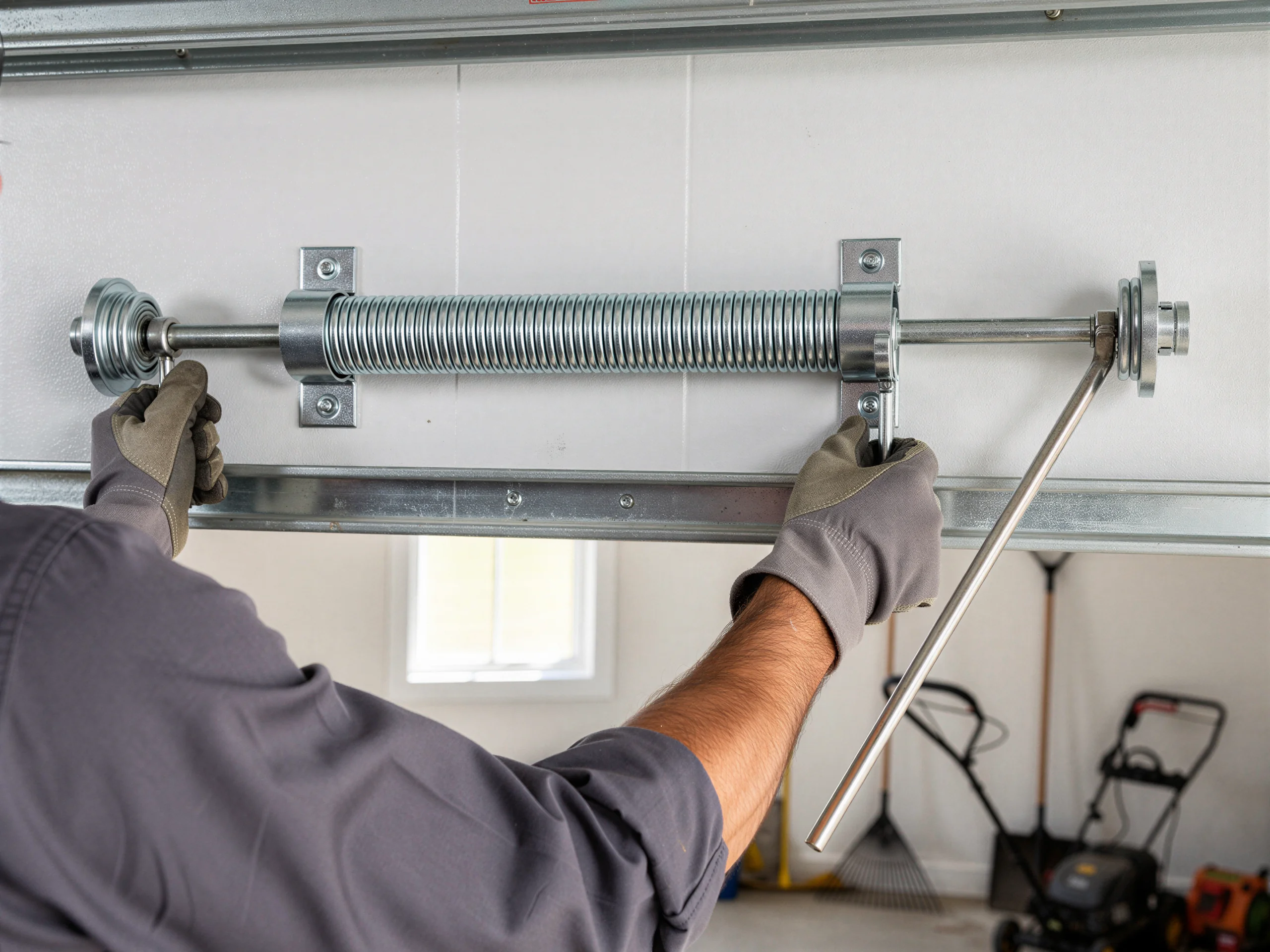
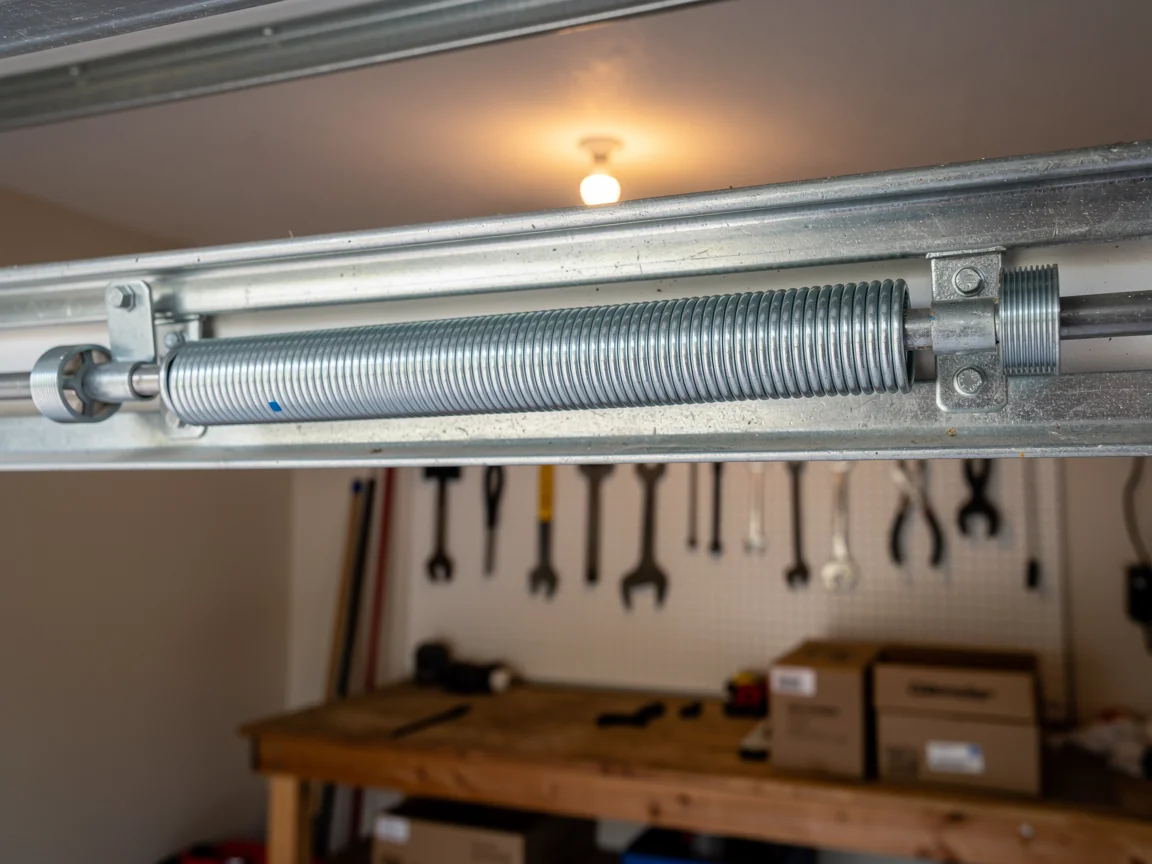
A spring swap on one of these older torsion setups is a different job than replacing a spring on a door built in the last ten years, because the drums, end bearing plates, and cable sizing from that era aren't always what a parts house stocks as a direct match. We quote after we look at the door, not over the phone, because guessing at 1979-era hardware from a photo gets it wrong often enough that it isn't worth doing.
Repair worn sets first
Colton's median household income sits at $69,581, lower than some of the other towns we reach from San Bernardino, and that's part of why we try to repair a worn spring or roller set before we ever suggest replacing the whole door. We travel the 6 miles from San Bernardino for both repair and install calls, and the trip itself isn't a separate charge.
What Causes It Around Here
The 1979 median build year does most of the explaining. A door installed in that era has had four decades to work through steel fatigue, and torsion springs are rated in cycles, not years, so a spring that was fine in 2005 can be done by now regardless of how it looks. Original rollers from that period are almost always steel, not nylon, and steel rollers on a track that's seen 45 years of use tend to bind, especially once the track brackets have loosened from the stud. Colton sits in a climate band we classify as moderate heat exposure, and repeated heat cycling on a garage that faces west does more to lubricant and weatherstripping than any single hot day. Grease hardens, nylon idler bearings get brittle, and a door that used to glide starts to shudder halfway up. With 17,191 households in Colton, a fair number of these doors are original to the house and have never had the torsion spring replaced at all, which is usually the first sign something's about to let go without warning.
What Can Go Wrong
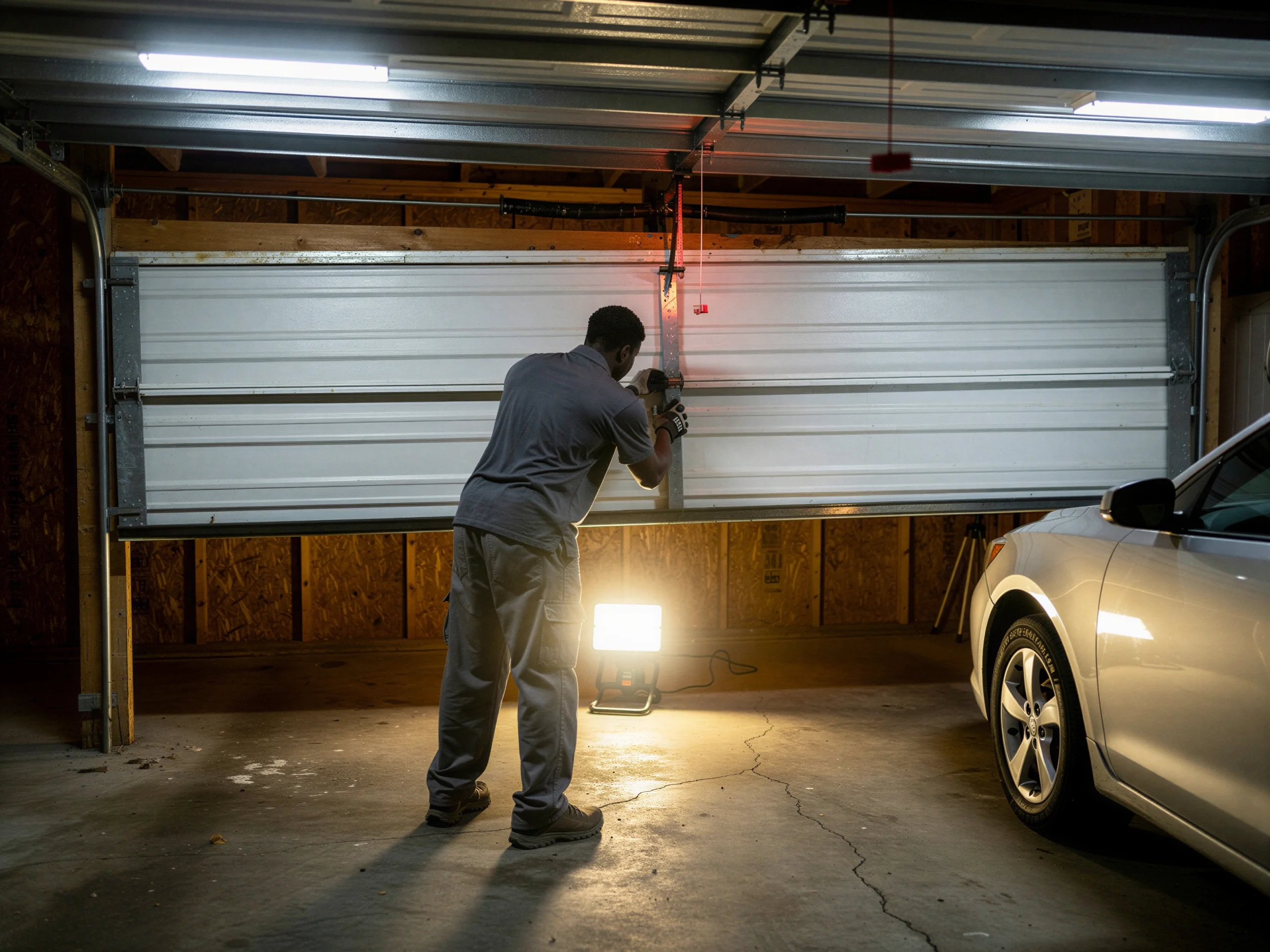
On a door of this vintage, a broken torsion spring is the most common emergency call, usually announced by a loud bang from the garage and a door that won't lift past a few inches.
Original cables fray
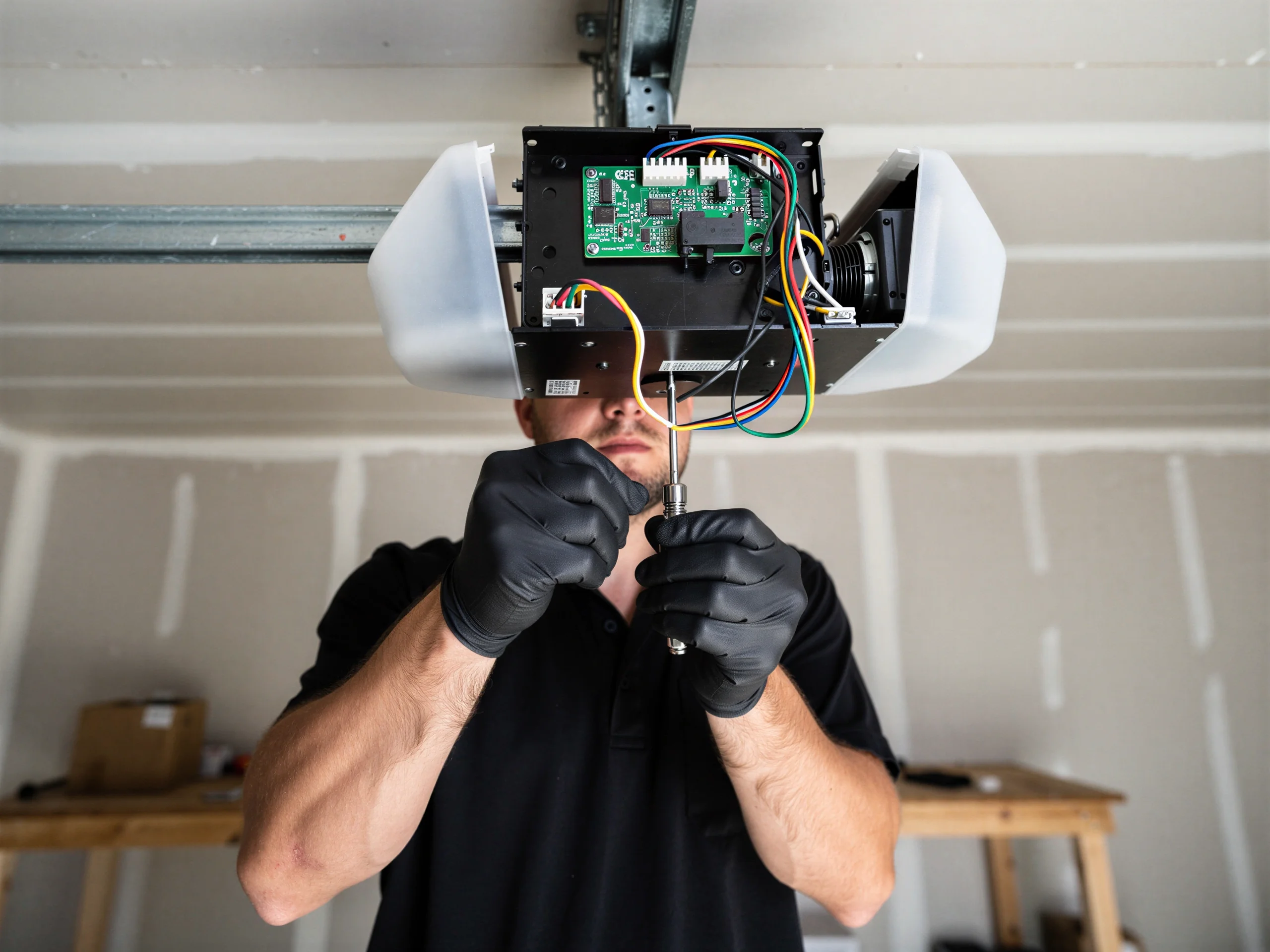
Cable fraying follows close behind, because the original cables on 1979-era doors are often still in service and wire rope doesn't improve with age. Opener failures on these homes tend to be electrical rather than mechanical if the unit itself was replaced more recently, but if the opener is original to the house, the gear and sprocket assembly inside is usually what gives out first.
Car-clipped tracks
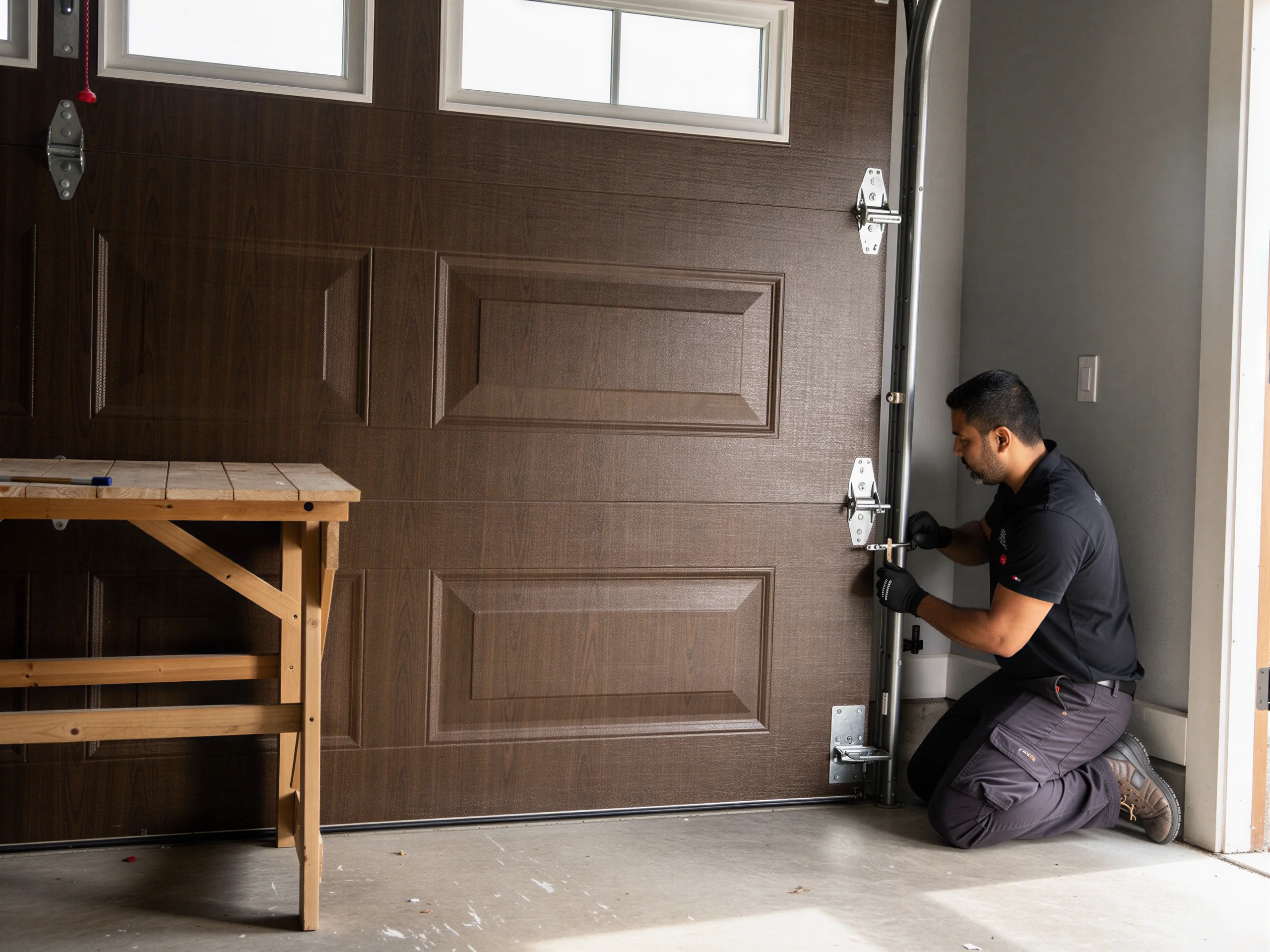
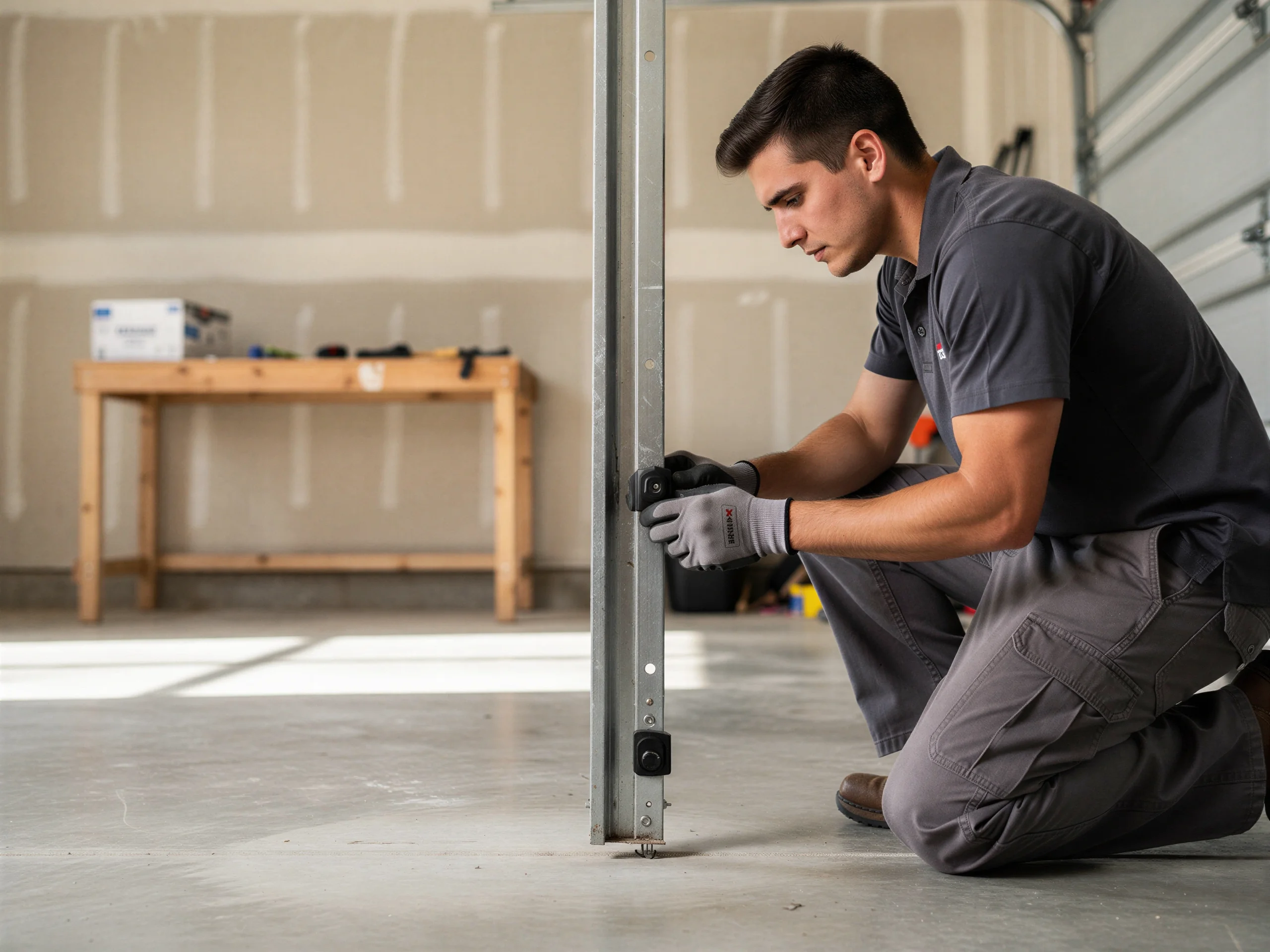
We also see bent tracks from cars clipping the edge of a narrower original opening, since some of these garages were sized for the smaller vehicles common when the house was built.
Era-driven call odds
None of this is unique to Colton, but the odds of hitting it on any given Colton service call are higher than on a newer street, simply because of how much of the town's housing dates to that one era.
What Is on the Truck
We carry the parts that fail most on a 45-year-old door: torsion springs in the common residential weights, standard-lift cables, steel and nylon rollers, and the hinges and end bearing plates that tend to wear out together. What we don't always have on the truck is an exact match for an obsolete track bracket or a discontinued panel from a door manufacturer that's since closed or rebranded, and on those jobs we're upfront that a full panel replacement, or in some cases the whole door, may be the faster and cheaper path than hunting down a one-off part. Opener boards and circuit parts for units from the 1990s and early 2000s fall into that same category sometimes. We'd rather tell you that on the driveway in Colton than order a part that takes two weeks to show up.
The DIY Question
A torsion spring under load holds enough stored energy to cause real injury, and that doesn't change because the door is older or newer. Where the DIY line moves for a Colton homeowner is tied to the age of the hardware: on a door built around 1979, the spring, drum, and bearing setup is often non-standard enough that even a confident DIYer can order the wrong spring winding or cable length. Roller swaps, tightening loose track bolts, and lubricating hinges are reasonable weekend jobs on any door. Spring replacement, cable work, and anything involving the torsion bar on an original 1970s door is where we'd tell you to call instead of guess.
Talk to a local pro
Garage door service in San Bernardino?
Same-day service with honest, upfront quotes.