What You Pay
Colton is six miles from our San Bernardino base, close enough that drive time isn't padding the bill the way it would for a call out to the far edges of the service area.
Tighter travel-to-labor ratio
That matters for a maintenance visit, where the labor-to-travel ratio is tighter than it is for an emergency repair. What we can't do is quote you a number here. We don't have a published maintenance rate in front of us for this page, and giving you one would mean inventing it, which we won't do.
Income shapes maintenance cost
What we can tell you is what drives the cost on a Colton job specifically: median household income in Colton runs $69,581, noticeably below the $84,594 median across the wider San Bernardino service area, and that gap shows up in the kind of original hardware still installed on these doors rather than full replacements.
Unserviced doors cost more
A maintenance visit on a door that's never been serviced costs more in time than one that's been checked every year or two, because there's more to find. Ask for the current maintenance pricing when you call. We'd rather you hear it from us directly than read a number on this page that's gone stale.
What Causes It Around Here
Colton's housing stock centers on 1979, the same median year as the rest of the area we cover, which puts a lot of these garage doors and their openers right at the edge of a design life nobody planned around. A door installed in the late 1970s has been through four decades of temperature swings even under a moderate heat band, and the steel, the lubricant, and the fasteners all age on that same clock whether anyone's touched them or not.
The pattern we see on 1970s-era Colton doors is springs that were never rated for the door's current weight, because insulation or panel replacements happened at some point without anyone recalculating the spring. Add seventeen thousand or so households in this one city alone, a lot of them original owners or second owners who inherited the door as-is, and you get a town where "it's always made that noise" is a common answer.
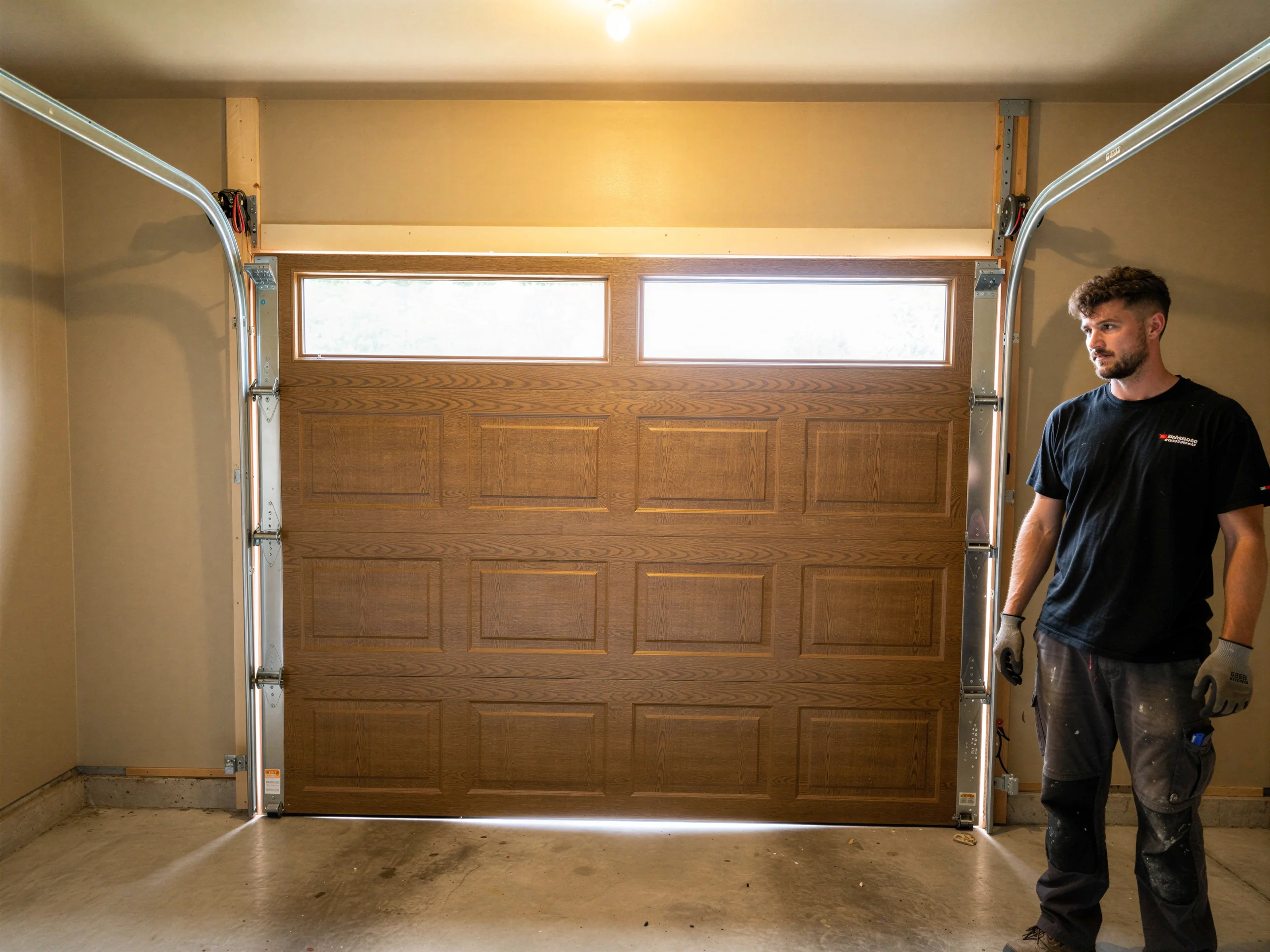
Maintenance here isn't about adding anything new to the door. It's about catching the wear that a 45-year timeline guarantees before it turns into a spring letting go or a track pulling loose.
What Can Go Wrong
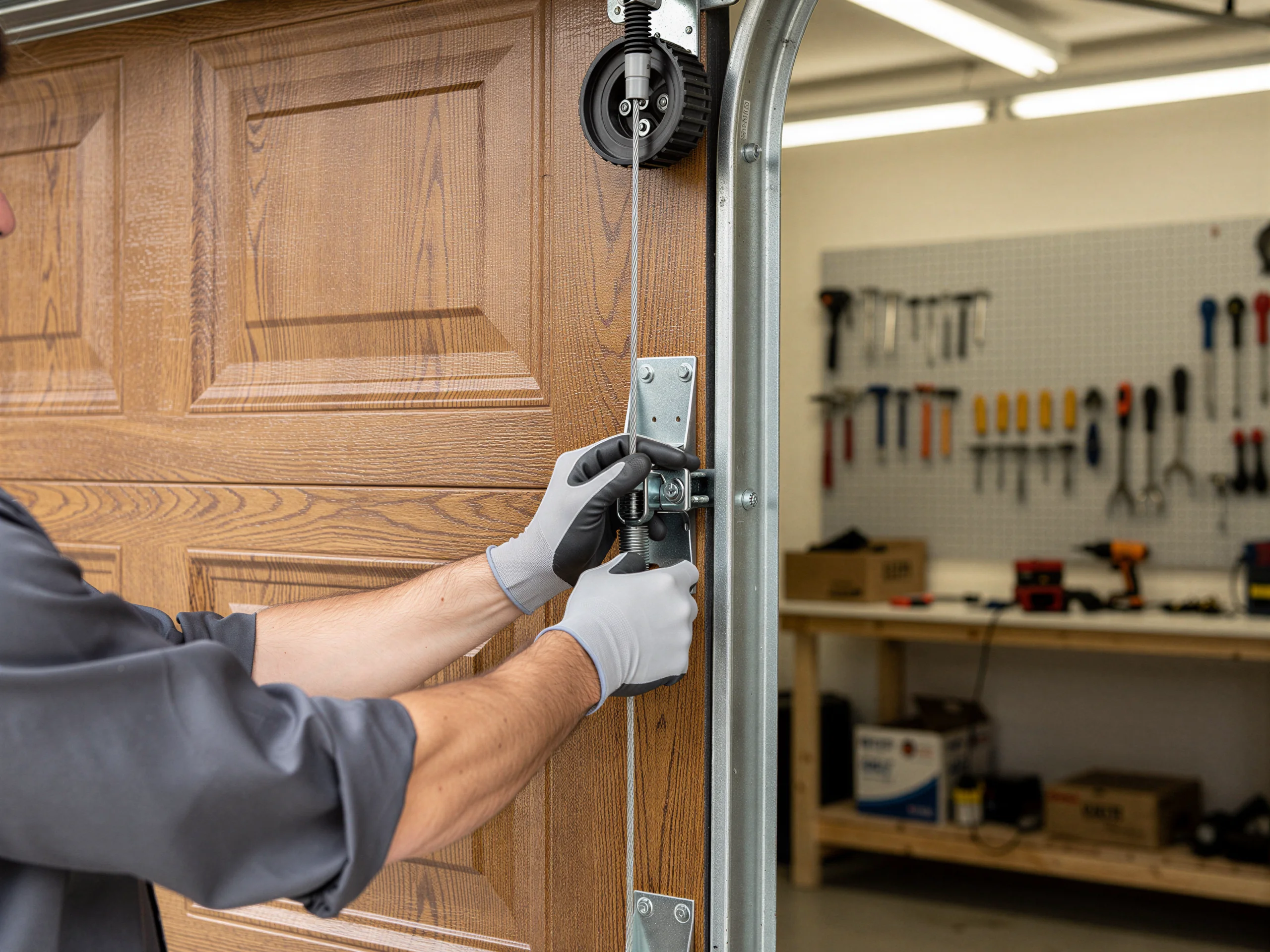
On a door this age, the usual failure points are the torsion spring, the cable ends where they wrap the drum, and the rollers if they're still the original steel ones instead of nylon.
Heavy panel on old track
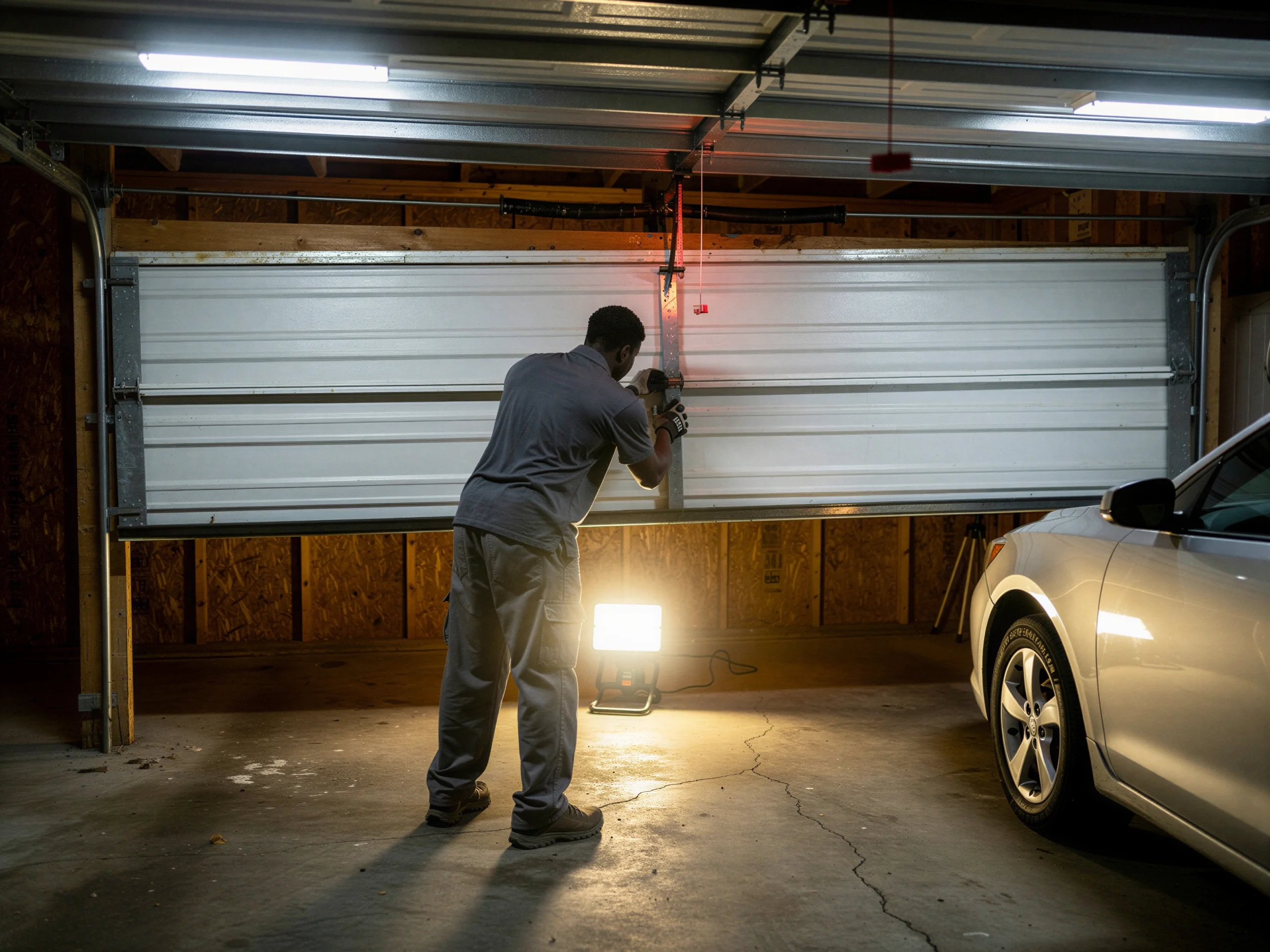
None of that is dramatic until it is: a spring under tension that finally cracks doesn't give much warning, and when it goes on a heavier insulated replacement panel bolted onto 1970s track, the door can come down hard and fast.
Missing auto-reverse wiring
Openers from this era, or even the second-generation openers that replaced them in the 1990s, often don't have modern auto-reverse sensors wired in correctly, if at all. That's a safety issue, not just a maintenance one, and it's one we flag rather than ignore when we see it.
Track drifting out of plumb
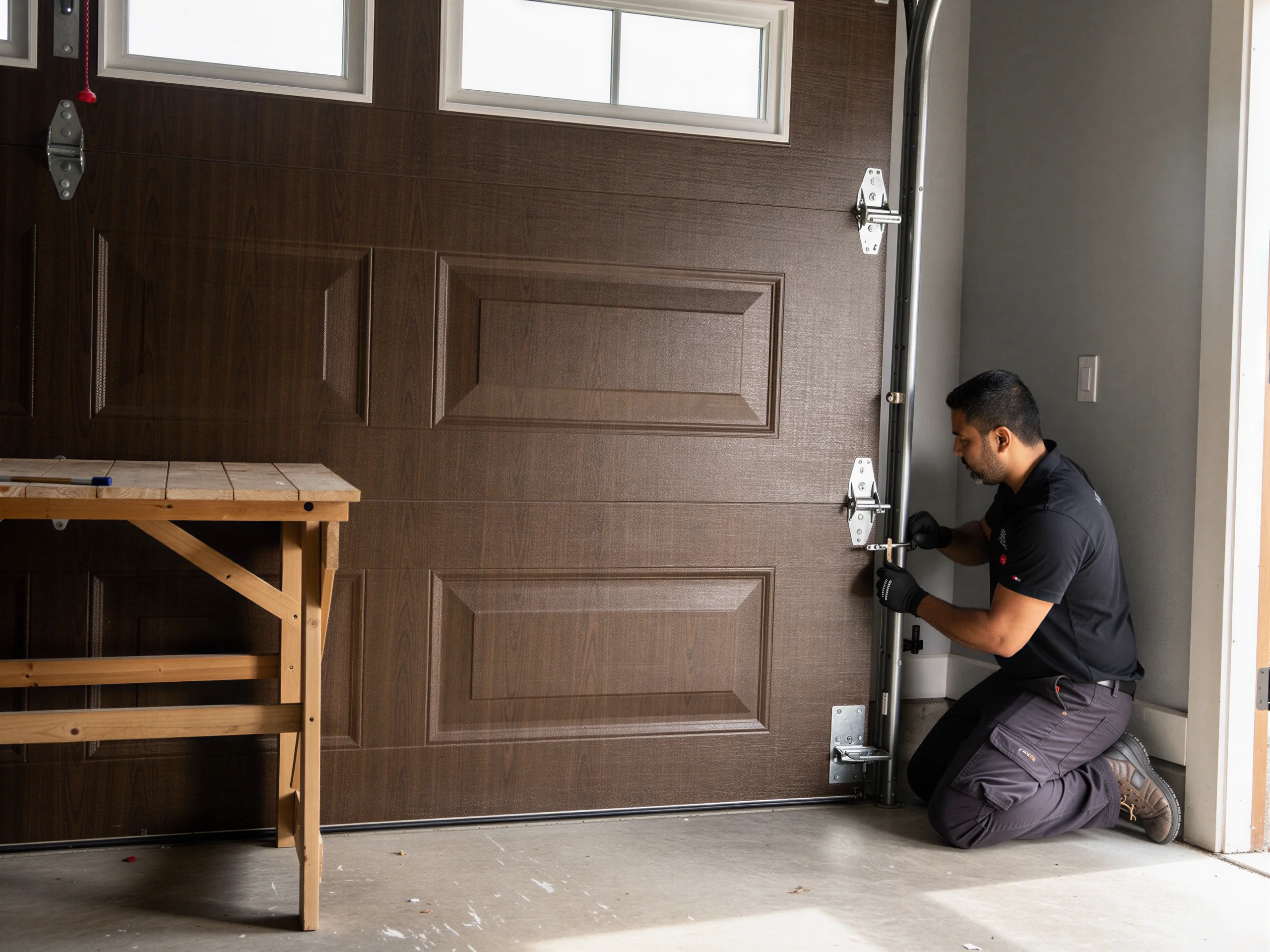
We also see a fair number of doors in Colton where the track has shifted slightly out of plumb over the years, not enough to notice day to day, but enough that the rollers are wearing unevenly. A maintenance check catches that kind of slow drift before it becomes a stuck door on a Saturday morning.
What Is on the Truck
We come from San Bernardino, six miles out, which means the truck is stocked for a route, not sitting on standby a block away. For a standard maintenance visit that's not a problem; we carry the lubricant, the fastener kits, and the roller and cable stock that covers most of what a 1970s-era door in this area needs.
What the truck doesn't carry is a guess at what's specifically broken before we've looked at the door. If a visit turns up a spring that needs replacing or a part that's a non-standard size for the original installation, that can mean a second trip for the right part, especially on doors from this era where hardware sizing wasn't as standardized as it is now.
We'd rather tell you that up front than pretend every job wraps in one visit. On most routine maintenance calls it does. On a door that hasn't been touched since it was installed, it sometimes doesn't.
The DIY Question
Lubricating hinges and wiping down tracks is fine to do yourself, and it's worth doing between professional visits regardless of who does the bigger checks.
Spring fatigue after decades
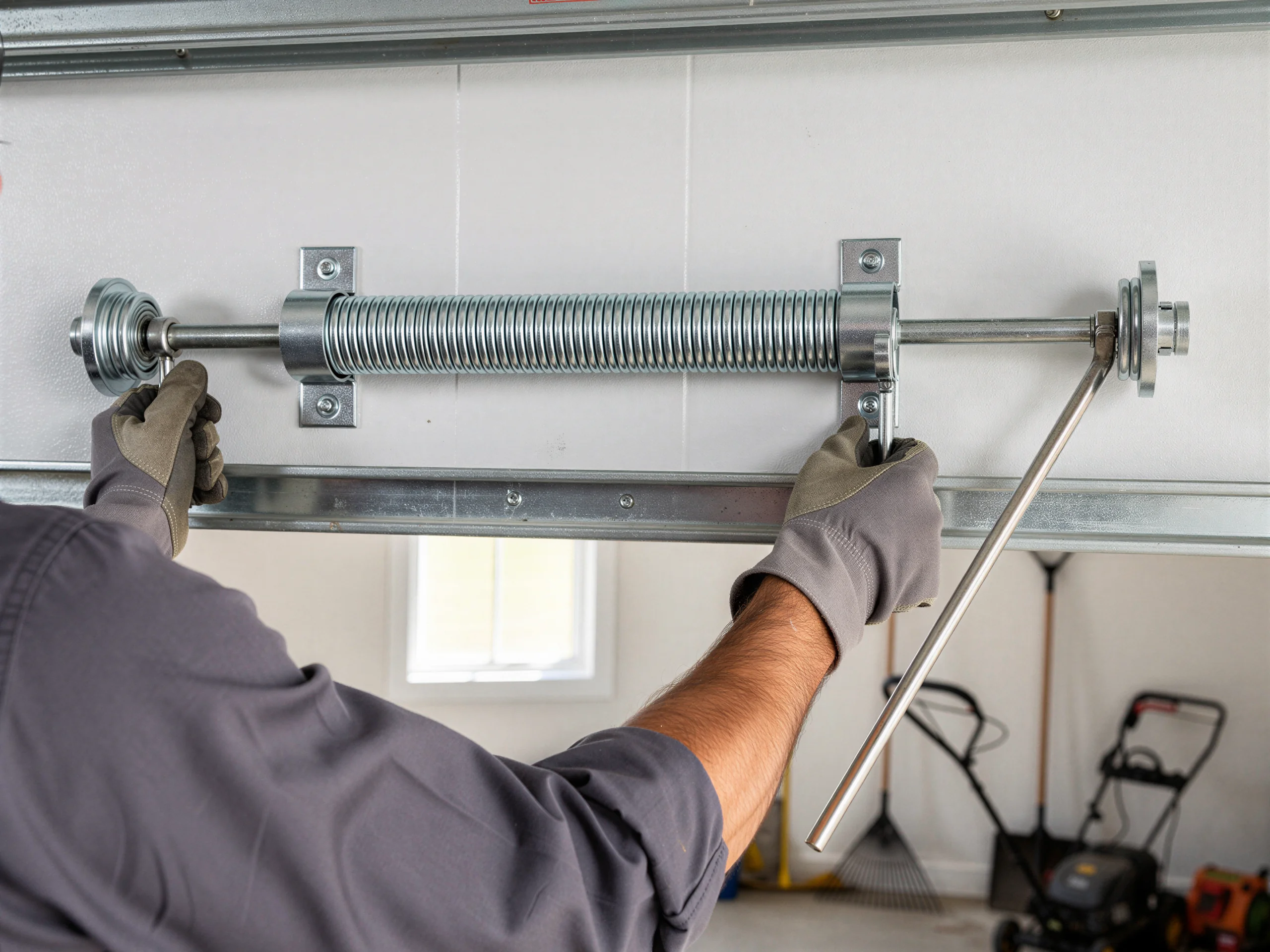
What we don't recommend touching yourself is anything involving the torsion spring or the cables under tension. On a door built around 1979, that spring has had four and a half decades to fatigue, and there's no way to tell from the outside how close it is to failing.
Pre-1990s opener reversal
If your opener predates the mid-1990s auto-reverse requirement, or you're not sure whether it's wired correctly, that's also not a DIY call. The cost of a diagnostic visit is small compared to the cost of a door coming down on something, or someone, it shouldn't.
Basic DIY checks
Where DIY makes sense is the basic stuff: checking that the door balances when disconnected from the opener, listening for new noises, keeping the tracks clear of debris. Catch something off in that routine, and that's the point to call rather than the point to start adjusting spring tension on your own.
Talk to a local pro
Garage door service in San Bernardino?
Same-day service with honest, upfront quotes.