What You Pay
Most houses in Colton went up around 1979, which means a lot of garage doors here are still running on the track and spring hardware the builder put in - nobody's touched it since.
Behind-the-panel price factors
That's not unusual for a house this age; it's actually the norm. What changes the price of a new install isn't the door panel itself, it's what's behind it: is the opener original too, is the track bent from forty-plus years of use, does the header need reinforcing for a heavier insulated door.
Header conditions vary
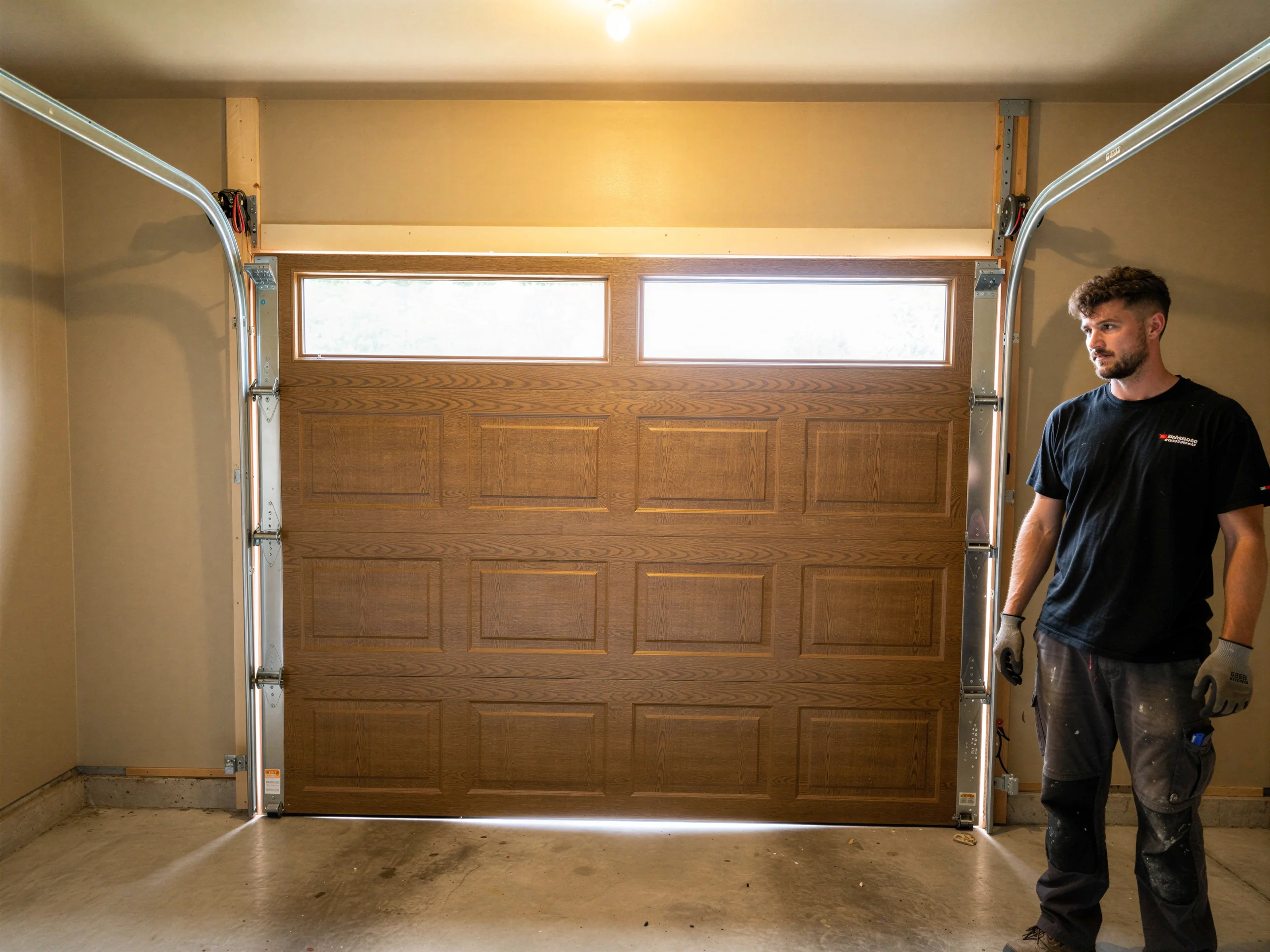
We quote new installs after we see the opening, not over the phone, because a house built in 1979 can have three different header conditions depending on who framed it. What we can tell you up front is that if your spring, track, and opener are all original, you're not looking at a simple panel swap - you're looking at a full hardware replacement, and that costs more than a like-for-like door change.
No walk-in counter
We travel from our San Bernardino shop, about 6 miles out, so there's no local depot markup, but there's also no walk-in counter here - every job is scheduled from a truck visit.
What Causes It Around Here
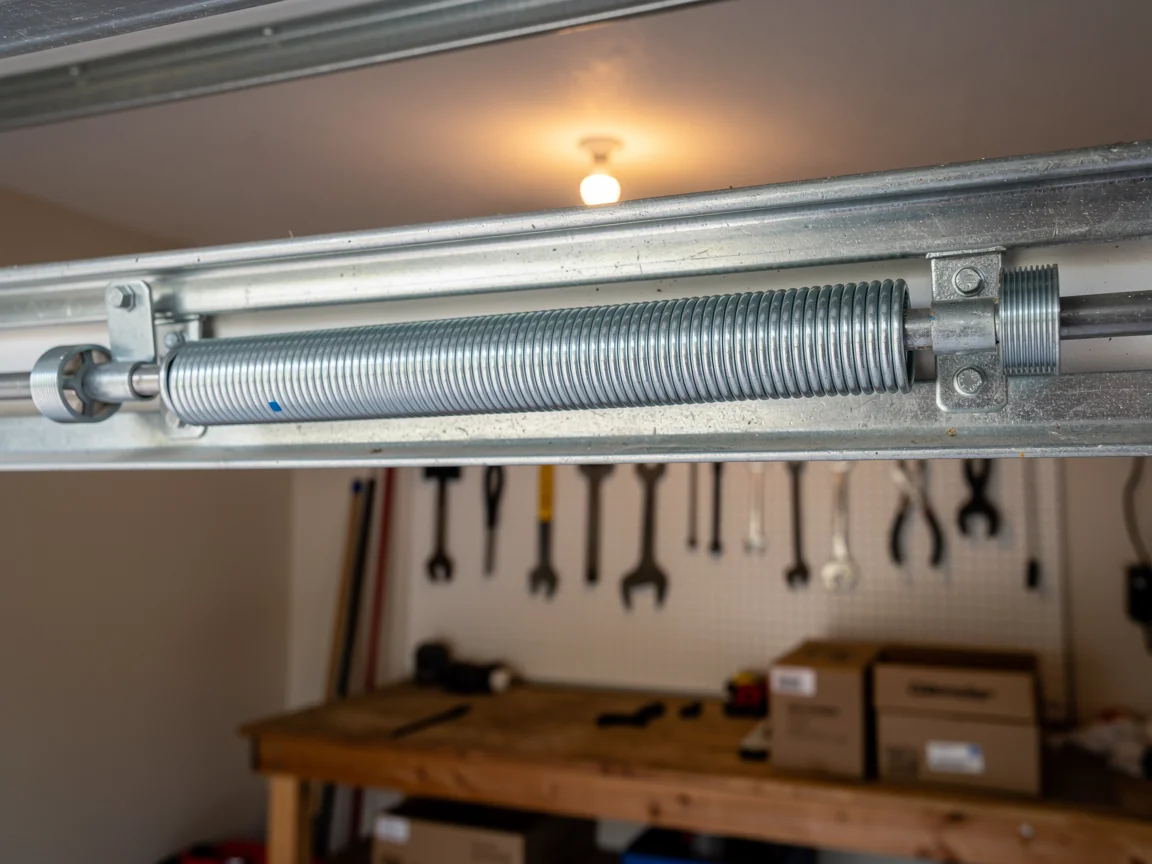
Colton's housing stock clusters tight around 1979, which puts a huge share of these garage doors at or past 45 years old. At that age the failure isn't usually the door skin - it's the torsion spring fatiguing, the rollers wearing oval, or the opener's gears stripping from decades of thermal cycling in a moderate-heat climate. Heat here isn't extreme by Southern California standards, but it's steady, and steady heat cycling is what ages nylon rollers and opener belts faster than cold ever does.
With 17,191 households in Colton, a good number of them are original-hardware houses that have never had a torsion spring replaced. That's the pattern we see on install calls: the owner thinks they need a new door because the old one won't open smoothly, and the real issue is springs and track that are original to a house built when Carter was president. The median income here, $69,581, runs below the broader San Bernardino service area's $84,594, which is part of why a lot of owners here patch hardware for years before replacing the whole door - and that's a reasonable call, right up until the patching costs more than the install would have.
What Can Go Wrong
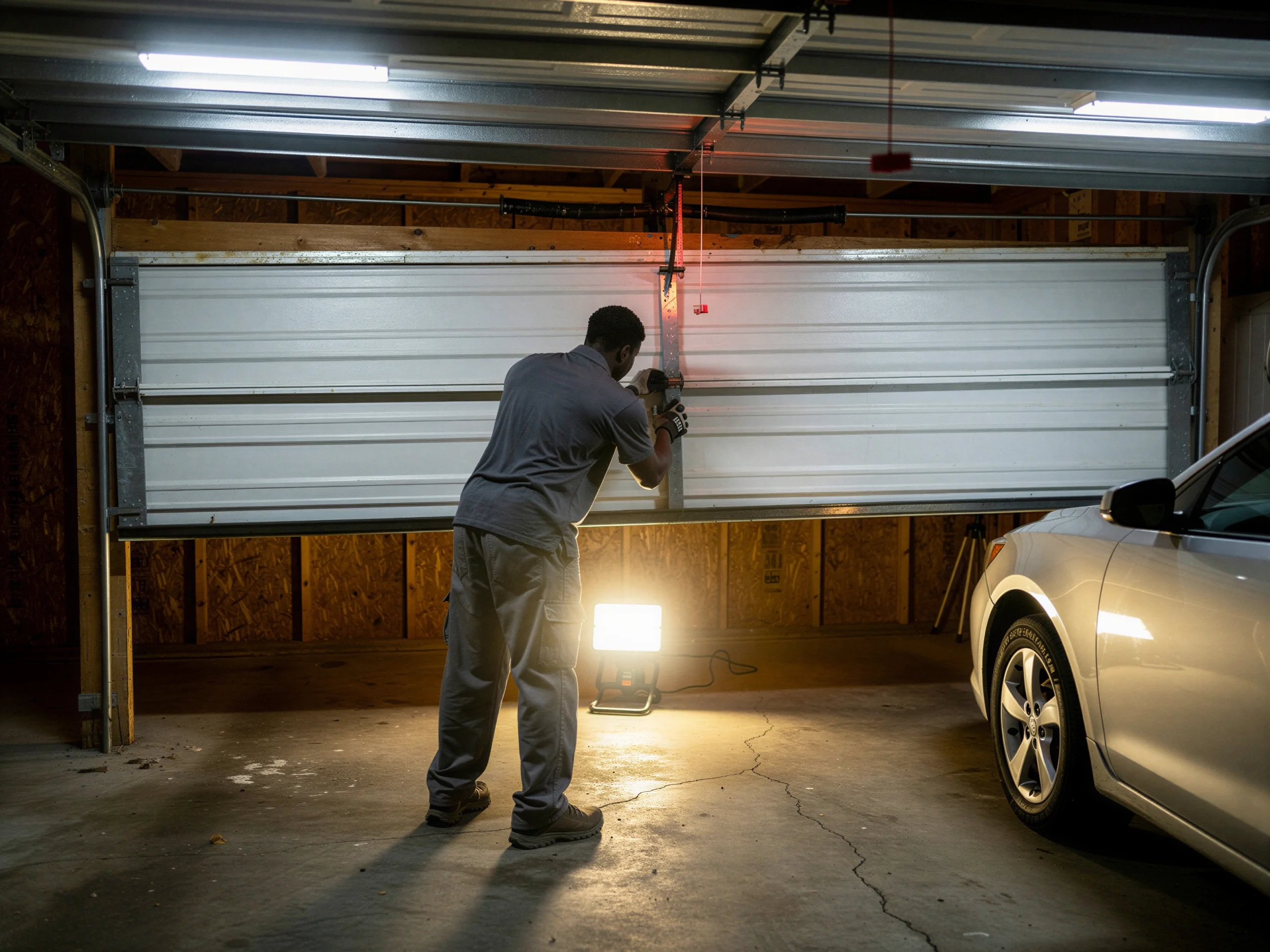
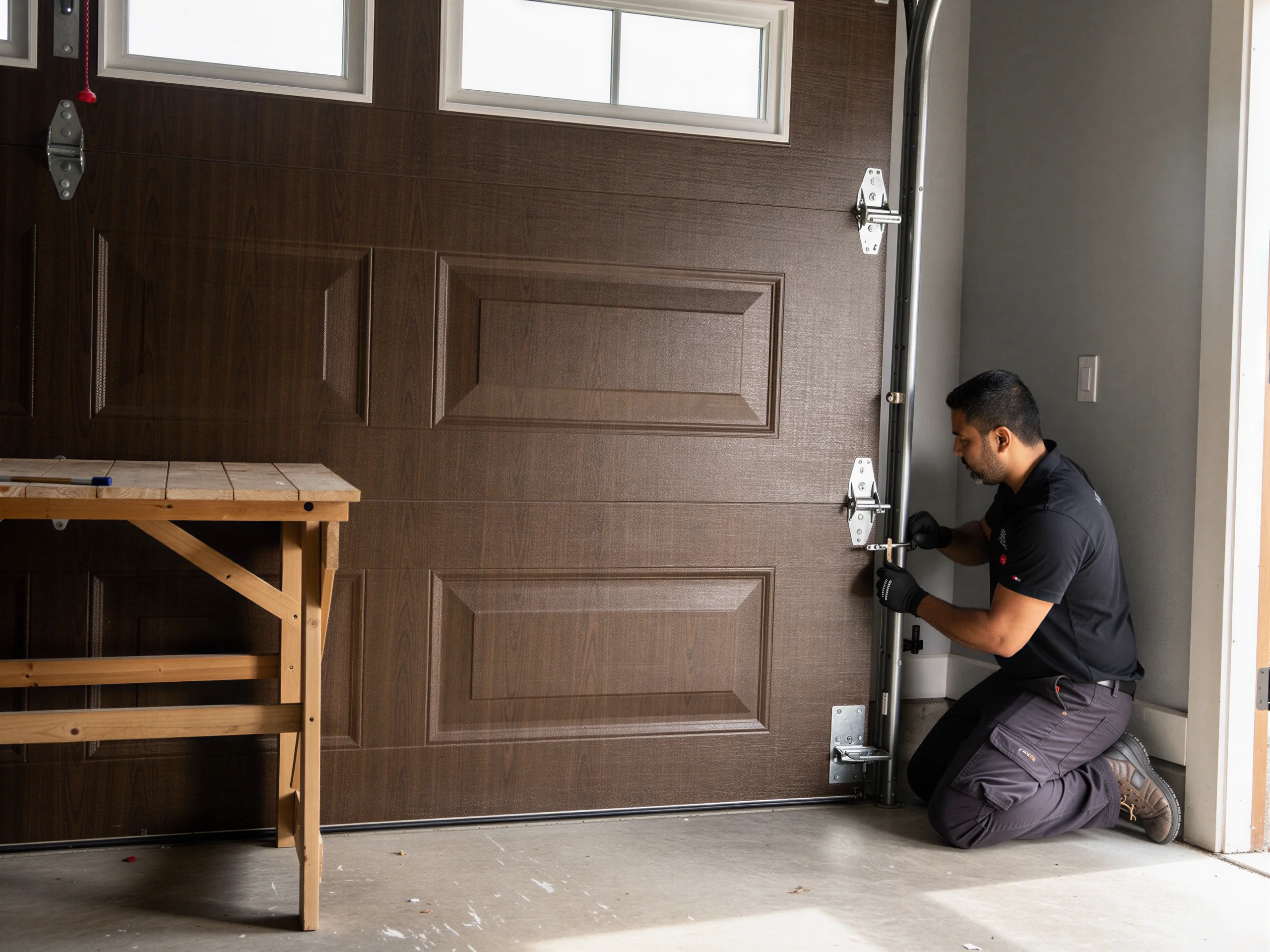
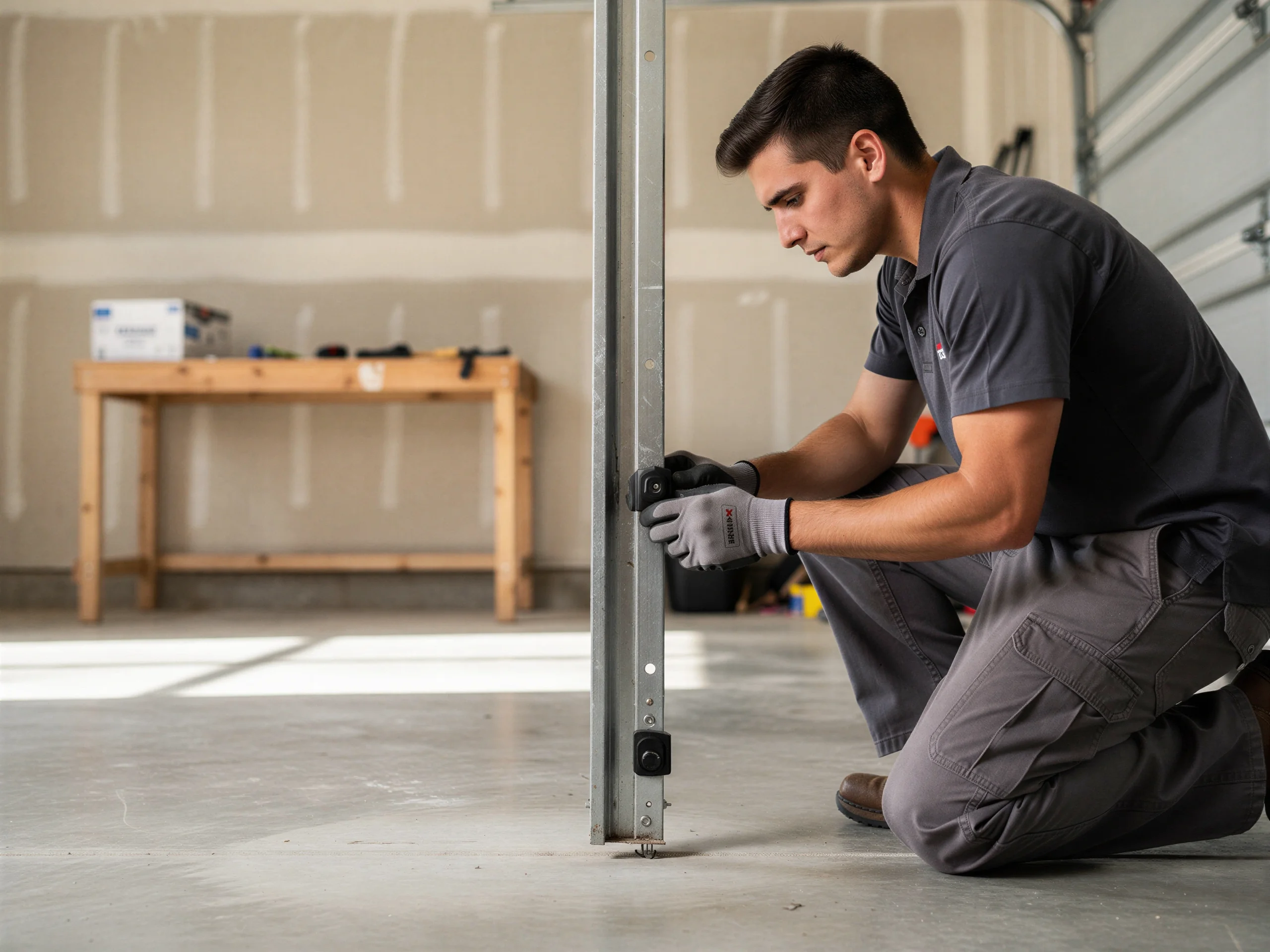
On a house with original 1979-era hardware, a new door install isn't always a clean panel-for-panel swap. We've opened up jobs where the track mounting was never upgraded to current bracing and the header behind the door isn't rated for a heavier insulated panel - which means extra framing work before the new door goes in.
Old wiring limits openers
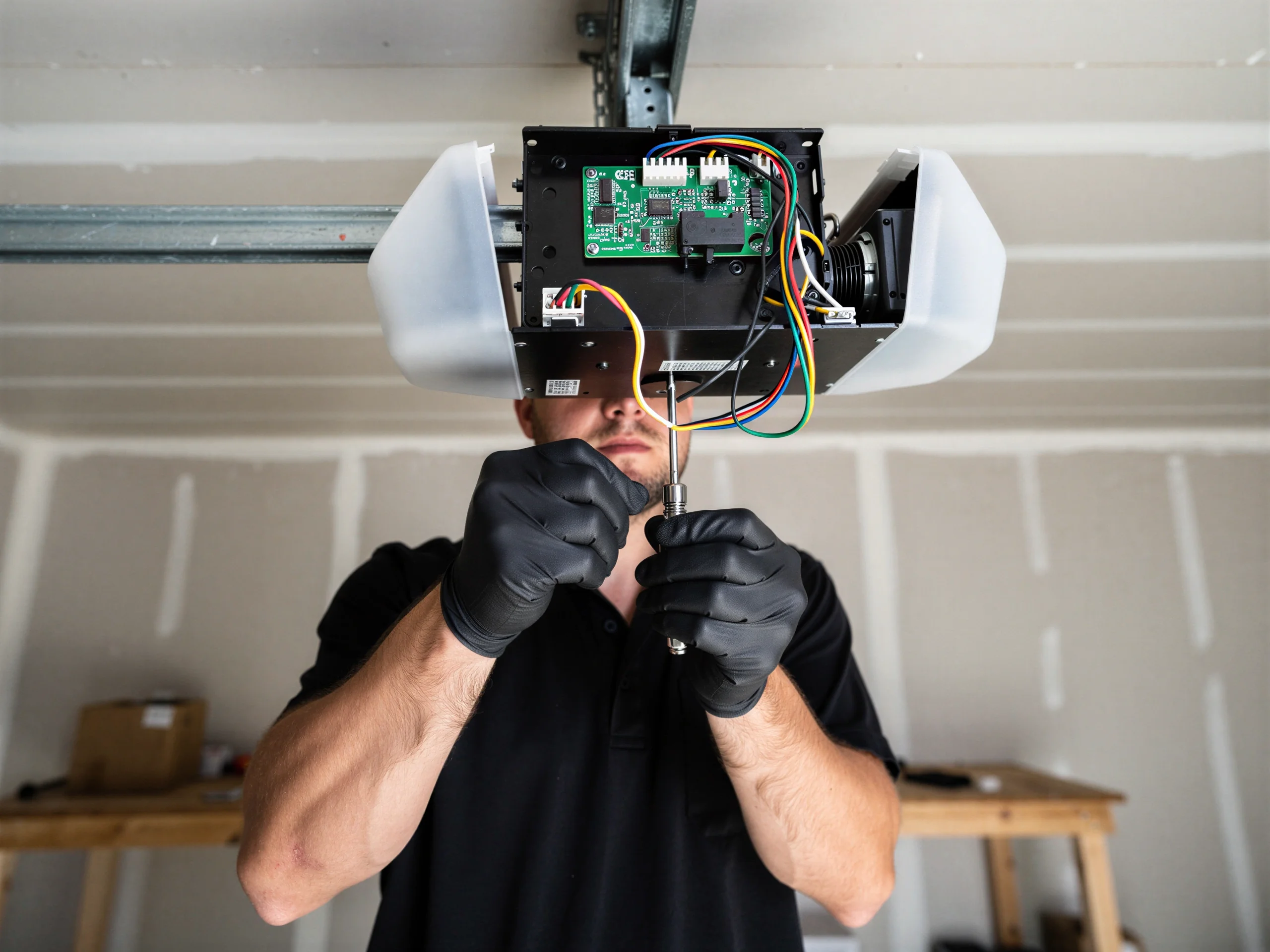
Original wiring to an opener from that era can also be undersized for a modern unit, and we won't hook a new opener to wiring that isn't up to it.
Scope creep on new doors
The other thing that goes wrong is scope creep nobody wanted: owner calls for a new door, we find the spring is original and on the edge of failing, the cables are rusted through at the bottom bracket, and now the quote covers three things instead of one. We tell you before we start, not after, but a 1979 opening with nothing replaced since build day usually has more than one issue stacked up.
What Is on the Truck
Because Colton skews heavily toward one build era, we stock torsion springs and track hardware sized for openings common to houses built between the late 1950s and the 1990s - Colton sits right in the middle of that window at 1979. That covers most standard single and double openings without a special order.
What we don't carry on the truck is anything custom - a non-standard opening width, a specialty insulated panel in an odd color, or a smart-opener model outside our regular line. Those get ordered in, and that's the honest limitation: if your opening is a standard 1970s-era size, we can often install same visit; if it's custom, you're waiting on a part.
The DIY Question
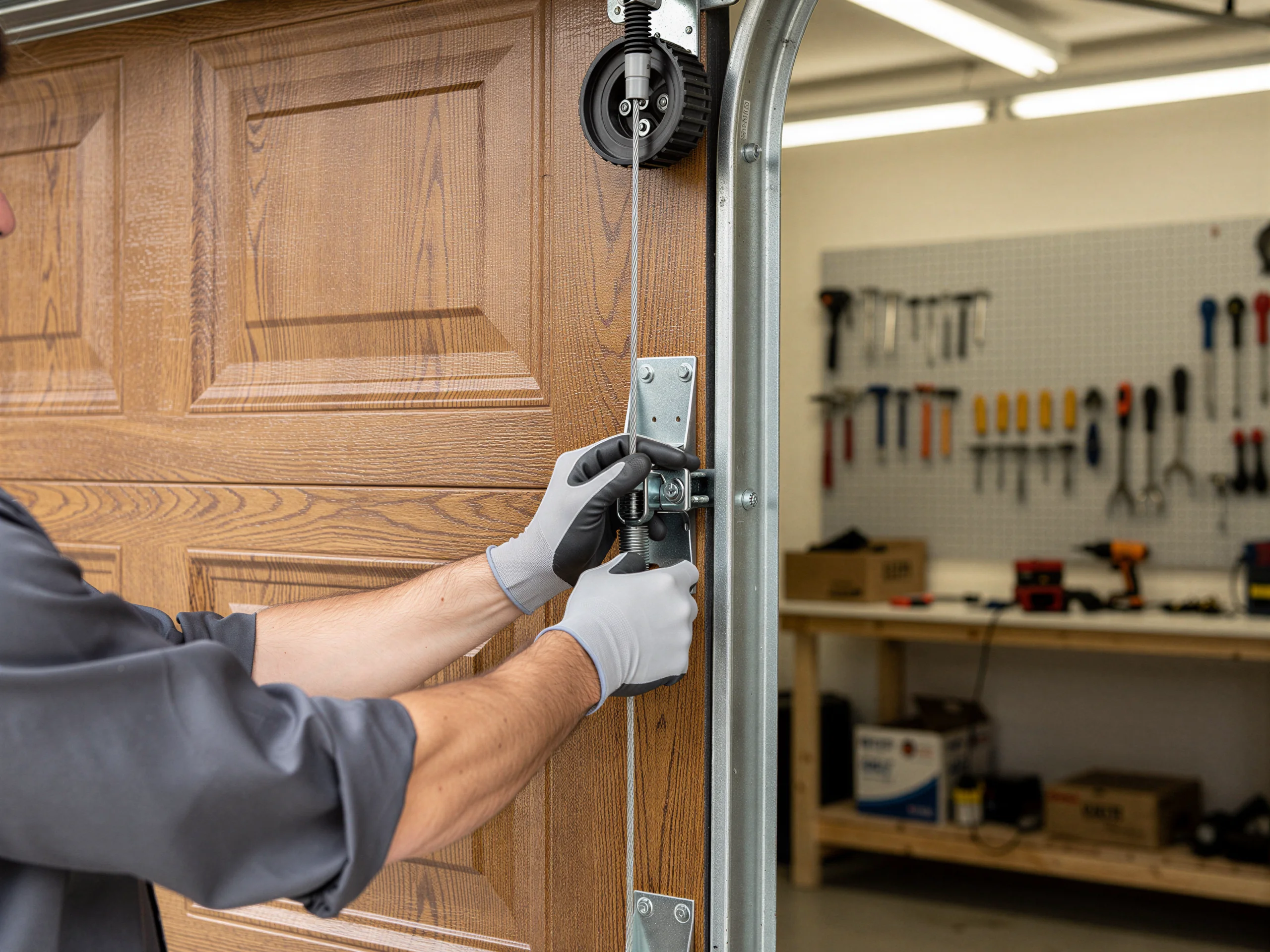
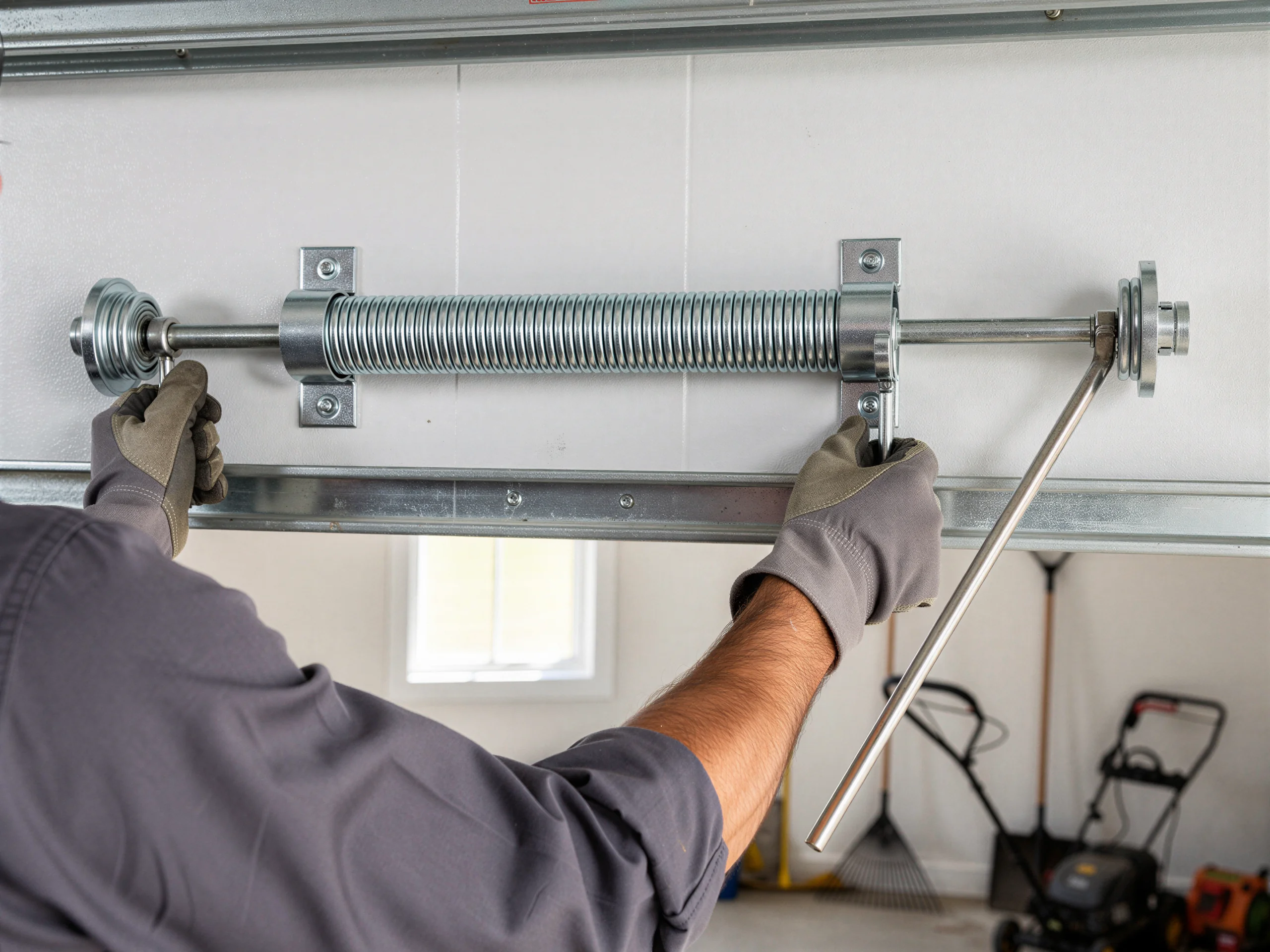
A full install on a house this age isn't a weekend DIY job, mainly because of what's usually hiding behind an original 1979 door: a torsion spring under enough tension to break a bone if it's released wrong, and header framing that may or may not be rated for the door you're buying off a shelf. We've seen owners get partway into a DIY swap and stop once they realize the old spring won't come off safely without the right bars.
Where DIY makes sense is cosmetic - repainting a panel, swapping a handle, oiling rollers. Where it doesn't is anything involving the spring, the track anchoring, or opener wiring on a house where none of that has been touched since the build year. That's the line we draw, and it's the same line we'd tell a neighbor to draw.
Talk to a local pro
Garage door service in San Bernardino?
Same-day service with honest, upfront quotes.