How Long You Are Without the Door
Muscoy sits about 3 miles from our San Bernardino shop, so a truck is on the road the moment we take your call. What changes the math for Muscoy isn't the drive, it's what we find once we get the door open.
Original hardware gap from 1958
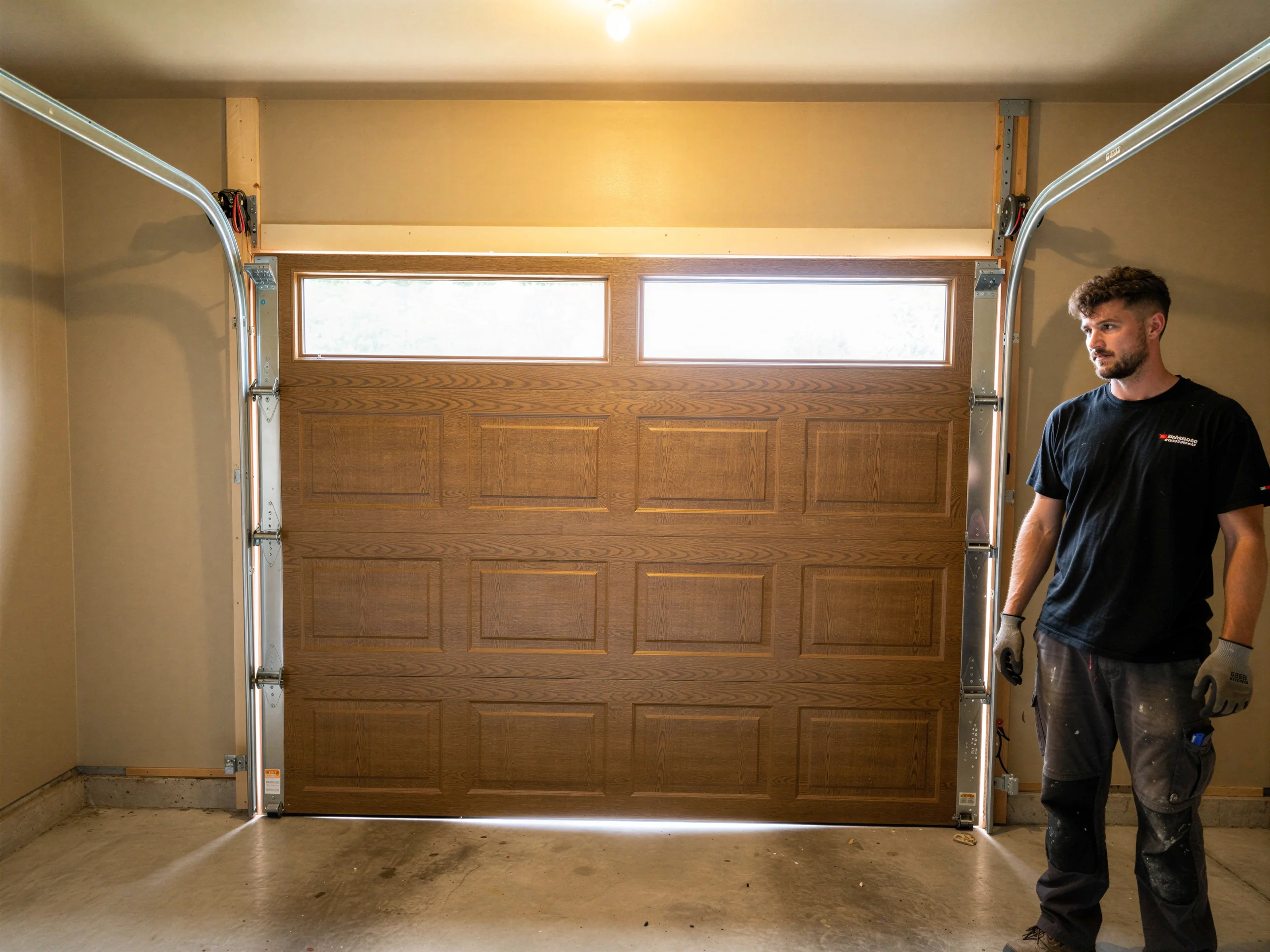
The wider San Bernardino service area has a median build year of 1979, but Muscoy's housing stock centers on 1958. That's a 21-year gap, and it means a lot more of what we're working on is original hardware or a first-generation replacement: steel panel doors on worn galvanized track, torsion springs that have outlived their cycle count years ago.
Cascading damage from spring
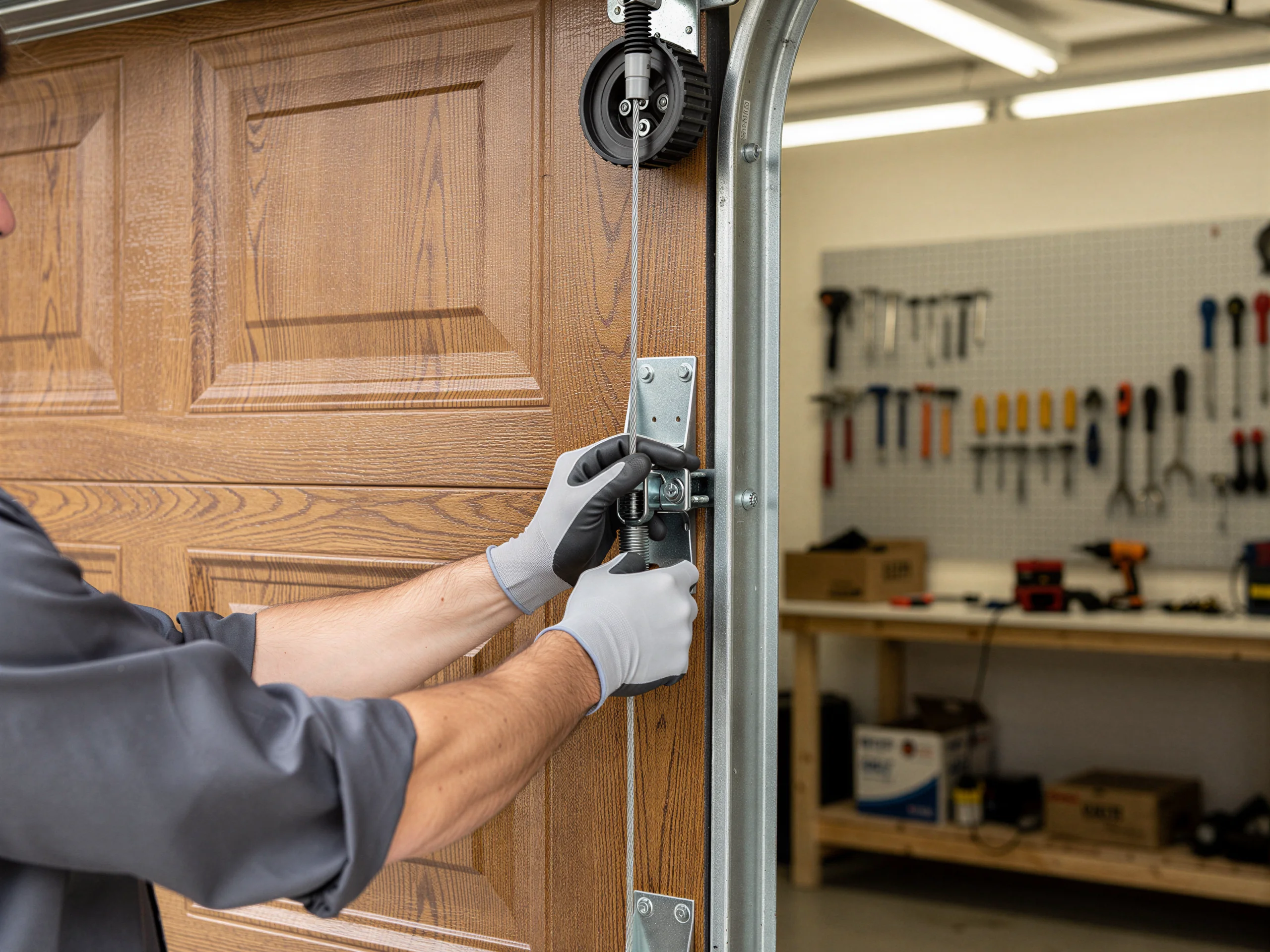
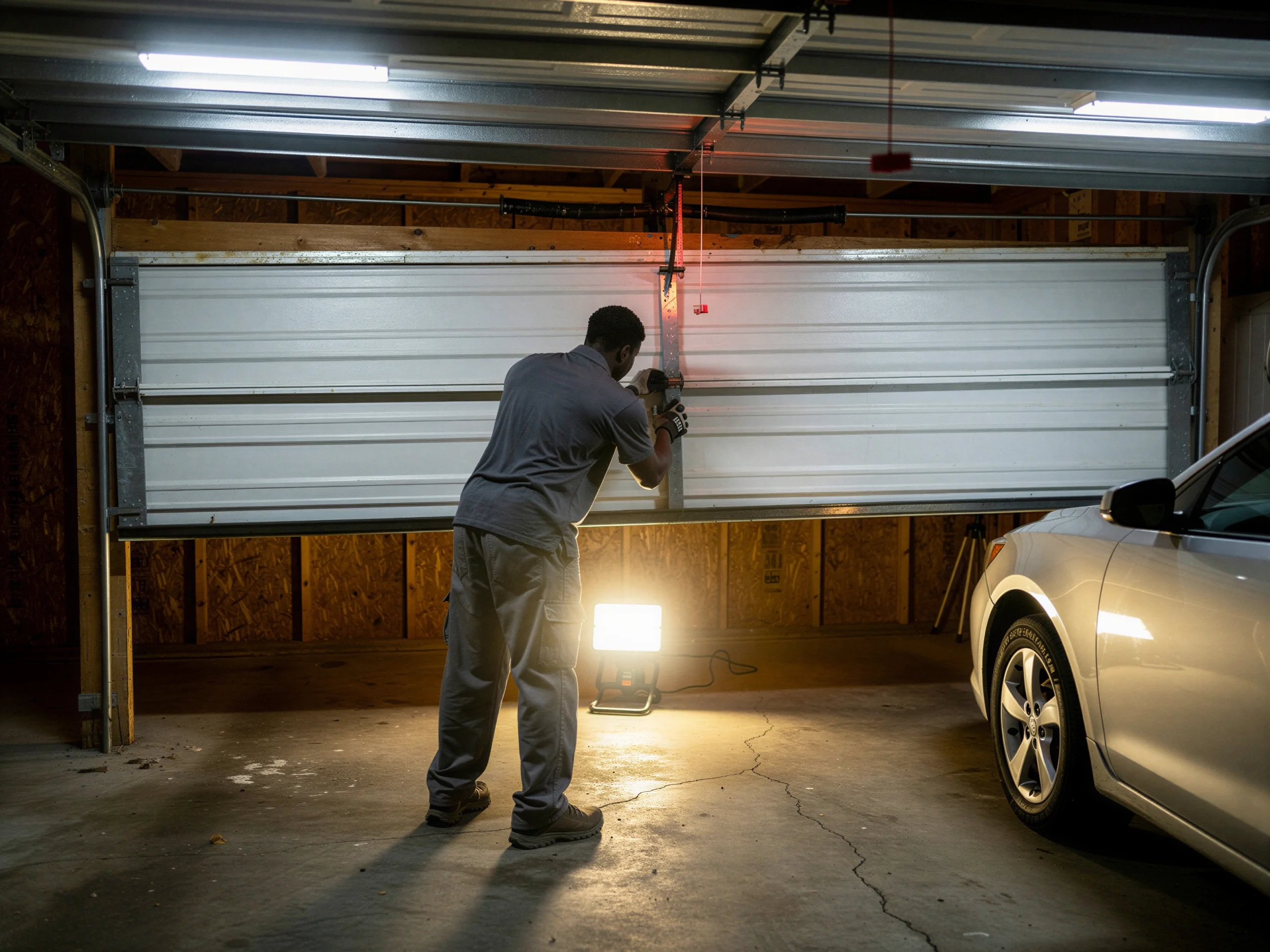
Those jobs take longer to diagnose because the fix sometimes cascades - a spring that let go has usually already chewed up a cable or bent a roller bracket on its way down.
Stock for both hardware eras
We don't pad an estimate to cover that risk; we tell you on-site once the door's apart what else needs attention, and we carry stock sized for both eras of hardware so a second trip isn't usually necessary.
What You Pay
Across the full San Bernardino service area, median household income runs $84,594. In Muscoy it's $57,726 - a real difference, and one reason we don't push full door replacement as a default fix here. If a spring, cable, or opener board can be repaired on an older 1958-era door and still leave you with years of safe service, we say so. Replacement makes sense when the door itself is failing - rusted-through panels, a track that's been reshaped by one too many forced openings - not just because the house is older. We quote the repair in front of you before we start, not after the parts are already off the shelf.
What the Repair Takes
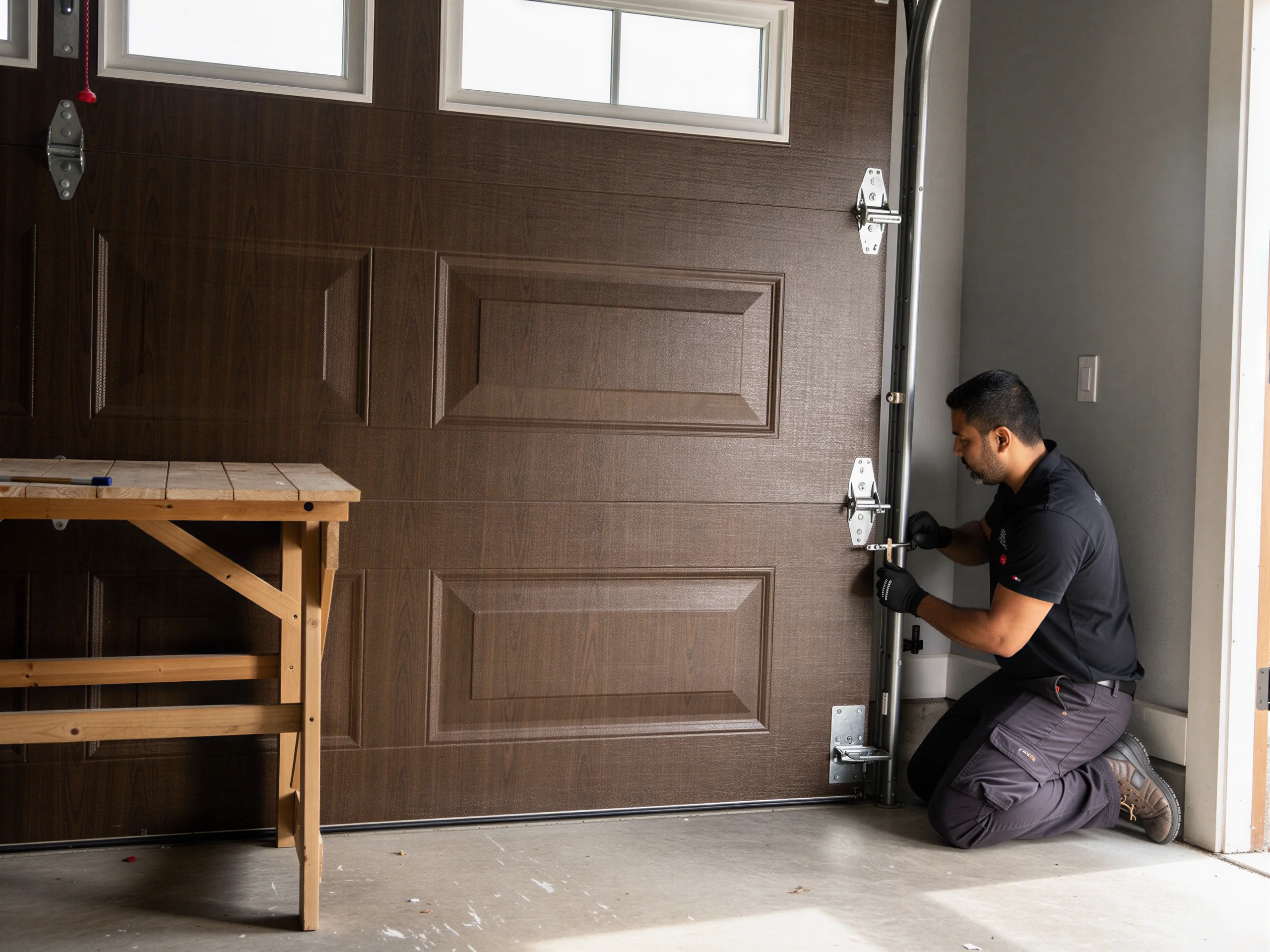
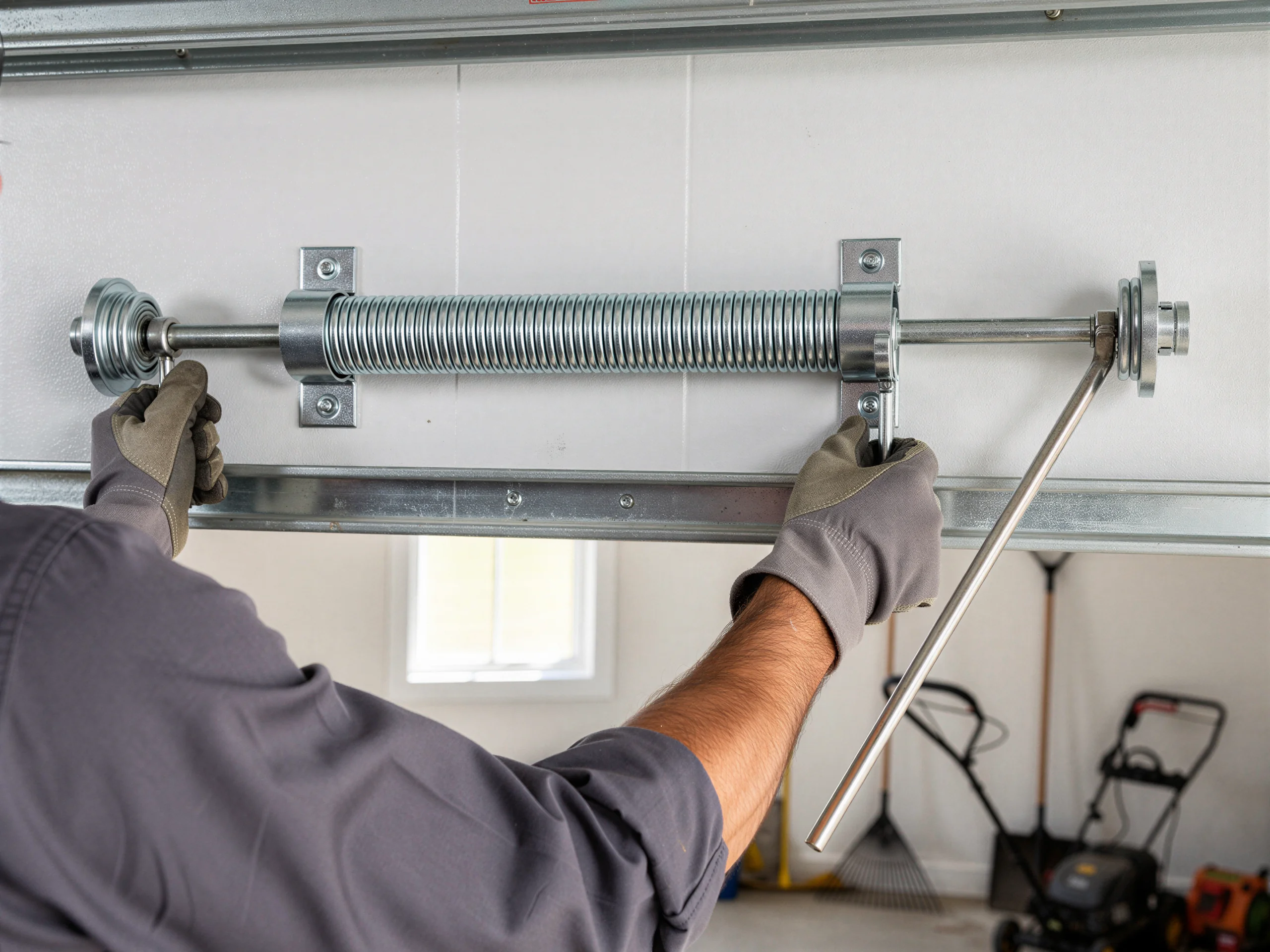
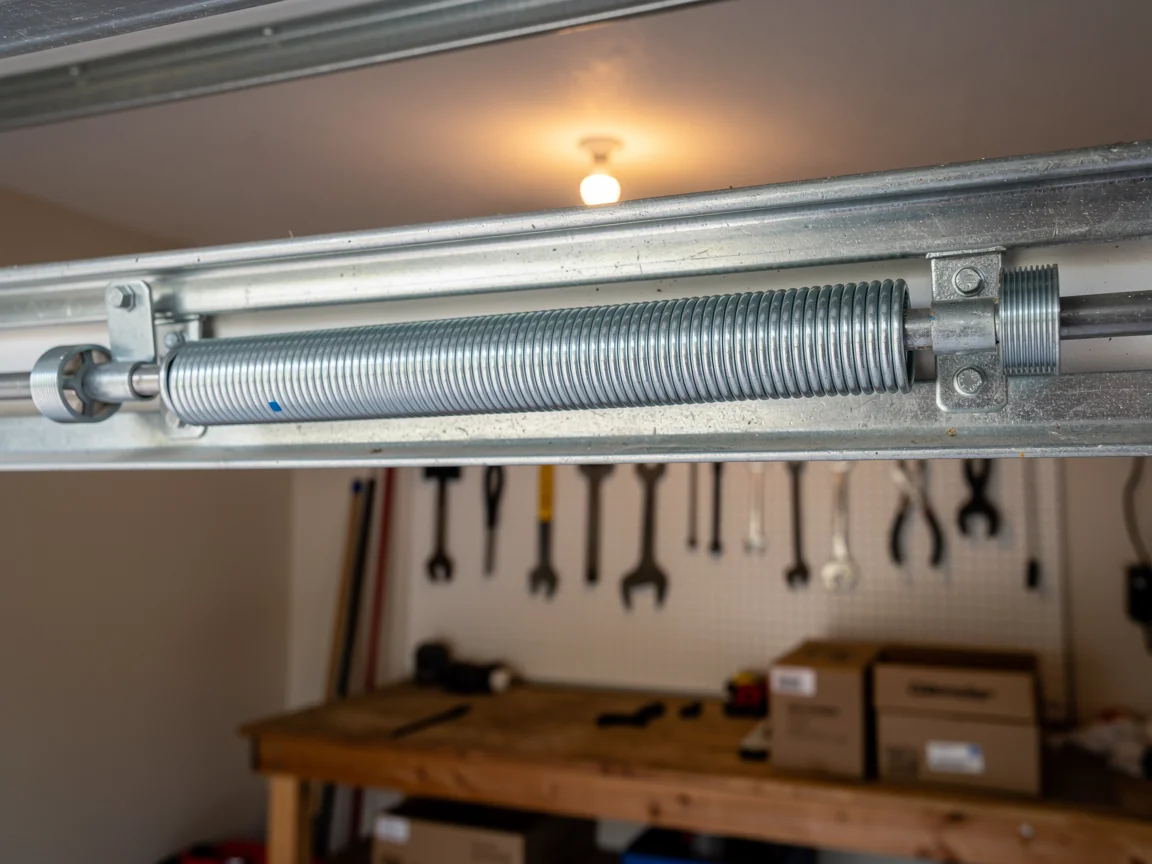
A broken torsion spring on a single door is usually a same-visit fix once we've confirmed the door and opener are otherwise sound.
Measuring older sizing
Where Muscoy's older stock adds time is in parts matching - doors from the late 1950s and early 60s sometimes used spring and drum sizing that newer standard kits don't cover, so we measure twice before cutting any cable.
Bent track blocks sensor
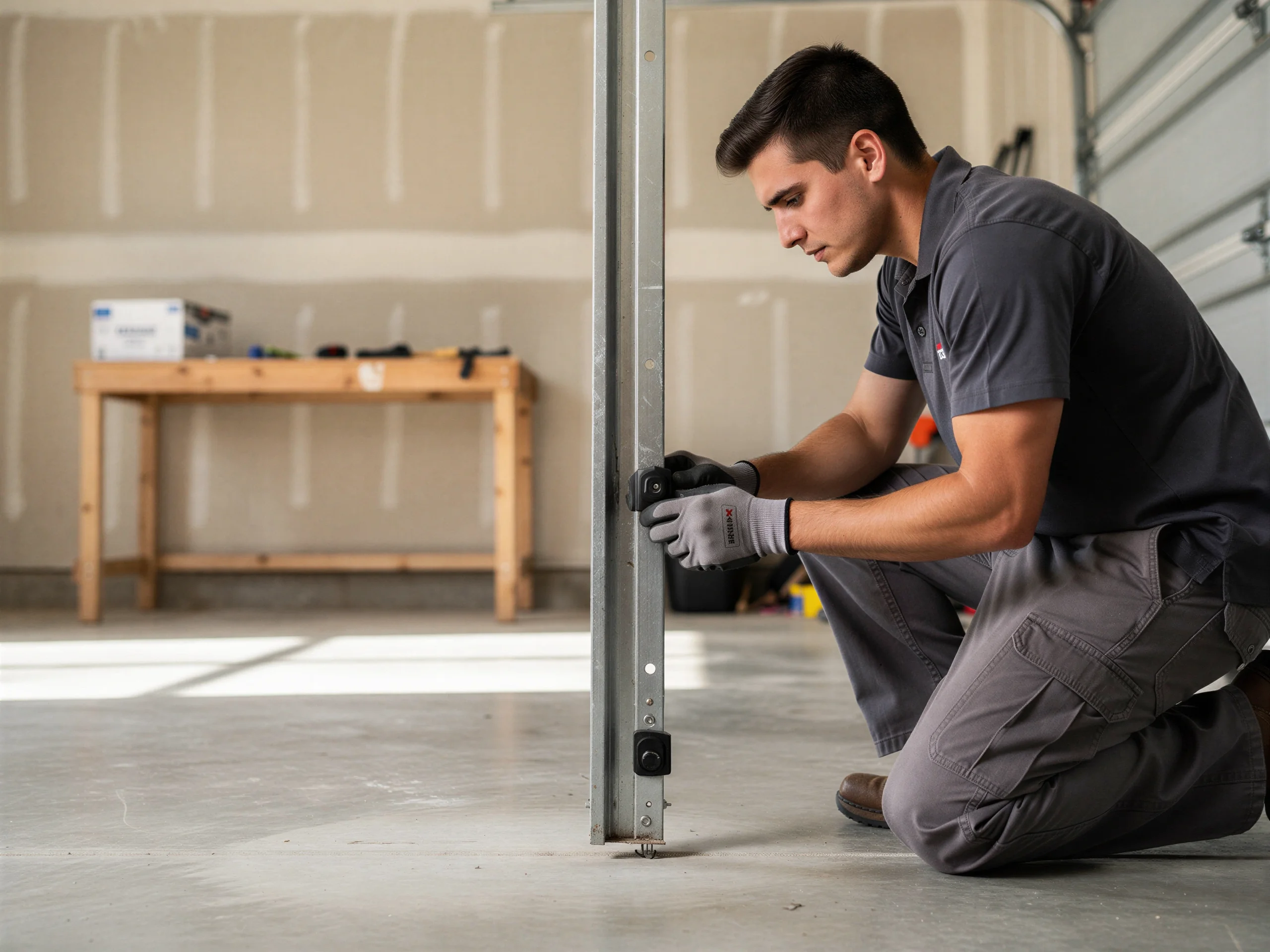
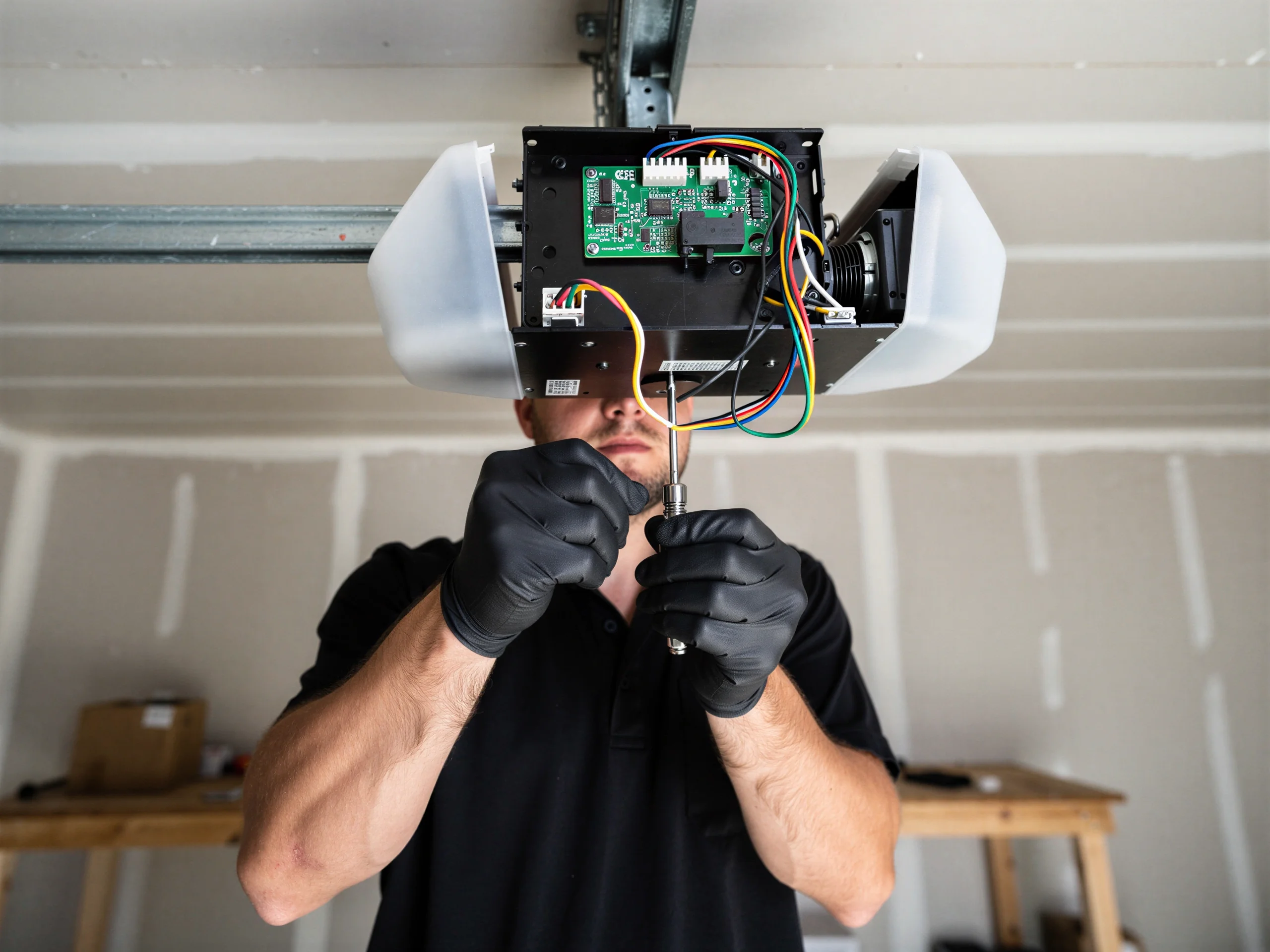
Opener swaps go faster regardless of house age, since the opener itself is rarely original equipment by now. What we won't do is force a modern safety sensor bracket onto a track that's been bent out of true - that gets fixed first, or the sensor won't hold alignment no matter how many times we reset it.
The DIY Question
A torsion spring under tension on a door this old is not a project to learn on. The winding bars and cone sizes that worked on newer doors elsewhere in the service area don't always match what's on a 1958-era track, and guessing wrong with a spring under load is how people end up in the ER, not just back on the phone with us. Things you can safely check yourself: the sensor eyes aren't knocked out of alignment, the track isn't visibly bent, the door isn't binding on one side when it travels. If any of those look off, that's the call to make before the spring itself goes.
What Can Go Wrong
Heat is a moderate factor across this whole region, and it does the same slow work on older hardware everywhere it sits: dried-out lubricant, nylon rollers that have gone brittle, bearing plates that seize instead of turning. On a door built around 1958, that aging has had decades longer to work than on a typical 1979-era door elsewhere in the service area. The failure you'll actually notice is usually the spring - it's been absorbing that wear quietly until the day it doesn't. Less obvious is a cable that's frayed at the drum from the same slow corrosion; it looks fine until it isn't, and it tends to let go right as the spring does. We check both whenever we're called out for one of them.
Talk to a local pro
Garage door service in San Bernardino?
Same-day service with honest, upfront quotes.