What Is on the Truck
The run out to Yucaipa is sixteen miles from San Bernardino, which is far enough that a maintenance call here gets built as its own stop rather than squeezed between two closer jobs.
Lubrication kits and winding bars
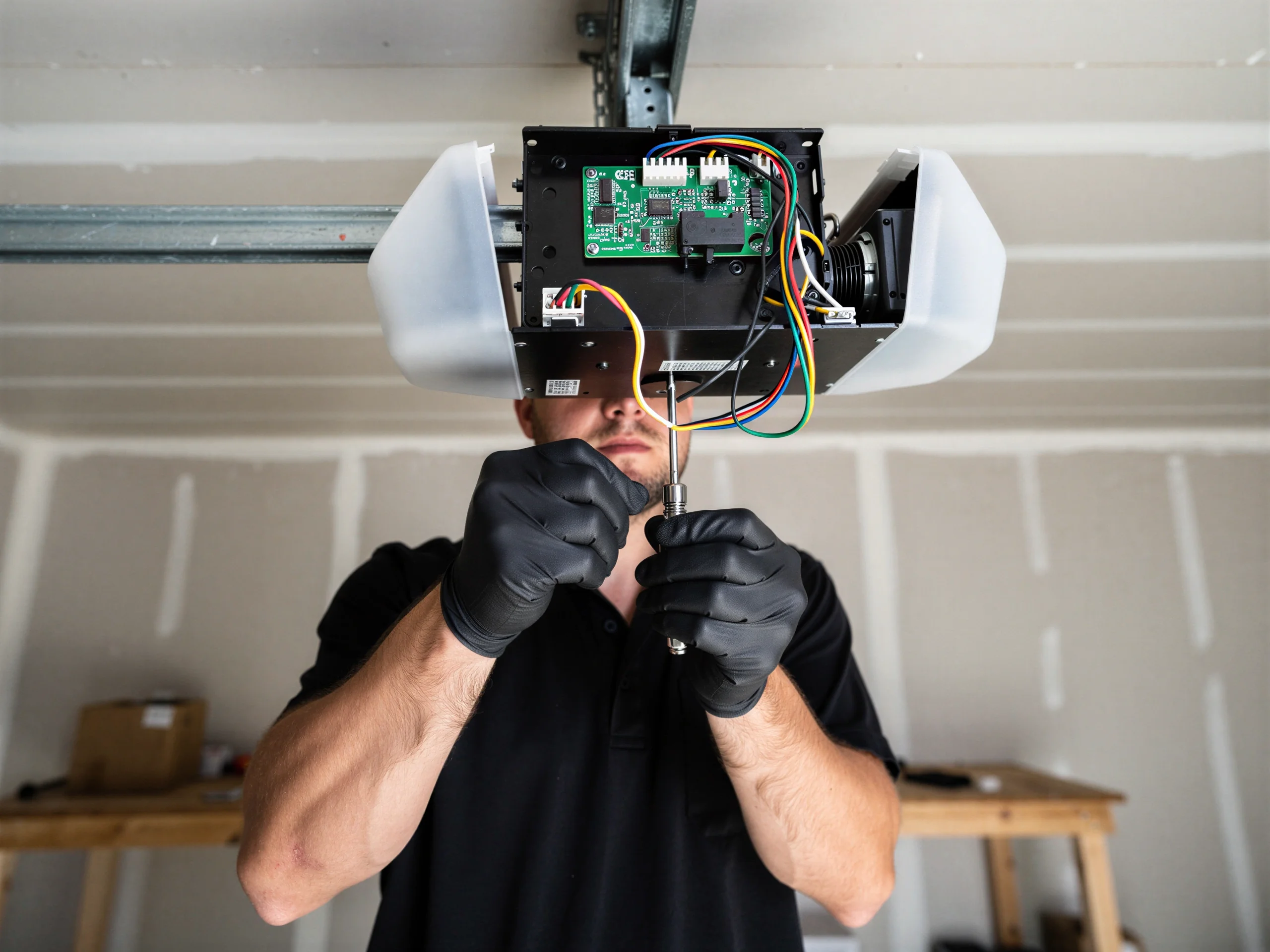
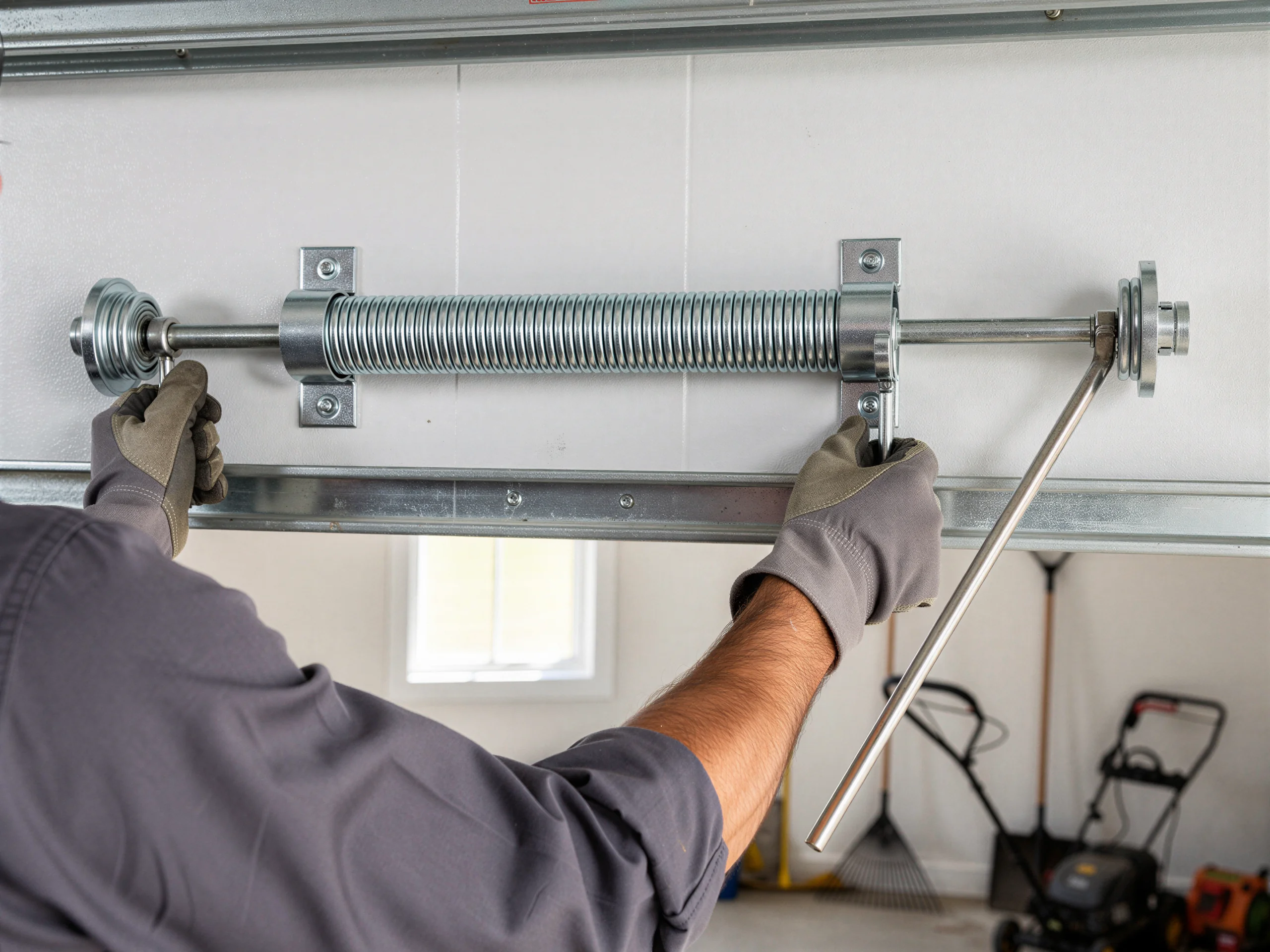
That changes what rides on the truck that day: full lubrication kits for springs, hinges, and rollers, a torsion spring winding bar set sized for the heavier doors common on homes from the late 1970s, and replacement rollers and hinges carried in bulk because a tune-up that turns up one worn roller usually turns up three.
Same-day add-on limits
With roughly 18,006 households in Yucaipa, there's enough of this housing stock to make the drive worth planning around, but it does mean a same-day add-on isn't realistic. If your door needs a look today, that's a call, not a walk-in - the truck comes from San Bernardino, not a yard in town.
Galvanized cable fray at drum
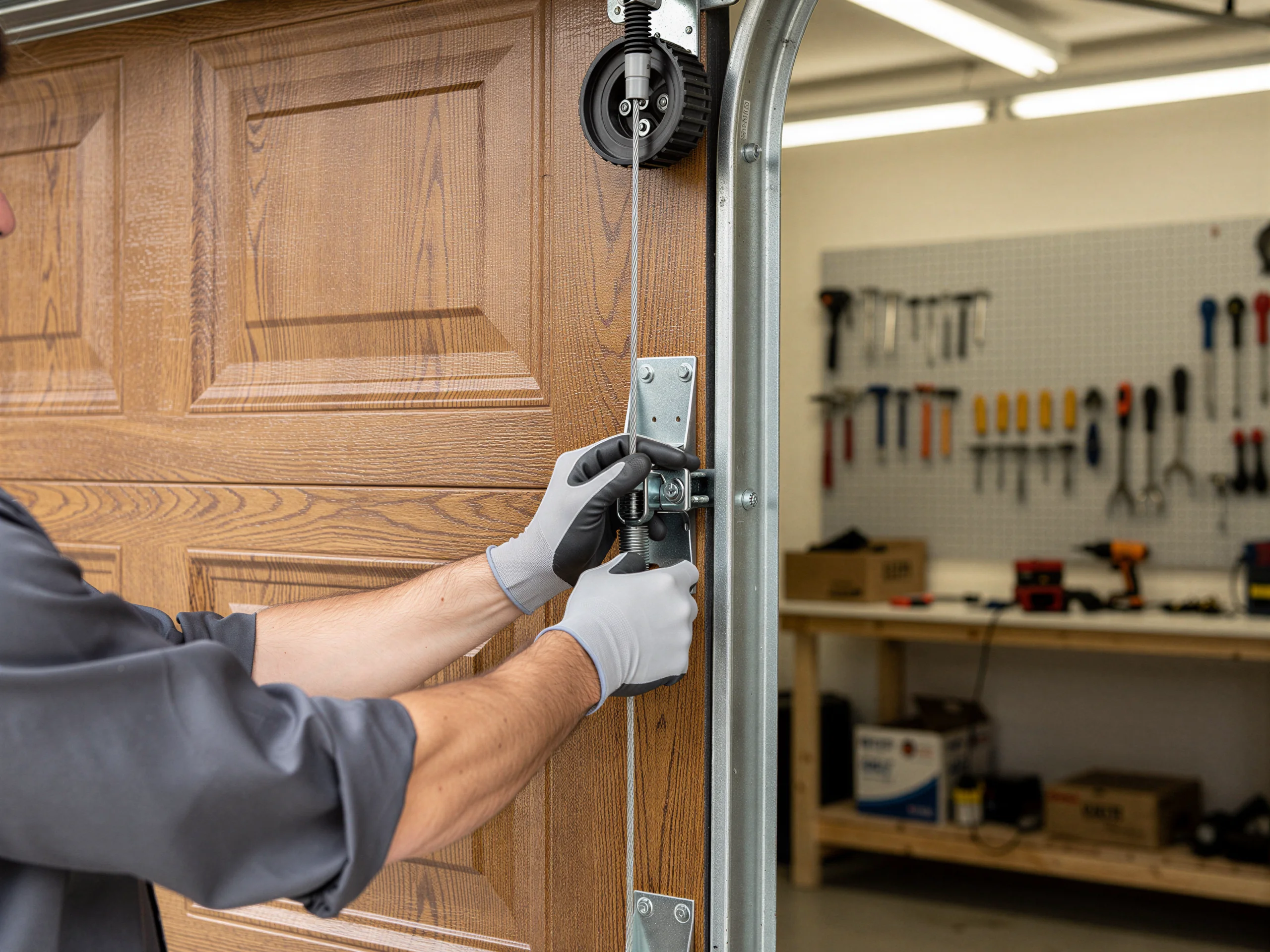
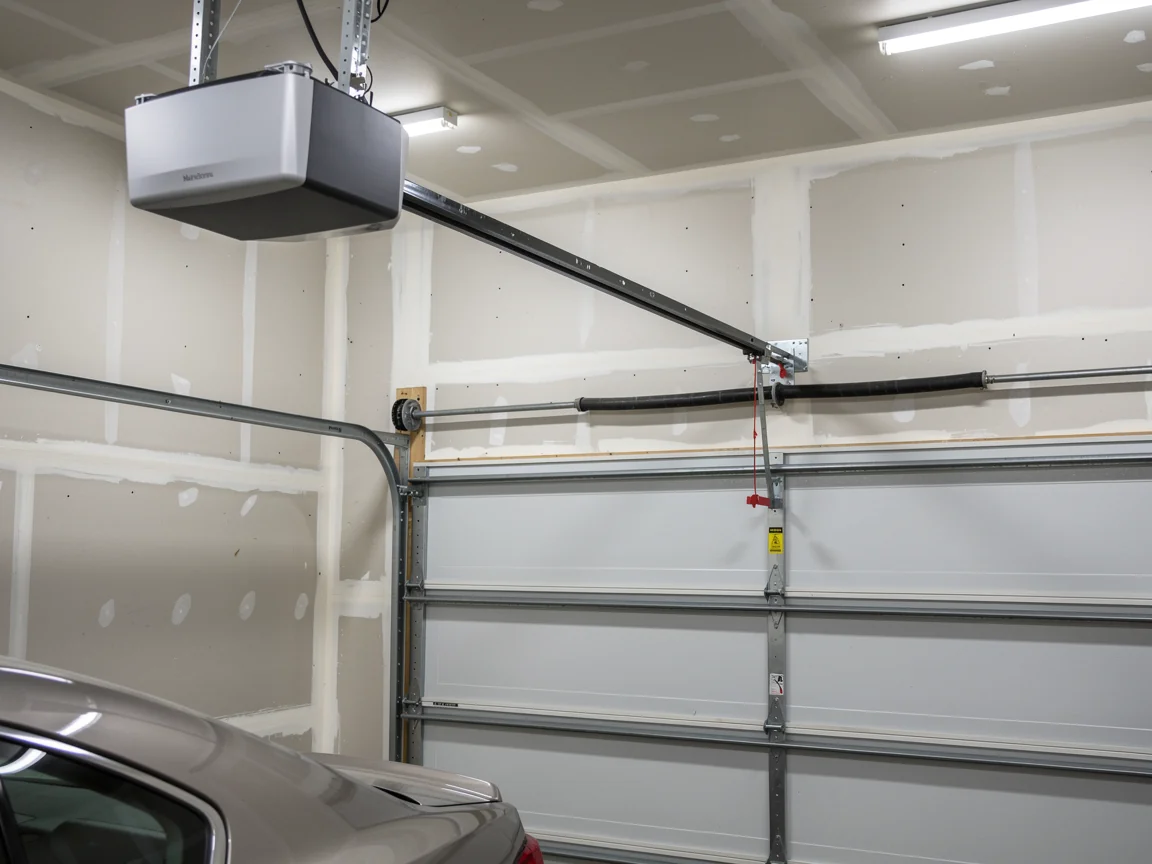
The parts list also reflects what breaks on doors this age: galvanized lift cables that fray at the drum before they look bad to the eye, and center hinges that have carried thirty-plus years of cycles on the same pivot pin.
What Can Go Wrong
Most houses in Yucaipa went up around 1978, which puts the original garage door hardware squarely in the era of steel roller tracks and side-mounted torsion springs rated for a service life that's already been exceeded on anything never serviced.
Track drift strains openers
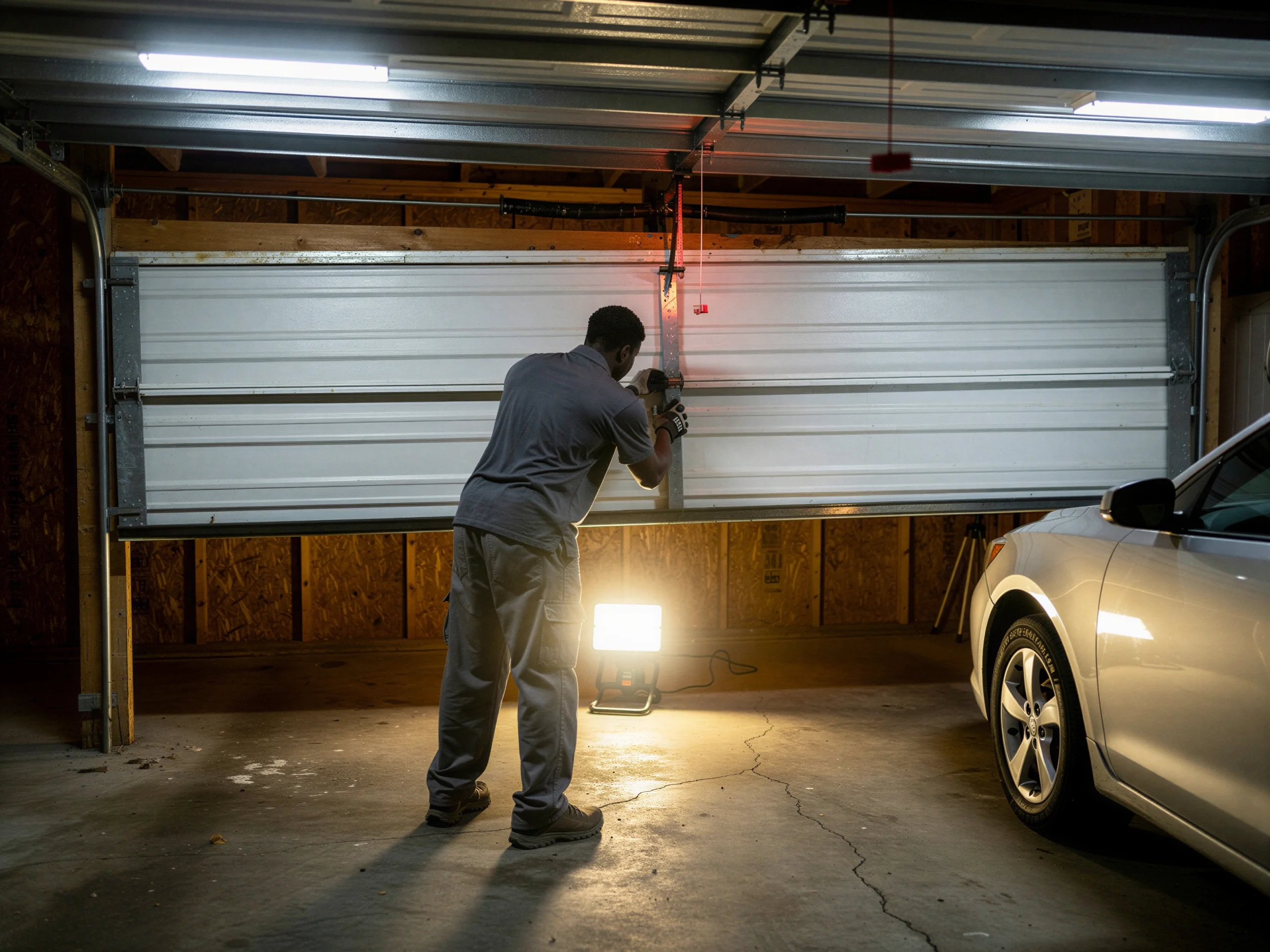
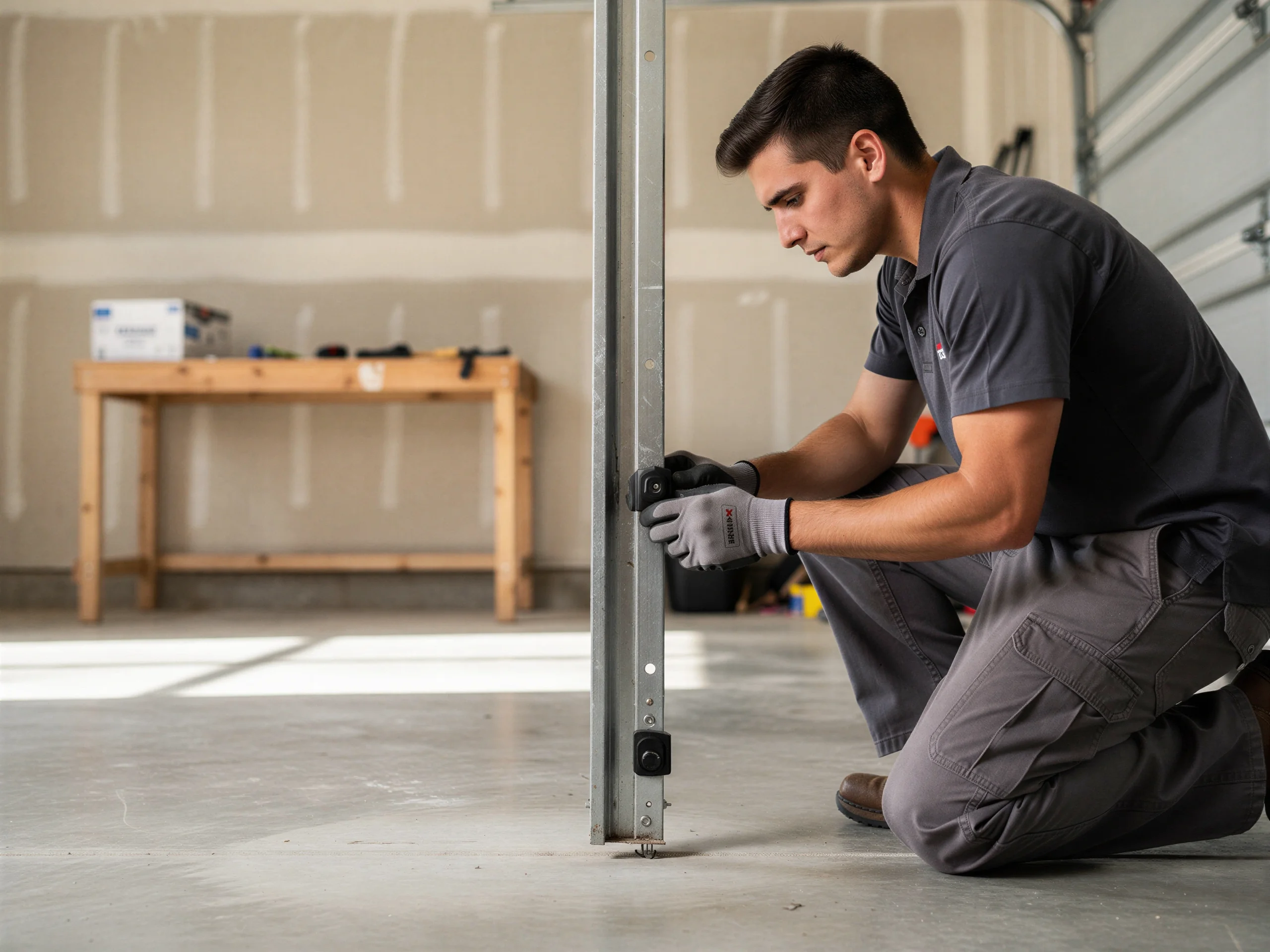
The common failure isn't dramatic - it's a track that's drifted out of plumb by a few degrees, enough to make the rollers bind and the opener strain to compensate. Left alone, that strain is what burns out the opener's drive gear long before the gear itself was due to wear out.
Grease thinning in summer
The moderate heat here does its own damage over a season: factory grease on rollers and hinges thins out and runs off in summer, then the metal grinds dry through the hotter months unless someone's been back to relube it.
Bottom bracket and fixture fray
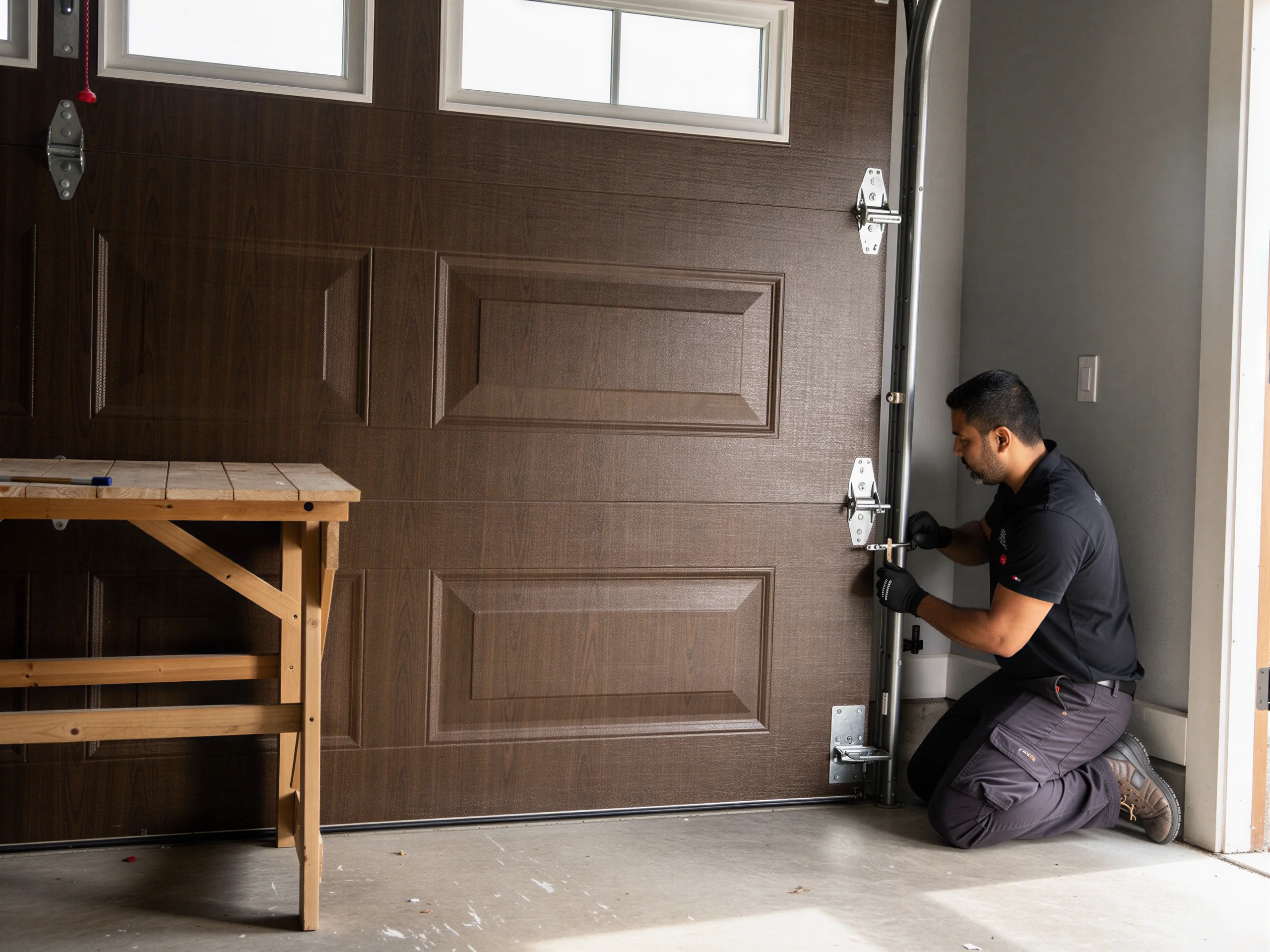
We also see bent bottom brackets on doors that got left half-open during wind, and cable fraying where the cable meets the bottom fixture - a point most owners never think to check because it's low and out of sight.
What the Repair Takes
A standard maintenance visit checks spring tension and balance, lubricates every moving metal-on-metal point, tightens hardware that's worked loose from cycling, and inspects cables and rollers for fraying or flat spots before they become a stuck door.
Inspection finds worn parts
On a Yucaipa house built in the late 1970s, that inspection usually turns up at least one item worth flagging - a roller close to cracking, a hinge pin worn oval - even on a door that still opens and closes fine. We won't pad the list.
Lubrication and tightening pass
If the door balances correctly and the hardware's in decent shape, the visit is lubrication and a tightening pass, nothing more. Where we do find a worn part, we'll tell you what it is and what it costs to replace rather than bundling it into a vague service fee.
Rust pitting becomes repair
One honest limit: if a spring is already showing rust pitting or a cable strand has let go, that's a repair call, not a maintenance line item, and we'll say so on site rather than patch it and have it fail in a month.
The DIY Question
Lubricating hinges and rollers with a silicone-based spray is reasonable for an owner to do twice a year, and it's the single best thing you can do between visits given how fast the heat here dries out grease. Checking that the door is balanced is also safe: disconnect the opener, lift the door halfway by hand, and see if it holds. If it drops or shoots up, the spring tension is off.
What isn't reasonable to do yourself is anything involving the torsion spring itself - winding, unwinding, or replacing it. A torsion spring on a door this size holds enough stored energy to break a bone or worse if the winding bars slip, and that risk doesn't change because the house is in Yucaipa instead of anywhere else. If your door is hard to lift by hand, that's a spring problem, and it's a call, not a weekend project.
How Long You Are Without the Door
Routine maintenance doesn't take your garage offline - the door stays operable through the whole visit, and you're looking at roughly an hour on site for lubrication, balance check, and hardware tightening. If the inspection turns up a part that needs replacing, like a cracked roller or a frayed cable, that's typically handled the same visit if the part's a common size, since those ride on the truck already.
What does stretch things out is a spring that's further gone than expected, or hardware sized for an older door that isn't a stock item. In that case the door may need to stay manually operated, or closed and left alone, until the part's sourced. Because the shop runs out of San Bernardino and not Yucaipa itself, a return trip for a special-order part means another sixteen-mile drive, which is worth knowing before you decide whether to fix now or wait for symptoms to get worse.
Talk to a local pro
Garage door service in San Bernardino?
Same-day service with honest, upfront quotes.