What Is on the Truck
Most houses in Yucaipa went up around 1978, right in the middle of the 1958-1996 window that covers this whole service area, and on the later end of the 1960s-70s run that's typical across the sixteen communities we work.
Single-layer steel removal
That matters for what we load before we ever leave San Bernardino. A door install here usually means pulling a single-layer steel door that shipped with the house, on side-mounted torsion hardware that's never been swapped - just adjusted, maybe, if that.
Modern sensors and track stock
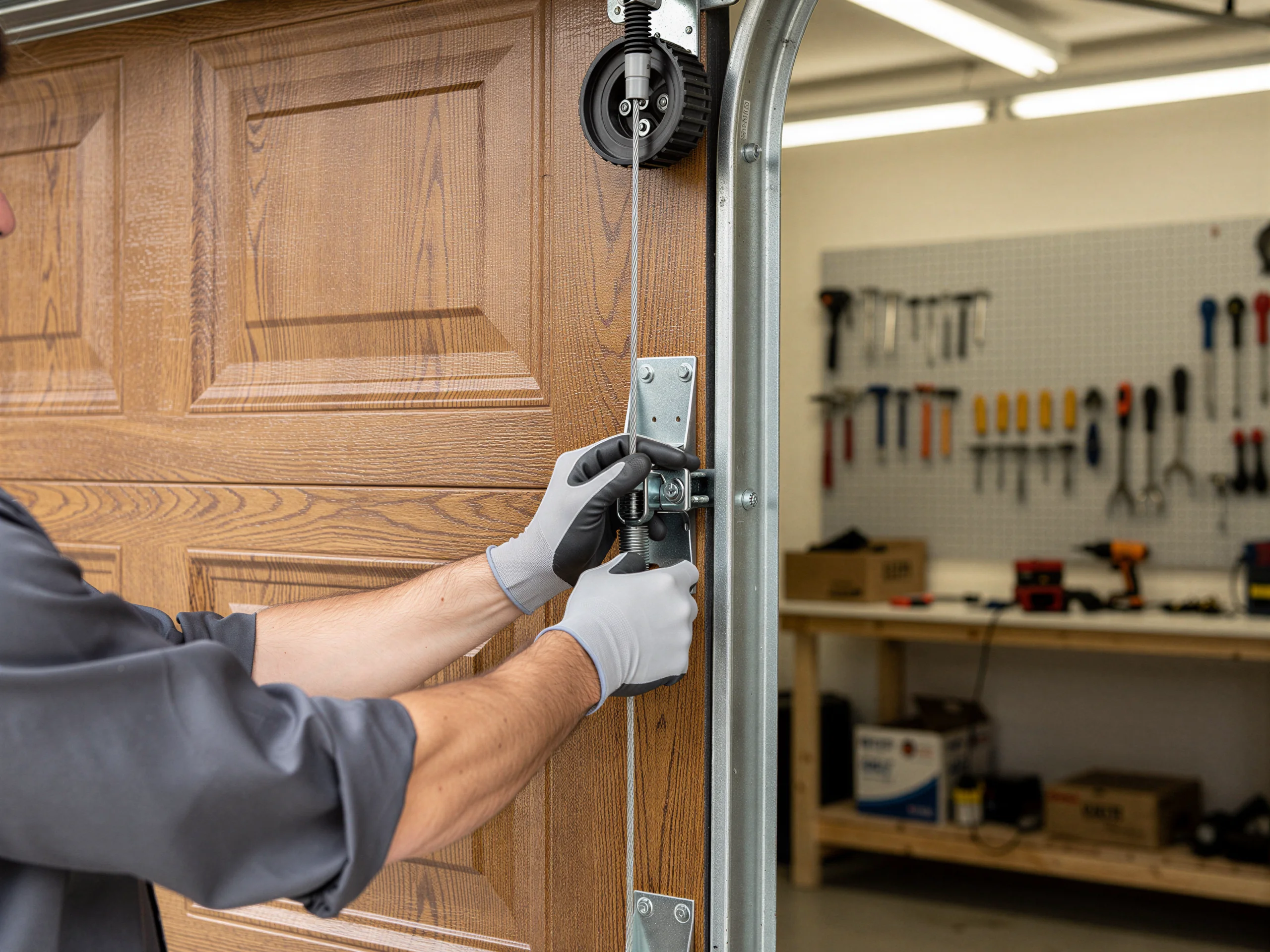
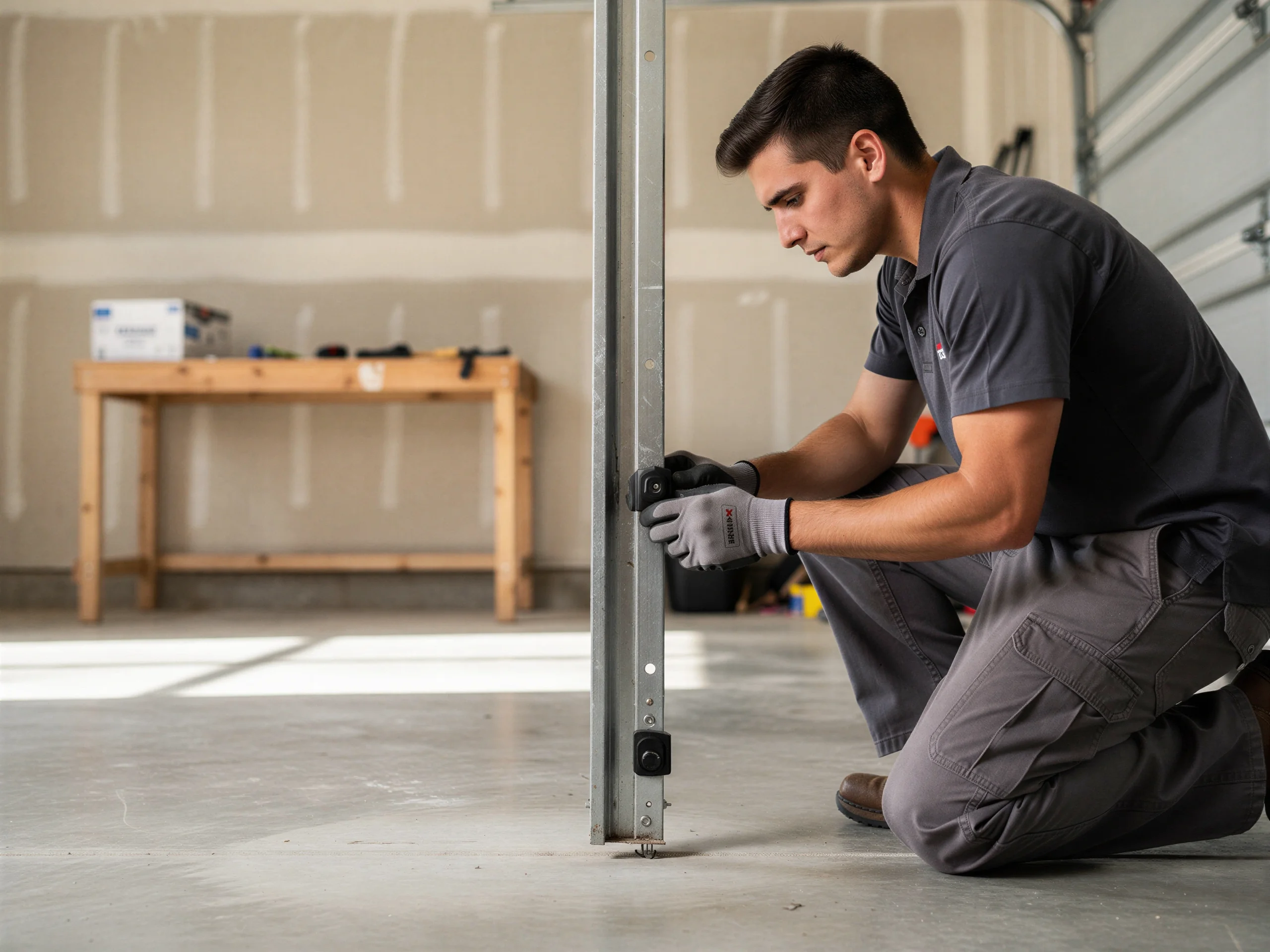
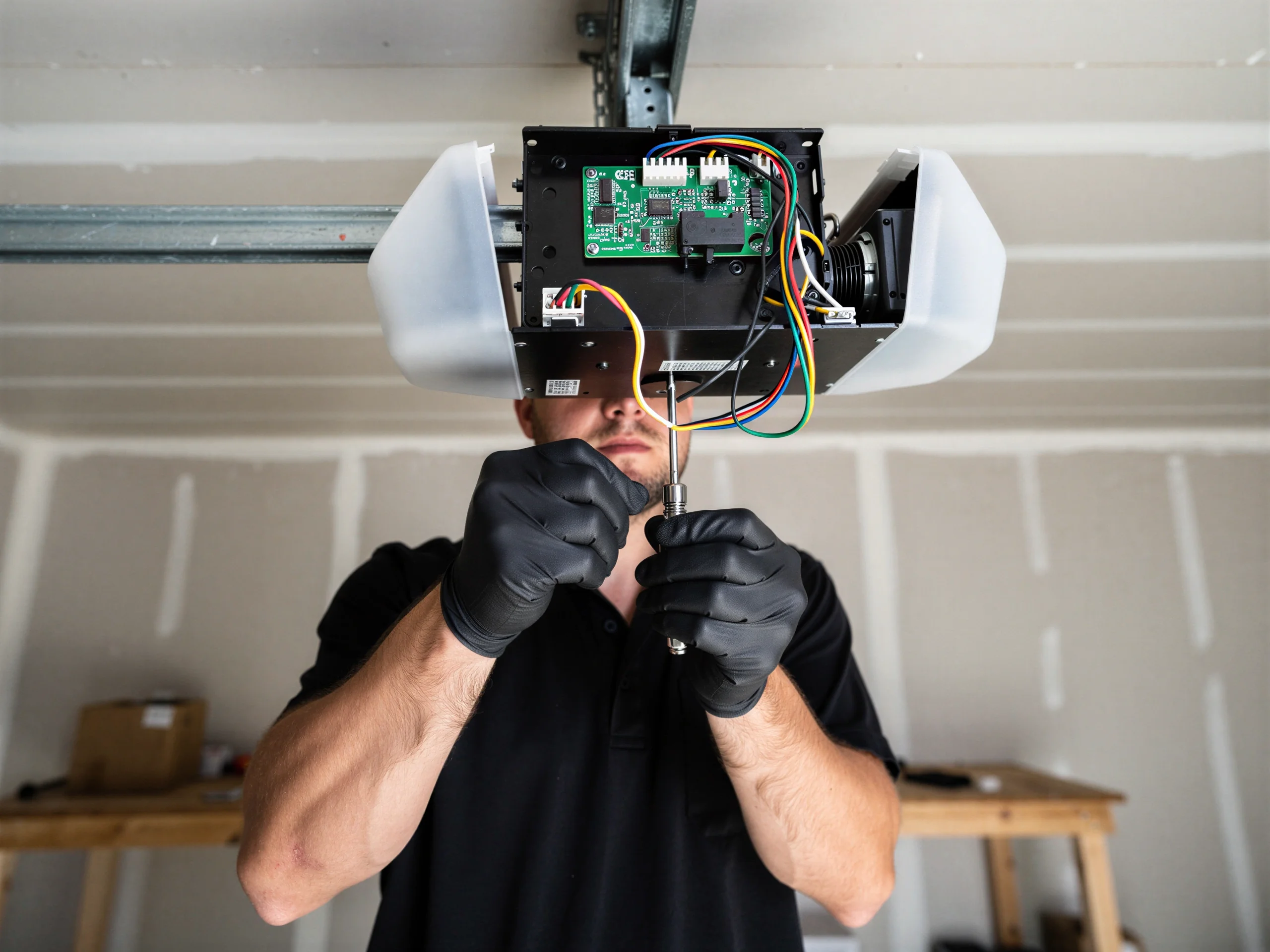
We carry current-size torsion springs sized for 16x7 and 9x7 openings, galvanized track in standard lengths, nylon rollers, and openers with modern safety sensors, because the original photo-eye brackets (if the door even has them) don't meet what's required now.
Converting overhead extension springs
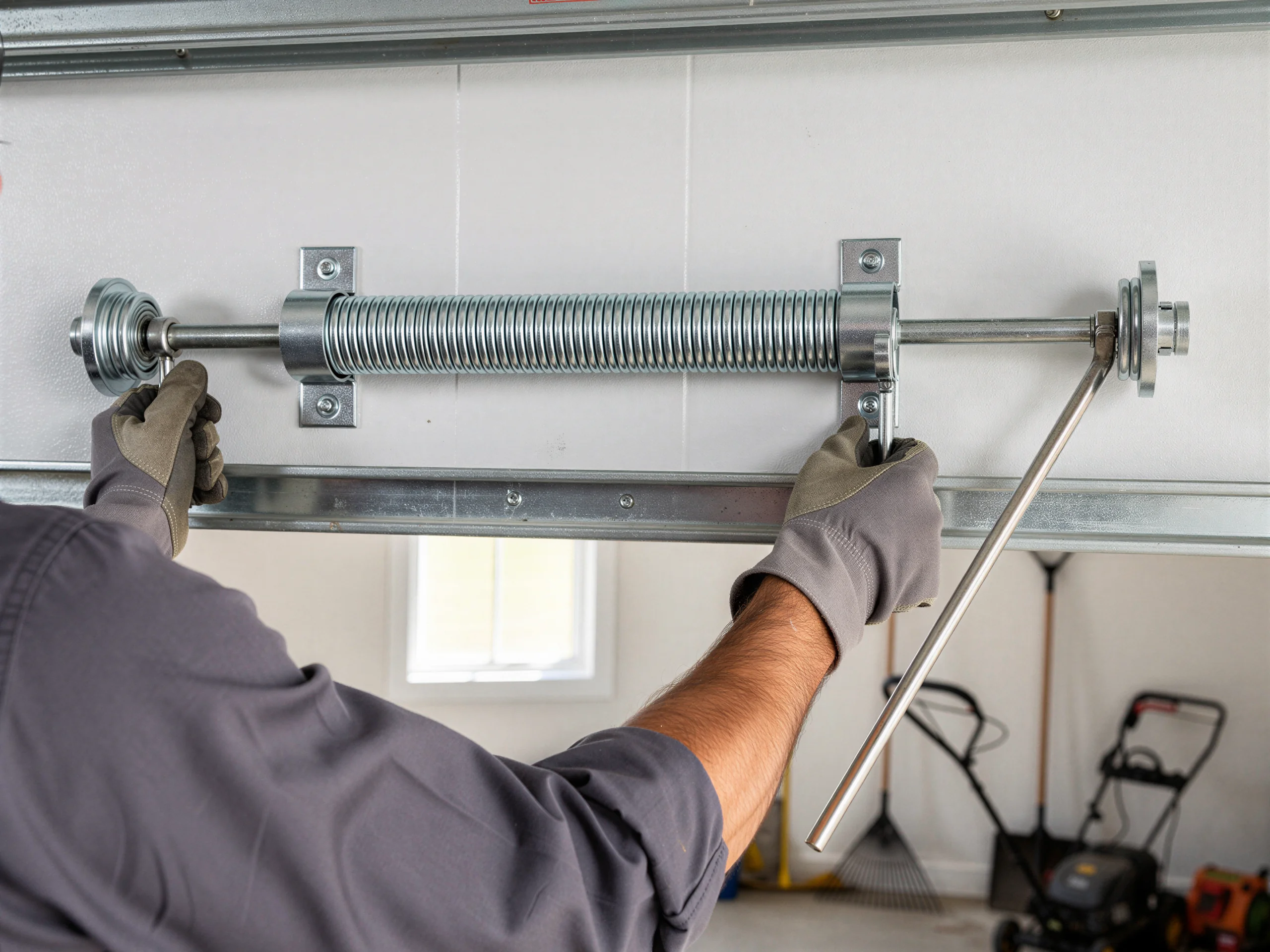
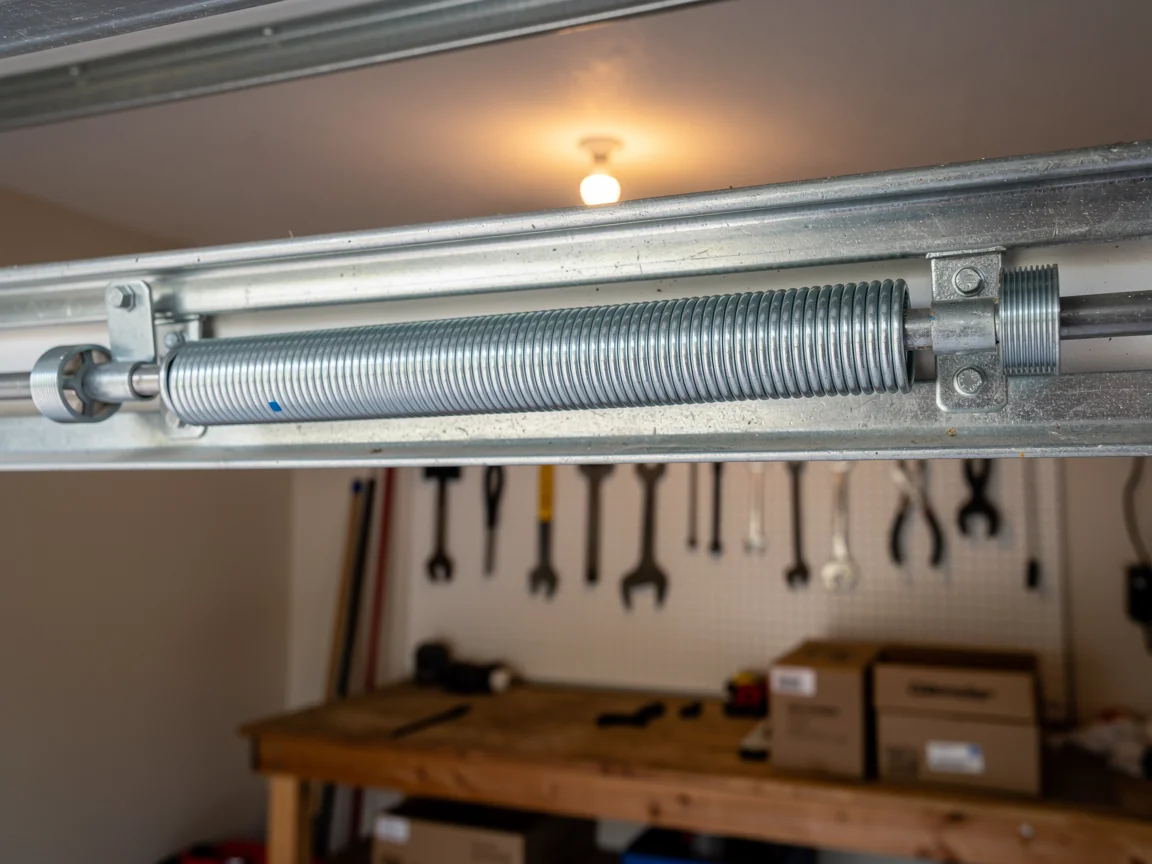
We also bring the hardware to convert from extension springs to torsion where the old setup used overhead springs mounted along the track - common on houses from this era. What we don't load on spec: oddball panel widths or custom heights. If your opening isn't a standard size, we measure first and order, which means a second trip.
What Can Go Wrong
The heat band out here runs moderate, not extreme, but decades of daily expansion and contraction still work on steel panels and track brackets fastened in 1978.
Binding from shifted framing
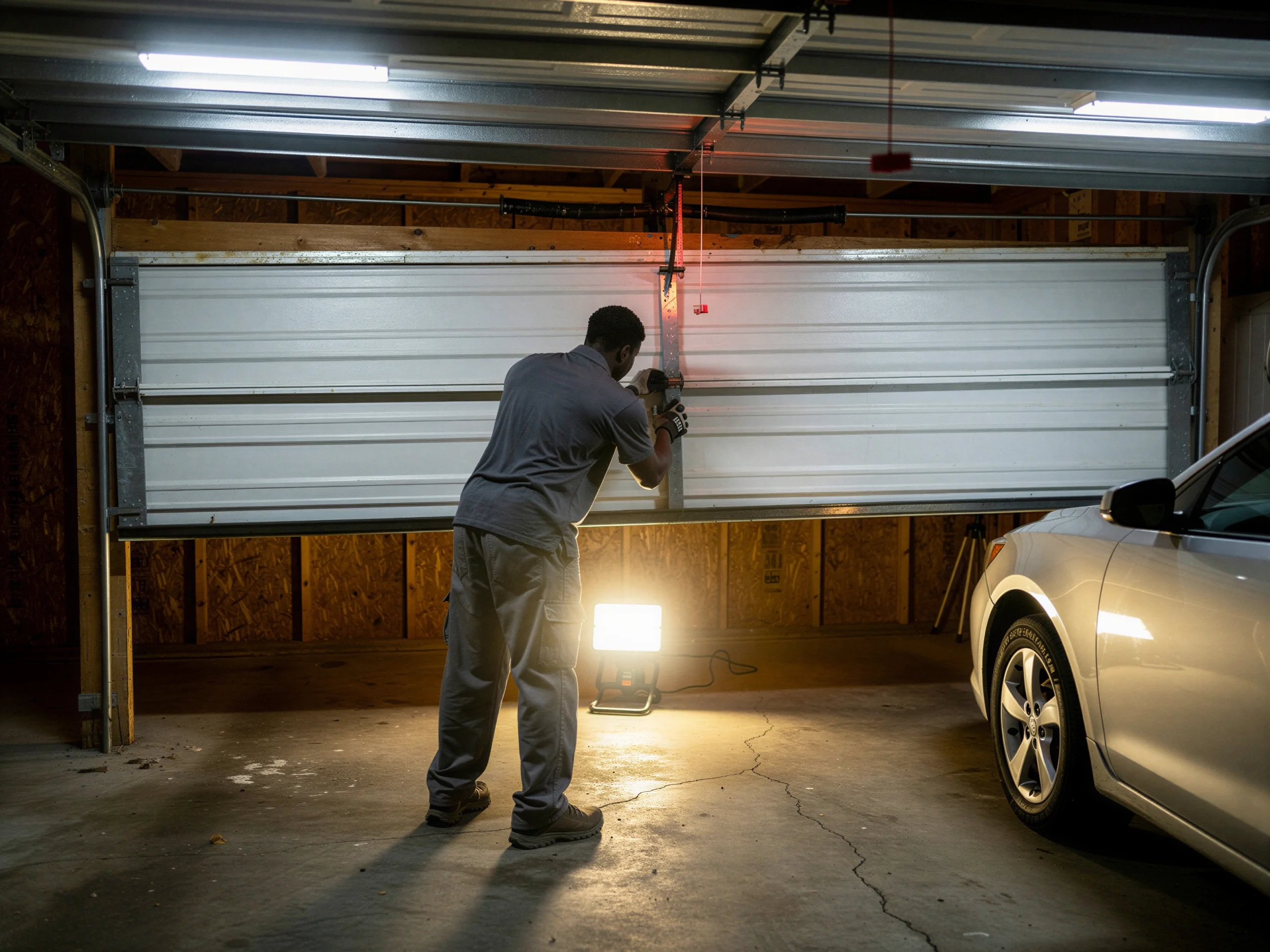
The failure we see most in Yucaipa isn't a snapped spring - it's a door that still technically opens but binds halfway, because the track bolts have worked loose in framing that's shifted slightly over 40-plus years.
Uneven roller stress
On an old single-layer door, that binding puts uneven stress on one roller, which wears a groove in the track faster than the other side. Original lift cables on these houses are usually galvanized steel that's held up fine, but the drums they wrap around can be pitted, and a pitted drum frays a new cable in months.
Chain drives worn sprockets
We also find openers from the 80s and 90s still running on old chain-drive units with worn sprockets - not dangerous, just loud and slow, and parts for some of those models aren't made anymore. None of that is a Yucaipa-specific disaster. It's what you'd expect from a door nobody's replaced since the house was built.
What the Repair Takes
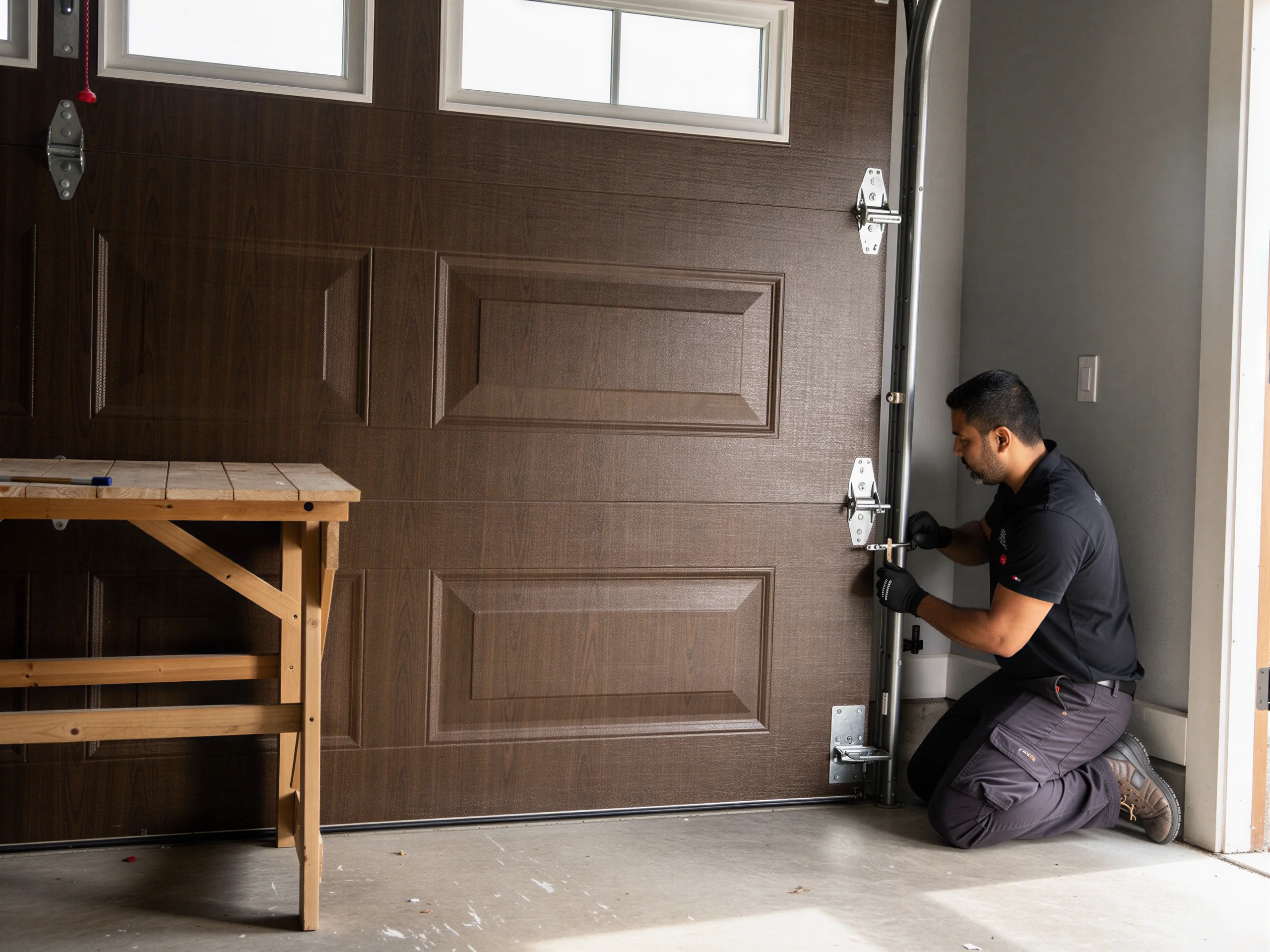
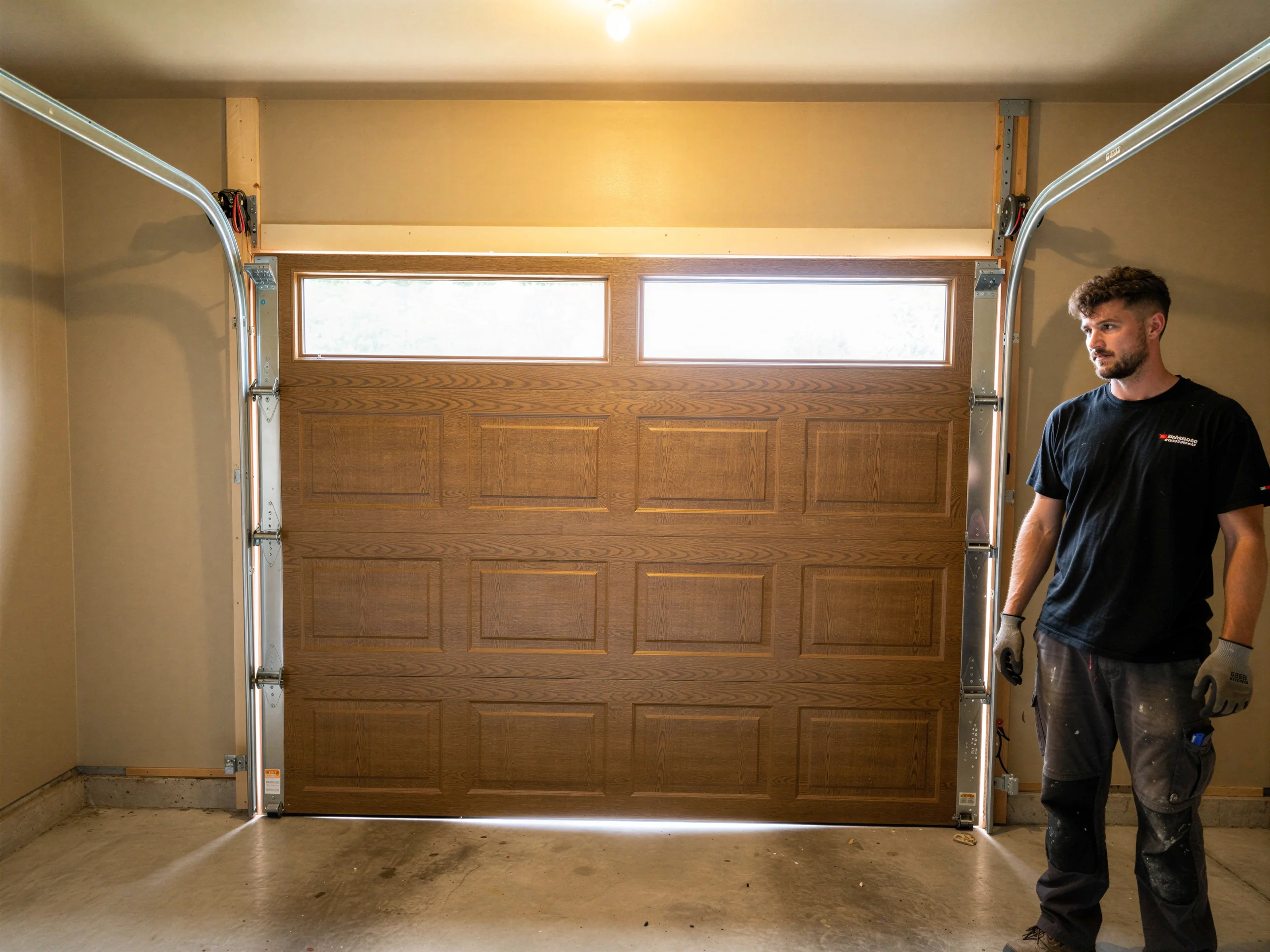
For a straight swap - old single-layer door out, new insulated steel door in, same opening size - we're usually in and out in a day once the door's on the truck. Where it runs longer is the hardware underneath. If the original track brackets are bent or the jamb has settled out of square (not rare in houses from this build era), we're shimming and re-anchoring before the new door goes up, not just hanging panels. Torsion spring conversions, where the house still runs an older extension-spring overhead setup, add time because we're rebuilding the header assembly, not just swapping a door. Opener installs are usually the fast part - most homeowners here are up front for a new opener with rolling-code security and a battery backup, since the service area's household income runs higher than the area average and Yucaipa's income is well above it, which tends to show up in willingness to replace rather than patch. We quote the full job after we've seen the opening, not before.
The DIY Question
A new garage door is heavy, the spring system is under real tension, and on a house from 1978 you're often also dealing with hardware that's outlived its intended service life by decades.
Older installs need inspection
That's not a scare line - it's why we don't recommend a homeowner install on anything older than the last decade or so without having someone check the track and jamb first.
Simple DIY boundaries
Where DIY makes sense: swapping weatherstripping, lubricating rollers and hinges, replacing a remote. Where it doesn't: anything involving the torsion spring, the cable drums, or pulling the old door off hardware that hasn't been inspected.
Standard jamb install reality
We'll say plainly that if your opening is a standard size and the jamb is square, a new door install isn't exotic work - but on houses this age, we usually find at least one thing that needs attention before the new door goes on, and that's easier to catch with the old door still up.
How Long You Are Without the Door
We run every Yucaipa job out of San Bernardino, 16 miles each way, so scheduling is built around that drive rather than a local branch - there isn't one. For a standard door swap where we've already measured and the parts are on the truck, the garage is open to the elements for part of a single day, not overnight. Where it stretches is custom sizing: if your opening isn't a stock width or height, we order after measuring, and that lead time depends on the manufacturer, not on us. We'll tell you the real number once we've measured, not a generic one. One limitation worth saying up front: we don't keep every custom panel color or glass-insert style in stock on the truck, so if you want something outside the standard run, expect a wait on the door itself even though the labor side is quick.
Talk to a local pro
Garage door service in San Bernardino?
Same-day service with honest, upfront quotes.