What Can Go Wrong
Grand Terrace's houses cluster around a median build year of 1976, which puts a lot of garage doors here either original or on their second opener.
Spring fatigue at cold mornings
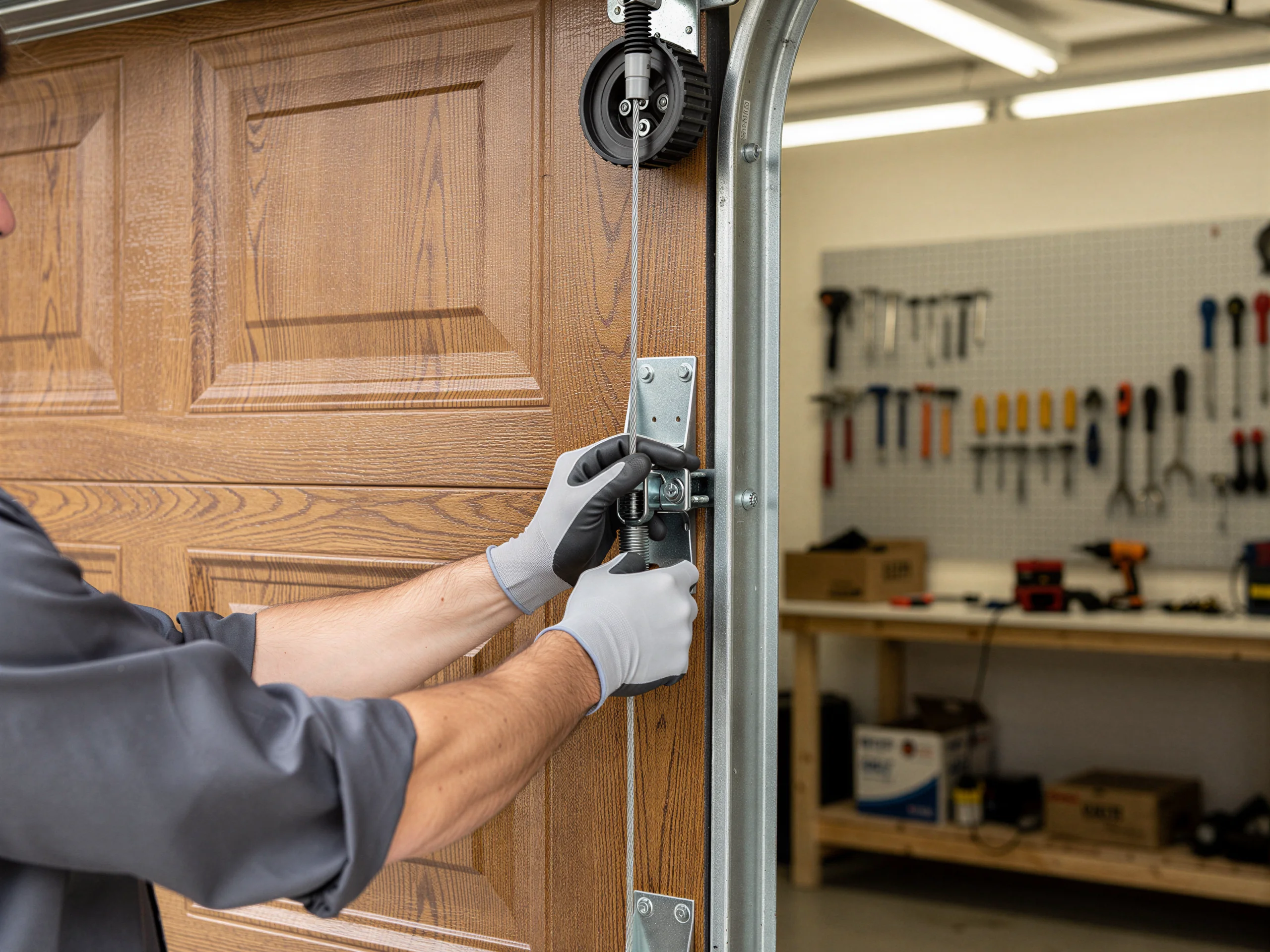
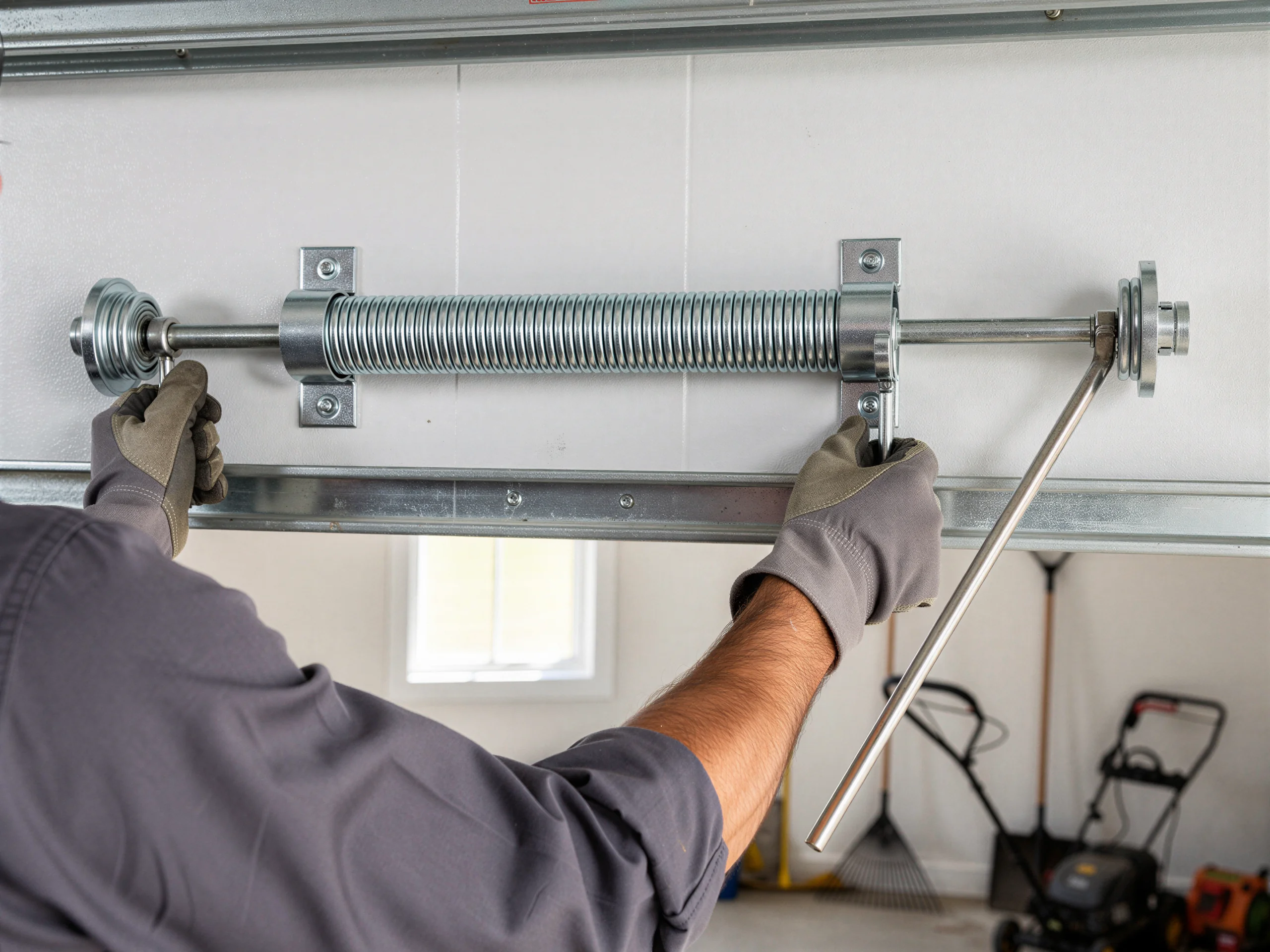
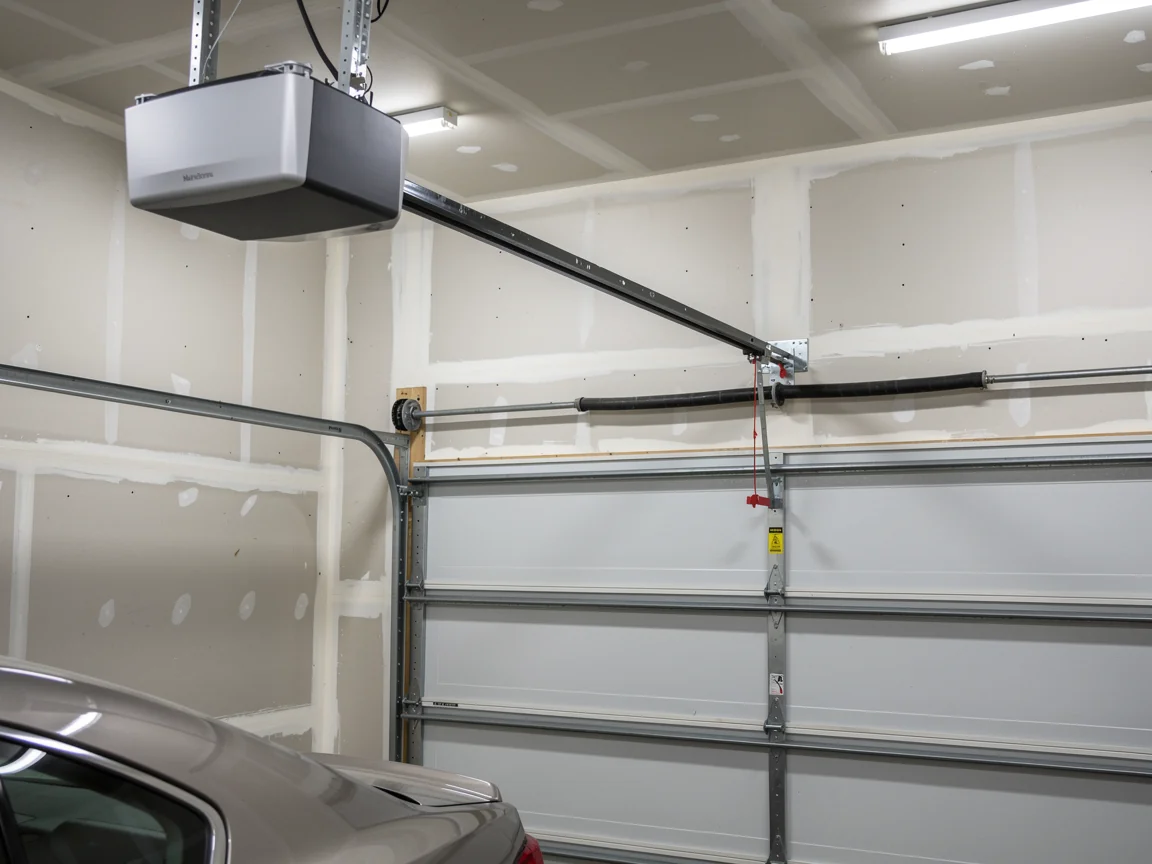
The common failure isn't a dead remote - it's a torsion spring that's done 10,000-plus cycles and finally lets go, usually on a cold morning when the steel is stiffest. Right behind that: extension springs on older setups without proper safety cables, which is a code gap you see a lot in houses from this era.
Rollers rattling, panels rusting
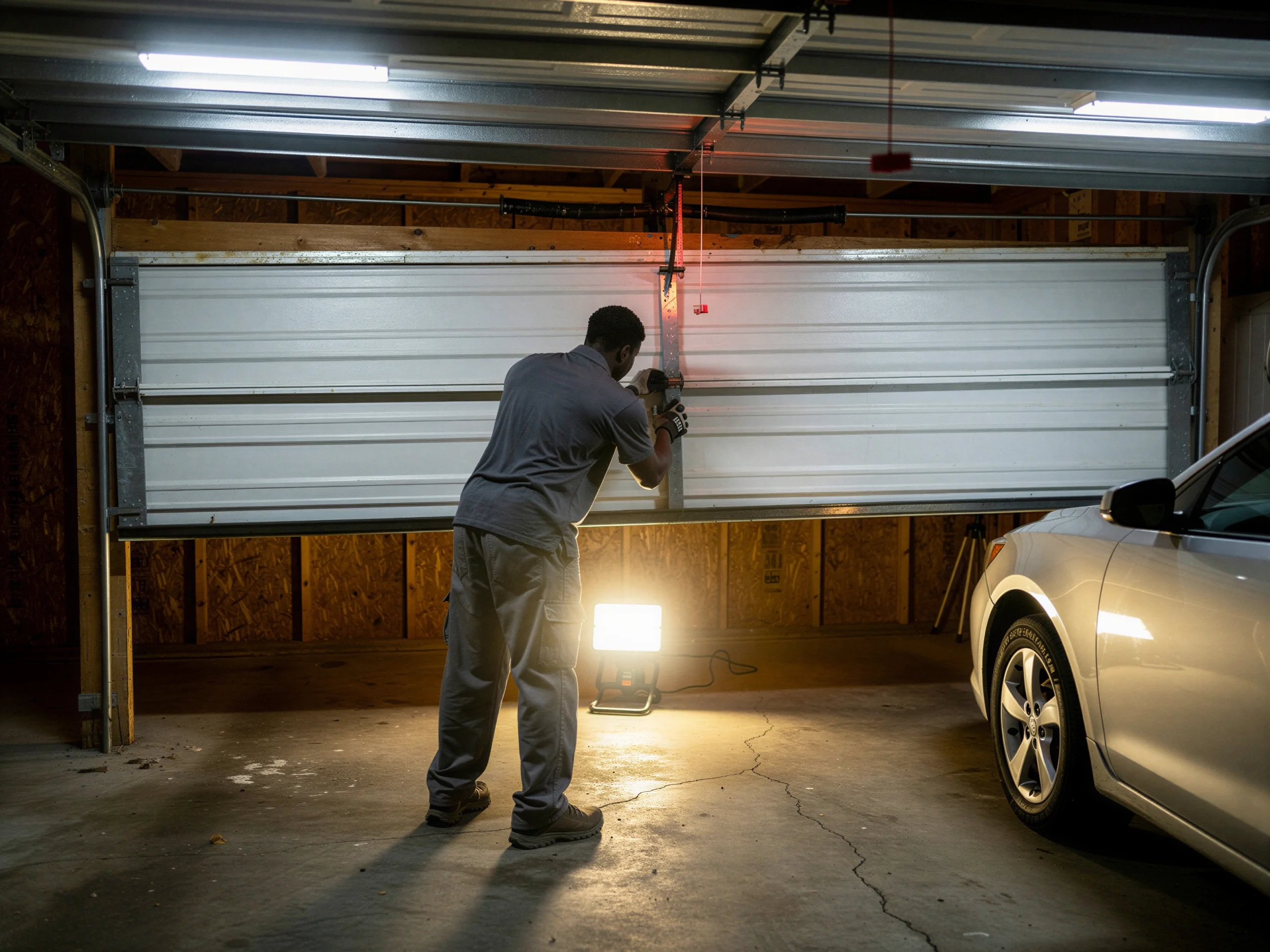
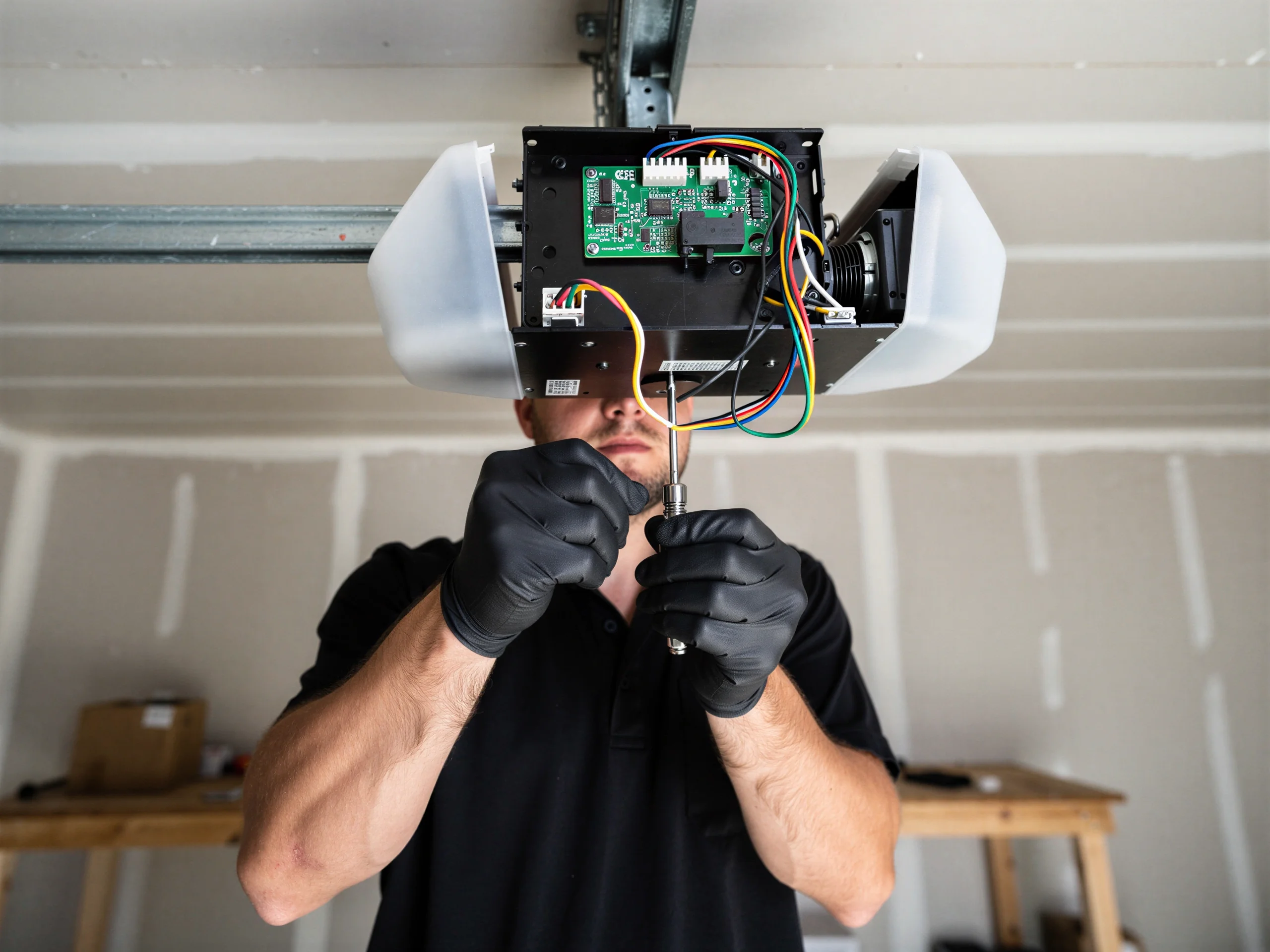
Rollers worn to the point the door rattles in the track. Panels on steel doors from the late '70s that have rusted through at the bottom corner where water sits. We also see a fair number of openers that are original to the house or close to it - chain-drive units built before today's safety reversal standards were standard practice.
Reverse failure on contact
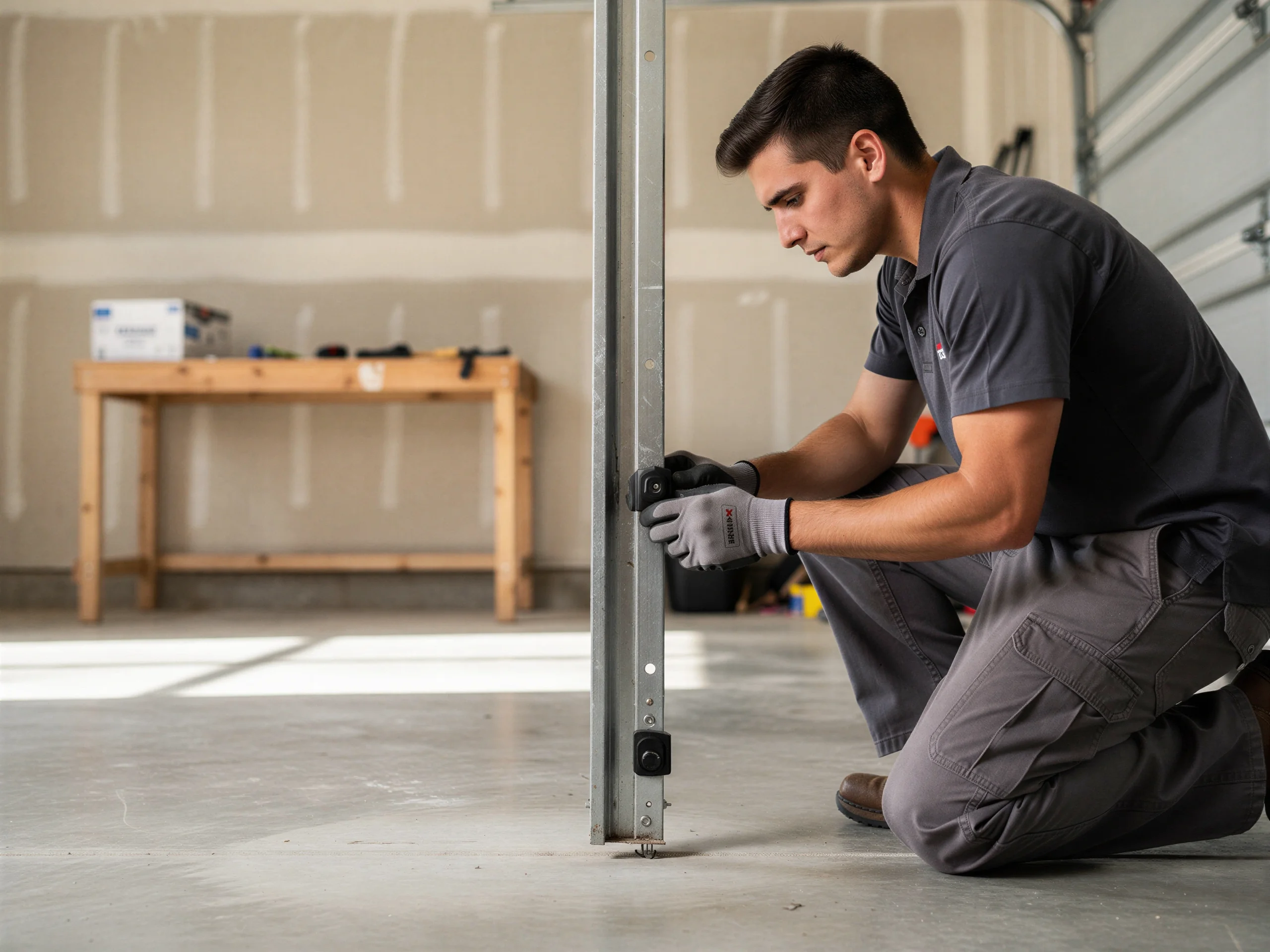
When a customer calls about a door that won't reverse when it hits something, that's usually what we find. None of this is unique to one street in Grand Terrace; it's what you get when a town's housing stock is nearly 50 years old and a garage door's moving parts weren't built to outlast the house.
What Causes It Around Here
The San Bernardino area sits in a moderate-heat climate band, and heat is hard on garage door hardware in a specific way: metal expands, lubricant thins and runs off, and springs that are already fatigued fail faster under the extra load of a hot afternoon. In a town where the median home was built in 1976, you're dealing with springs, cables, and track hardware that have had decades of that cycle working against them, not just a few summers.
We also see corrosion on torsion bar end bearings and bottom brackets, which is a slower problem than a sudden spring snap but just as disruptive when it finally seizes the door in place. Original hardware from the mid-'70s wasn't galvanized the way current hardware is, so once the coating wears through, rust moves faster than owners expect. None of this means every door in Grand Terrace is on its last legs - plenty of owners have already replaced springs once or twice - but if your door has never had a spring replacement and the house is original, the math says you're due.
How Long You Are Without the Door
We're honest about this part: we run out of San Bernardino, about 8 miles from Grand Terrace, so we don't have a crew sitting around the corner.
Same-visit common repairs
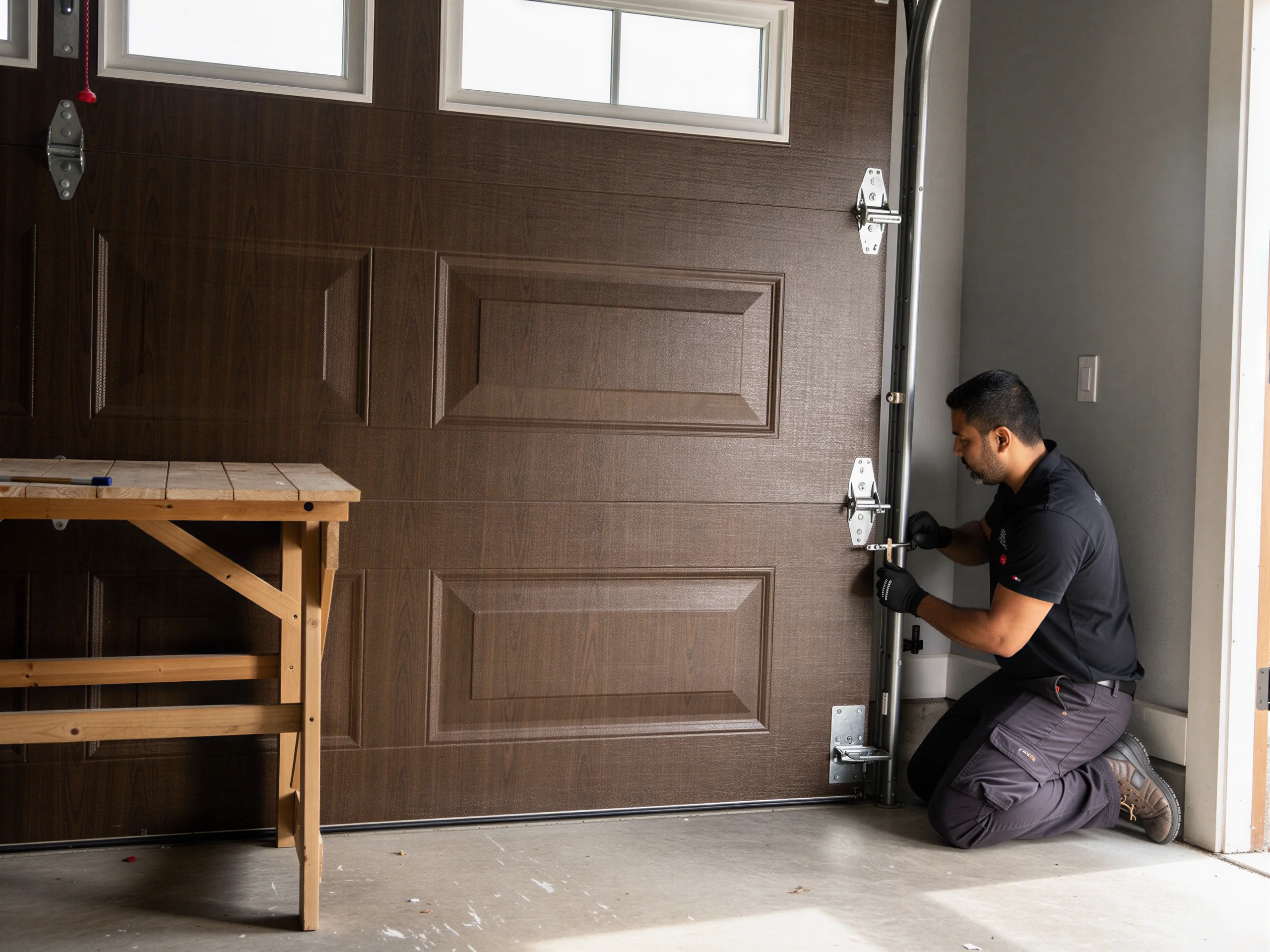
What we can tell you is that most of what breaks in a house this age - a broken torsion spring, a worn roller set, a cable that's jumped the drum - is a same-visit repair once we're on site with the right spring size and cable length for your door.
Discontinued panel and opener parts
What takes longer is anything that needs a part we don't carry on the truck: a specific panel for an older steel door, a replacement for a chain-drive opener assembly that's been out of production for years.
Section-for-section replacement
If your door is original to a 1976 build, there's a real chance the exact panel doesn't exist anymore, and the honest fix is a new door section-for-section rather than hunting for a match. We'll tell you straight if that's where you're at instead of stringing out a repair that won't hold.
What You Pay
We don't have a Grand Terrace-specific price list to quote here, and giving you a number without seeing the door would be guessing. What we can say is that cost tracks closely with what's actually failed and how old the hardware is: a standard torsion spring swap on a door that's otherwise sound costs a lot less than replacing an opener that's been discontinued, and a lot less than a full door replacement when panels can't be matched.
Household income in the broader service area runs a median of $84,594, and Grand Terrace's own median sits close to that at $83,668 - context that matters because a lot of owners here are weighing a repair against a replacement on a house that's otherwise in good shape. We'll always give you the repair option first if it's a reasonable fix, and tell you plainly when the parts situation or the age of the door makes replacement the better math.
What You Are Seeing
If your door is slow to open, drops suddenly partway down, or the opener grinds and reverses without obvious reason, that's consistent with aging spring or roller hardware rather than anything you did wrong. A door that's noticeably heavier to lift by hand than it used to be is very often a spring that's lost tension, not a track problem.
Grand Terrace sits about 8 miles from where we're based in San Bernardino, closer than some of the other communities we cover, and most of what we're called out for here matches what you'd expect from a town built mostly through the 1970s: aging torsion and extension spring systems, original openers past their safe service life, and rust at the bottom bracket on doors that have never been swapped out. If something looks different from that - a newer door acting up, for instance - it's worth a call rather than guessing, since newer hardware fails for different reasons than the 1976-era stuff we see most often.
Talk to a local pro
Garage door service in San Bernardino?
Same-day service with honest, upfront quotes.