What Can Go Wrong
At a median household income of $83,668, most Grand Terrace homeowners sit in the range where a spring repair is the obvious call and a full door replacement only makes sense once the opener, track, and panels are all failing at once. A single broken torsion spring on a double door is a repair job, not a replacement job, and that's true for the large majority of houses here.
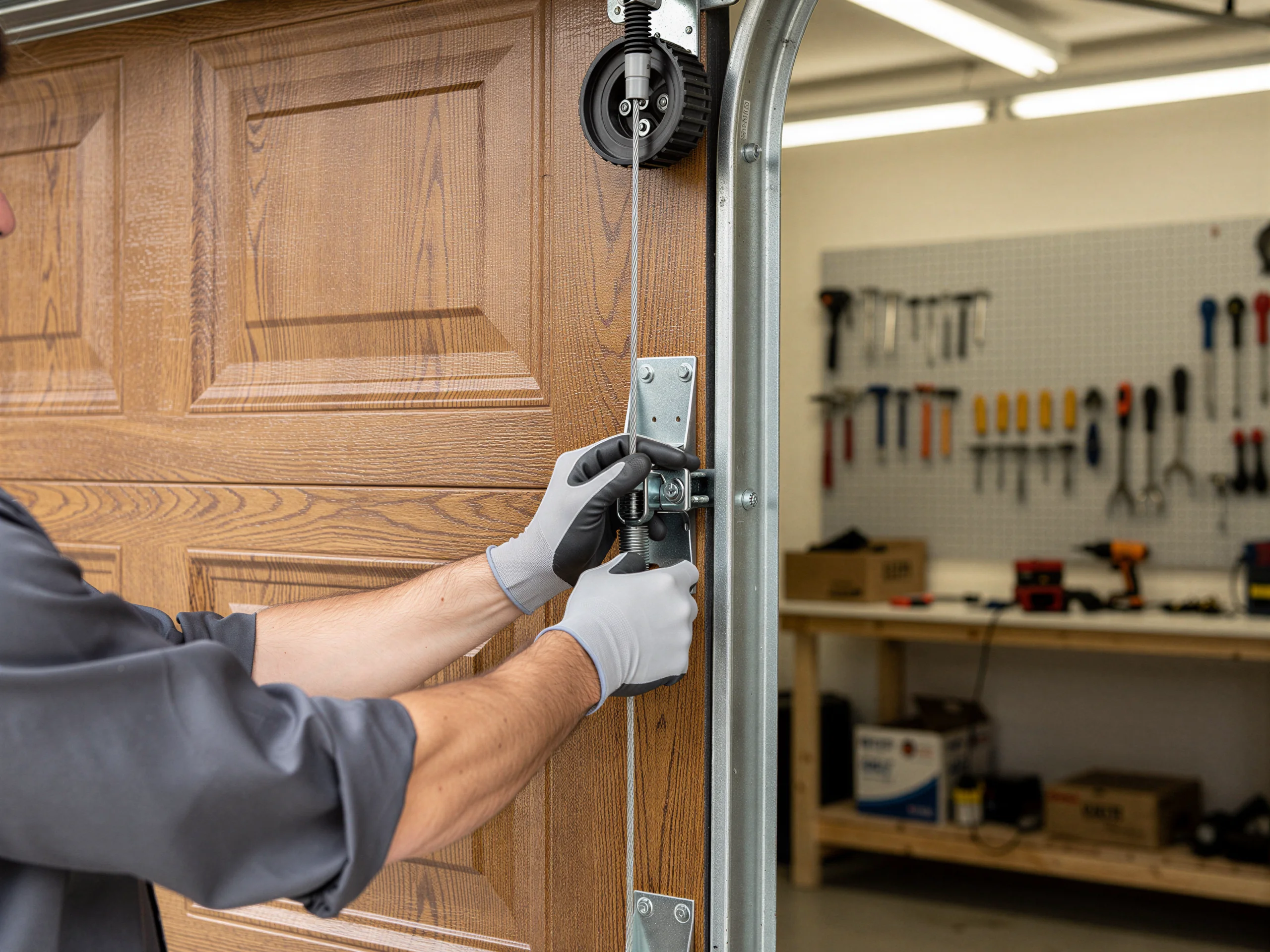
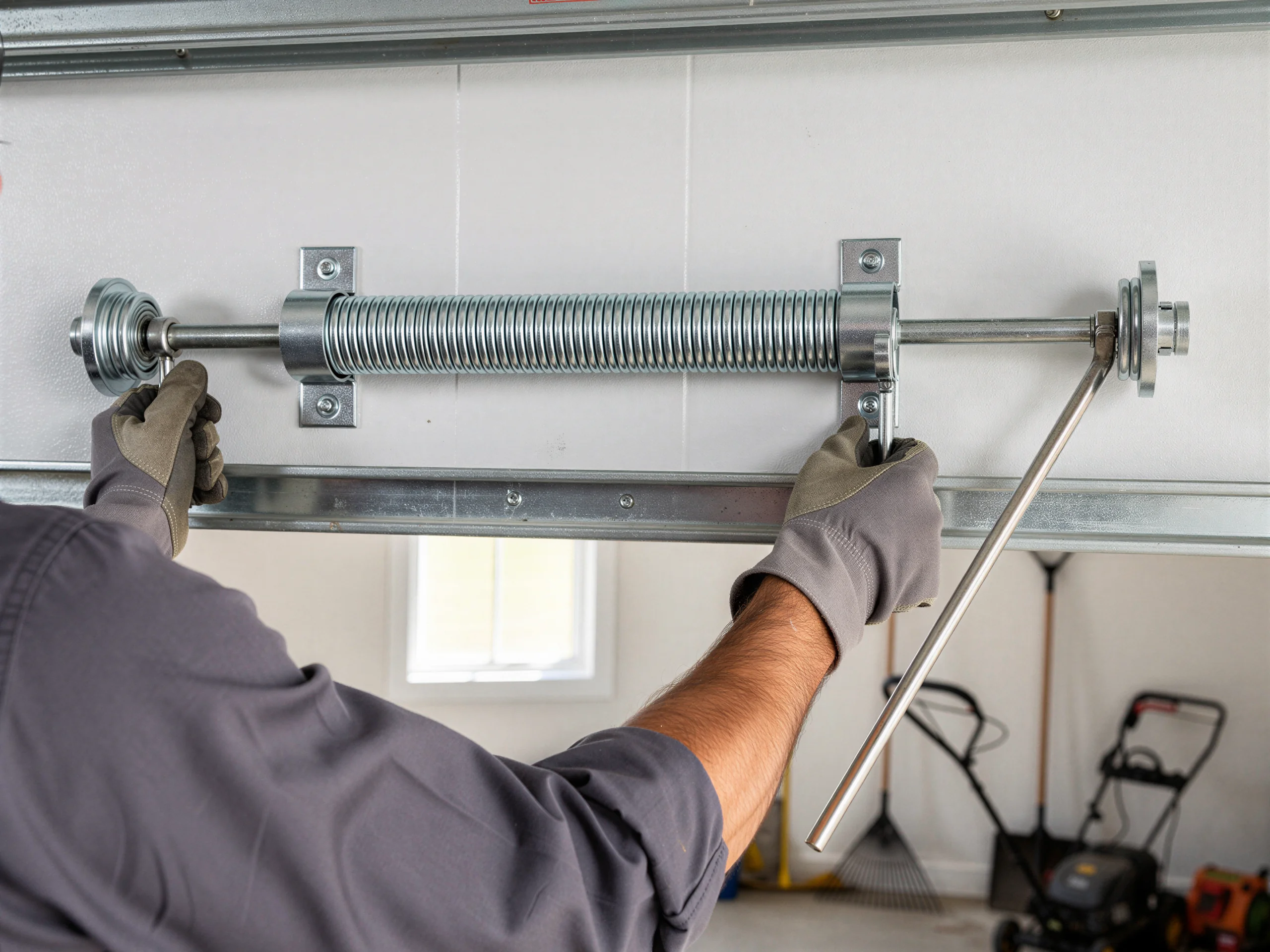
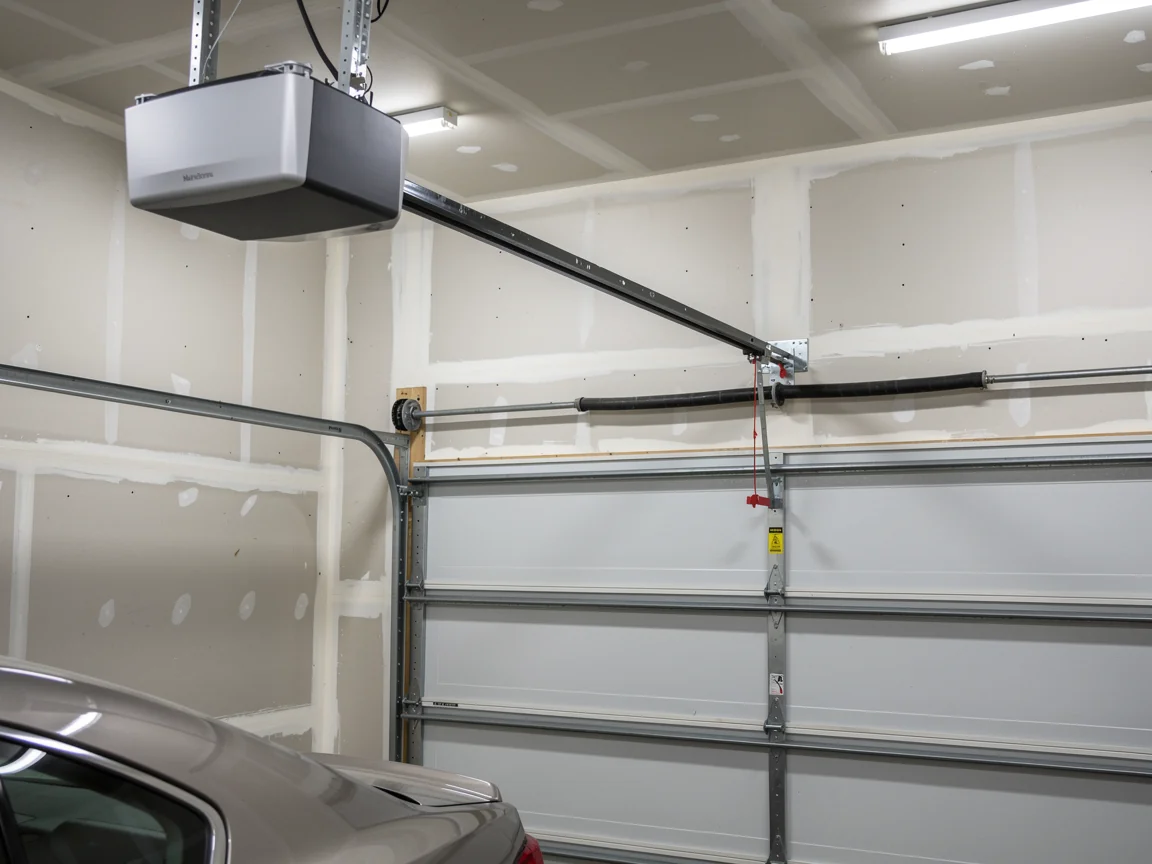
The springs themselves fail in a few predictable ways: a torsion spring snaps clean in the middle (you'll hear it, usually a loud bang), a spring stretches and loses tension so the door feels heavier every month, or a cable at the bottom of the spring system frays and jumps the drum. On older torsion setups the center support bearing wears out at the same time the spring does, and replacing one without checking the other is how a repair turns into a second call two weeks later. We check the bearing and both cable ends anytime we're already up at the header doing spring work.
What Causes It Around Here
Grand Terrace's housing stock centers on 1976, which puts a lot of doors here on original or first-replacement torsion hardware from the late 1970s through the 1980s. That generation of spring was sized for lighter, often single-layer steel doors. If a homeowner has since swapped in a heavier insulated door without upsizing the spring, the original spring is doing more work than it was built for and wears out faster than the manufacturer's rated cycle count would suggest.
The climate here runs moderate on heat, so we're not dealing with the extreme thermal cycling that cracks springs in harsher desert zones - the failures we see are closer to straightforward fatigue: the spring did its job for decades and the coil finally gives out. That's a cleaner diagnosis than homes dealing with heat-driven metal fatigue, and it usually means a straight spring swap rather than a hunt for a secondary cause.
How Long You Are Without the Door
We run this job from San Bernardino, about 8 miles out, so there's no depot or branch sitting in Grand Terrace itself. That drive is short enough that it doesn't change much about how we schedule the call, but it does mean the truck is coming from outside town rather than already parked a few blocks away.
Same-visit spring replacement
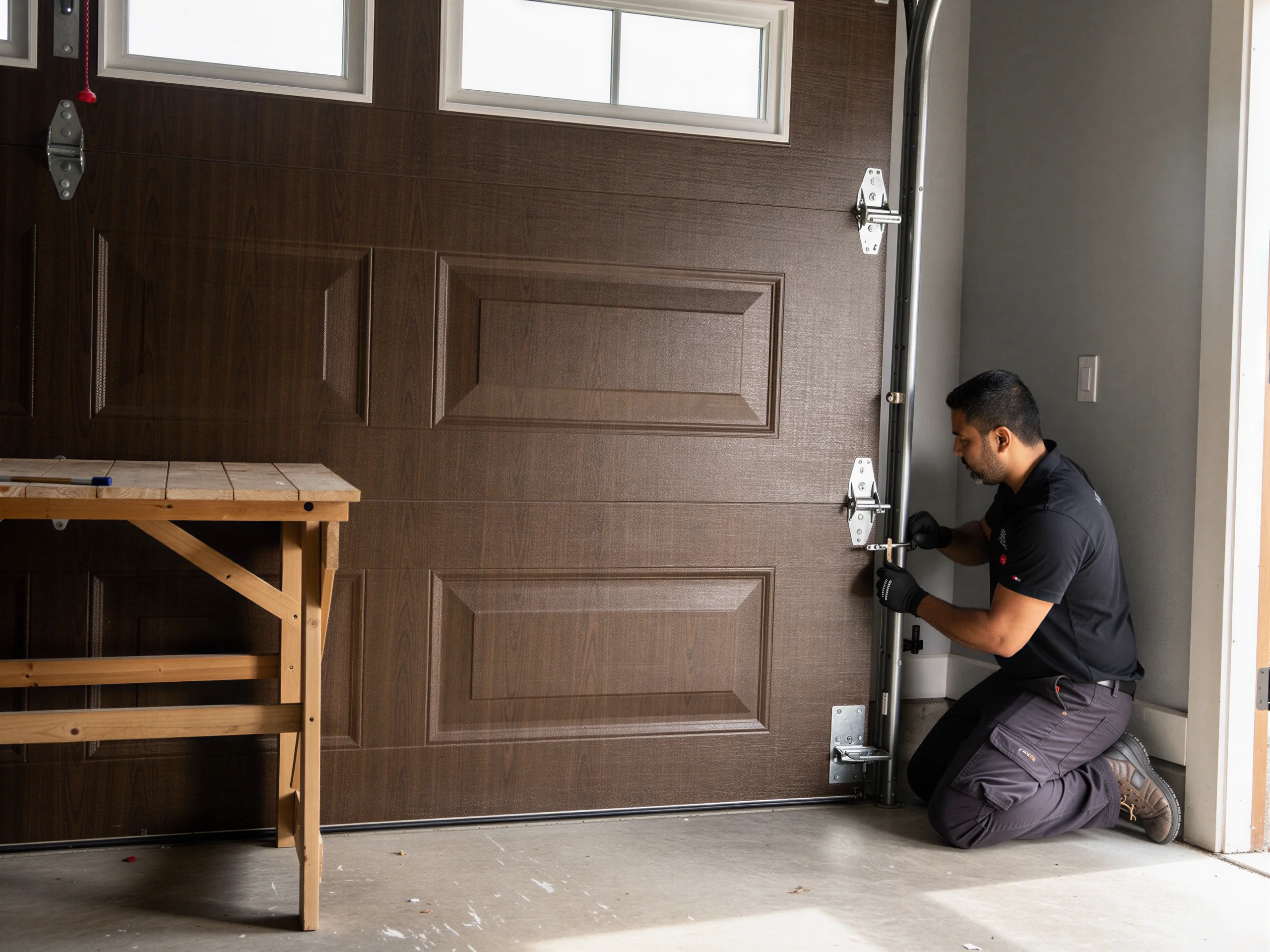
Once we're at the house, a straight torsion spring replacement on a standard double door is a same-visit job - we don't leave with the door still down.
Drums, cables, bearing add time
Where it runs longer is when the drums, cables, or center bearing need replacing alongside the spring, or when the spring size on the door isn't a stock size we're carrying that day.
Odd original wire gauge
On a house built in the 1970s, finding an odd original wire gauge isn't rare, and that's the one case where we may need a day to get the right part rather than force a close match.
What You Pay
We don't publish a flat number for spring repair because the cost depends on whether it's one spring or two, standard or oversized wire, and whether the drums or cables need replacing alongside it - and for Grand Terrace specifically we don't have a local price figure to post here. What we can tell you is how the decision usually breaks down for a household at this area's income level: a spring repair on an otherwise sound door is almost always the cheaper and more sensible call than a full replacement, and that holds for the great majority of the roughly 4,543 households in Grand Terrace.
For the actual numbers, see our San Bernardino spring repair pricing page, which covers the service area including this run out to Grand Terrace. If you want the rest of what we do here beyond springs, that's on the Grand Terrace garage door repair page.
What You Are Seeing
If the door won't budge and feels like dead weight when you try to lift it by hand with the opener disconnected, that's a broken spring, not a motor problem.
One spring gone, sagging
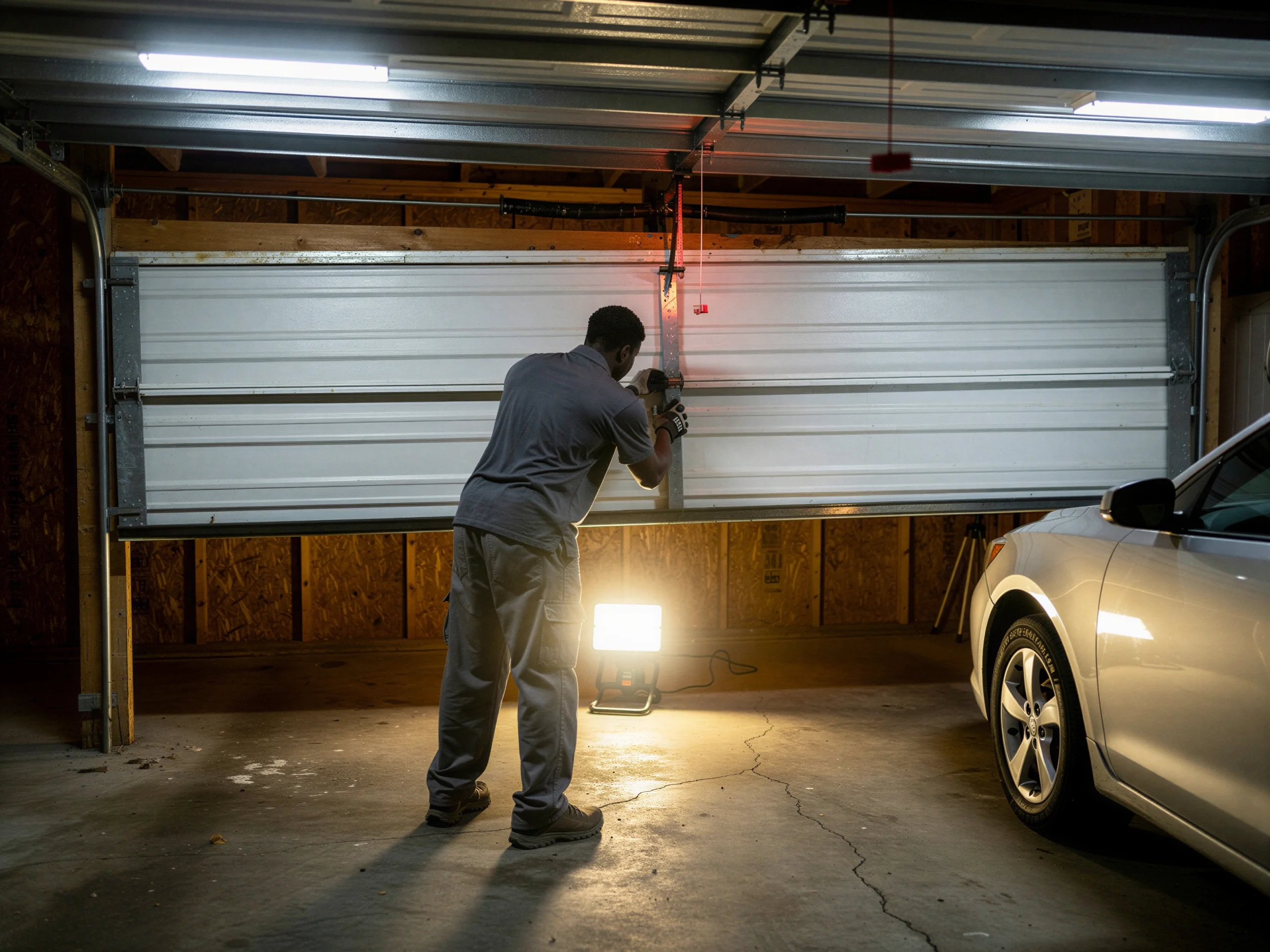
If it opens but sags on one side or closes crooked, you're likely looking at one spring that's gone on a two-spring system while the other is still holding. A loud bang from the garage followed by the door refusing to move is about as unambiguous as this gets.
Sensor not spring reversal
What doesn't need a spring call: a door that opens fine but reverses partway closed is almost always a sensor or limit issue, not a spring. We'll tell you that over the phone if that's what it sounds like, rather than rolling a truck for a repair the door doesn't need.
Checking bearing and cables
On a house from the 1970s, we'd still want to glance at the bearing and cables while we're there, since hardware that age is usually due for more than just the one part.
Talk to a local pro
Garage door service in San Bernardino?
Same-day service with honest, upfront quotes.