What Can Go Wrong
Grand Terrace's housing stock centers on 1976, which puts a lot of these garage doors and their hardware near or past 45 years old. If nothing's been swapped out, that door is likely still running its original torsion spring, original rollers, and in some cases the original single-layer steel or wood panel that came with the house.
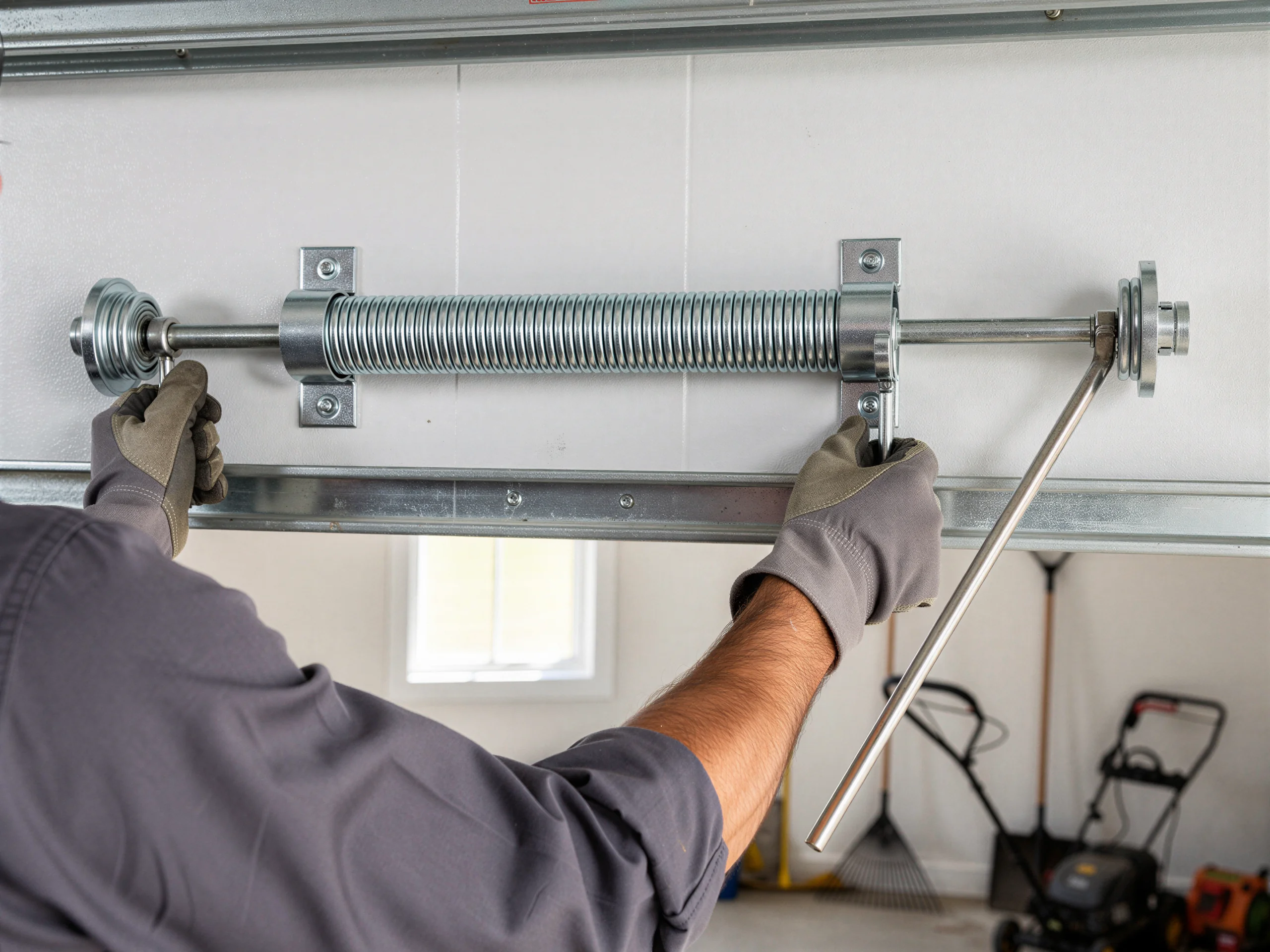
Spring age near five decades
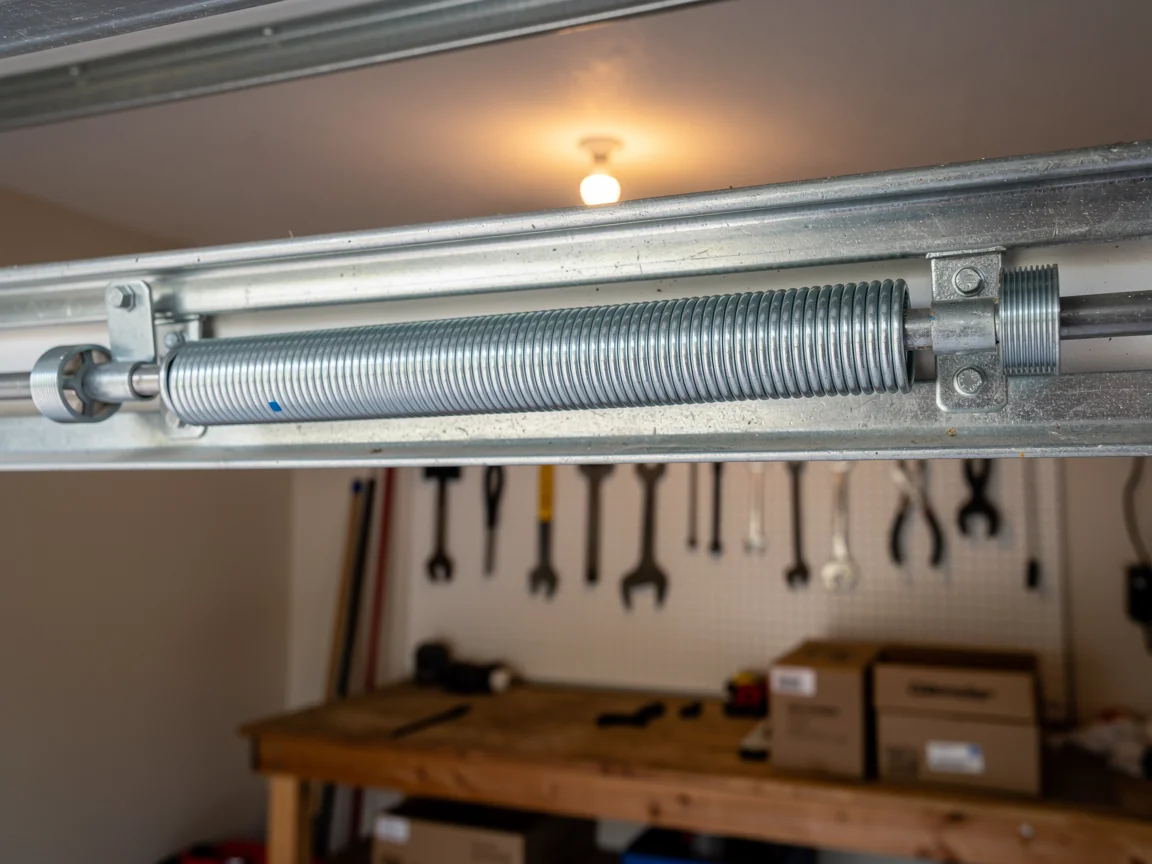
Springs are rated in cycles, not years, but a spring that's never been replaced in nearly five decades is not a spring you want to find out has failed while the door is halfway up.
Old openers lacking safety
Original openers from that era, if they're still in service, usually lack the safety features and insulation value that newer units come standard with. None of that means the door is unsafe today - plenty of old hardware still works fine.
Assembly-wide inspection before install
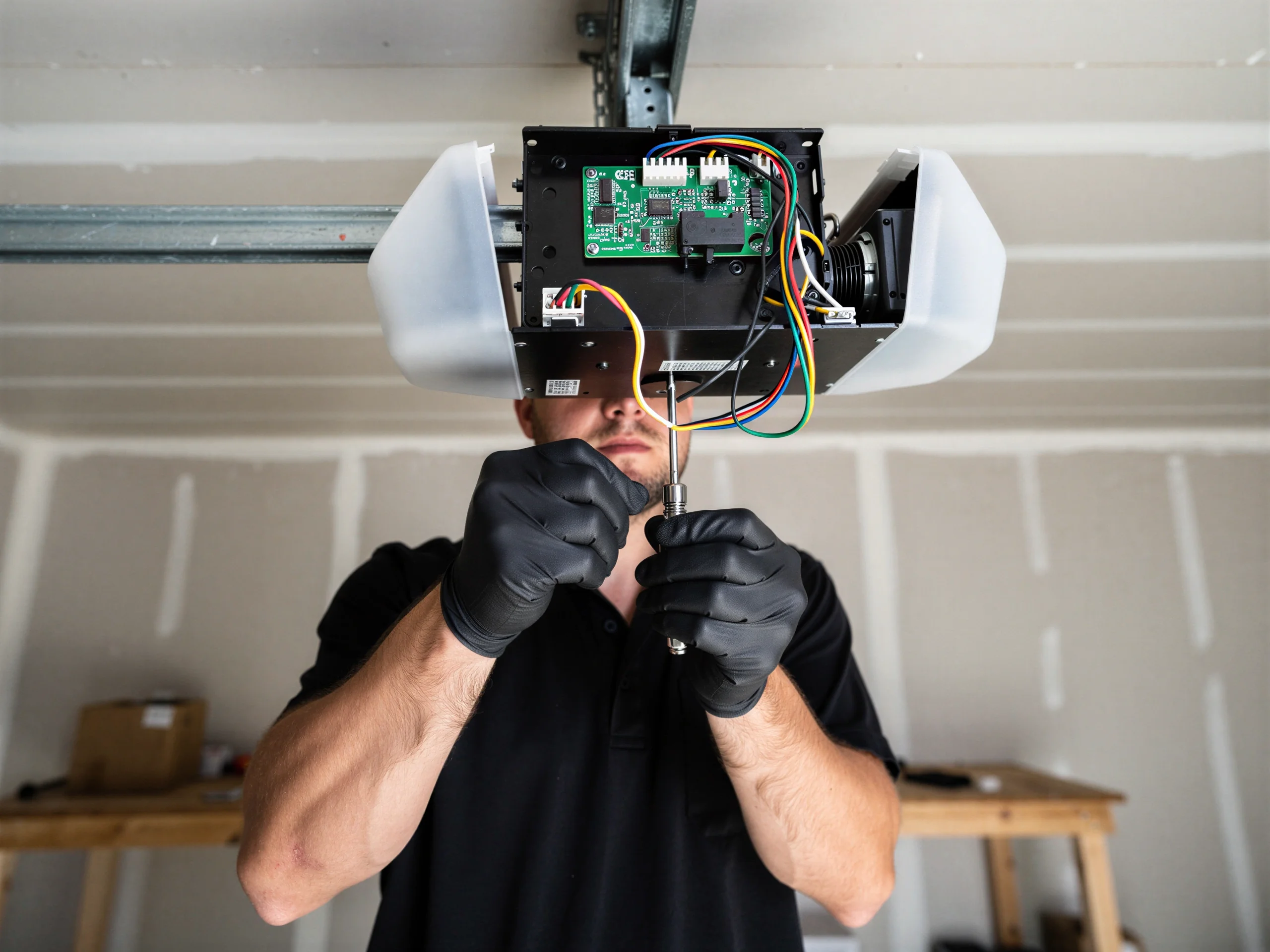
It means the parts are old enough that failure, when it comes, tends to come without warning. If you're planning a new install because of a visible problem, we look at the whole assembly, not just the panel, since swapping a door onto worn track and drums just moves the failure point.
What Causes It Around Here
The regional climate band here is moderate heat, which is kinder to garage doors than the desert cities further out, but it's not nothing. Steel panels and galvanized hardware installed in the mid-1970s have had decades of seasonal heat cycling to work springs loose, dry out lubrication, and let steel fasteners work their way out of wood jambs. Wood-panel doors from that build era, if they're still around, tend to show it in warping or delamination at the bottom panel where moisture collects. None of this is dramatic weather damage - there's no single storm event to point to. It's closer to ordinary wear that's had an unusually long time to accumulate, since a lot of these doors simply never got replaced when the rest of the house was updated. That's the pattern we see most in this part of the service area: a kitchen remodel, new windows, a repainted exterior, and a garage door nobody's touched since the house was built.
How Long You Are Without the Door
A full replacement is usually a one-day job once the new door is on site, but we're coming from San Bernardino, about 8 miles out, so we schedule the visit rather than promise a same-hour arrival.
Crew travels without stock
We don't keep a branch or stock point in Grand Terrace itself - everything travels with the crew. For a straightforward swap on existing track, most of a workday covers removal and install.
Track and jamb rework
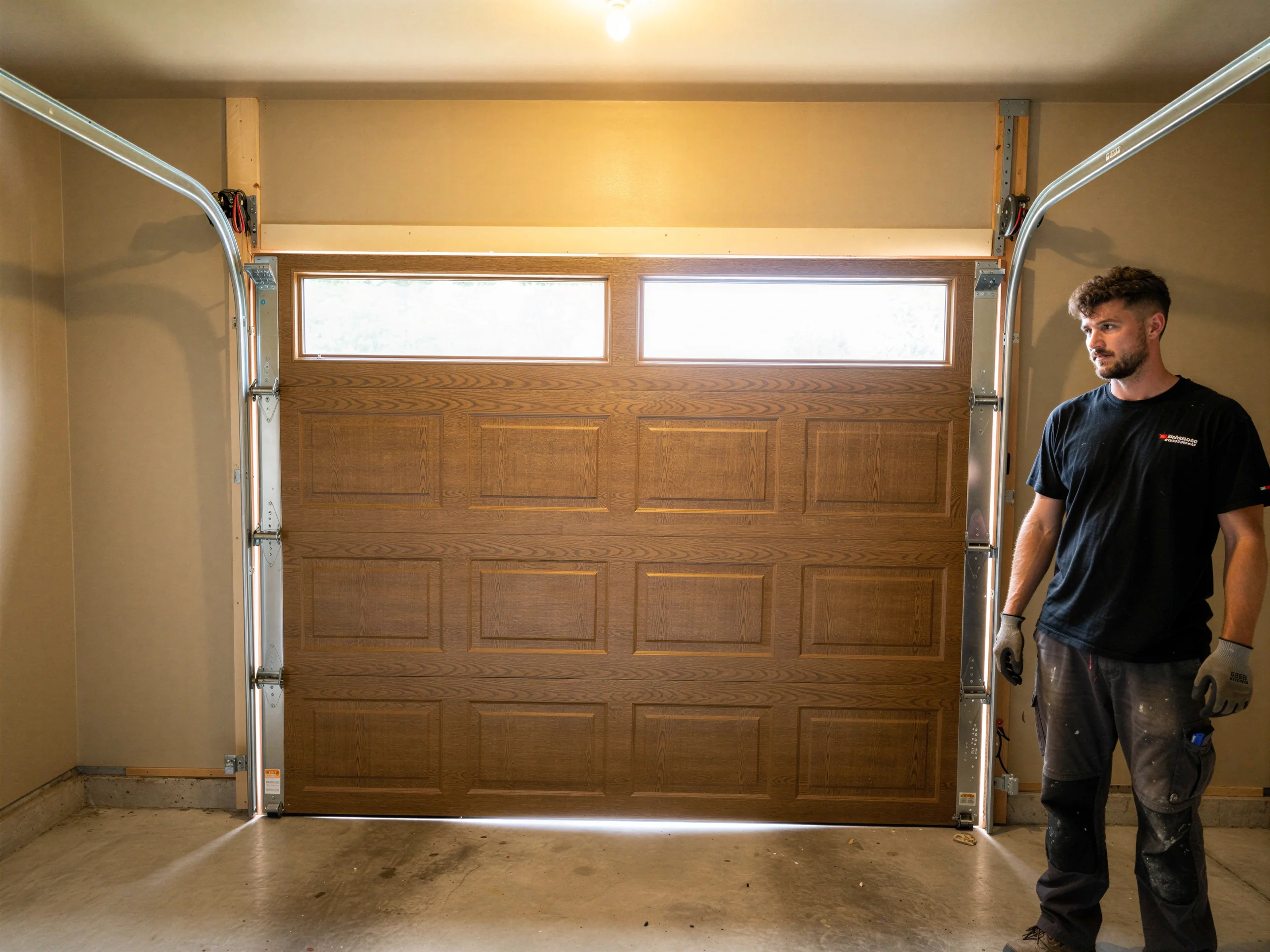
If the opener, track, or jambs need rework too - common on a house this age - plan on the job running longer. Panel styles that aren't common stock sizes can also add lead time before the crew ever shows up, since that part isn't something we control.
Week versus few-week lead
We'll tell you up front if your order is a same-week job or a few-week wait; we'd rather give you the real number than a guess that doesn't hold.
What You Pay
We don't publish a flat price here because door size, insulation level, opener choice, and whatever track or framing repair comes with it all move the number. What we can say: with median household income in Grand Terrace at $83,668, close to the $84,594 median across the wider service area, most jobs we quote here land in the mid-range tier rather than the cheapest or the top-end options - a double steel insulated door with a mid-grade opener, not the bare-bones single-layer panel and not a premium carriage-house custom order. If your current setup is original to a 1976 build, expect the quote to include some hardware beyond just the door itself, since track and spring sized for a door that old often don't carry over cleanly to a new one.
What You Are Seeing
If you're on this page because something looks off, the usual tells on a Grand Terrace house this age are a door that sags visibly at the center when open, daylight gaps along the bottom seal, or a panel that's visibly bowed rather than flat.
Grinding rollers signal wear
Rollers that grind or jump the track, and an opener that strains or reverses partway through the cycle, both point to hardware that's simply worn out rather than something a quick repair fixes.
Isolated fault suggests repair
If the door still opens and closes evenly and the issue is isolated - a bad panel, a single broken spring - repair is usually the better call, and that's a separate job we also handle.
Multiple failures favor replacement
If the whole assembly is original and multiple things are failing at once, replacement tends to be the more honest answer, since fixing one part on 1970s hardware often just shifts the next failure a few months down the road.
Talk to a local pro
Garage door service in San Bernardino?
Same-day service with honest, upfront quotes.