What Can Go Wrong
Grand Terrace has about 4,543 households, which makes it one of the smaller pockets San Bernardino Garage Door Pros covers. Small doesn't mean simple - it means the openers here tend to be older and more worn than what you'd find in a newer subdivision.
Stripped drive gears and belts
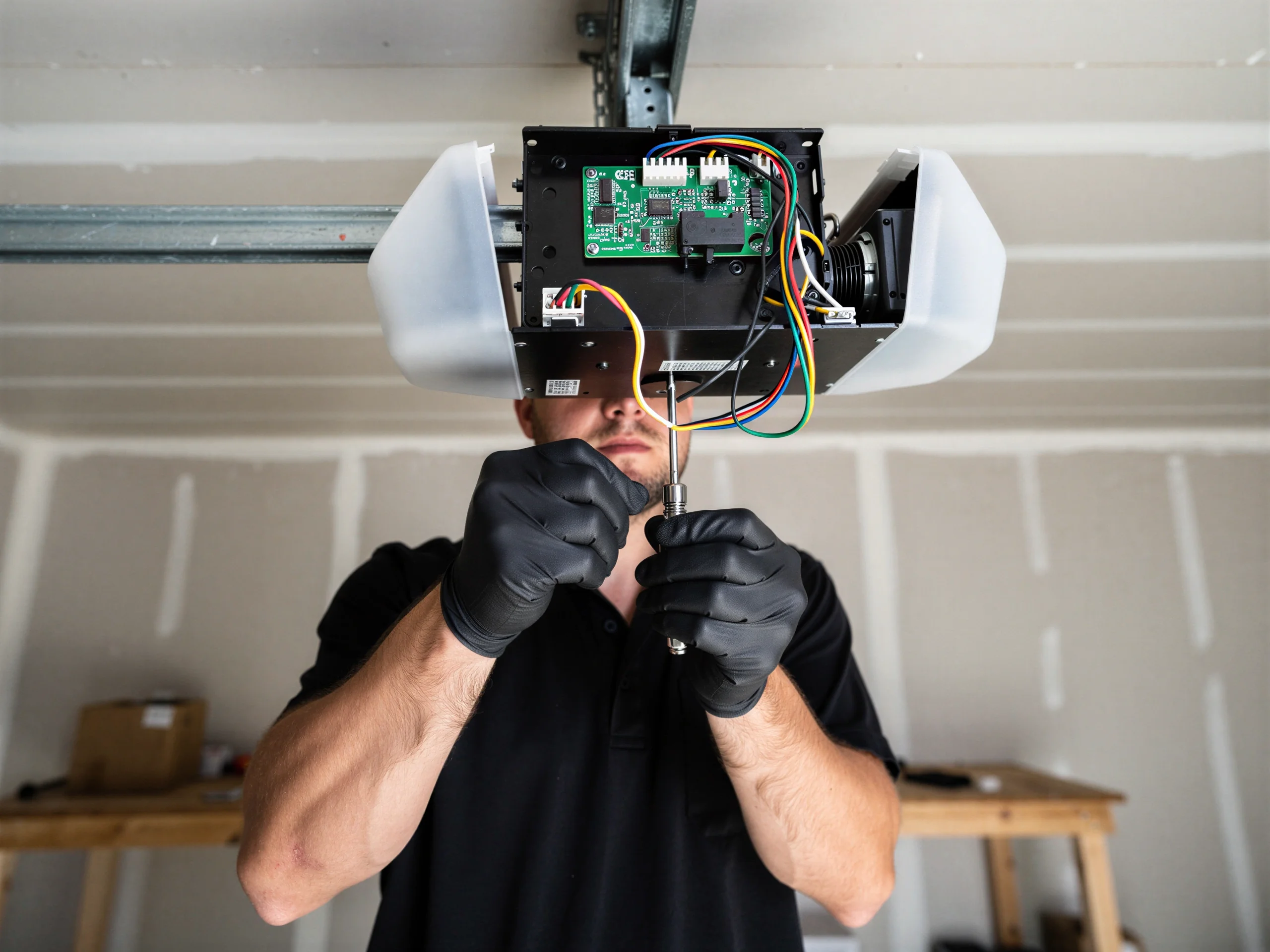
The usual failure points still apply: a stripped drive gear on a chain unit, a logic board that's stopped talking to the wall button, a worn belt that slips instead of pulling, or a capacitor in the motor housing that's finally given out after years of cycling.
Dead photo-eye sensors
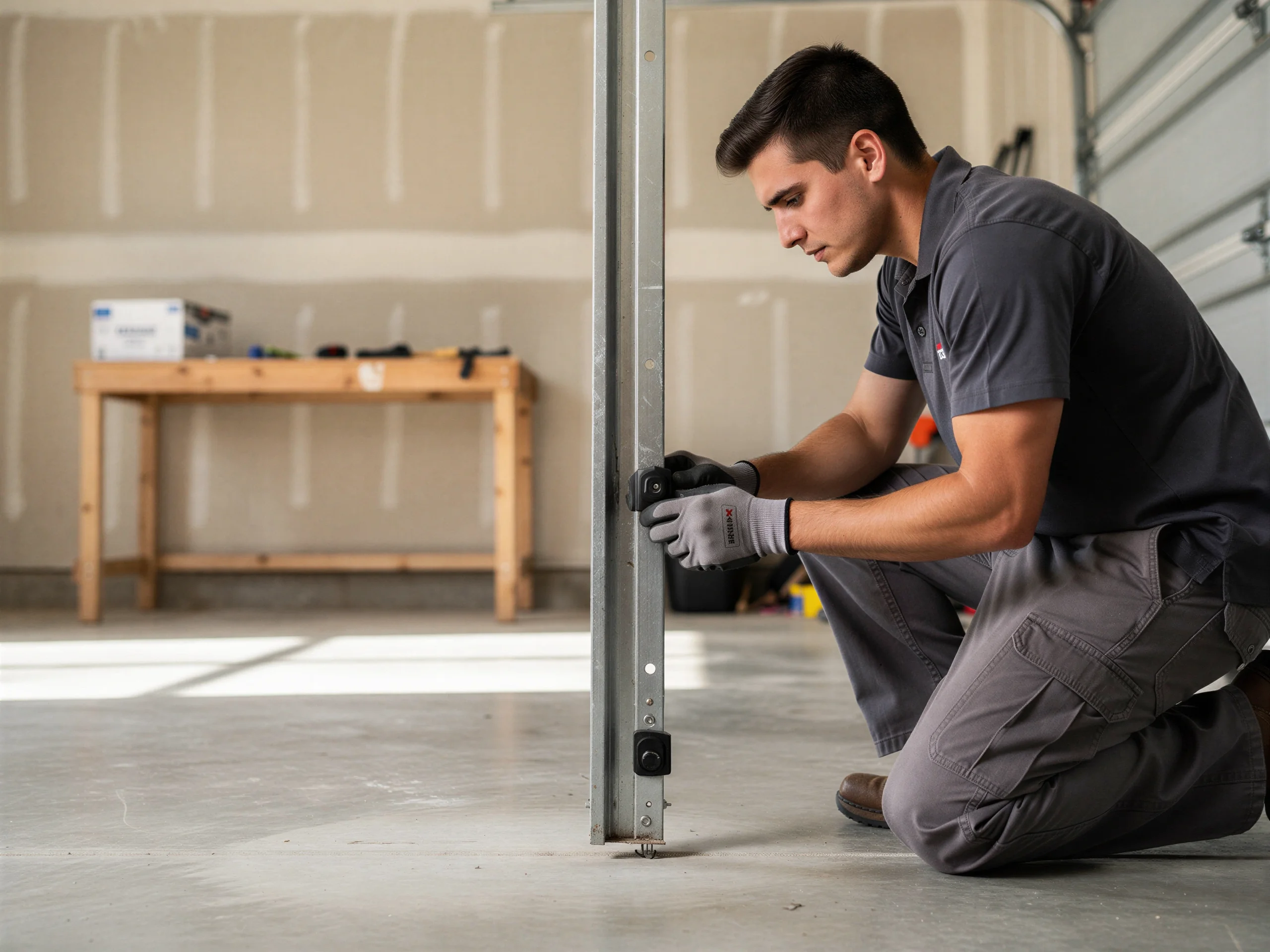
On older units you also get dead safety sensors - the photo-eyes at the bottom of the track - which is the most common reason a door won't close even though the motor sounds fine.
Broken drive springs inside opener
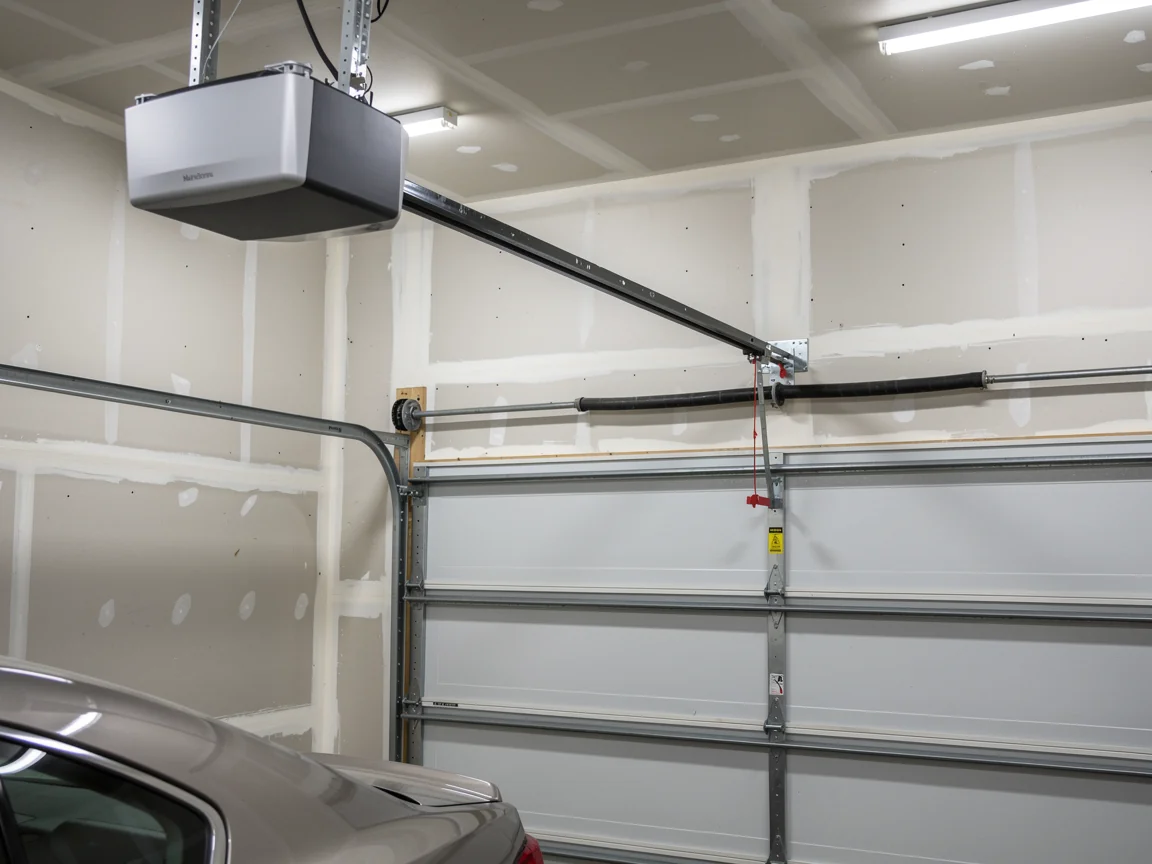
We also see broken drive springs inside the opener head on chain-drive units, which is a different animal from a torsion spring on the door itself and gets mixed up with it often. None of this is exotic. It's what happens to a motor and gearbox that have been running for decades in a garage that gets hot.
What Causes It Around Here
The median home in Grand Terrace went up around 1976, right in the middle of the 1958-1996 range across the wider service area we work. That means a good share of openers here are either original to the house or are the first or second replacement unit - either way, older than what you'd find in a tract built in the 2000s. Heat is the other piece. The climate band here runs moderate rather than extreme, but garages still bake, and a circuit board that sits above a hot engine compartment all summer loses solder joints and capacitors faster than one in a conditioned space. A town this size - under five thousand households - also means we see fewer brand-new smart openers and more of the chain-drive 1/2-horse units that were standard through the 70s and 80s. Those units are solid machines, but their control boards aren't built to the tolerances modern ones are, and after enough summers the heat cycling catches up with the solder and the sensor wiring both.
How Long You Are Without the Door
We're driving the truck about 8 miles out from San Bernardino to reach Grand Terrace, so we don't carry a local parts cache here the way we might closer to the shop.
Sensor fixes versus board parts
If the fix is a sensor realignment, a logic board reset, or a remote reprogram, that's a same-visit job. If the motor itself or the control board needs a part we don't have on the truck, you're waiting on that part to come in before we can finish - that's the honest limitation, and it's worth knowing before you call rather than after.
Manual release while waiting
We'd rather tell you a repair needs a part than quote a fix we can't actually close out that day. For a door that's stuck shut because the opener died, we can usually get it moving manually in the meantime so the car isn't trapped while the part comes through.
What You Pay
We don't have a published price list for opener work in Grand Terrace specifically, and we're not going to make one up. What drives the number on any given job is whether it's a sensor, a logic board, a gear set, or the whole motor assembly that needs replacing, and whether the unit is old enough that parts for that exact model are getting hard to source. Grand Terrace's median household income sits at $83,668, a touch below the service area's $84,594 - not a huge gap, but it's the kind of thing that factors into whether a homeowner wants to repair an aging unit or just replace it outright once the motor's the problem. As a rule, a sensor or logic board fix is a smaller job than a full motor swap, and a motor swap on a unit that old is sometimes the point where replacing the whole opener makes more sense than chasing parts for a 20- or 30-year-old model.
What You Are Seeing
If the door runs partway and stops, or the motor hums but the door doesn't move at all, that's usually a gear or belt problem, not the motor itself.
Button and remote mismatch
If the wall button does nothing but the remote still works, or vice versa, that points to a wiring or board fault rather than anything mechanical. A door that reverses right after it touches the floor, or won't close unless you hold the button down, is almost always the safety sensors - the two eyes mounted low on either side of the track - misaligned, dirty, or dead.
Blinking light diagnostic codes
Blinking lights on the motor unit are usually a diagnostic code; what it means depends on the brand and the pattern, and on an opener that old the manual with that code chart is probably long gone, so we check it against the model plate on the unit itself.
Grinding that worsens fast
If you're hearing a grinding or clicking sound that wasn't there last month, don't keep running the opener - that's wear that gets worse fast, and it's cheaper to deal with before something breaks mid-cycle.
Talk to a local pro
Garage door service in San Bernardino?
Same-day service with honest, upfront quotes.