What Can Go Wrong
Most houses in Rialto went up around 1982, a few years past the median build date for the wider San Bernardino service area. That one fact changes what breaks on your door compared to the older stock closer to the city core.
Early-1980s extension switch
By the early 1980s, builders had mostly moved off wood doors and onto steel roll-formed panels, and tract housing from that era commonly shipped with extension spring systems riding on side pulleys rather than the torsion setups that came standard later.
Worn pulleys and cone fatigue
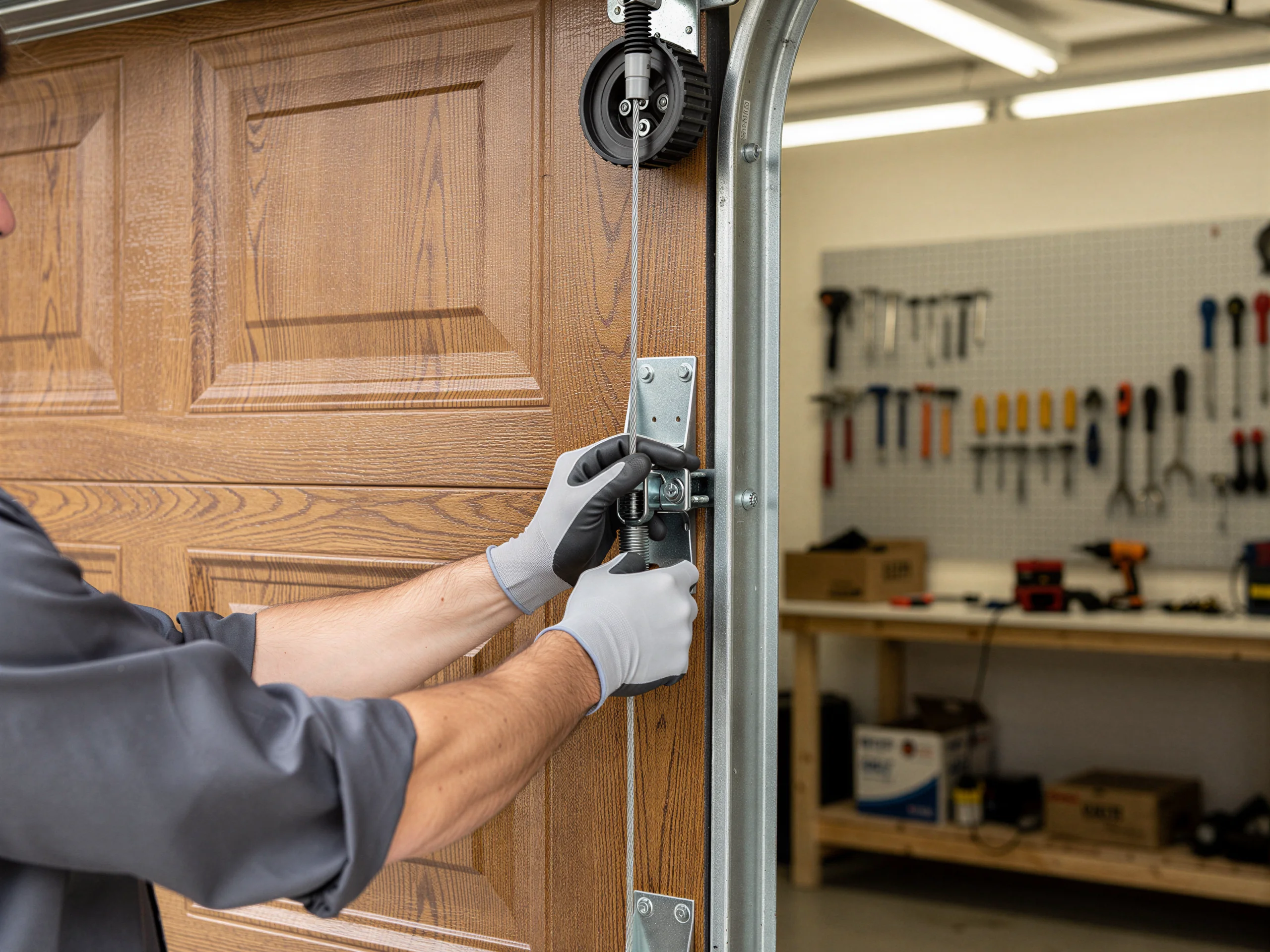
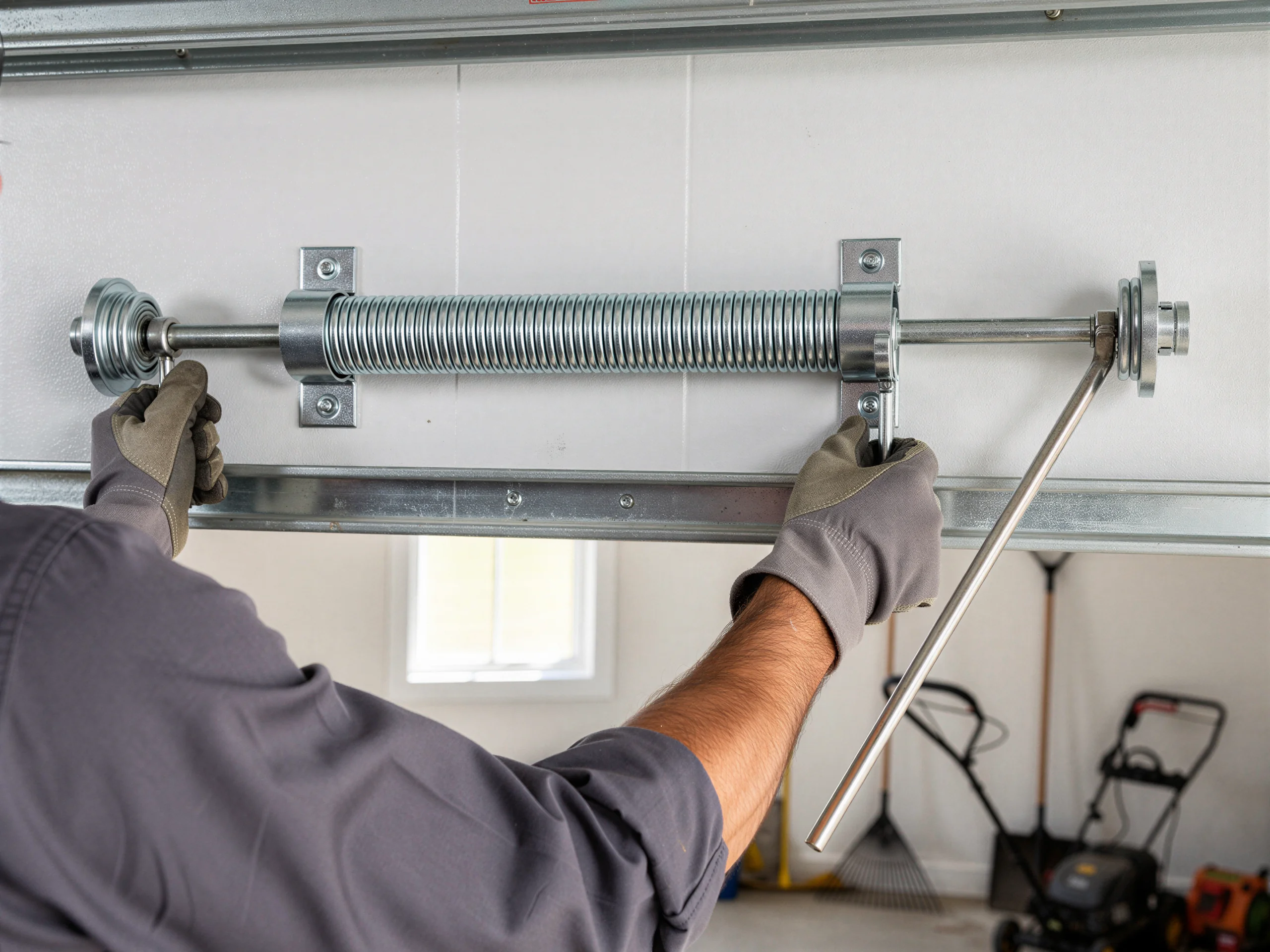
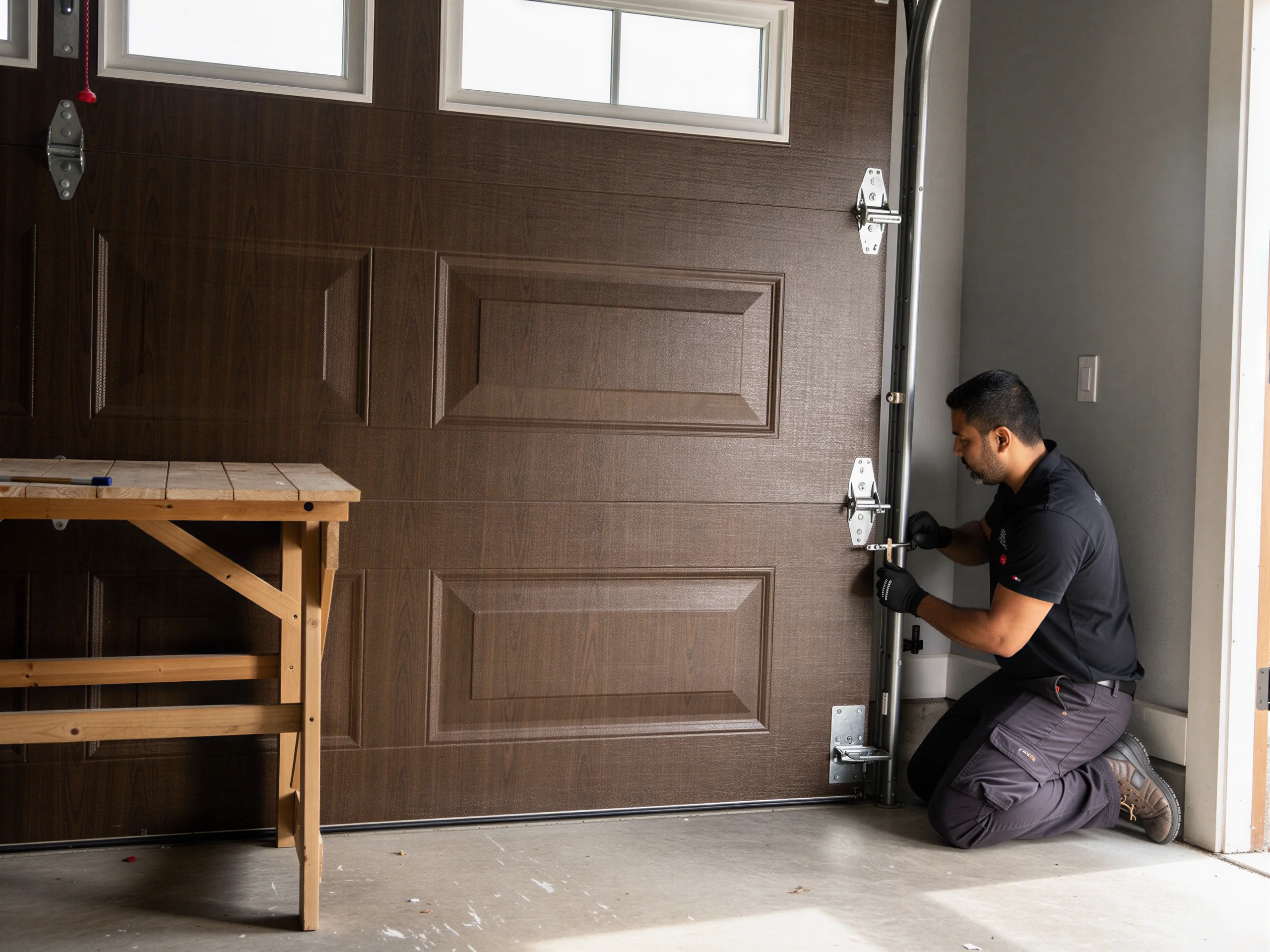
Those pulleys wear, the cable guides bend, and the stationary cone on the spring itself fatigues after enough open-close cycles. We also see galvanized track that's been reset one too many times, bent at the curve where the door transitions from vertical to horizontal.
Early chain-drive gear stripping
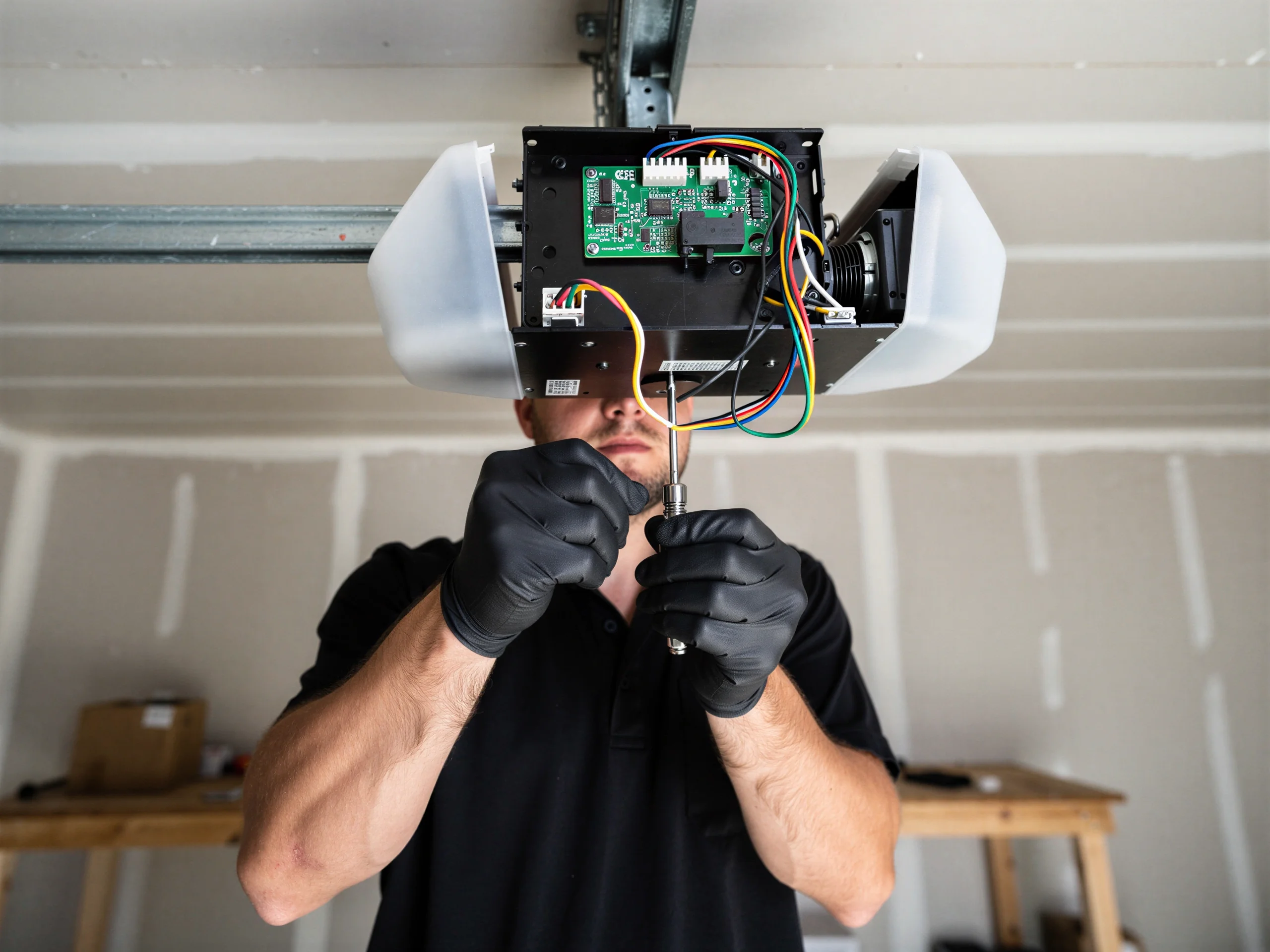
On doors fitted with an early chain-drive opener - common builder-grade equipment through the 80s - the gear-and-sprocket assembly inside the motor housing is usually the first thing to strip, long before the door itself gives out. None of this is exotic. It's just what you'd expect from hardware that's been in continuous use since the Reagan administration.
What Causes It Around Here
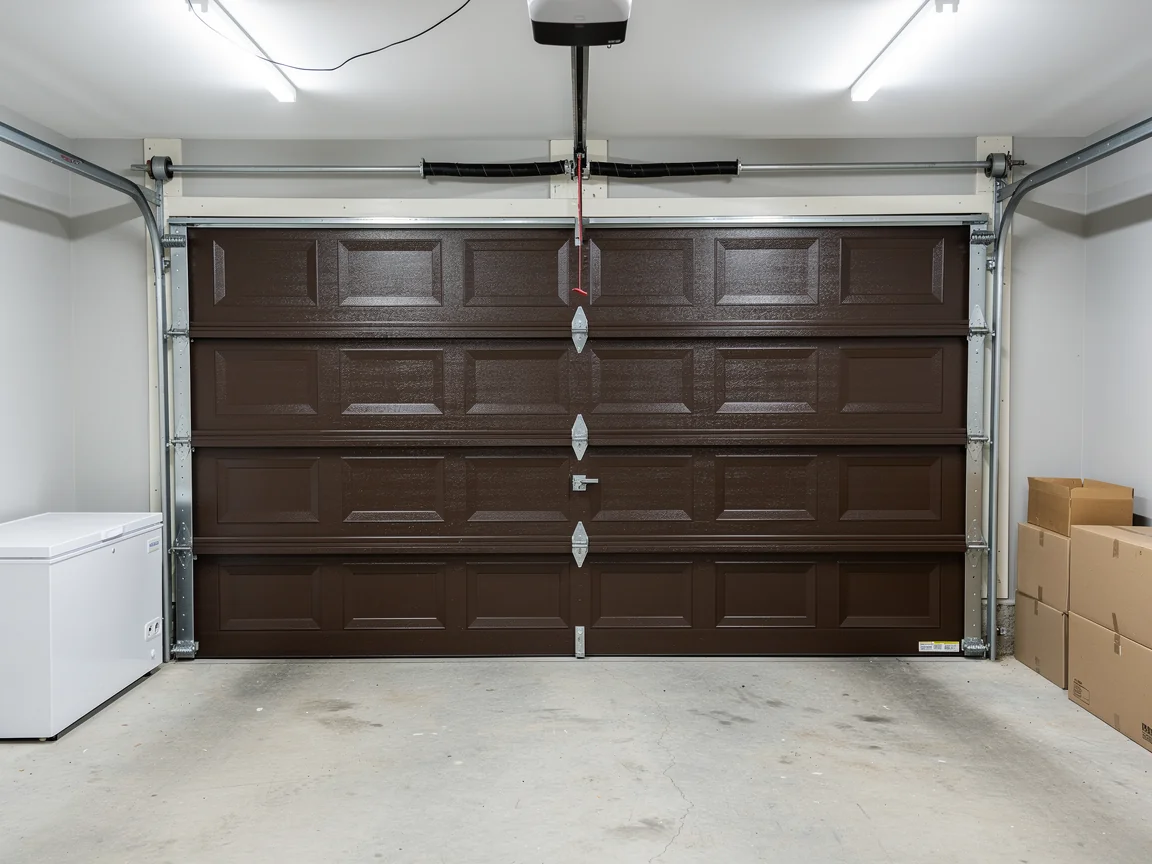
San Bernardino's service area sits in a moderate heat band, and that steady thermal cycling matters more than people think. Steel panels expand and contract daily, and over forty-plus years that movement works screws loose at the hinge points and flexes the bottom bracket where the cable terminates. On a 1982-era extension spring door, the pulley brackets were often attached with shorter screws than you'd use today, and decades of that expansion-contraction cycle backs them out. We also see a lot of original hardware that was never upgraded when the opener was swapped - a 1990s or 2000s opener bolted onto an original 1982 track and spring system that was never rated for the heavier lift cycles of daily automatic use instead of occasional manual use. That mismatch shows up as a door that opens fine but shudders or reverses partway through the cycle.
What the Repair Takes
On a Rialto call, the first ten minutes are spent figuring out whether we're dealing with original 1982 hardware or a mix of replacement parts from different decades - that matters because older extension spring brackets sometimes take a different gauge screw than current stock, and we need to know before we're on the ladder.
Extension springs need pulley work
Spring replacement on an extension system is a different job than a torsion spring swap: it's lower risk in terms of stored energy, but the pulleys and cables usually need attention at the same time or you're back out in a year.
Steel panels aging well
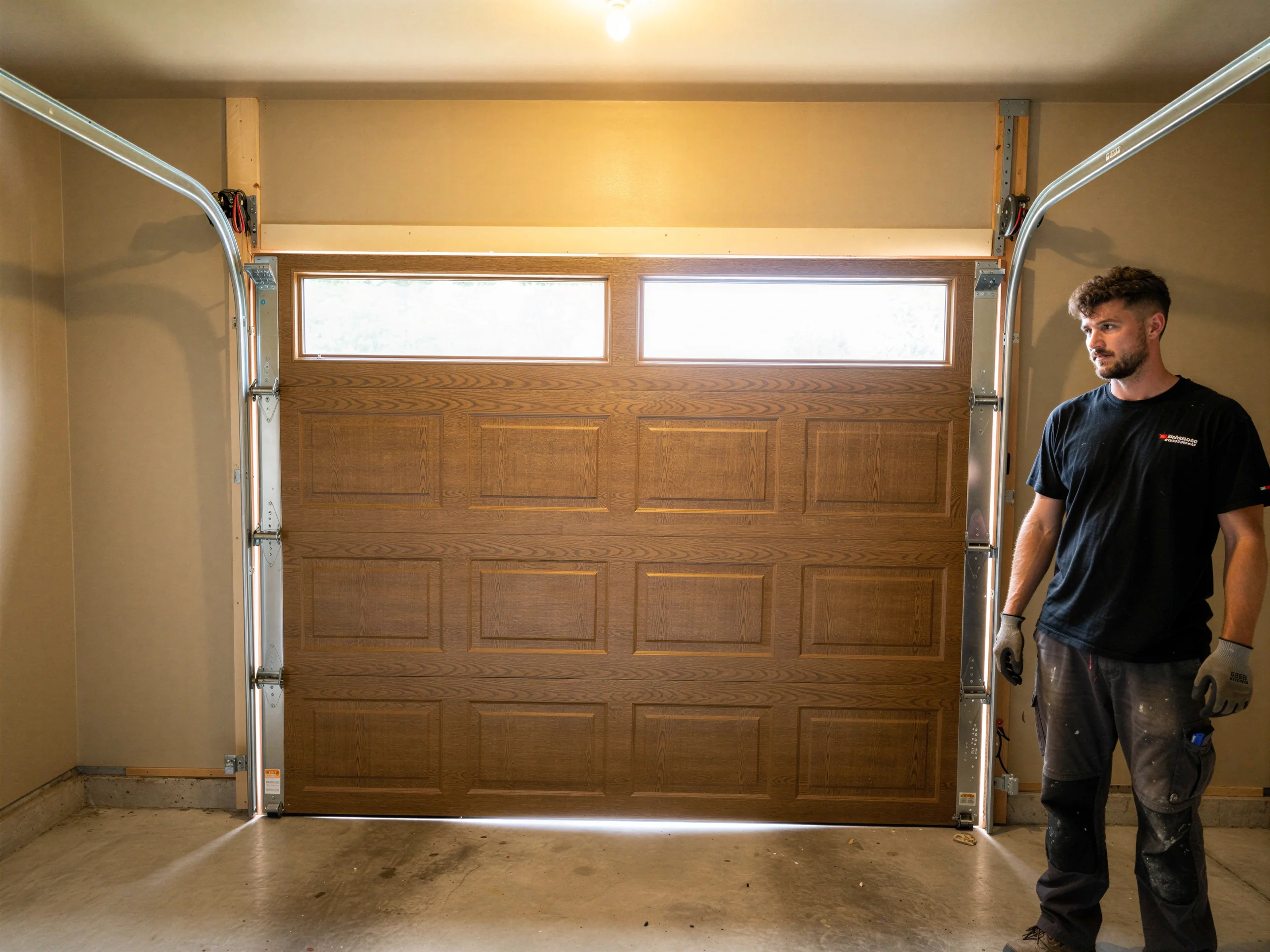
If the door's original steel panels are still sound - and on 1982-era doors they often are, since steel ages better than the wood doors from decades earlier - we're usually looking at hardware and opener work, not a full door replacement.
Six-mile travel, same job
We travel in from San Bernardino, about six miles out, so we're not quoting a walk-up response time, but the job itself runs the same whether we're six miles or sixty.
The DIY Question
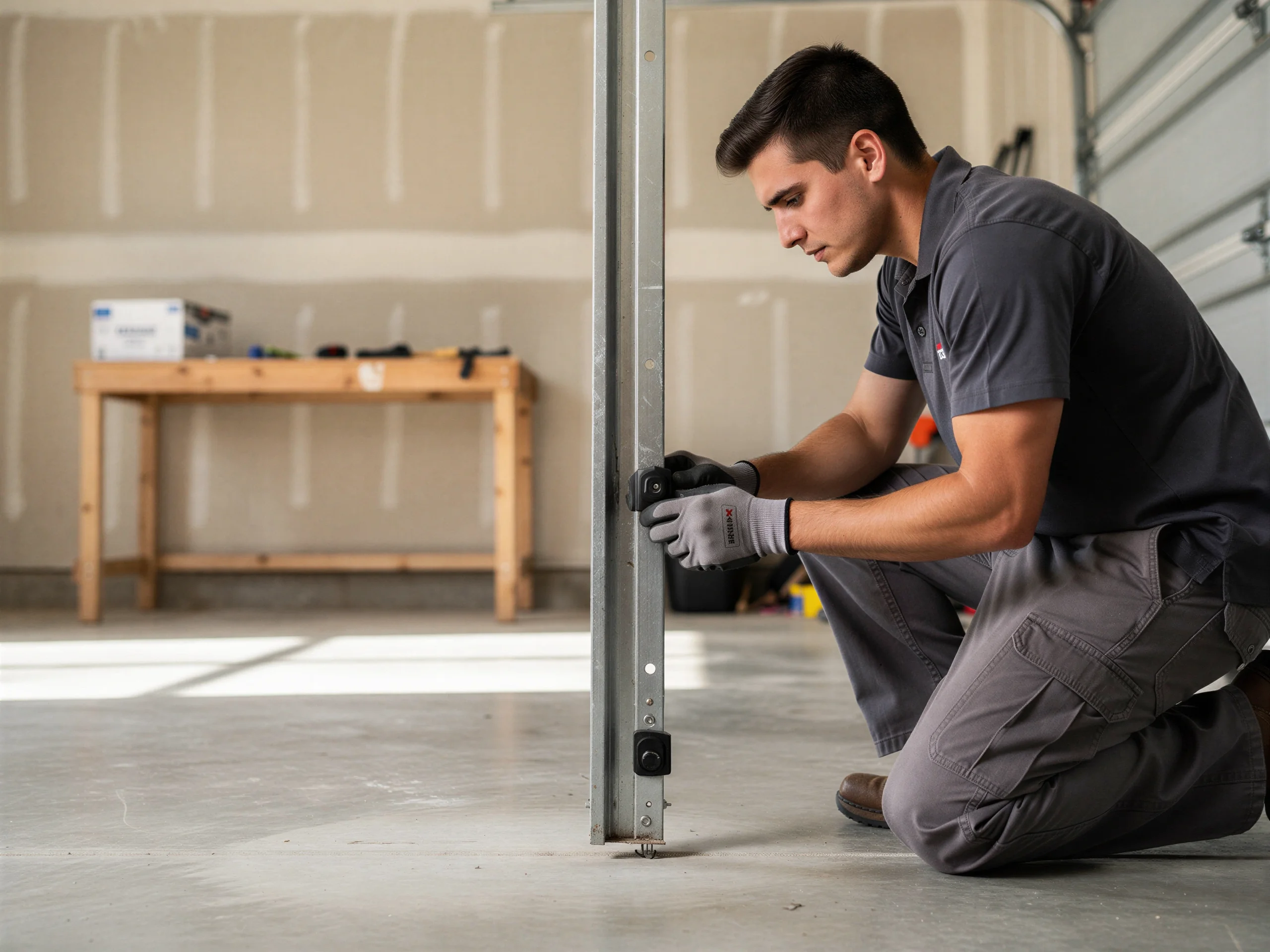
Extension springs are lower-tension than torsion springs, which is why some homeowners feel comfortable poking at them. We'd still say no to doing the spring swap yourself - the spring is still under load, and the pulley and cable system on a 1982-style setup has more failure points than a torsion system, which means more ways to get it wrong. Where DIY makes sense: tightening loose hinge screws, lubricating rollers and the track, and replacing weatherstripping. Where it doesn't: anything involving the spring, the cable, or the bottom bracket under tension. If your opener is original builder-grade equipment from the 80s, replacing it outright is often cheaper than sourcing parts for a motor that old - we're honest about that rather than trying to keep a dead unit alive.
How Long You Are Without the Door
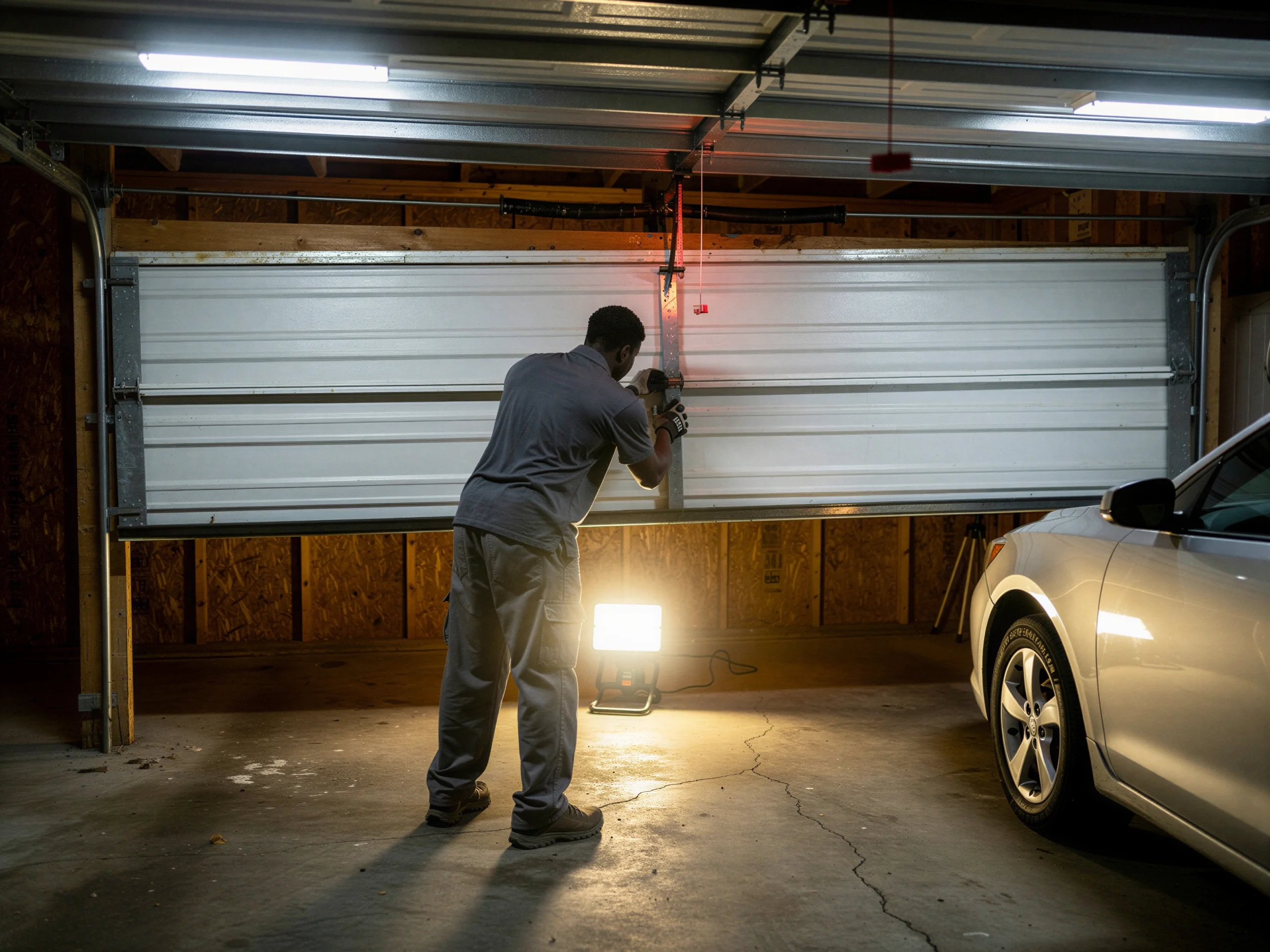
A spring or cable job on an extension system usually takes a single visit once we're on site, parts depending. The harder variable in Rialto is parts availability for original hardware - if your pulleys or brackets are genuine 1982 stock and not a later replacement, we may need to source a compatible modern equivalent rather than an exact match, since the original parts aren't manufactured anymore. That's not a Rialto-specific problem, it's a 40-plus-year-old-hardware problem, but it shows up here more often than in neighborhoods built later. We travel from San Bernardino for the job, so plan the visit around that six-mile run rather than a same-neighborhood walk-up.
Talk to a local pro
Garage door service in San Bernardino?
Same-day service with honest, upfront quotes.