What Can Go Wrong
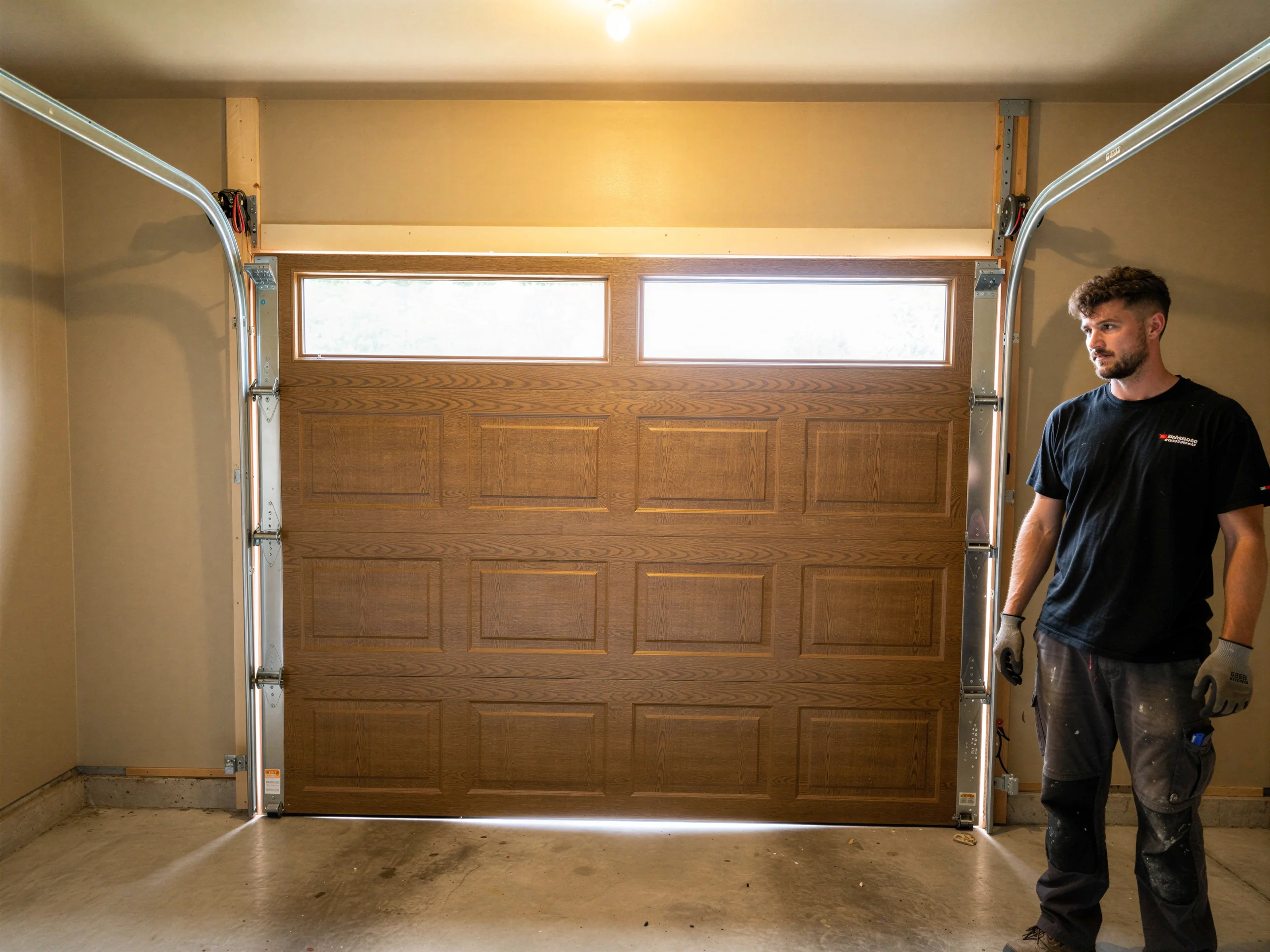
Most garage doors in Rialto went up around 1982, which put the area squarely in the two-car, double-wide era. That means you're mostly looking at a 16x7 steel sectional door, often still carrying its factory torsion spring or, on older builds, a pair of extension springs mounted over the horizontal tracks.
Heavier doors stress springs
A door that size is heavier than the single-car doors you'd find on older stock, so the spring doing the lifting works harder every single cycle. The classic failure is a torsion spring that just lets go, usually with a bang loud enough to bring you out to the garage.
Racking and stalled openers
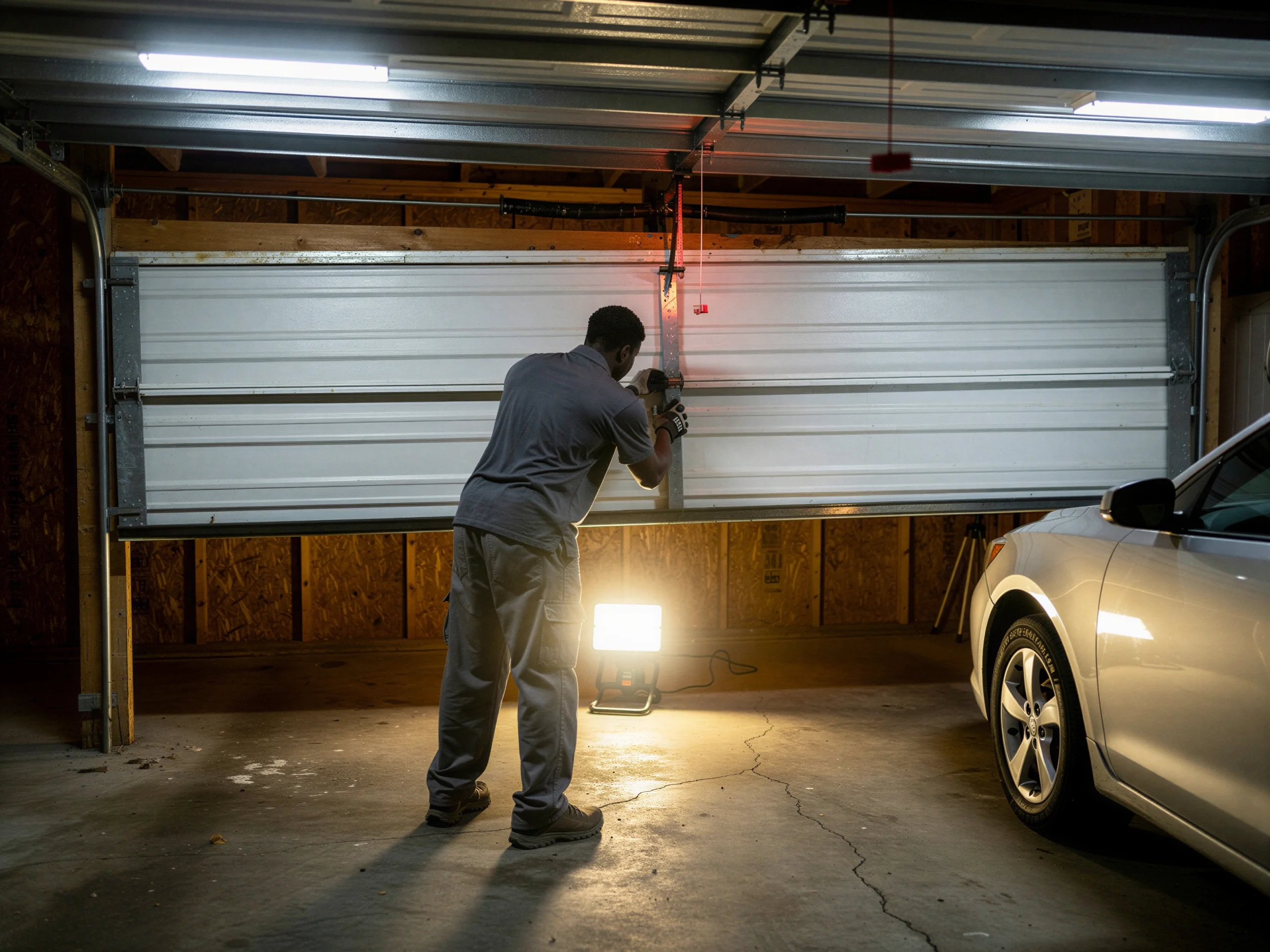
You'll know it happened because the door won't budge, or it budges a few inches and the opener strains and stalls. On homes still running the older extension-spring setup, the failure looks different: one side sags, the door racks sideways in the tracks, or a frayed safety cable finally snaps.
Old rollers and cable fatigue
Either way, the door is now too heavy to lift by hand and too dangerous to force with the opener. Rollers and cables on doors from this era are also due. A 1982 door has had roughly four decades of cycles on it, even with replacement springs along the way, and the track hardware wears at a different rate than the spring itself.
What Causes It Around Here
Spring failure here comes down to cycle count more than anything dramatic. A torsion spring is rated for a set number of open-close cycles, and most residential springs are good for somewhere in the 10,000-cycle range before fatigue cracks the coil. A door built in 1982 that's original, or that's on its second spring, is simply at or past that point for a lot of households.
Heat plays a role too, though it's a moderate factor here rather than an extreme one. Steel expands and contracts with the day's temperature swing, and a spring that's already near the end of its fatigue life is more likely to snap on a hot afternoon than a cool morning, since the metal is under more stress when it's warm and the door's been sitting closed since the night before.
The other factor is simply what's on the door. A double-wide 16x7 section door is heavier than a single, so its spring is working at a higher load than the single-car doors you'd find on an older street. Combine 1980s-era hardware with four decades of two-car cycling and the math on spring life runs out sooner than owners expect.
What the Repair Takes
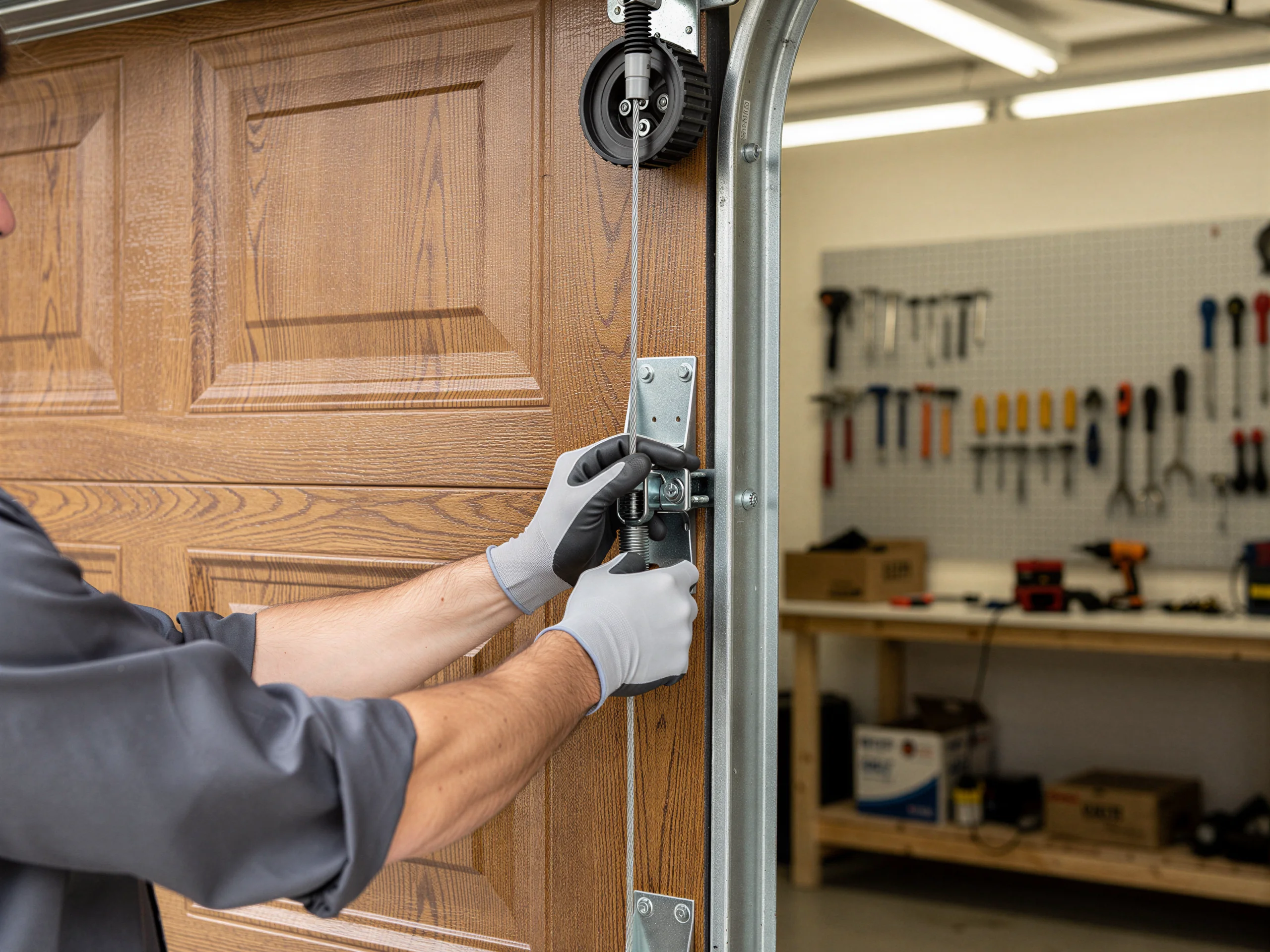
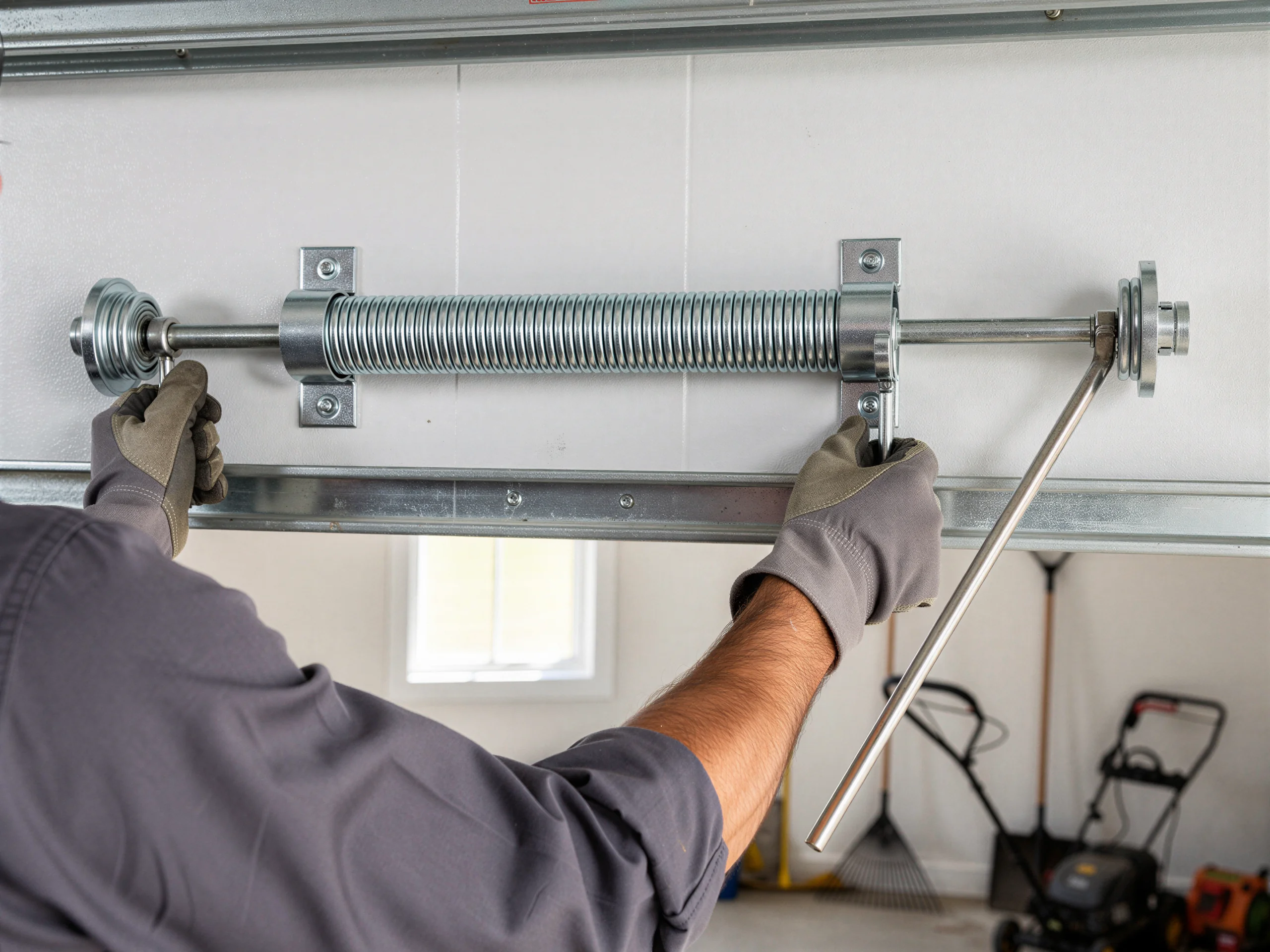
For a torsion spring job on a 16x7 door, we're matching spring wire size and wind to the door's actual weight, not just swapping in whatever's on the truck.
Spring match and slam risk
Get that match wrong and the door either won't hold its position or it slams down when the opener releases it. On the older extension-spring doors still running in Rialto, the job includes checking that safety cables are present and routed correctly, since a lot of these were installed before that became standard practice.
Local base, no branch
We travel the roughly 6 miles out from our San Bernardino base to do the work, which means the quote covers the job itself, not a standing branch location in town. Parts for a 1982-era door are generally not a problem since torsion and extension spring sizes are still widely stocked, but if your door has a less common width or an opener bracket that's been discontinued, that part may need to be ordered rather than pulled off the truck.
Rollers and bearing alongside
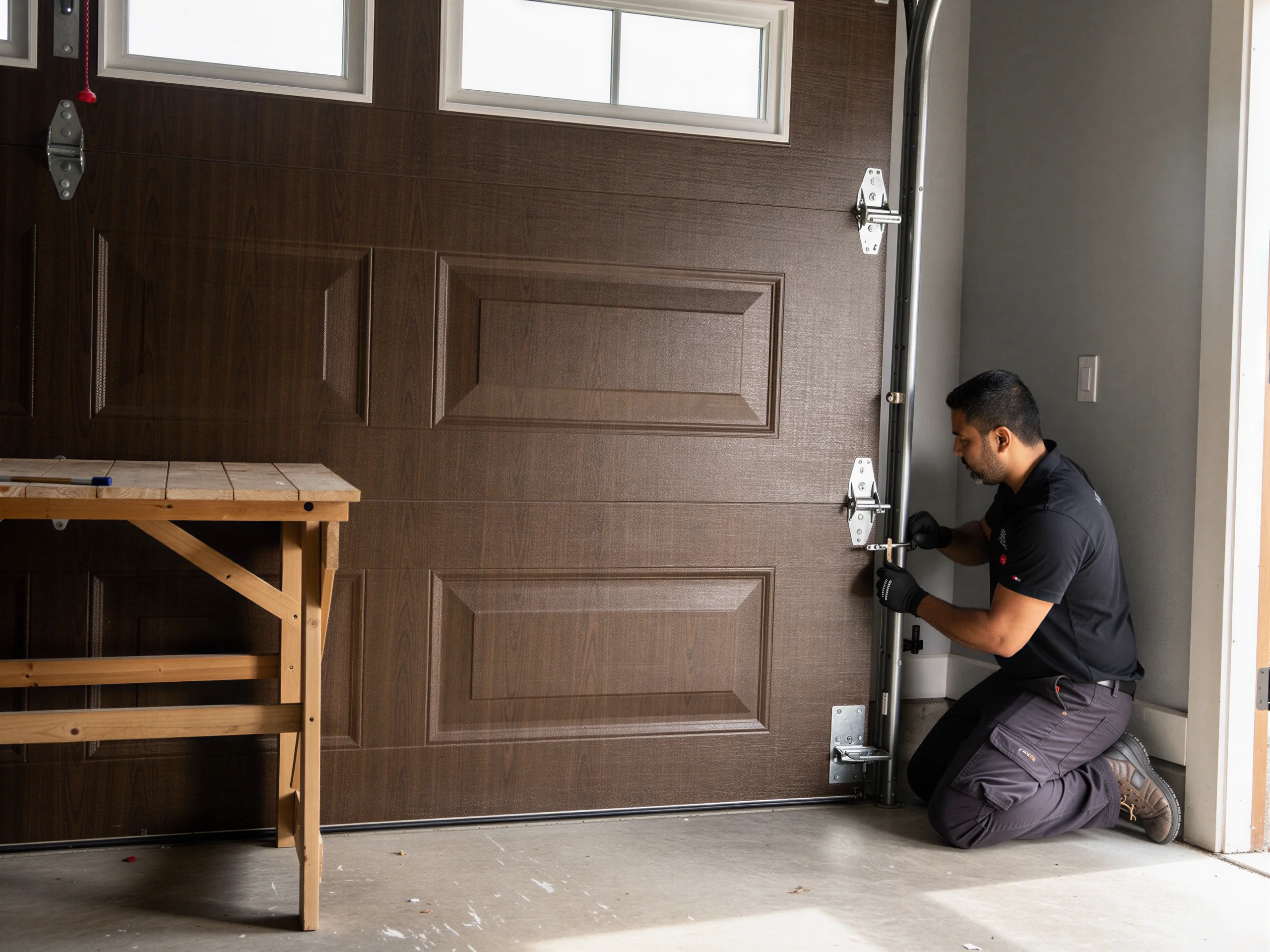
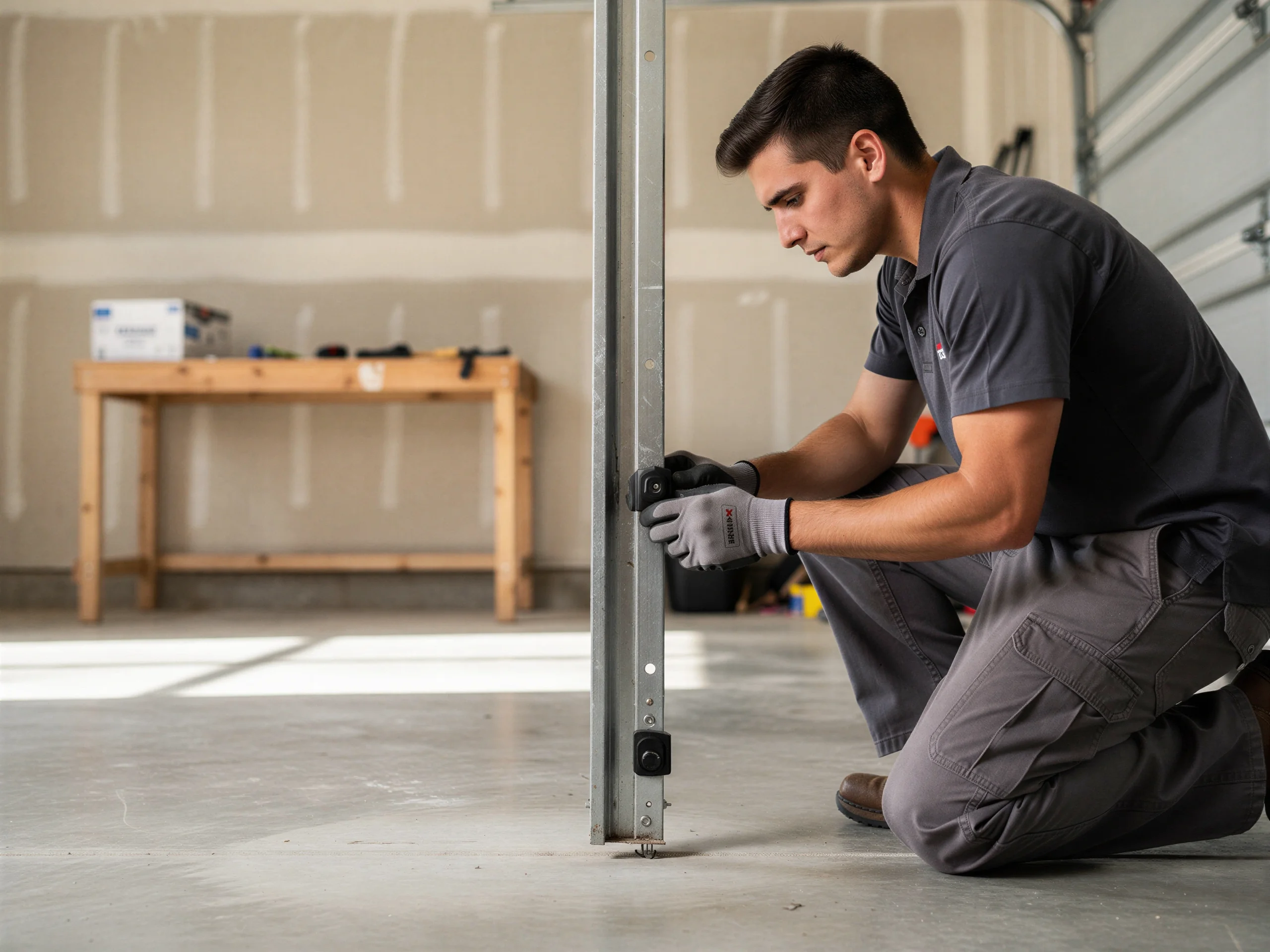
We'll also check the rollers and center bearing while the door's apart, since on a door this old they're usually close to needing replacement anyway and it's cheaper to do it in the same visit.
The DIY Question
A torsion spring is wound under enough tension to break bones or worse if it's released wrong, and that's true whether the door is brand new or forty years old. We don't recommend homeowners attempt the spring swap themselves, full stop. That's not a sales pitch, it's the same line every reputable shop gives.
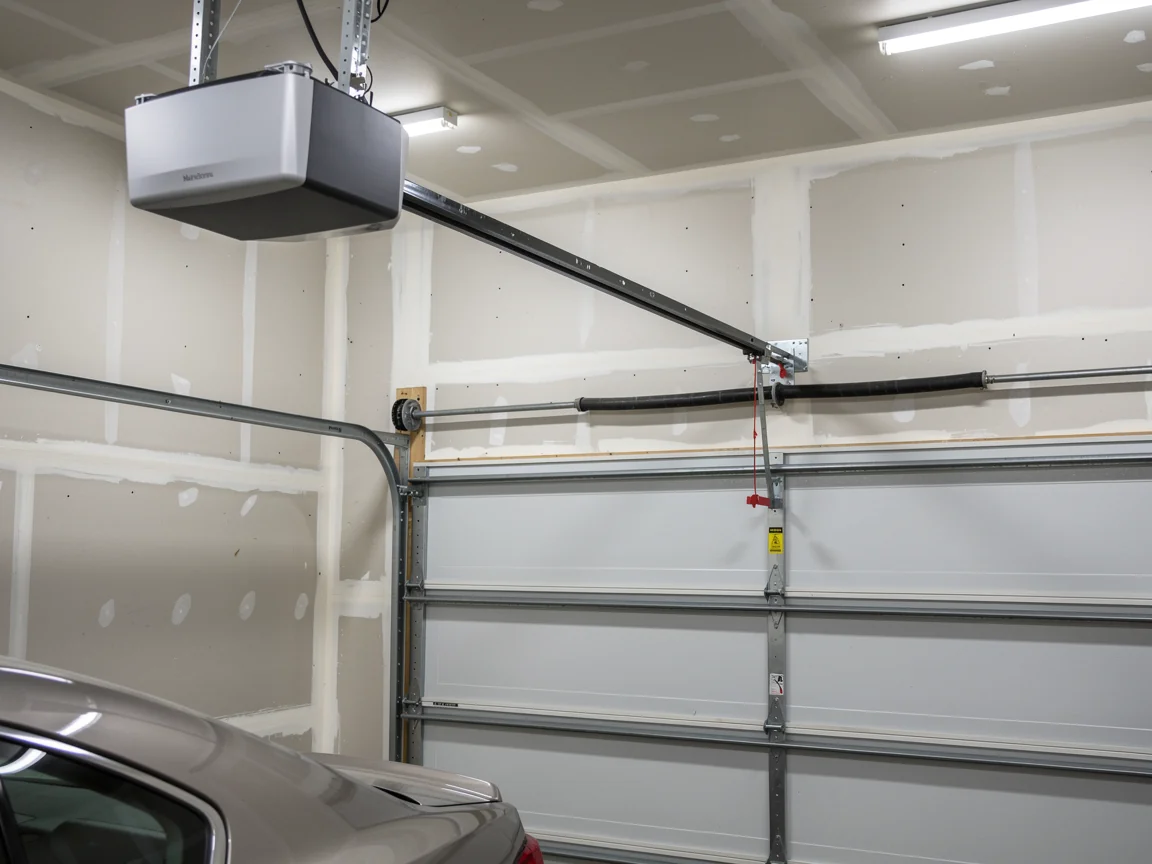
What you can safely do yourself: pull the emergency release cord so you can open the door by hand while you wait for the spring to get fixed, and take a look at whether it's a torsion spring (horizontal bar above the door) or extension springs (stretched along the upper tracks) so you know what you're dealing with when you call. Beyond that, leave the bar and the winding cones alone.
How Long You Are Without the Door
Once we're on site, a standard torsion spring replacement on a 16x7 door is usually a same-visit fix measured in an hour or two, not days. The door comes back into service the same day we arrive. Where it can stretch longer is parts availability: if your door needs a spring size that isn't common, or if the opener or track hardware is damaged beyond the spring itself, that piece may need to be ordered in, and we'll tell you that up front rather than guessing.
In the meantime, don't try to force the door open or closed with the opener. Running the motor against a broken spring strains the opener itself and can turn a spring repair into a spring-plus-opener repair.
Talk to a local pro
Garage door service in San Bernardino?
Same-day service with honest, upfront quotes.