What Can Go Wrong
The most common call we get from this side of the service area is a door that's gone loud or heavy before it quits outright.
Wear catching up hardware
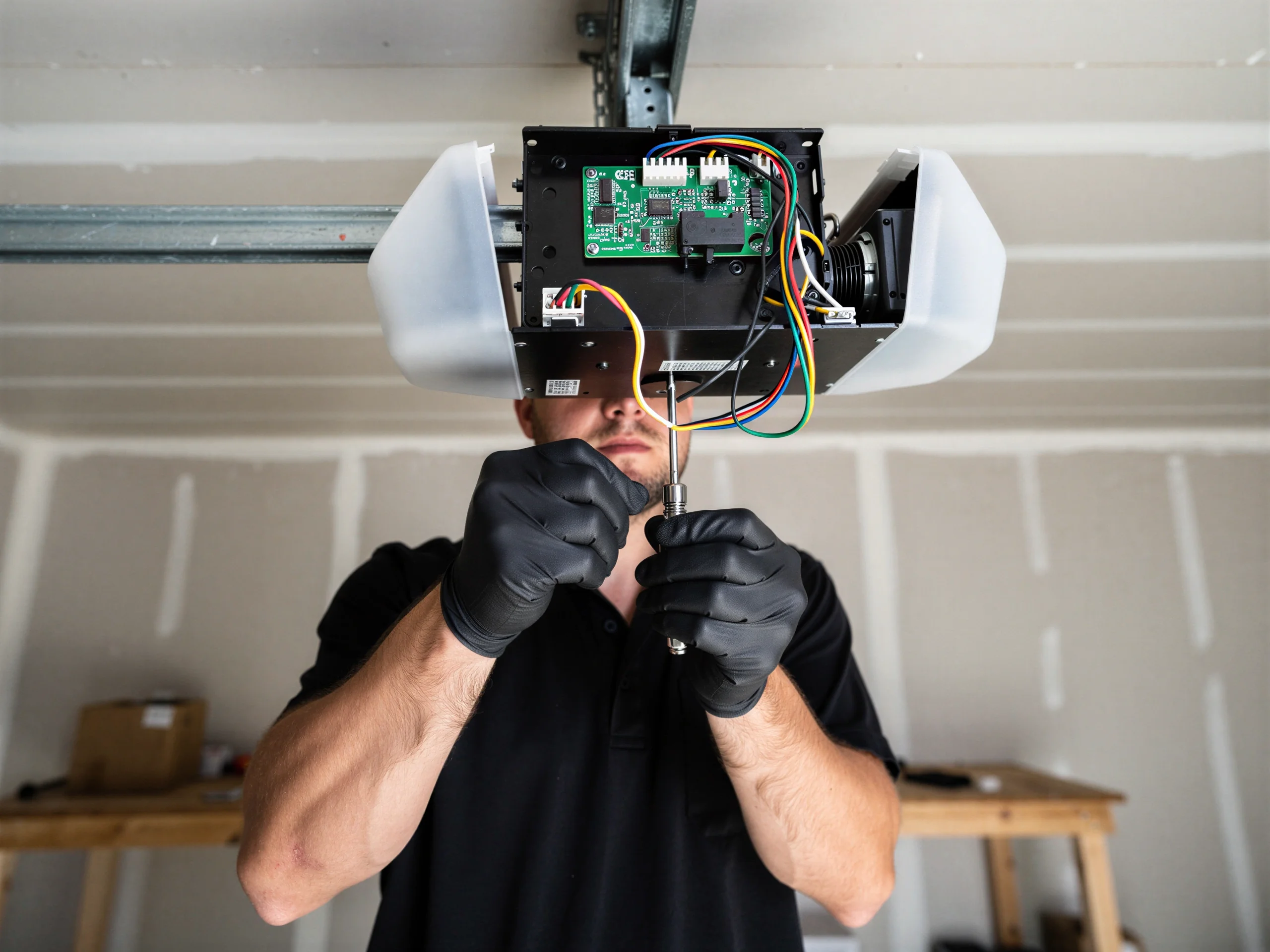
Rollers grind, the opener strains on the last foot of travel, or the door starts to sag on one side when it closes. None of that is random. It's wear catching up with hardware that's been doing the same job, unexamined, for decades. Most houses in this part of Rialto went up around 1982, a few years newer than the bulk of the wider service area, which runs 1958 to 1996 with a median closer to 1979.
Heavier insulated door strain
That gap matters more than it sounds. Doors from the early 1980s were built for lighter steel panels than what's common today, and a lot of owners have swapped in a heavier insulated door over the years without ever touching the spring that's supposed to counterbalance it.
Mismatched spring tension damage
The spring keeps working, just wrong, until a cable frays or the opener's gears strip trying to make up the difference. That's the fault we're called out for most on this end of town: mismatched spring tension on an otherwise sound door.
What Causes It Around Here
The climate here falls in a moderate heat band, not the extreme swings you'd see further up in the mountains, but it's still enough to matter over a 40-year-old door. Steel expands and contracts through the summer, grease hardens in the track, and nylon rollers that were fine in cooler months start to crack. None of this is dramatic. It's slow, and it's cumulative, which is exactly why a door that's never been serviced tends to fail in the heat rather than in a storm.
With 26,856 households in Rialto, a large share of them built in that same window around 1982, you've got a lot of garage doors reaching the same point in their service life at roughly the same time. Original torsion hardware on a door that age wasn't designed to run forever without lubrication and a tension check. Owners who've never had that done are the ones who end up calling for a repair instead of a tune-up. A tune-up is cheaper and it's scheduled on your terms.
What the Repair Takes
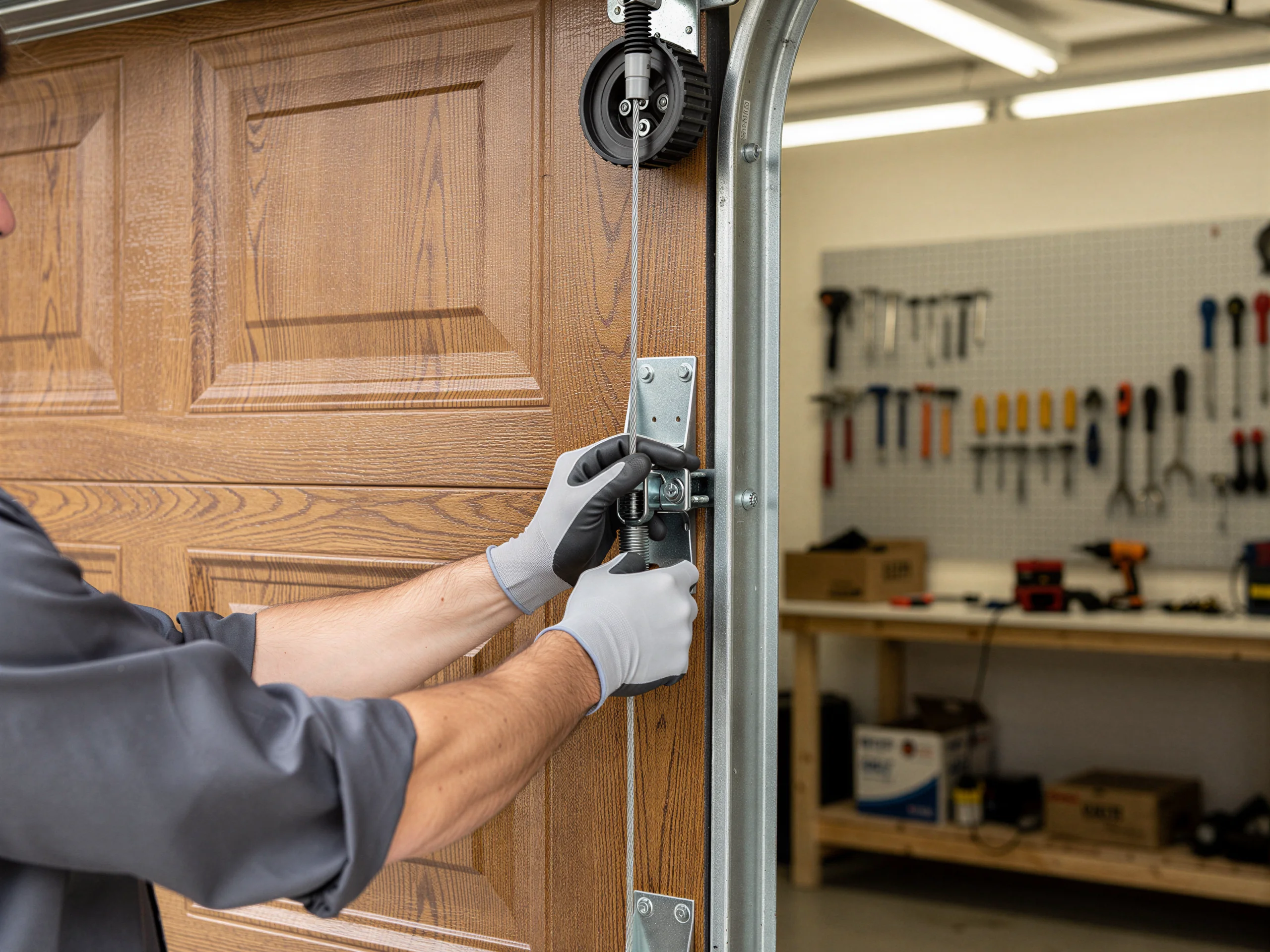
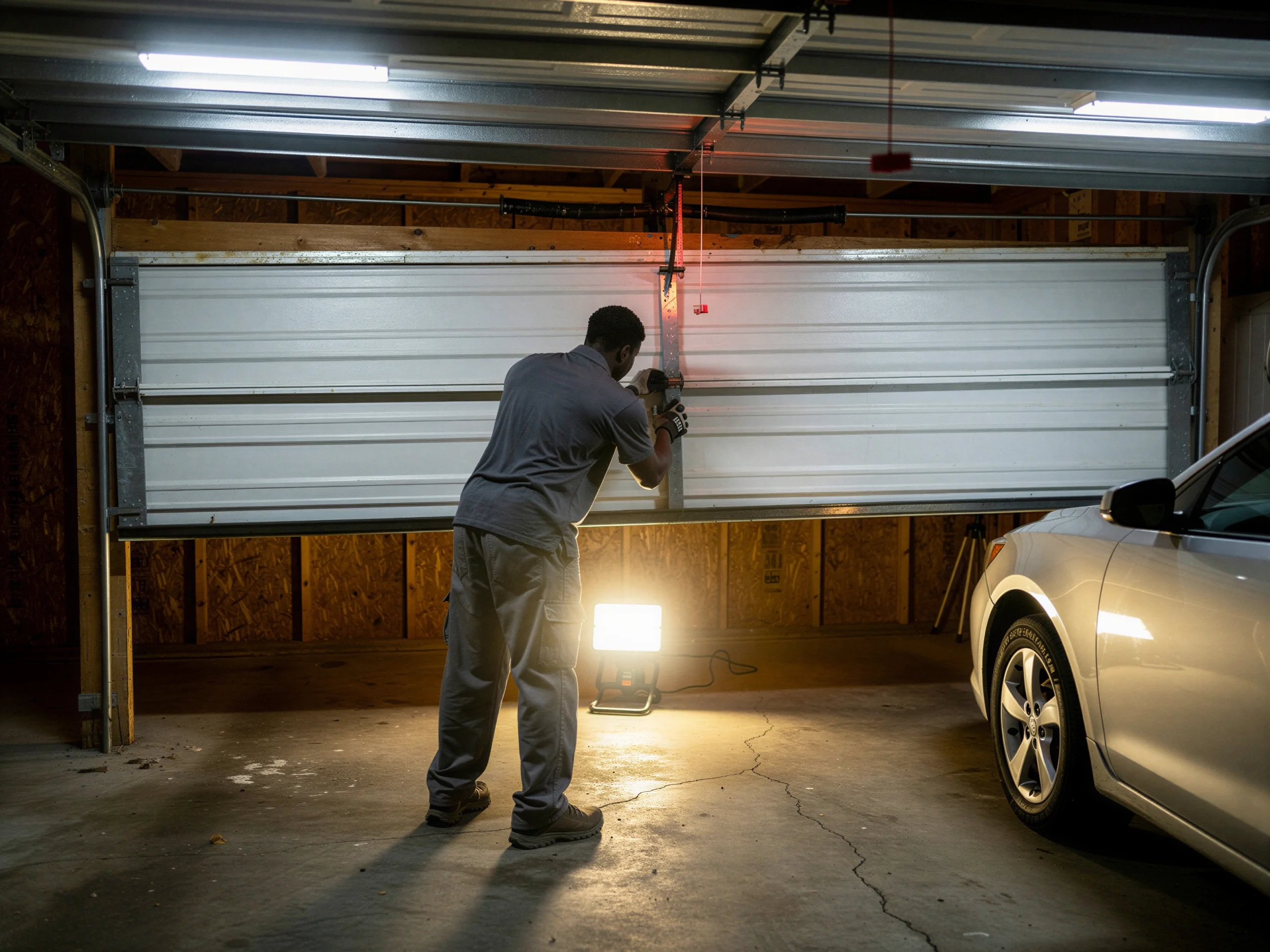
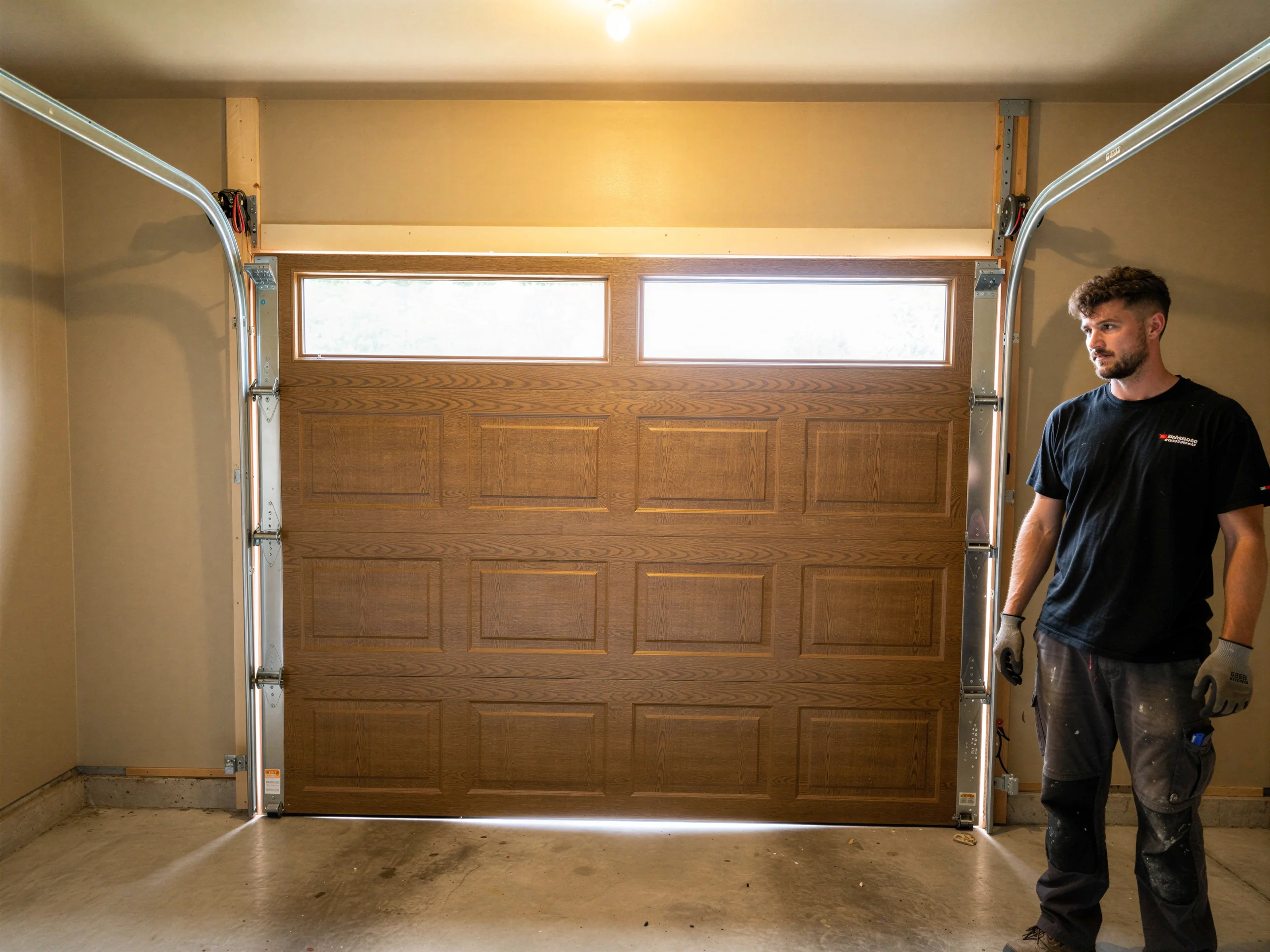
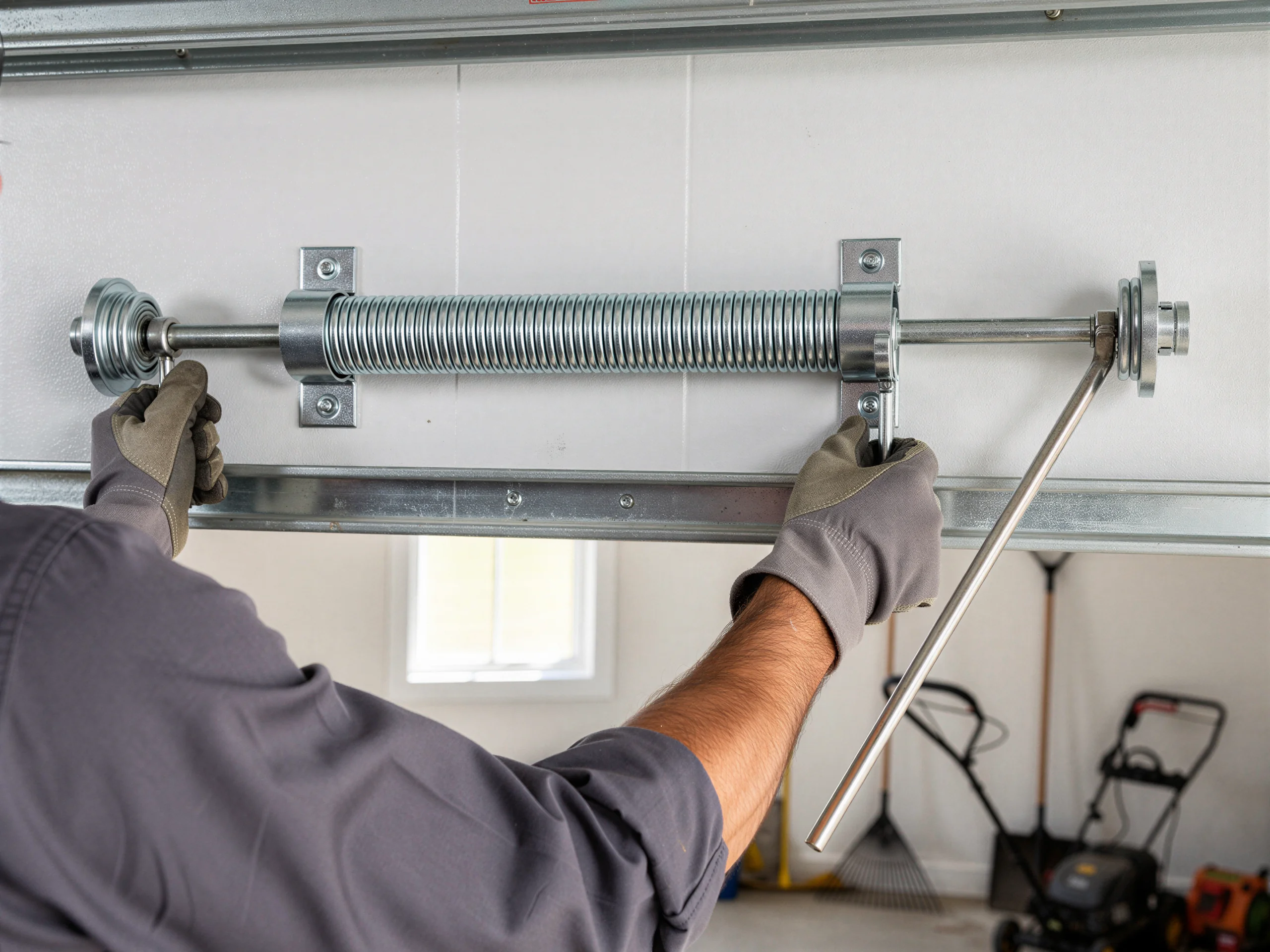
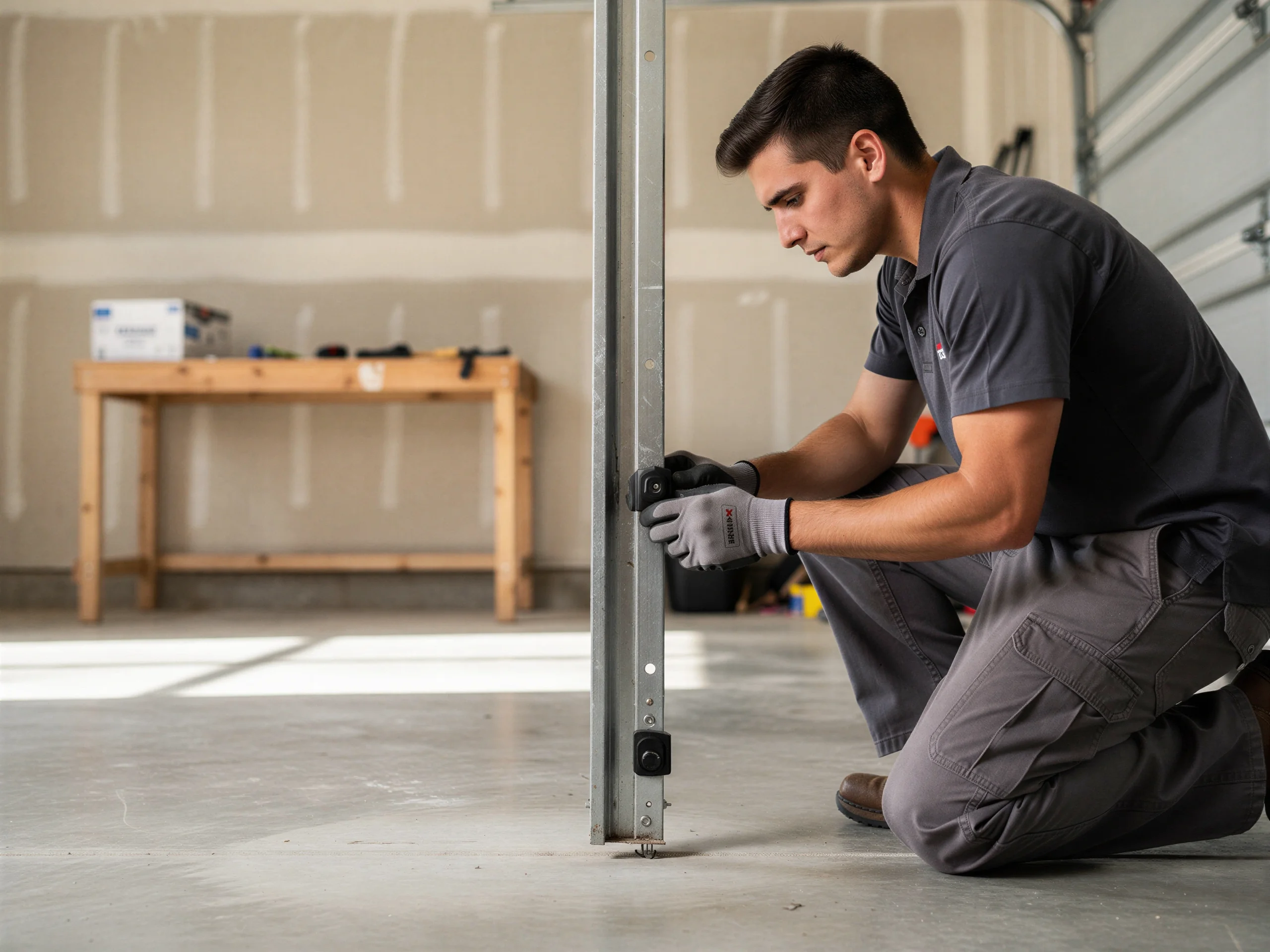
A proper maintenance visit covers the track, the rollers, the cables, the spring tension, and the opener's safety reverse. We check the balance by hand - a door that's set right should lift about halfway and hold on its own, not drop or shoot up.
Tension adjustment versus swap
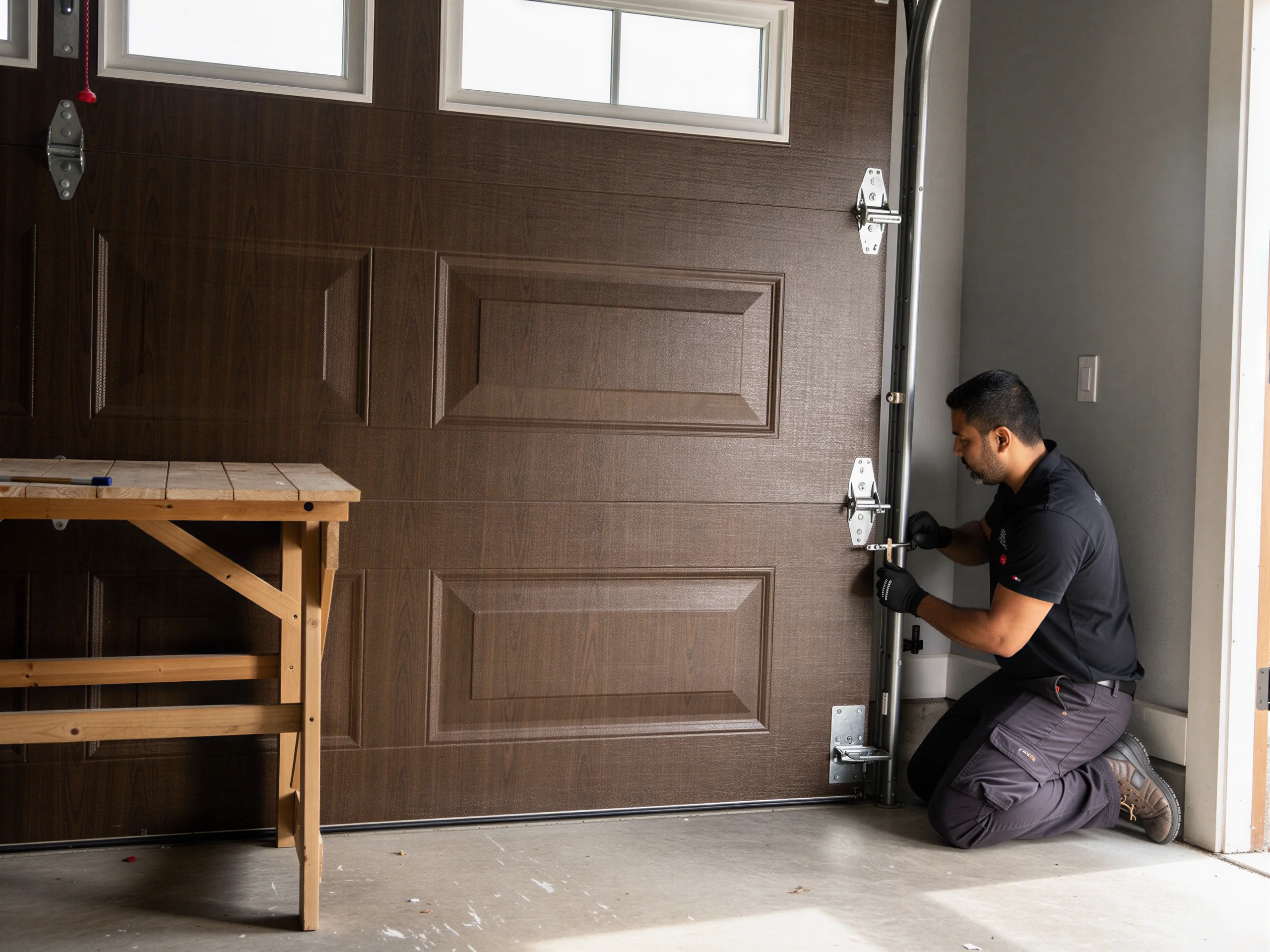
If it doesn't, that's a tension adjustment, not a full spring swap, assuming the spring itself isn't cracked or stretched past spec. We also look at the hardware that gets ignored: hinges, the bottom seal, and the fasteners holding the track to the frame.
Bolts loosening over years
On a door built around 1982, bolts loosen and brackets shift over the years even without a dramatic failure. Catching that early is most of what keeps a maintenance visit cheap.
Repair versus tune-up line
If something's already broken - a snapped cable, a cracked panel - that's a repair job, not a tune-up, and it's worth reading through what that involves separately rather than bundling it in here.
The DIY Question
Lubricating hinges and wiping down the track is fine to do yourself, and it's worth doing a couple times a year regardless of who handles the rest. What we don't recommend doing yourself is touching the torsion spring. It's under enough tension to cause a serious injury if it lets go while you're adjusting it, and on a door old enough to be original to a 1982 build, you often can't tell from looking whether it's near the end of its life or just dirty.
We'll be honest about the other limit here too: if a door is genuinely worn out - rusted track, a panel that's been dented and reshaped more than once, an opener that's obsolete and can't get replacement parts - maintenance won't fix that. At some point the right call is replacement, not another tune-up, and we'll tell you that straight rather than keep billing for visits that won't hold.
How Long You Are Without the Door
We run out of San Bernardino, six miles from Rialto, which is close enough that a scheduled maintenance visit fits into a normal route rather than needing a special trip. Most tune-ups are done in under an hour once the truck is on site - the work itself is checking and adjusting, not replacing major parts, so there's rarely a wait on anything.
If the visit turns up a part that needs ordering - a specific spring size, a track section - that adds time, and we'll tell you up front rather than leave the door half-functional. For straightforward maintenance, though, the short run from San Bernardino means we're not working around a long drive, just around your schedule.
Talk to a local pro
Garage door service in San Bernardino?
Same-day service with honest, upfront quotes.